
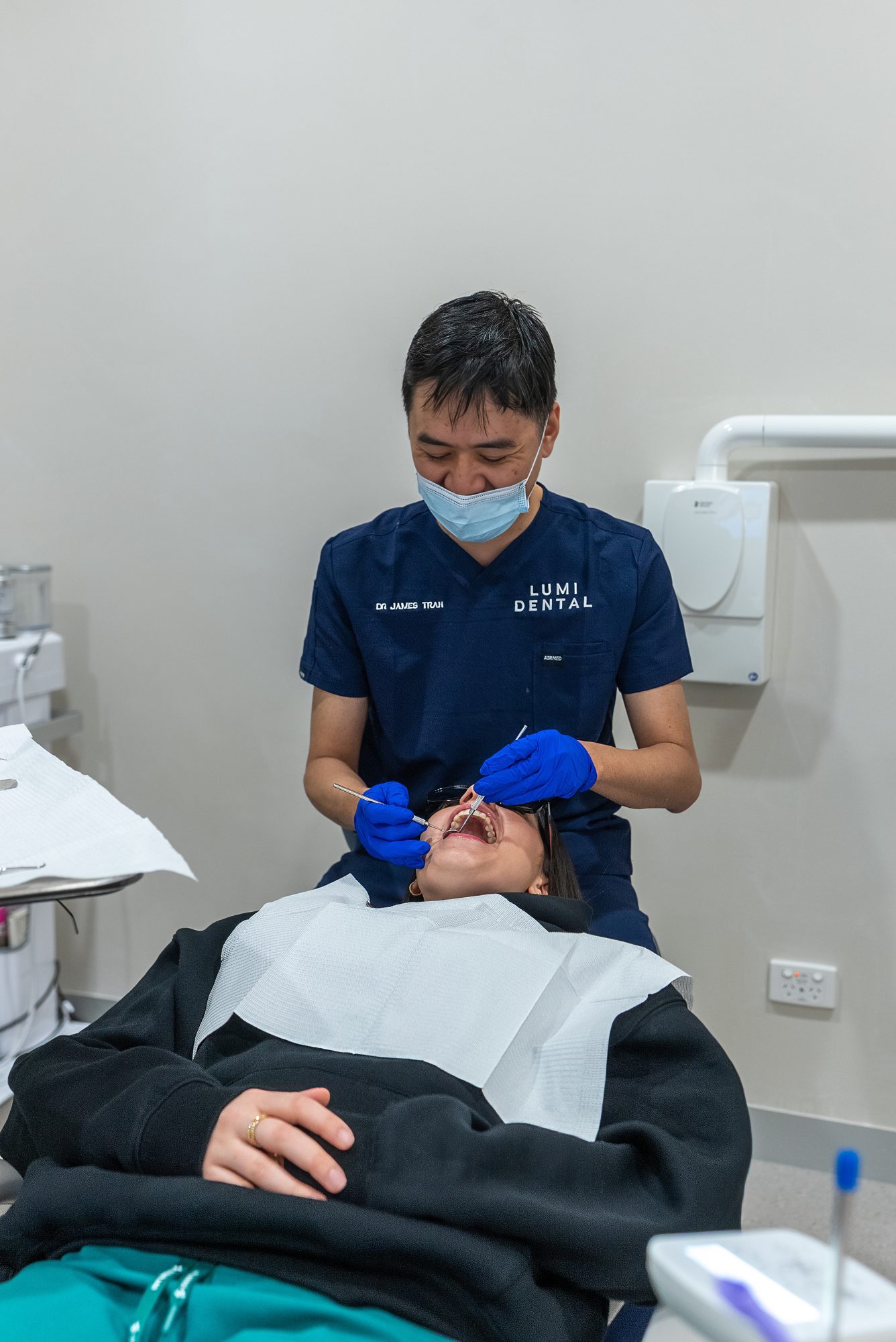

Having an implant does not mean giving up football, basketball or martial arts. It does change what a knock to the mouth can do, because an implant is joined directly to bone with no cushioning ligament around it. A custom-fitted mouthguard made over the finished crown is the usual protection, and a crown that feels loose, high or sore after a hit should be checked by a dentist promptly.
Written by Dr James Tran, BDent (University of Sydney), MICOI, GradDip (Oral Implants), general dentist at Lumi Dental in Melrose Park.
An implant has no shock absorber
A natural tooth is held in its socket by the periodontal ligament, a layer of fibres that lets it move very slightly and absorbs some of the force of a bite or a blow. A systematic review by Taneja and colleagues (Journal of Indian Prosthodontic Society, 2023) describes the ligament as a shock-absorbing cushion and notes that an implant has no such layer. It is effectively fused to the bone, so it barely moves at all.
When an elbow or a ball meets an implant crown, that force has nowhere soft to go. It passes into the crown, the small screw that holds it, the neighbouring teeth or the bone. In practice the most common results are a chipped crown or a loosened screw, both of which can usually be repaired. A heavy blow can damage the bone around the implant or, less often, the implant itself.
The injuries also differ from those to natural teeth. A natural adult tooth that is knocked out can sometimes be replanted, and our guide to knocked-out tooth first aid explains what to do. An implant that has become loose after a blow has lost its connection with the bone and cannot simply be pushed back.
Custom-fitted guards are the recommended choice
The Australian Dental Association's policy on oral injuries states that the most effective protection against oral damage is a custom-fitted mouthguard. Over-the-counter guards are better than nothing, but their protection depends on design and fit. The ADA's model club policy also asks for a "no mouthguard, no play" rule, with guards worn at training as well as in games. Custom guards fit better and are more comfortable, although research directly comparing injury rates between custom and boil-and-bite guards is limited. Our comparison of custom and boil-and-bite mouthguards goes into the detail.
For an implant, timing matters. The guard should be made after the final crown is fitted, so that it matches the crown's shape. A position statement from the European Association for Sports Dentistry (Avgerinos and colleagues, Dental Traumatology, 2025) recommends that each custom guard be tailored around implants, missing teeth or orthodontic work, that the front be at least 3 to 4 mm thick, and that a guard be replaced once its edges deform. It also cites research reporting up to 86 per cent higher risk of mouth and face injury in players without a guard.
Mouthguards may protect more than teeth. A systematic review by Eliason and colleagues (British Journal of Sports Medicine, 2023) found fewer concussions among mouthguard wearers in collision sports, with an incidence rate ratio of 0.74, although the studies behind this finding vary in design.
Which sports call for a guard
The ADA policy groups sports by risk. The right column applies that guidance to someone with an implant.
| ADA grouping | Examples | With an implant |
|---|---|---|
| Mouthguard strongly recommended | Football codes, basketball, combat sports, squash, field hockey, off-road bike riding, skateboarding, rock climbing, trampolining | Custom guard made over the final crown, worn at training and games |
| Head protection usually worn, which may make a guard unnecessary | Ice hockey with a full-face helmet, hockey goalkeeping, cricket, rollerblading, cycling | The helmet or face guard; ask the dentist whether a guard adds protection for your situation |
| Guard could be justified in some circumstances | High diving, surfboarding, skiing | Discuss with the dentist, based on the implant's position and your history of knocks |
| Low risk, or guard impractical | Swimming, athletics, aerobics, rowing | Usually none needed |
Organised sport is not the biggest source of dental injuries. The Better Health Channel (Victoria) reports that sport, leisure and recreation are the most common cause, with cycling, skateboarding and scooter riding accounting for about 44 per cent of dental injuries, and sports such as football, basketball, netball and hockey for up to 14 per cent.
While the implant is healing
In the months after placement, the implant is bonding with the surrounding bone, a process called osseointegration. A hard knock during this time could disturb the healing bone. The dentist will usually advise keeping contact away from the area in the early weeks. For the rest of the healing period, a guard can be adjusted so it does not press on the healing cap. An existing guard rarely fits well at this stage, and a new one is made once the final crown is in place. The timing depends on how the site heals, so check with the dentist before returning to contact training.
Checking yourself after a knock
Stop playing, do not push on the crown, and look for these signs:
- The crown feels loose, has turned, or meets the opposite teeth first when you close gently. This can mean the screw has loosened or the implant has moved.
- Blood is coming from the gum around the crown, rather than from a cut lip.
- Biting hurts or the jaw aches deep down.
- Your lip or chin feels numb, especially after a knock to a lower implant.
- The crown has chipped. Keep any piece.
- Neighbouring natural teeth are loose, chipped or out of position.
- A full-arch implant bridge clicks, rocks or feels different. Our guide to a chipped or broken full-arch implant bridge explains the next steps.
Chew on the other side until you are seen. If the crown is loose or high, the gum is bleeding or you have numbness, contact a dentist the same day. If nothing feels different, an appointment within a day or two is still sensible. Our guide to a loose implant crown has more on that situation.
What the dentist looks for
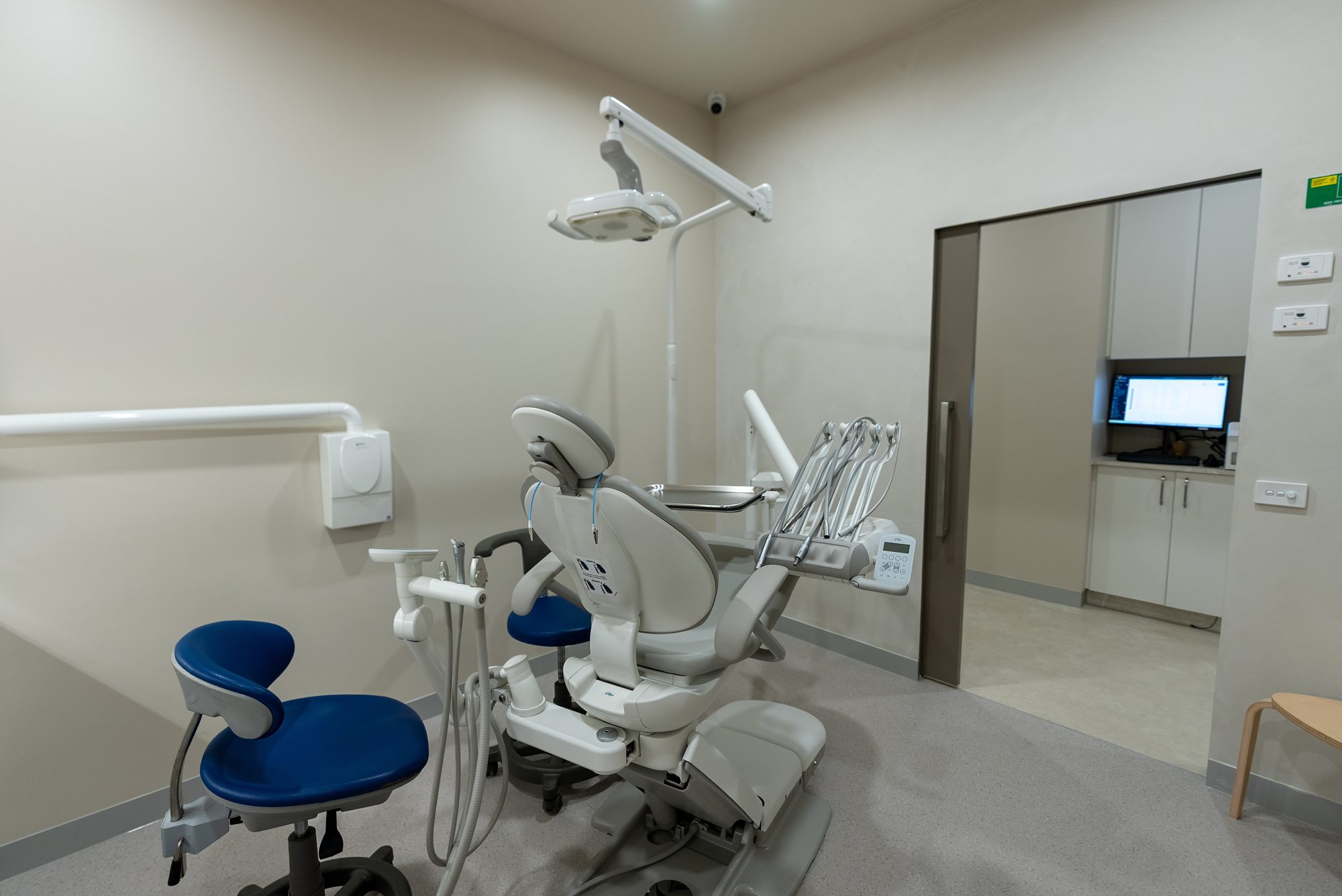
The first job is to find where any movement is coming from: the crown on its abutment, the abutment on the implant, or the implant in the bone. A loose crown or abutment is a mechanical problem, usually solved by tightening or replacing the screw. An X-ray, or a 3D X-ray if the bone is in question, shows whether anything has fractured and whether the bone level has changed compared with earlier images. A high crown is adjusted, and a chip is smoothed or repaired. An implant that moves in the bone is treated as a failing implant; our guide to the signs of implant failure explains what happens then.
At Lumi Dental, imaging including 3D X-rays is done in the practice, and emergency appointments are available after a sporting injury. If you play contact sport, mention it when your implant is being planned, so the mouthguard can be arranged once the crown is fitted.
Looking after your mouthguard
Better Health recommends a guard about 4 mm thick that is comfortable and lets you speak and breathe normally. Rinse it with soap and warm water after use, let it air-dry, and store it in a ventilated box away from direct sun and hot cars. Ask your dentist to check it at each visit, and replace an adult guard after dental treatment or tooth loss, which includes a new implant crown. If you grind your teeth at night, say so, as a separate night guard may also be worth discussing.
What sporty patients ask
Can an implant snap if I take a hit?
It is uncommon. A chipped crown or loose screw is more likely. A severe blow can fracture the bone or the implant, which is why any knock that leaves the implant feeling different is X-rayed.
When can I go back to football after implant surgery?
Light, non-contact training may be possible fairly soon, but contact near the site is best avoided until the dentist is happy with healing. Ask before returning to full contact.
My implant crown was knocked loose. What now?
Stop playing, leave it alone and book the same day. A loose crown often means a loose screw, which can be retightened or replaced once an X-ray confirms the implant beneath is sound.
If you play contact sport and have an implant, or are thinking about one, we can examine the site, take a 3D X-ray and plan how to protect it. Contact Lumi Dental in Melrose Park to book a free implant consult (see current offers), or read more about dental implants at Lumi Dental.
Sources
- Australian Dental Association: Policy Statement 2.2.5, Prevention and Management of Oral Injuries
- Better Health Channel: Mouthguards
- Avgerinos S and colleagues. Position statement and recommendations for custom-made sport mouthguards. Dental Traumatology, 2025
- Taneja S and colleagues. Survival of tooth-implant connections: a systematic review and meta-analysis. Journal of Indian Prosthodontic Society, 2023
- Eliason PH and colleagues. Prevention strategies and modifiable risk factors for sport-related concussions and head impacts: a systematic review and meta-analysis. British Journal of Sports Medicine, 2023
About the author

Dr James Tran is a general dentist at Lumi Dental in Melrose Park. He holds a BDent from the University of Sydney and a Graduate Diploma in Oral Implants, and is a Master of the International Congress of Oral Implantologists (MICOI).
This article is general information only and is not a substitute for an examination and individual advice from a registered dental practitioner. Suitability for any treatment varies from person to person.








