

A chipped or broken full-arch implant bridge is almost always a problem with the bridge, not the implants under it: keep any piece, stop chewing on that side and book a review, because most chips can be repaired and a screw-retained bridge can be removed for laboratory work without disturbing the implants. A chipped All-on-X bridge is one of the more common complications of full-arch treatment. An umbrella review of systematic reviews with at least five years of follow-up reported prosthesis survival of 89.5 to 96.8% over 5 to 15 years, with veneer chipping affecting 15 to 35% of veneered zirconia bridges and framework fractures under 5%. In other words, the teeth on a bridge chip far more often than the bridge fails.
Written by Dr James Tran, BDent (University of Sydney), MICOI, GradDip (Oral Implants), general dentist at Lumi Dental in Melrose Park.
The short version
- Keep the fragment, do not glue anything, eat soft food on the other side and call the practice. A chip is rarely urgent unless the bridge moves or a sharp edge is cutting your cheek.
- Acrylic and composite teeth chip and wear more often but are easier to repair. Zirconia chips less often but, when it does, the fix is more involved. Our comparison of zirconia and acrylic full-arch bridges goes deeper.
- Three repair paths: a chairside patch, laboratory repair after the bridge is unscrewed, or a replacement bridge.
- Screw-retained bridges are retrievable. That design choice is what makes repair rather than replacement possible.
- Grinding, hard foods and sleeping without a night guard are the usual causes. A guard and a maintenance schedule prevent most repeat chips.
What to do today
Find the piece if you can and keep it dry in a small container; a clean break in an acrylic tooth can sometimes be bonded back. Do not use household glue, which contaminates the surface and makes a proper repair harder. If an edge is sharp, a little orthodontic wax or sugar-free gum pressed over it protects the cheek until you are seen. Eat soft food and chew on the other side. Then check two things: does the bridge rock or click when you press it, and is there any pain, swelling or bleeding at the gum? A chip alone can wait a few days. A bridge that has started to move, or a crack that runs through the framework rather than one tooth, needs an appointment this week, because a loose bridge loads the implants unevenly.
Acrylic and zirconia chip differently
Acrylic or composite teeth on a titanium bar
The traditional full-arch bridge is a titanium bar wrapped in pink acrylic with denture teeth set into it. It is light, kind to the opposing teeth and simple to repair, but the teeth are the weak point. In one retrospective series, acrylic denture teeth were described as the weakest link, with 16 tooth fractures recorded across 12 conventional hybrid bridges. Chips are usually a single tooth, and a single tooth can be replaced.
Zirconia
Zirconia bridges are milled from a single block, so there is no bar-to-tooth join to fail. A systematic review of one-piece zirconia full-arch bridges reported a short-term failure rate of 1.4%, from four fractured prostheses, with minor chipping of the layered porcelain in around 15% of bridges. Monolithic zirconia, with colour staining rather than layered porcelain, chips less than veneered zirconia in the umbrella review above. When zirconia itself fractures rather than its porcelain, the bridge generally has to be remade.
Provisional bridges chip most
The acrylic bridge fitted on the day of surgery is designed to be light and adjustable while the implants heal. It chips more than any final bridge, and patients I see in that phase are warned to expect it. A chipped provisional is usually patched in the chair and then replaced by the final bridge on schedule.
If one tooth has chipped, it is a repair; if the bridge moves or the framework has cracked, it comes off
That is the rule that sorts most cases in the first minute of an appointment. A chipped tooth with a firm bridge is handled by adding material or swapping the tooth. Movement, a crack through the pink acrylic to the bar, or a fractured zirconia connector means the bridge is unscrewed, examined off the mouth and either repaired in the laboratory or replaced.
Repair paths compared
| Path | When it suits | What happens | Time without the bridge |
|---|---|---|---|
| Chairside repair | Small chip in an acrylic or composite tooth; minor porcelain chip on zirconia; firm bridge | Surface roughened and bonded, composite added and polished in the mouth | None |
| Laboratory repair after removal | Lost or broken tooth, crack in the acrylic, worn teeth, repeated chips | Bridge unscrewed, teeth replaced or acrylic re-wrapped on the same bar, bridge refitted with new screws | Hours to a few days; a spare or provisional may be fitted |
| Replacement bridge | Fractured framework, zirconia fracture, bridge near the end of its life, bite has changed | New scan, design and manufacture; often a chance to change material | The old bridge or a provisional is worn while the new one is made |
Why screw-retained bridges are retrievable
A full-arch bridge is held by small screws passing through access holes on the biting surface into the implants or the connectors on top of them. The holes are sealed with a plug of composite. To remove the bridge, the plugs are drilled out, the screws loosened and the bridge lifted off, usually in under half an hour and without anaesthetic. The implants are untouched. The same umbrella review noted that screw-retained frameworks showed lower technical complication rates, and in my experience the bigger advantage is practical: the bridge can come off for repair, for a thorough clean underneath, or for a screw check, and go straight back on.
Why full-arch bridges chip
Implants have no ligament, so the bite force reaches the bridge with nothing to cushion it. Add any of the following and chips follow.
- Grinding and clenching. The Australian Dental Association lists fractured and chipped teeth among the signs of bruxism. Our guide to dental implants if you grind your teeth covers how this is planned for.
- Hard foods. Ice, olive pips, crusty bread, nuts and bones are the usual culprits, especially with acrylic teeth.
- No night guard. A bridge opposing natural teeth, or another bridge, benefits from a splint at night. In my experience, skipping it is the most common reason a repaired bridge chips again.
- Wear and age. Acrylic teeth flatten over the years, which changes the bite and concentrates force on a few spots.
- Design. Long cantilevers behind the last implant and thin connectors between teeth are the places that fracture first.
Prevention and a maintenance schedule
An occlusal splint, also called a night guard, is made of hard plastic and custom-fitted by a dentist; the ADA notes it does not stop grinding but protects the teeth from its effects. Beyond that, a sensible routine looks like this.
- Daily: brush the bridge and gum line, clean underneath with a water flosser or superfloss, and wear the night guard.
- Every six months: an examination and professional clean, with the bite checked for new high spots and the bridge checked for movement.
- Every year or two, as advised: the bridge is removed, cleaned off the mouth, inspected for wear and cracks, and refitted with new screws.
- Any time: a chip, a click, a loose feeling or a sore spot under the bridge is reviewed rather than watched.
Our article on dental implant aftercare and maintenance explains why the removal visit matters for the gum and bone as well as the bridge.
How we approach this at Lumi Dental
Lumi Dental's full-arch service is All-on-X. Full-arch bridges of this kind are typically screw-retained, so they can be removed for repair. A chipped bridge starts with an examination by a dentist, a check for movement and a 3D X-ray if the implants or screws are in question. Small chips are repaired in the chair the same day where possible. Where the bridge needs to come off, the in-house 3D intraoral scanner and 3D printer help the team plan the laboratory work and any provisional, and the oral health therapists use the removal visit to clean the implants thoroughly. A night guard is usually recommended for patients who grind.
Questions patients ask
Can a chipped All-on-4 bridge be repaired?
Usually, yes. All-on-4 is a treatment concept trademarked by Nobel Biocare, and the bridges used with it are typically screw-retained like other full-arch bridges, so they can be repaired in the chair or removed for the laboratory. Our article on the difference between All-on-X and All-on-4 explains the terms.
Will I be without teeth while my bridge is repaired?
For a chairside repair, no. For a laboratory repair the bridge is off for hours to a few days, and a provisional or your previous bridge may be fitted in the meantime.
Why does my implant bridge keep chipping?
Repeated chips usually point to grinding without a night guard, a bite that has changed as the teeth wore, or a design that puts too much load on one spot. Repairing the chip without addressing the cause tends to produce another chip.
How long does a full-arch implant bridge last?
The umbrella review above reported prosthesis survival of 89.5 to 96.8% over 5 to 15 years, though individual results vary with material, bite and maintenance. Acrylic teeth often need refreshing well before the bar or the implants do.
Is a chipped bridge a sign the implants are failing?
No. A chip is a prosthetic problem. Implant trouble shows as pain, swelling, bleeding or movement at the gum rather than a broken tooth. Our guide to signs of dental implant failure lists what to watch for.
Chipped full-arch bridge? Complimentary implant consult in Melrose Park
If a tooth on your full-arch bridge has chipped or the bridge feels different, the team at Lumi Dental in Melrose Park can assess it and set out the repair path. Book a complimentary implant consult, or read more about dental implants and All-on-X full-arch implants at Lumi Dental. Patients visit from Ryde, Parramatta, Ermington, Rydalmere and nearby suburbs.
Sources
- PubMed: Prosthetic complications of implant-supported complete arch prostheses, an umbrella review of systematic reviews
- PubMed: Clinical outcomes of full arch fixed implant-supported zirconia prostheses, a systematic review
- PubMed: Complications and clinical considerations of the implant-retained zirconia complete-arch prosthesis with various opposing dentitions
- Australian Dental Association (teeth.org.au): Teeth grinding
About the author
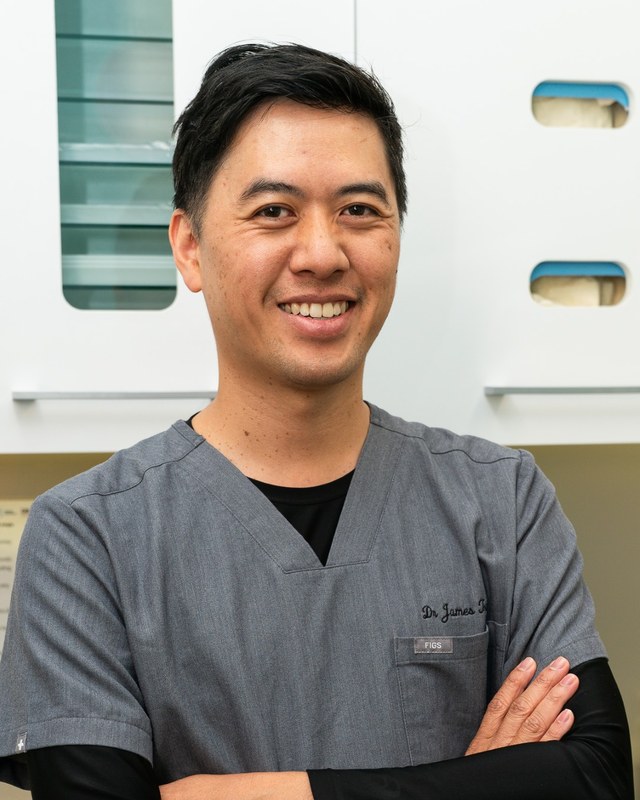
Dr James Tran is a general dentist at Lumi Dental in Melrose Park. He holds a BDent from the University of Sydney and a Graduate Diploma in Oral Implants, and is a Member of the International Congress of Oral Implantologists (MICOI).
This article is general information only and is not a substitute for an examination and individual advice from a registered dental practitioner. Suitability for any treatment varies from person to person.







