
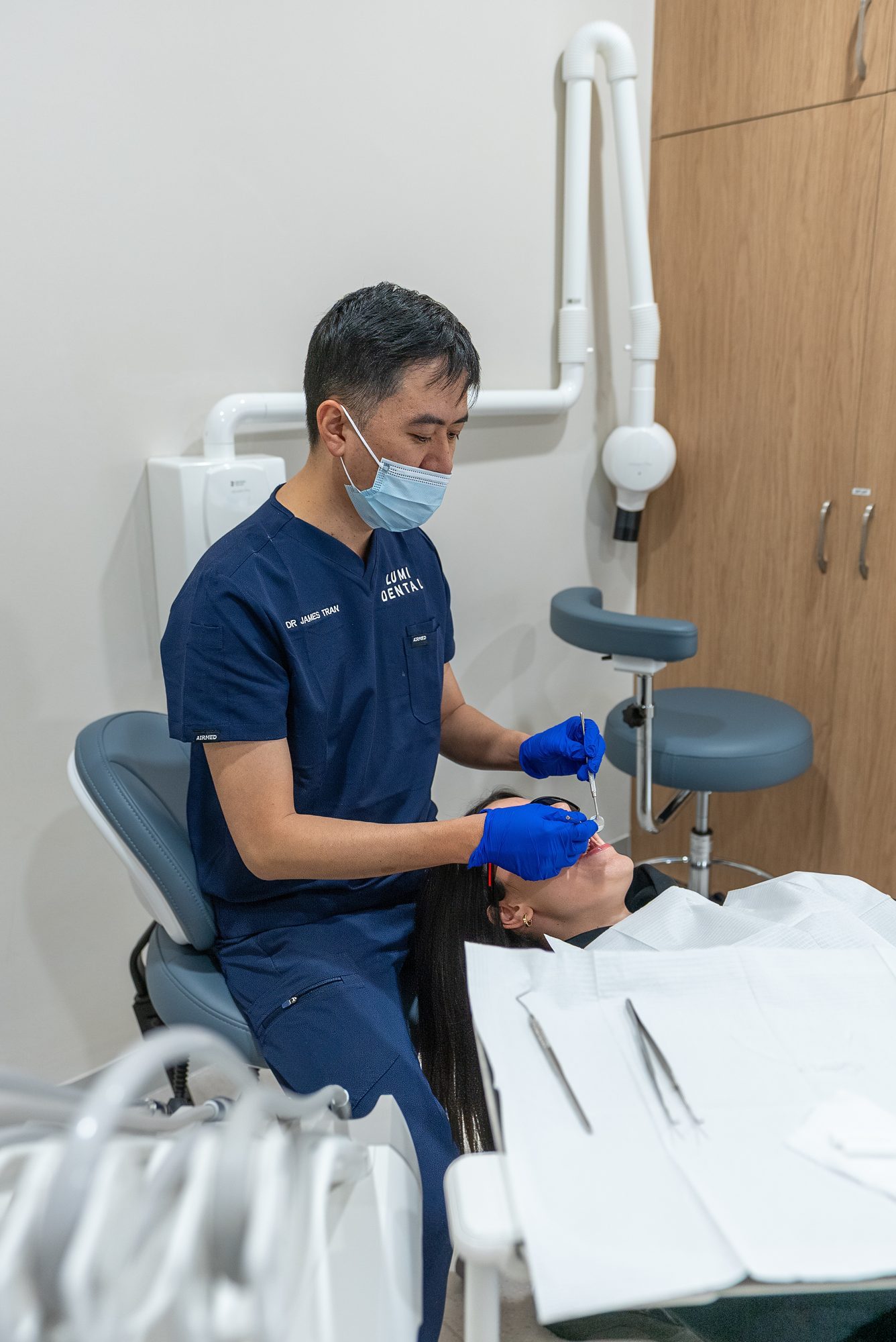

You can usually have a dental implant with a tongue, lip, labret, frenum or cheek piercing, but the jewellery should be part of the plan from the first consultation, because piercings are known to wear away the same gum an implant depends on. In one study of 50 adults with lower-lip studs, gum recession was found on the teeth opposite the stud in 68% of people, compared with 4% of people without a piercing. This guide covers dental implants with a tongue or lip piercing: what is checked first, healing with jewellery in, crowns and gum health.
Written by Dr James Tran, BDent (University of Sydney), MICOI, GradDip (Oral Implants), general dentist at Lumi Dental in Melrose Park.
The short version
- A piercing does not rule out an implant. It changes what the dentist looks for and how the area is planned.
- Research on piercings and recession is mostly about natural teeth, and it points to the gum around the lower front teeth.
- If jewellery taps or rubs where the implant will go, talk about it before surgery, not after the crown is fitted.
- Whether jewellery stays in, changes style or comes out for a while is an option to discuss with your dentist and your piercer. It is your choice.
- Implant crowns can chip if metal jewellery repeatedly knocks them, much as natural teeth can. Our article on tongue and lip piercing dental risks covers chips and recession on natural teeth.
- Bleeding, swelling or a lengthening gum line around an implant is worth having checked early.
What research says about piercings, gums and implants
The clearest data come from natural teeth. In the lip piercing study above, published in the Journal of Periodontal Research, more recession was linked with how long the stud had been in and where its inner disc sat against the gum. People with a narrow band of firm, attached gum also had more recession.
A scoping review of oral piercing complications found a strong link between piercings and enamel cracks, fractures and gum recession, particularly on the tongue side of the lower front teeth, with the tongue the site most strongly associated with recession. Our overview of oral piercings and dental health summarises the wider research.
I am not aware of studies that follow implants next to oral jewellery over time, so dentists reason from damage patterns on natural teeth and from what is known about implant gum. An umbrella review of 10 systematic reviews and more than 7,000 participants found that a narrower band of firm gum around implants was linked with more plaque, inflammation and recession, though the authors noted more data are needed.
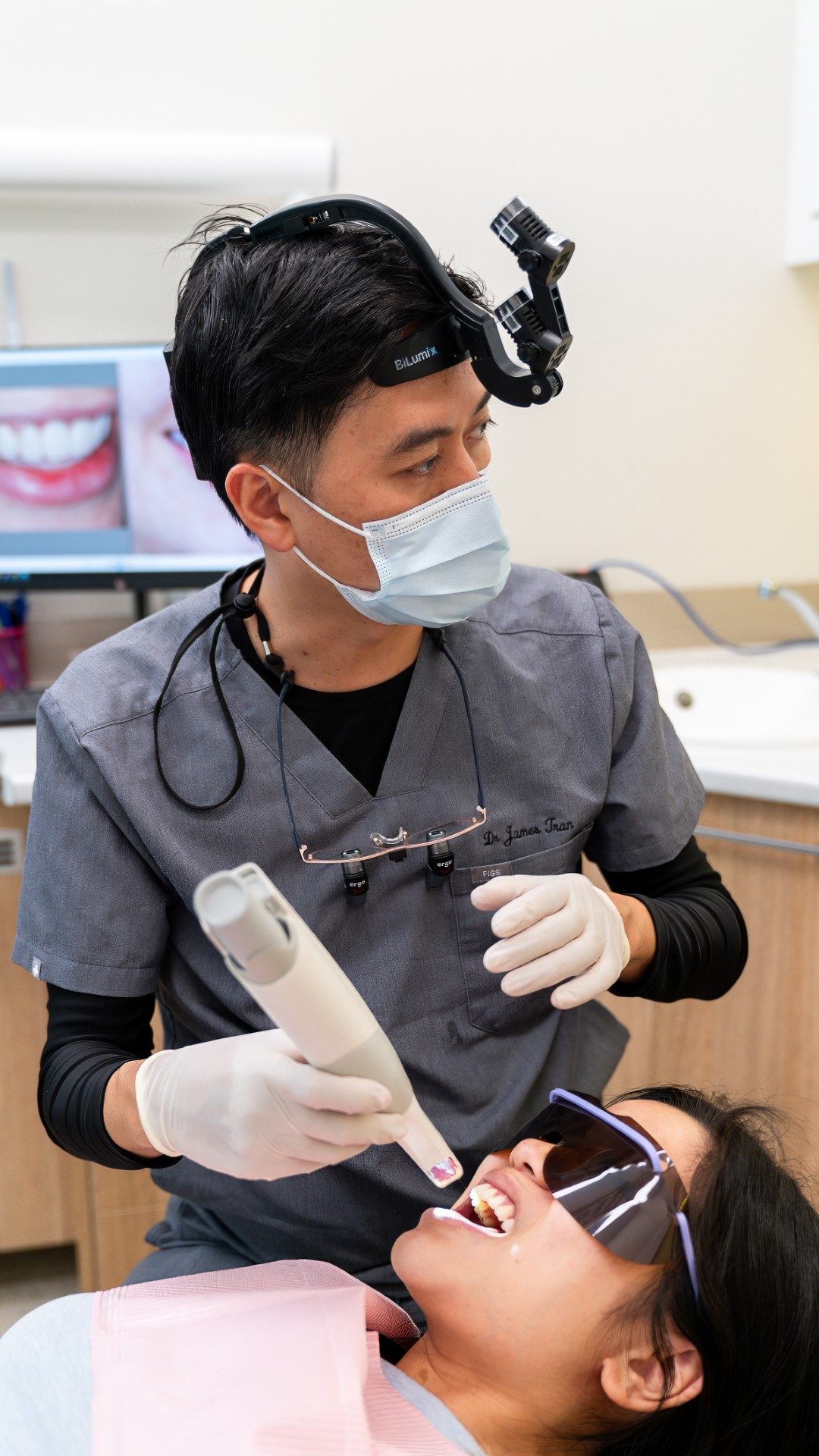
The single rule: plan for the jewellery before surgery
If your jewellery taps, rubs or rests where an implant will sit, it is discussed and planned for before surgery. The gum around the lower front teeth is where piercing recession is most often reported, and the lower front teeth are also one of the tightest spaces for an implant, as our guide to implants for lower front teeth explains.
Implant position, extra gum support and crown shape are easier to get right at the start than to change later. In my experience, the patients who do best mention the piercing at the first visit, even when it sits in a different part of the mouth. The same applies if the tooth being replaced cracked partly because of jewellery contact: the implant will sit in the same spot, so it helps to work out what caused the damage first.
What is checked at the assessment
Gum height, thickness and firm gum
The dentist measures recession on the teeth next to the gap and on the teeth the jewellery touches, checks for bleeding and pocketing, and looks at gum thickness and how much firm, attached gum there is. Clinical photographs give a baseline for later reviews.
Bone and the 3D X-ray
A 3D X-ray shows the width and height of bone and how close it lies to nearby roots and nerves. Thin bone can limit where an implant can safely sit, and sometimes bone or gum grafting is discussed.
The jewellery itself
The dentist looks at where the bar, stud or disc sits at rest, when talking and when biting. Mentioning habits such as clicking a tongue bar helps.
| Piercing site | Area it most often affects | What is checked |
|---|---|---|
| Lower lip stud or labret | Gum on the lip side of the lower front teeth, opposite the disc | Recession, gum thickness, firm gum, where the disc rests |
| Tongue bar | Tongue side of the lower front teeth; biting edges for chips | Inner gum level, enamel cracks and chips, how the ball meets the teeth |
| Tongue web (frenulum) | Sits close to the inner gum of the lower front teeth | Inner gum level and rubbing when the tongue moves |
| Upper lip frenum | Gum and teeth at the front of the upper jaw | Gum level between the upper front teeth, contact with crowns |
| Cheek | Inner cheek beside the back teeth, where the disc rests | Gum and teeth the disc touches, the cheek lining |
Healing after implant surgery with jewellery in your mouth
A new or healing piercing
The Better Health Channel notes that oral piercings can take up to two months to heal, and advises against removing jewellery before the wound has fully healed. A new piercing is usually best left to settle before implant surgery. If a piercing looks infected, Better Health advises seeing a doctor and not removing the jewellery until you have had advice.
The weeks after surgery
After surgery, the gum around the implant is tender and the stitches are delicate, so jewellery that presses on or flicks against the area may irritate it. Our guide to infection versus normal healing after implant surgery sets out the usual course.
Options to talk through
There is no single answer, and it is your decision. Options people often consider with their piercer include:
- keeping the current jewellery and not playing with it near the surgical site
- a shorter bar or a different style while the gum heals
- taking jewellery out for the surgery appointment, since Better Health notes loose jewellery can be a choking hazard
- leaving it out for a period, if you and your piercer are comfortable with that
Implant crowns and jewellery contact
An implant crown is usually zirconia or porcelain, sometimes layered over a stronger core. Better Health notes that teeth in contact with mouth jewellery can chip or crack, and that teeth with fillings or crowns can also be damaged. It is reasonable to expect a similar risk for an implant crown, and no material is guaranteed to resist repeated knocks.
The crown material, its shape where the jewellery touches and how the bite is set can all help. A chip can often be smoothed or repaired, and our article on a chipped or worn implant crown explains why layered crowns chip more often than solid ones.

Cleaning around an implant and a piercing
Jewellery gives plaque one more surface to collect on. A simple routine covers both:
- brush twice a day with a soft brush, angled into the gum line around the implant crown
- clean between the teeth once a day with floss or an interdental brush
- clean the jewellery as your piercer recommends, including the back of a disc
- keep regular maintenance visits with the hygiene team
Watching the gum around the implant
Gum around an implant can move back because of thin tissue, inflammation or physical rubbing. A grey shadow, a visible metal edge, bleeding or swelling each mean something different, and our article on gum receding around a dental implant explains how they are told apart. Where recession is advancing, referral to a periodontist, a registered gum specialist, may be suggested. I usually compare photographs from each review, because small changes are easier to see side by side.
How we approach this at Lumi Dental
At Lumi Dental, the dentist examines the gum, bone and jewellery before any implant is planned, using in-house 3D X-ray and 3D intraoral scanning, described on our technology page. The team talks through the jewellery, any extra gum support and crown options such as zirconia or porcelain, and gives you a written plan. Complex gum cases are referred to registered specialists. The oral health therapists then help with maintenance and check the gum next to any piercing at each visit.
Questions patients ask
Can you get a dental implant if you have a tongue piercing?
Usually, yes. The dentist will check the inner gum of the lower front teeth and look for chips and cracks, and the plan then takes the jewellery into account.
Do I have to take my lip ring out for implant surgery?
Not necessarily. Some people keep jewellery in, change style while the gum heals, or take it out for the appointment itself. Talk it through with your dentist and your piercer; the choice is yours.
Can a tongue bar chip an implant crown?
It can. Better Health notes that crowned teeth can be damaged by mouth jewellery, and implant crowns use similar materials. Crown design and not clicking the bar can lower the risk.
Will a lip piercing make my gum recede around an implant?
It may add to the risk if the disc rubs the gum at the implant, but it is not certain. Research on natural teeth links recession with time and disc position, so regular checks help catch changes early.
How long after a tongue piercing can I have an implant?
Better Health notes oral piercings can take up to two months to heal, so it usually makes sense to wait until it has settled. Your dentist will suggest timing after looking at the area.
Considering an implant? Complimentary implant consult in Melrose Park
If you have a piercing and are thinking about an implant, a complimentary implant consult is a chance to talk through the gum, bone and jewellery before anything is decided. Contact Lumi Dental to book, or read more about dental implants in Melrose Park. Patients visit from Ryde, Parramatta, Ermington and Rydalmere, with on-site parking at Melrose Central.
Sources
- Better Health Channel: Piercings
- Journal of Periodontal Research (Kapferer and colleagues): Lip piercing, prevalence of associated gingival recession and contributing factors (PubMed)
- International Journal of Environmental Research and Public Health (Inchingolo and colleagues): Oral piercing, a scoping review of local and systemic complications (PMC)
- Journal of Oral Implantology (Fathi and colleagues): The significance of keratinized mucosa on implant health, an umbrella review (PubMed)
About the author
Dr James Tran is a general dentist at Lumi Dental in Melrose Park. He holds a BDent from the University of Sydney and a Graduate Diploma in Oral Implants, and is a Member of the International Congress of Oral Implantologists (MICOI).
This article is general information only and is not a substitute for an examination and individual advice from a registered dental practitioner. Suitability for any treatment varies from person to person.







