

Hypermobile Ehlers-Danlos syndrome (hEDS) and hypermobility spectrum disorder (HSD) do not rule out dental implants, but the jaw joint, numbing and healing need to be planned before surgery day. The evidence on dental implants with Ehlers-Danlos syndrome is limited to case reports and small series: in one Norwegian series, five women with hypermobility or classic EDS received 16 implants and none were lost over 2 to 12 years. Vascular and periodontal EDS are different, and the team checks with your medical team first.
Written by Dr James Tran, BDent (University of Sydney), MICOI, GradDip (Oral Implants), general dentist at Lumi Dental in Melrose Park.
The short version
- The few published implant cases in hEDS and classic EDS are mostly encouraging, but the numbers are small.
- The single rule: hEDS or HSD is not a reason to avoid an implant, but plan the jaw joint and the numbing first; with vascular or periodontal EDS, the team checks with the treating specialist before anything is booked.
- Longer implant visits can strain a lax jaw joint, so shorter sessions, a bite block and breaks are planned in advance.
- Local anaesthetic may work less well or wear off sooner. IV sedation is an option for some adults after a medical review.
- General dental care with EDS, including jaw subluxation and dizziness on sitting up, is covered in our article on Ehlers-Danlos syndrome or hypermobility at the dentist.
- Your GP, rheumatologist or geneticist manages your EDS; the implant plan is built around their advice.
What the implant studies in EDS show
The NHS describes 13 types of EDS, with hEDS the most common; HSD is treated in the same way as hEDS. The implant research covers a handful of people, and the type matters.
Hypermobile and classic EDS
Jensen and Storhaug, at the University of Oslo, reported five women aged 19 to 68 with hypermobility or classic EDS who received 16 implants. Over 2 to 12 years, no implants were lost, bone loss was minimal and all five were pleased with the result. These patients coped with local anaesthetic and did not need bone grafting, so they were not the most complex cases.
Bergamini and colleagues later described two more successful cases, one with bone augmentation. Their review of the literature found it limited and often contradictory, with no consensus for treatment guidelines. In plain terms, implants can work in EDS, but nobody can quote you a reliable success rate.
Periodontal EDS
Periodontal EDS (pEDS) is a rare, genetically confirmed type that causes early, severe gum disease. Rinner and colleagues in Austria followed three members of one family with pEDS. All three developed bone loss around their implants after initial success, and in one person the implants were removed about five years after placement. The authors concluded that keeping natural teeth as long as possible is the main goal in pEDS. Three people is a small number, but it is the clearest warning in the literature.
The single rule: plan the jaw and the numbing first
If you have hEDS or HSD and want an implant, start by planning two things before surgery day: how your jaw will be supported, and how your numbing will be checked. If you have vascular or periodontal EDS, start with a letter to the specialist who manages it, because those types change the risk enough that the plan begins with their advice.
In my experience, people with EDS know their own bodies well: which positions hurt, how long the jaw stays comfortable open, which anaesthetic has failed. I usually write that into the plan at the consult.
Protecting the jaw joint during longer implant visits
Implant treatment asks more of the jaw than a check-up. A lax jaw joint may slip forward out of place (subluxation) if the mouth is held wide for too long.
- A soft bite block so the jaw muscles can rest rather than hold the mouth open.
- Planned breaks to close and relax, built into the booking.
- Shorter visits. Surgery, healing checks and crown steps can be split across more appointments.
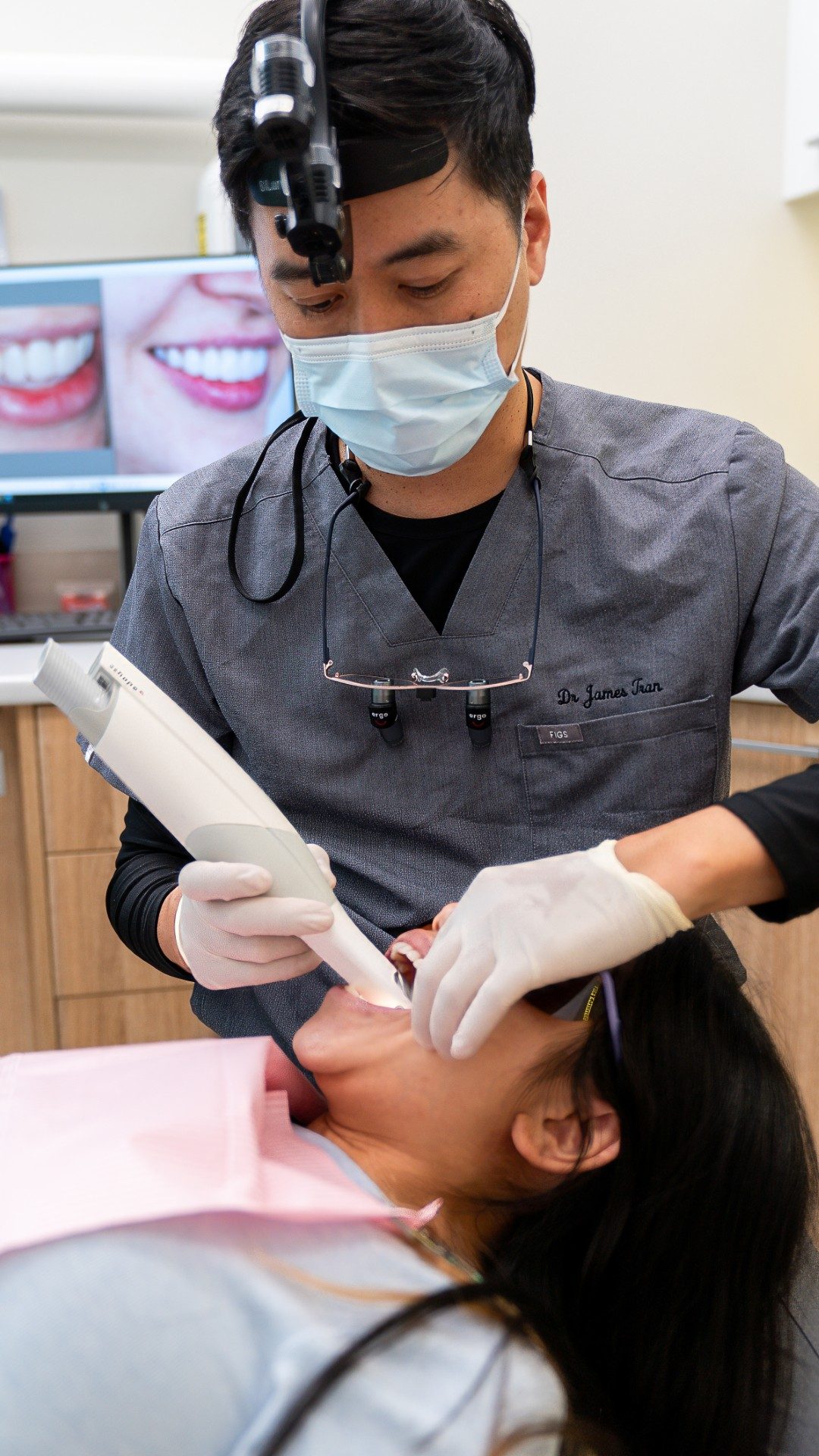
- Paused scans. An intraoral scan can be stopped and resumed when the jaw tires.
Back teeth need the widest opening. If your opening is already limited, our article on dental implants when you cannot open wide explains how the technique and parts can be chosen to need less room. If your jaw has ever stuck, read about a jaw locking open or closed and tell the dentist.
Numbing, comfort and sedation
Many people with EDS report that local anaesthetic works less well or wears off sooner. In a large online survey by Schubart and colleagues, 88% of 980 respondents with EDS recalled inadequate pain prevention during dental procedures, compared with 33% of 249 respondents without EDS. That is recalled experience, not a controlled trial, and many people with EDS numb normally.
For implant surgery, that means extra time before starting, careful checks and a hand signal so the dentist stops and tops up. Our article on when local anaesthetic does not work explains the options.
IV sedation does not replace local anaesthetic, but it can make a longer appointment easier. For adults with EDS it is considered only after a medical review. Our guide to IV sedation for dental implant surgery explains the day. Lumi Dental does not provide general anaesthetic itself and refers where it is needed, though IV sedation is available at the practice.
Gums, bruising, healing and bone
Soft tissue and wound healing
The NHS lists fragile skin that bruises easily among the features several types of EDS share, and the gums and lining of the mouth may bruise or tear more readily too. That means gentle handling of the gum, careful stitching and a plan for facial bruising that may look worse than it feels. Report bleeding that does not settle with pressure.
Bone quality
A review by Basalom and Rauch found that some studies in hypermobile and classic EDS reported mildly lower bone mineral density, without clear evidence of more fractures. A small Belgian study found thinner cortical bone in women with hEDS or HSD than in controls. Those measurements came from the leg and spine, not the jaw, so they are a reason to read the 3D X-ray carefully, not a prediction.
Healthy gums around the implant
A soft brush, gentle technique and regular professional cleans matter more than usual if your gums recede easily. Our article on peri-implantitis explains the early signs of trouble around an implant.
Vascular EDS and periodontal EDS
Vascular EDS (vEDS) is rare; the Ehlers-Danlos Society puts it at roughly 1 in 100,000 to 200,000 people. It affects blood vessels and hollow organs. The Society notes that people with vEDS may have thin, fragile gums that bleed easily after dental procedures and that wounds may heal poorly after dental surgery, and it advises considering conservative approaches first and avoiding elective procedures where possible.
A missing tooth is not simply left untreated: the conversation starts with your vascular or genetics team, and a bridge or denture may be discussed first. With pEDS, gum therapy and maintenance to keep natural teeth come first.
What to check first, issue by issue
| Issue | What to check before surgery | What may help on the day and after |
|---|---|---|
| Jaw subluxation | History of the jaw slipping or locking; comfortable opening measured | Bite block, planned breaks, shorter visits, staged treatment |
| Numbing wears off or does not take | Past experience with local anaesthetic | Extra time, careful checks, a stop signal, top-ups; IV sedation after medical review |
| Easy bruising | Medicines and supplements that affect bleeding | Gentle handling, pressure, cold packs, a clear plan for what is normal |
| Fragile gums | Gum health and recession around the gap | Gum therapy first, careful stitching, a soft brush |
| Dizziness on sitting up | Advice from your GP or cardiologist | Chair raised in stages, a pause before standing |
| Vascular EDS | Advice from your vascular or genetics team before any booking | Non-surgical options discussed first; any surgery planned with them |
| Periodontal EDS | Genetic diagnosis, gum history, bone levels | Keeping natural teeth as long as possible; registered specialist input |
How we approach this at Lumi Dental
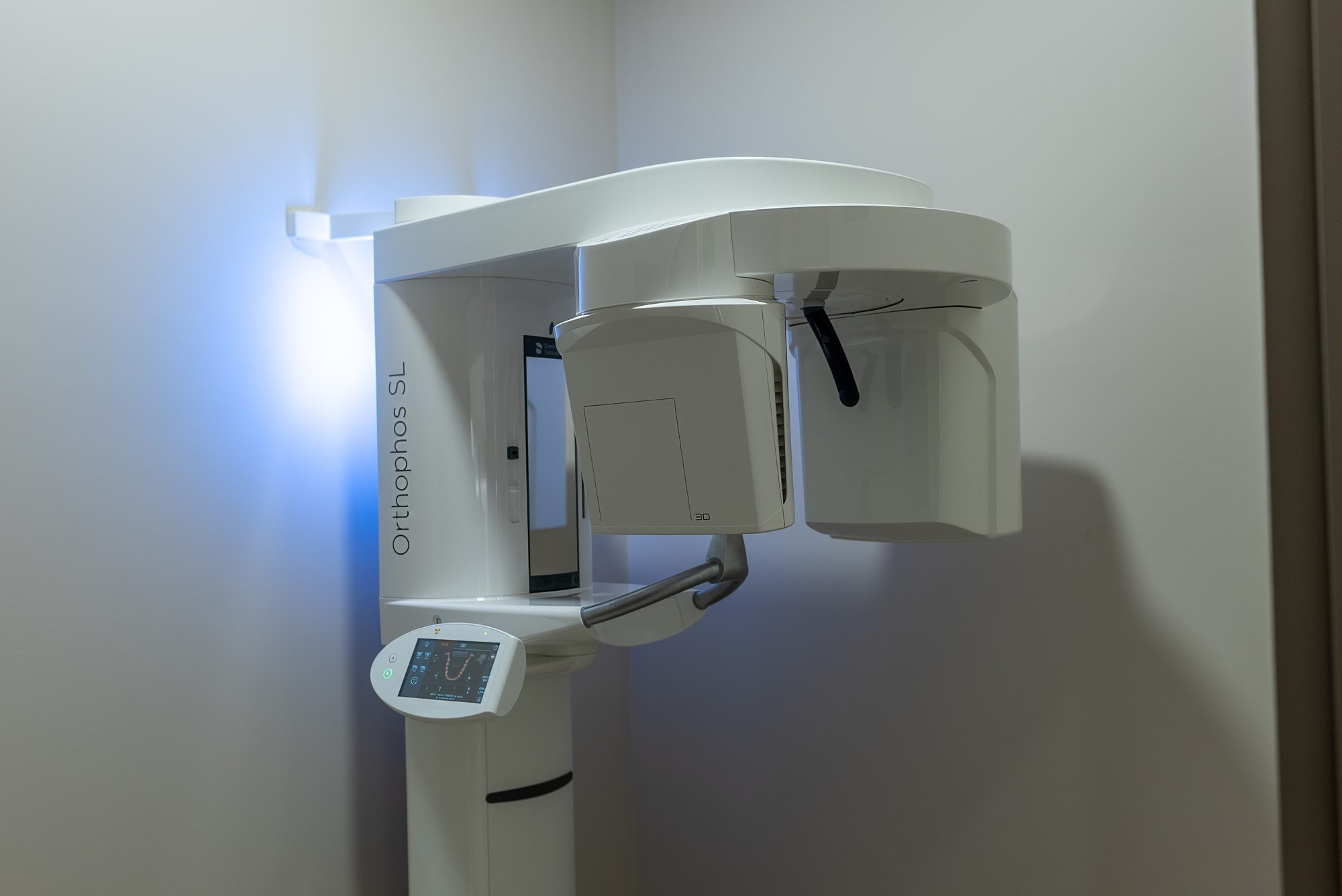
At Lumi Dental in Melrose Park, a dentist takes your history, examines your teeth, gums and jaw joint, and takes a 3D X-ray and intraoral scan in house to plan the implant position. See the technology used at Lumi Dental. Appointments can be booked longer, with breaks and a bite block.
The oral health therapists provide cleans and gum therapy. The team at Lumi Dental writes to your GP, rheumatologist or geneticist before planning surgery, and complex cases, including vascular or periodontal EDS, may be referred to a registered specialist.

Questions patients ask
Can you get dental implants if you have Ehlers-Danlos syndrome?
Often, yes, particularly with hEDS, HSD or classic EDS. The published cases are few but mostly successful. Vascular and periodontal EDS need input from the treating specialist first.
Do dental implants fail more often with hypermobility?
There is no reliable failure rate, because the research covers very few people. A small Norwegian series lost no implants, while one family with periodontal EDS had implant problems in all three people.
Will local anaesthetic work for my implant surgery?
It usually can, with planning. Tell the dentist if numbing has failed before, so extra time, careful checks and top-ups are built in.
Can my jaw dislocate during implant surgery?
It is a risk if the mouth is held wide for a long time, which is why a bite block, breaks and shorter visits are used. Tell the dentist if your jaw has slipped or locked before.
How do I look after an implant if my gums are fragile?
Use a soft brush with a gentle technique, clean around the implant daily and keep regular maintenance visits. Report bleeding or swelling early.
Considering an implant? Complimentary implant consult in Melrose Park
If you live with hEDS, HSD or another type of EDS and are thinking about replacing a missing tooth, the team at Lumi Dental can check your jaw joint and gums, take 3D scans and plan visits around what your body needs. Contact Lumi Dental to book a complimentary implant consult, or read more about dental implants in Melrose Park. Patients visit from Ryde, Parramatta, Ermington and Rydalmere, with on-site parking at Melrose Central.
Sources
- The International Journal of Prosthodontics (Jensen JL, Storhaug K): Dental implants in patients with Ehlers-Danlos syndrome, a case series study (PubMed)
- Clinical Oral Implants Research (Rinner A and colleagues): High risk of peri-implant disease in periodontal Ehlers-Danlos syndrome, a case series (PMC)
- Journal of Dental Anesthesia and Pain Medicine (Schubart JR and colleagues): Resistance to local anesthesia in people with the Ehlers-Danlos syndromes presenting for dental surgery (PMC)
- The Ehlers-Danlos Society: Vascular EDS (vEDS)
About the author
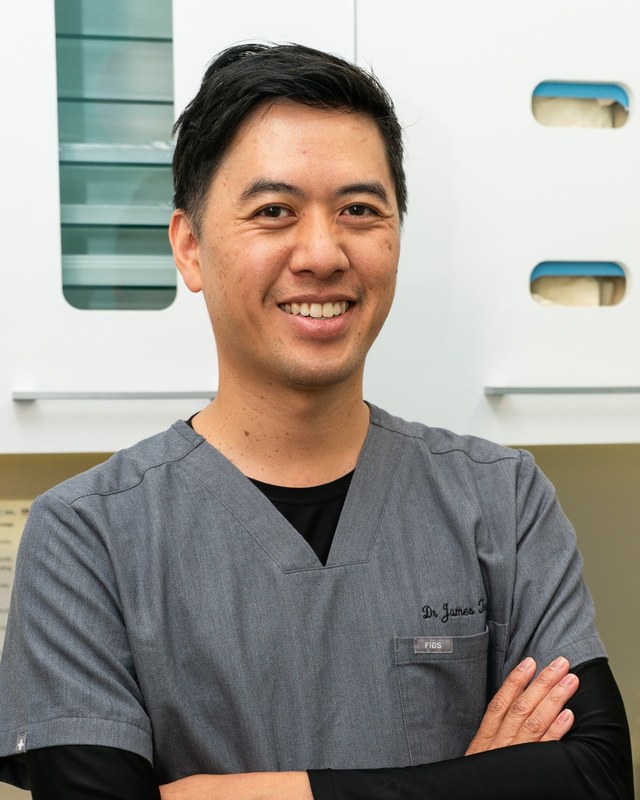
Dr James Tran is a general dentist at Lumi Dental in Melrose Park. He holds a BDent from the University of Sydney and a Graduate Diploma in Oral Implants, and is a Member of the International Congress of Oral Implantologists (MICOI).
This article is general information only and is not a substitute for an examination and individual advice from a registered dental practitioner. Suitability for any treatment varies from person to person.







