

Multiple sclerosis does not usually rule out dental implants, but the plan works best when surgery is timed for a stable period and the new teeth are chosen so you can clean them on your worst day, not your best. MS Australia reports that more than 37,000 Australians live with MS, most often diagnosed between the ages of 20 and 40. Dental implant planning with multiple sclerosis starts with your neurologist's view, then looks at your medicines, energy and hands.
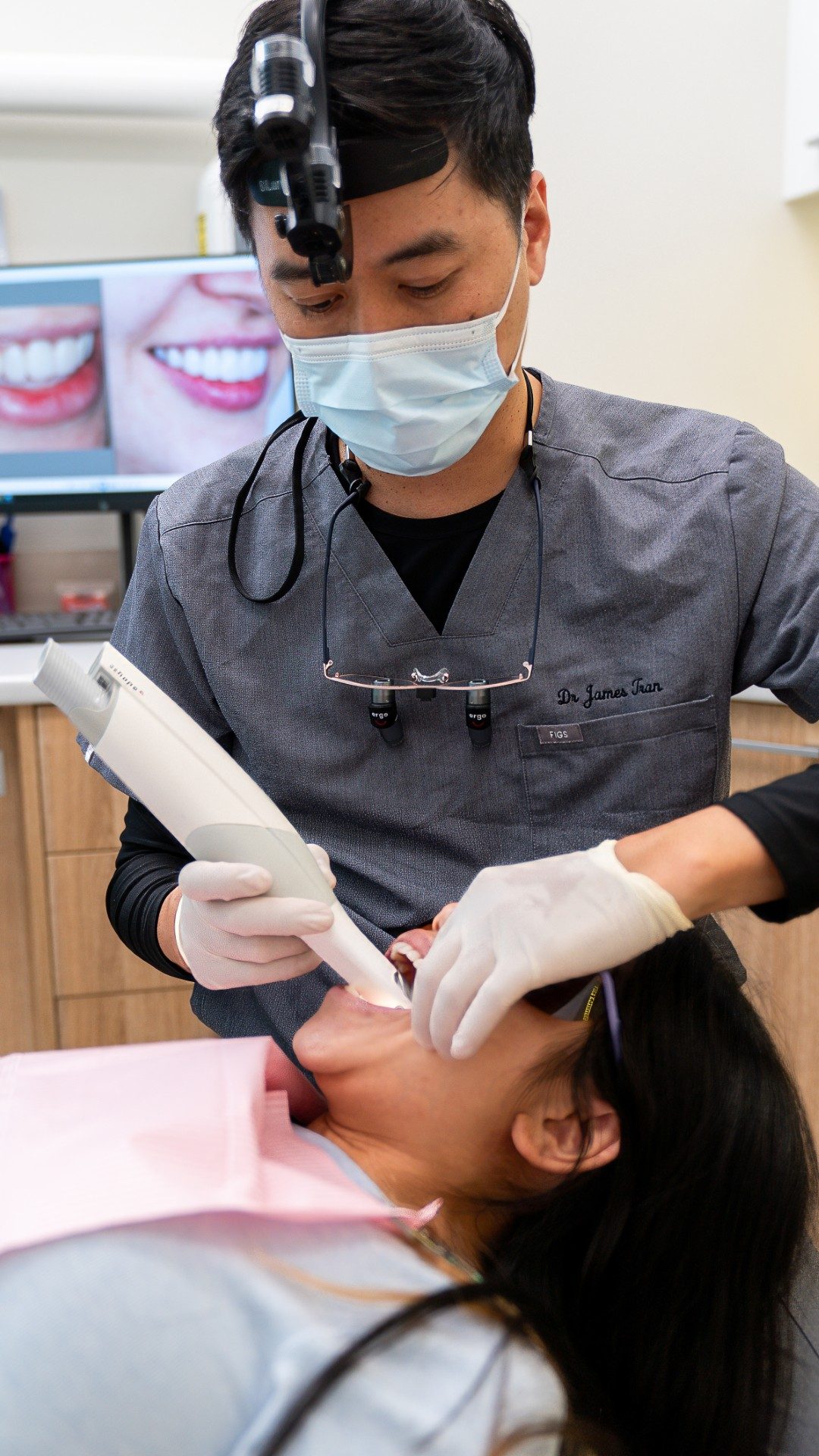
Written by Dr James Tran, BDent (University of Sydney), MICOI, GradDip (Oral Implants), general dentist at Lumi Dental in Melrose Park.
The short version
- MS on its own is not a reason to avoid implants, but published research is limited to a few case reports.
- The single rule: plan surgery for a stable stretch, not during a relapse or soon after a course of steroids, and choose teeth you can clean with the hands you have on a bad day.
- Some disease-modifying therapies lower the body's defences more than others. Your neurologist advises on timing; the dentist never stops or changes an MS medicine.
- Heat can temporarily worsen MS symptoms, so a cool room, short visits and breaks help.
- Everyday brushing, dry mouth and appointment timing with MS are covered in our guide to dental visits and daily oral care with multiple sclerosis; this article is about replacing teeth.
MS in one paragraph, and why it matters for implants
MS Australia describes multiple sclerosis as a condition in which the body's immune system damages myelin, the fatty coating that insulates nerves, so messages between the brain and the body travel less reliably. Symptoms vary widely and can include changes in hand and arm function, numbness, pain, vision changes and fatigue. For implants, three things stand out: the condition can flare, some MS medicines affect the immune system, and hand function and energy can change. None of these stops an implant bonding to bone, but each changes how treatment is timed and cared for.
The single rule: a stable period, and teeth for your hands on a bad day
If your MS has been settled and your neurologist is comfortable with a planned procedure, start with a full implant assessment. If you are in a relapse, have just finished steroids, or your treatment is being reviewed, start with your neurologist and come back once things settle.
Then choose the type of tooth replacement with your hands in mind. In my experience, the implant that causes trouble years later is rarely the one that failed to heal. It is the one that became hard to clean when grip, fatigue or vision changed.
Relapses, steroids and timing
MS Australia defines a relapse as new neurological symptoms, or a significant worsening of existing ones, lasting at least 24 hours and separated from the previous relapse by at least 30 days. If a relapse is significantly affecting daily life, a short course of corticosteroids may be suggested, as tablets or through a drip.
Steroids matter for surgery. The Better Health Channel lists susceptibility to infections among the common side effects of corticosteroids, notes that long-term or high-dose use can thin the bones, and includes slow healing among the effects of high cortisol levels. A short course is not long-term use, but it is sensible to let the body settle first; how long to wait is a question for your neurologist. Our article on dental implants with autoimmune conditions or long-term steroids covers longer steroid use in more detail.
MS Australia also lists infection, recent surgery and overheating as things that can worsen symptoms without being a true relapse, one more reason to keep surgery short, cool and clean.
Disease-modifying therapies and infection risk
MS Australia reports that around 62% of people with MS use a disease-modifying therapy, and that there are now 15 of these medicines available in Australia. A commentary in Annals of Translational Medicine summarised a Swedish register study of 6,421 people with MS. People treated with rituximab had the highest rate of serious infection (infection needing a hospital stay), while those on interferon beta or glatiramer had the lowest.
That research looked at infections in general, not implants, so it guides the questions rather than predicting anything. The team asks which therapy you take, when your last dose or infusion was, and whether your neurologist wants surgery timed within your treatment cycle. The neurologist advises on any medicine decision. Never stop or change an MS medicine because of a dental plan.
Heat, fatigue and comfort in the chair
Heat sensitivity
MS Australia describes heat sensitivity, also called Uhthoff's phenomenon, as a temporary, reversible worsening of existing symptoms after the body warms up, from hot weather, exercise, fever, saunas or hot tubs. For some people a rise of only 0.2 to 0.5 degrees in body temperature is enough. Symptoms usually settle once you cool down.
For surgery that means a cool room, a cold drink beforehand if allowed, light clothing, and telling the team early if you feel warm or tired.
Fatigue and appointment length
I usually suggest booking implant surgery for the time of day you feel strongest and splitting longer treatment into shorter visits.
Positioning, transfers and spasticity
Lying flat can be uncomfortable with stiffness or spasms and can make swallowing harder. Mention any help you need getting into the chair, whether you prefer to sit more upright, and which positions set off spasms. Short breaks to change position are reasonable.
| MS factor | What it changes in implant planning |
|---|---|
| Relapse | Elective surgery is postponed until the relapse has settled and your neurologist agrees |
| Recent steroid course | A gap before surgery, with timing advised by your neurologist; closer review of healing |
| Fatigue | Morning or best-energy bookings, shorter visits, planning steps spread out |
| Heat sensitivity | Cool room, cold drink if allowed, breaks, early warning if you feel warm |
| Reduced hand function | Teeth chosen for easy cleaning, larger-handled brushes, easy-grip overdenture attachments |
| Swallowing difficulty | More upright position, frequent suction, small parts managed carefully |
| Medicines that lower immunity | Surgery timed with your neurologist, careful infection control and follow-up |
What the research says about implants in MS
Evidence on implants in people with MS is limited. A case report in the Journal of Advanced Periodontology and Implant Dentistry describes a 70-year-old man with relapsing-remitting MS who had four implants supporting a bar overdenture in the upper jaw and two implants holding a lower overdenture. The design was chosen for stability, less surgery, cost and ease of cleaning. After three years the bone around the implants was stable, although plaque and gum inflammation reflected fair cleaning and continued smoking.
The author notes finding only one earlier case report of implants in MS, without long-term follow-up, and recommends maintenance visits every three months. One person is a very small sample, so the report is encouraging but cannot predict results more widely.
Fixed teeth or an overdenture: choosing by hand function
Fixed implant crowns and bridges are cleaned in place with small brushes, floss threaders or a water flosser, which takes fine finger control. An implant overdenture comes out and can be brushed over a basin with a large-handled brush. For many people with weaker grip or tremor, that is easier, as long as the attachments are easy to clip in and out. Our article on implant-retained overdentures explains how the different attachments work.
Many people prefer the idea of fixed teeth, and for some that is the right choice. The useful test: can you clean this design on a tired day, and can someone help if your hands change? If a fixed bridge is the plan, our guide to cleaning a full-arch implant bridge at home shows the tools involved.
When facial pain is not the implant
Trigeminal neuralgia can cause sharp, electric-shock pains in the jaw and teeth in some people with MS. It is a nerve problem, not an implant problem, and an implant will not cause or cure it. Our article on MS, dry mouth and facial pain explains how the two are told apart.
How we approach this at Lumi Dental
At Lumi Dental in Melrose Park, a dentist reviews your medical history, MS medicines and recent relapses, examines your teeth and gums and takes a 3D X-ray in house to measure the bone. The team at Lumi Dental writes to your GP or specialist before planning surgery. After treatment, the oral health therapists help with maintenance visits and show you or a carer how to clean around the implants. IV sedation is available at the practice after medical review; Lumi Dental does not provide general anaesthetic itself and refers where it is needed. Read more about dental implants at Lumi Dental.
Questions patients ask
Can you get dental implants if you have MS?
Usually, yes. MS alone is not a reason to avoid implants, but surgery is best planned for a stable period with your neurologist's input. The research is limited to a few case reports.
Do I need to stop my MS medicine before implant surgery?
No, not on a dentist's advice. Some therapies affect infection risk, so your neurologist may suggest timing surgery around your dose or infusion, and that decision belongs to them.
Can I have implant surgery during a relapse?
Elective implant surgery is usually postponed until a relapse has settled. Urgent pain or swelling can still be treated.
Can I be sedated for implant surgery with MS?
Often, yes, after a medical review of your medicines, swallowing and breathing. Our article on IV sedation for dental implant surgery explains what the day involves, and you can read about IV sedation at Lumi Dental.
Is an overdenture easier than fixed implant teeth if my hands are weak?
Often it is, because it comes out and can be brushed over a basin with a large-handled brush. The attachments need to be easy to grip, so try them at the planning stage.
Considering an implant? Complimentary implant consult in Melrose Park
If you live with MS and are thinking about replacing missing teeth, the team at Lumi Dental can examine your mouth and work with your neurologist on timing and a design you can look after. Contact Lumi Dental to book a complimentary implant consult, or read more about dental implants in Melrose Park. Patients visit from Ryde, Parramatta, Ermington and Rydalmere, with on-site parking at Melrose Central.
Sources
- MS Australia: Heat sensitivity
- MS Australia: Managing a relapse
- PMC: Full-mouth rehabilitation with implant-supported overdentures in a heavy smoker with multiple sclerosis, a 3-year follow-up case report
- PMC: Disease modifying therapies and infection risks in multiple sclerosis, a decision-making conundrum
About the author

Dr James Tran is a general dentist at Lumi Dental in Melrose Park. He holds a BDent from the University of Sydney and a Graduate Diploma in Oral Implants, and is a Member of the International Congress of Oral Implantologists (MICOI).
This article is general information only and is not a substitute for an examination and individual advice from a registered dental practitioner. Suitability for any treatment varies from person to person.







