

To clean a full-arch implant bridge at home, brush every surface you can see twice a day with a soft brush, then clean the two places you cannot see, the gap under the bridge and the collar of gum around each implant post, with a water flosser and a floss with a stiff threader, every night without fail. The bridge itself cannot decay, but the gum and bone under it can become inflamed: a review in the British Dental Journal reported that around 45 per cent of implant patients may develop peri-implant mucositis and around 20 per cent peri-implantitis, the stage with bone loss. Brushing alone has been estimated to remove only around 60 per cent of plaque.
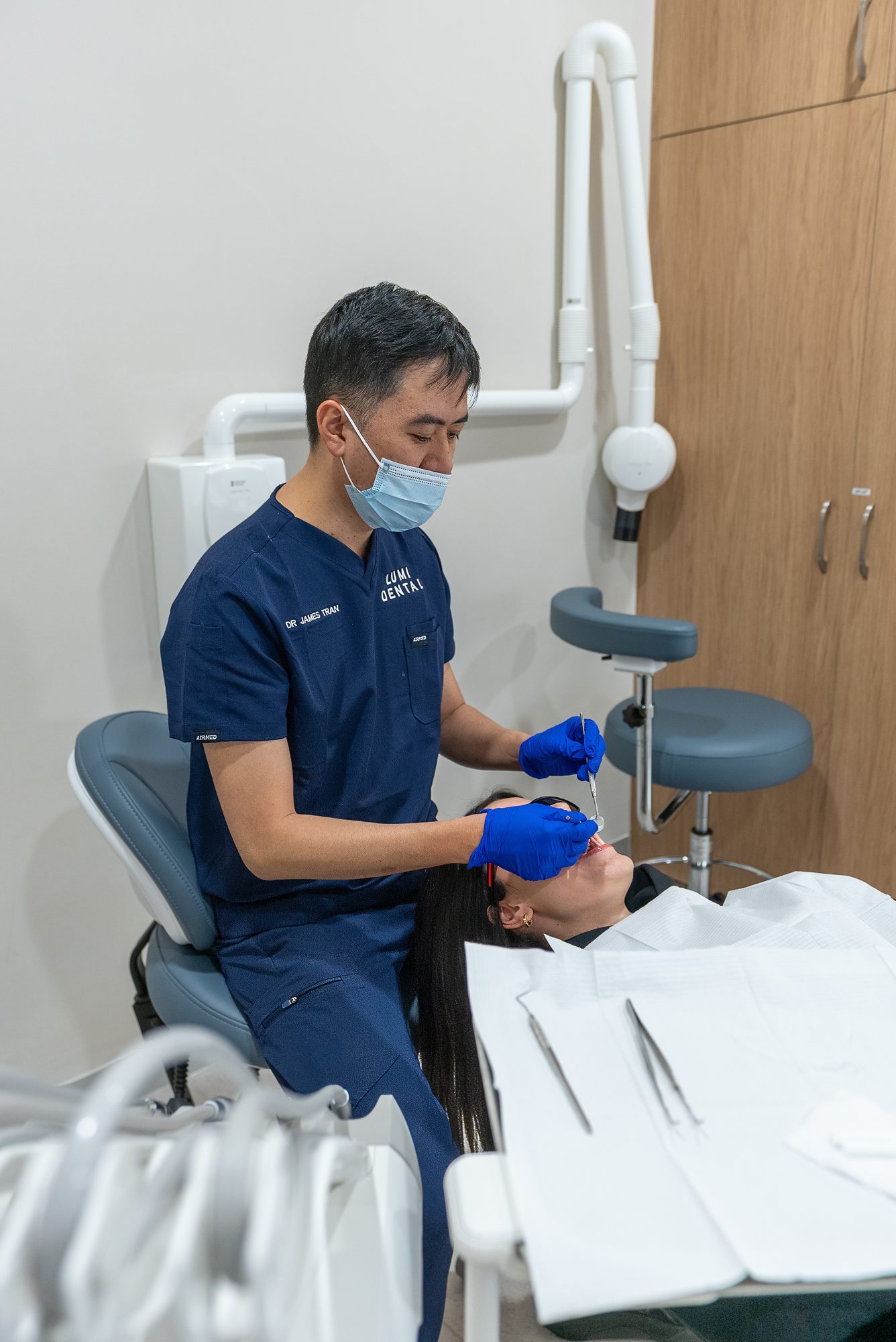
Written by Dr James Tran, BDent (University of Sydney), MICOI, GradDip (Oral Implants), general dentist at Lumi Dental in Melrose Park.
The short version
- A fixed full-arch bridge has two trouble zones, the underside and the gum around each implant, and a toothbrush reaches neither.
- Tools that work: a soft toothbrush, a water flosser on low to medium, super floss under the bridge, a small sulcus brush and coated interdental brushes.
- Avoid metal toothpicks, hard bristles, gritty toothpastes and long courses of chlorhexidine, which stains the bridge.
- Bleeding, a bad taste or smell, swelling or food packing that will not shift are reasons to book a review.
- Professional cleans at least twice a year. The basics for any implant are in our guide to cleaning dental implants at home.
Why a full-arch bridge is harder to clean than teeth
A full-arch implant bridge is one piece, a row of teeth and a strip of pink gum-coloured material, screwed onto four to six implants. All-on-4 is a treatment concept trademarked by Nobel Biocare; the full-arch service at Lumi Dental is called All-on-X because the number of implants is chosen case by case. The bridge rests on the gum, leaving a shallow space under it where plaque and fine food particles collect.
The second zone is the gum around each post. An implant has a weaker cuff of gum than a natural tooth, and the Australian Dental Association notes that implants cannot decay but can be affected by gum disease. Peri-implant mucositis is the reversible stage; peri-implantitis adds bone loss and can loosen the implant.
The single rule: clean under the bridge every night, not just the top of it
Brushing the teeth of the bridge makes it look clean and does almost nothing for the gum under it, so the evening routine is built around the water flosser and the floss, with brushing as the finish. Patients I see who get into strife with a full-arch bridge are rarely the ones who skip brushing; they are the ones who brush beautifully and never go underneath.

The tools, and what each one is for
The British Dental Journal review lists the kit most clinicians recommend: angled-neck implant toothbrushes, single-tuft brushes, interdental brushes, spongy floss with a stiffened end, water flossers and mouthrinses. It notes that water flossers are particularly helpful around implants with limited access, citing a trial in which one reduced bleeding around implants by about 82 per cent against about 33 per cent for string floss. A systematic review found every interproximal device helped, though the evidence is thin.
| Tool | Where it works | How to use it | Watch out for |
|---|---|---|---|
| Soft or powered toothbrush | Teeth of the bridge and the pink margin | Twice daily, bristles angled into the join between bridge and gum | Hard bristles scratch acrylic |
| Water flosser | The underside and around every post | Low to medium pressure, tip at the gum line, both sides | High pressure can strip the gum cuff from the implant |
| Super floss or floss on a threader | The underside, post by post | Thread the stiff end under, draw the spongy section through, wipe around each post | Fraying floss can leave fibres on rough implant threads |
| Interdental brush, coated wire | Gaps between posts if space allows | A size that passes with light resistance | Bare wire scratches titanium; never force it |
| Sulcus or single-tuft brush | The line where bridge meets gum | Small circles along the margin, both sides | Replace when the tuft splays |
| Alcohol-free rinse | Whole mouth, as a finish | Swish after the evening clean | Chlorhexidine stains; short courses only |
Our step-by-step guides to using a water flosser and to floss threaders and super floss cover the technique.
A two-minute morning and a five-minute evening routine
Morning: two minutes
Brush the bridge inside and out with a soft brush and a low-abrasion toothpaste, angling the bristles into the pink margin, and give the water flosser a quick pass if there is time.
Evening: five minutes, in this order
- Water flosser first. Lean over the basin, tip at the gum line on a low to medium setting, and trace the arch slowly along the cheek side, pausing at each post, then the tongue side.
- Floss under the bridge. Thread the stiff end of a super floss under the bridge beside a post, pull the spongy section through, hug the post and wipe along the underside, gap by gap.
- Sulcus or interdental brush. Run the sulcus brush along the margin where the bridge meets the gum, and a coated interdental brush through any gap wide enough.
- Brush. Two minutes, soft brush, every surface, bristles into the margin.
- Rinse. An alcohol-free rinse to finish.
In my experience the routine takes closer to ten minutes for the first fortnight and settles to five once your hands know the posts.

What to avoid
- Metal toothpicks or improvised tools under the bridge; they scratch titanium and gouge acrylic, and a scratched surface holds plaque.
- Hard-bristled brushes and gritty whitening toothpastes, which dull the bridge surface.
- High pressure on the water flosser. The clinician protocol we cite recommends medium or low, because the high setting may separate the gum attachment from the implants.
- Chlorhexidine rinses beyond a short course. The British Dental Journal review lists staining, a burning feeling and altered taste as the common complaints, and the clinician protocol notes staining of the bridge itself. Use it when prescribed, for the period advised.
- Alcohol-based mouthwashes, which sting inflamed gum.
Signs of trouble, and what to do about them
A healthy bridge has pale pink gum around each post, no bleeding when you floss and no smell on the floss. Bleeding when you clean is the earliest sign of peri-implant mucositis, which the British Dental Journal review describes as clinically manageable; it often settles once the underside is cleaned properly every night. A persistent bad taste, a smell on the floss, food packing that returns within an hour of eating, redness, pus, or a bridge that feels different when you bite are reasons to book rather than scrub harder. If bone loss has started, our guide to peri-implantitis treatment explains what happens next.
The professional side: hygiene visits and when the bridge comes off
Home care does not remove hardened deposits around the posts. The Australian Dental Association recommends regular check-ups and professional cleans with a dentist, hygienist or oral health therapist, and the British Dental Journal review cites a systematic review suggesting supportive care visits no further apart than five to six months. The clinician protocol we cite sees full-arch patients at least twice a year and removes the bridge only when needed: when the patient cannot clean under it, when deposits cannot be reached, when there is pus or suspected peri-implantitis, or when the bridge is loose or damaged. The screws may need replacing each time, so cleaning in place is preferred.
I ask patients to bring their floss and water flosser tip to each visit and show how they use them; disclosing solution, a harmless dye that stains plaque, shows in seconds where the routine falls short.
How we approach this at Lumi Dental
At Lumi Dental in Melrose Park, the full-arch service is All-on-X, planned by a dentist using the 3D X-ray and intraoral scan taken in house. Once a bridge is in place, the dentist examines the implants and the bridge at reviews and decides whether it needs to come off for cleaning, while the hygiene team of oral health therapists looks after the cleans, marks missed spots with disclosing solution and provides gum therapy where needed. The All-on-X full-arch implants page describes the treatment.
Questions patients ask
How do you clean under an All-on-4 bridge?
With a water flosser along the gum line and super floss passed under the bridge at each post, every night. All-on-4 is a Nobel Biocare trademark, and the cleaning is the same for any fixed full-arch bridge. Our article on the difference between All-on-X and All-on-4 explains the naming.
Why does my implant bridge smell?
Usually because food and plaque are sitting under the bridge or around a post where the brush does not reach, and the bacteria there produce sulphur gases. A week of thorough evening cleaning usually clears it; a smell that persists, or comes with bleeding, needs a review.
Is a water flosser enough for a full-arch bridge?
It is the most useful single tool, and research reported bigger reductions in bleeding around implants with an irrigator than with string floss, but it does not scrub. Floss under the bridge adds the wipe that water cannot give. Use both.
Does a zirconia bridge need less cleaning than an acrylic one?
No. Zirconia tends to resist stain better, but plaque collects under any bridge regardless of material. The routine is the same; what differs is how the bridge wears and is repaired, which our comparison of zirconia and acrylic full-arch bridges covers.
How often should a full-arch implant bridge be professionally cleaned?
At least twice a year for most people, and more often if the gum has been inflamed before. The dentist decides at reviews whether the bridge should come off for a thorough clean underneath.
Full-arch implant care and planning: complimentary implant consult in Melrose Park
If you have a full-arch bridge and want your cleaning routine checked, or you are weighing up full-arch treatment and want to understand the upkeep, the team at Lumi Dental in Melrose Park can go through it at a complimentary implant consult. Contact Lumi Dental to book, or read about All-on-X full-arch implants and dental implants at the practice. Patients visit from Ryde, Parramatta, Ermington, Rydalmere and nearby suburbs.
Sources
- Teeth.org.au (Australian Dental Association): Dental implants
- PMC (British Dental Journal): Maintenance of peri-implant health in general dental practice
- PMC (International Journal of Implant Dentistry): Optimizing implant hygiene, the added value of interproximal cleaning devices around implant-supported restorations, a systematic review and meta-analysis
- DentistryIQ: Hygiene protocol for full-arch All-on-4 fixed bridges
About the author

Dr James Tran is a general dentist at Lumi Dental in Melrose Park. He holds a BDent from the University of Sydney and a Graduate Diploma in Oral Implants, and is a Member of the International Congress of Oral Implantologists (MICOI).
This article is general information only and is not a substitute for an examination and individual advice from a registered dental practitioner. Suitability for any treatment varies from person to person.








