

With arthritis in your hands, the best choice between dentures, an implant overdenture and fixed implant teeth is usually the one you can still take out, put in and clean on a bad hand day, because each option asks something different of your fingers. Arthritis is common: the Australian Institute of Health and Welfare estimates that around 3.7 million people in Australia live with it, and about half of people aged 75 and over. This guide covers dentures and dental implants with arthritis in the hands, and the aids that can help.
Written by Dr James Tran, BDent (University of Sydney), MICOI, GradDip (Oral Implants), general dentist at Lumi Dental in Melrose Park.
The short version
- Dentures need a firm hold to remove and a steady hand to clean; partials add small clasps.
- Implant overdentures stay put better but can need a firm pull to unclip.
- Fixed implant teeth never come out at home, so the work moves to cleaning underneath them.
- Try each task in the chair before you decide, ideally on a day when your hands are stiff.
- Thicker handles, a towel in the basin and a carer can help. If your eyesight is also changing, our guide to dentures and implants with low vision covers cleaning by touch.
- Keep taking your arthritis medicines as your doctor prescribes, and bring the list to your consult.
How arthritis in the hands changes denture and implant care
According to the AIHW, around 2.1 million people in Australia live with osteoarthritis and around 514,000 with rheumatoid arthritis. Musculoskeletal Health Australia notes that osteoarthritis most often affects the wrist, the finger joints and the base of the thumb, and that pain at the thumb base can make gripping or pinching difficult. Rheumatoid arthritis often starts in the small joints of the hand or wrist and usually affects both sides, so swapping to the other hand may not help.
Those are the movements dentures and implants rely on: a pinch to remove a lower denture, a grip on a wet denture while brushing, and fine control under a fixed bridge. Rheumatoid arthritis also has links with gum health, which our article on rheumatoid arthritis and gum disease explains, so cleaning matters even more around natural teeth and implants.
The single rule: choose teeth you can handle on a bad hand day
If arthritis affects your hands, start by testing the daily tasks, not by choosing the teeth. Removing and seating a denture, unclipping an overdenture, and threading floss or a brush under a fixed bridge each need a different grip and a different amount of strength. Try each one in the chair before you commit.
In my experience, morning is often the hardest time: stiffness tends to be worst just when the denture needs to go in.
Full and partial dentures with sore fingers
Taking a denture out
An upper denture is held by suction, so breaking the seal at the back is usually easier than pulling straight down. Pushing up on the front teeth with your thumb, or puffing your cheeks, can let air in. A lower denture often lifts out by its front teeth with a gentle rocking movement. If pinching is painful, tell the dentist, because the fit and edges can sometimes be adjusted.
Cleaning without dropping it
NSW Health advises cleaning dentures over a sink of water or a towel to reduce the risk of breaking one if it is dropped, using mild liquid soap on a soft toothbrush or denture brush rather than toothpaste. Resting the denture on a folded face washer means you do not have to grip it tightly, and a soak does part of the work if brushing tires your hands.
Partial dentures, clasps and adhesive
Metal clasps can be hard to release with stiff fingertips. Lifting evenly from both sides is kinder to the clasp and your joints, and a clasp that is too tight can often be adjusted. A small amount of adhesive can steady a lower denture so you are not pressing it back through the day. Our guide to denture adhesives covers how much to use, and needing more each week usually means the fit has changed.
Implant overdentures: easier to wear, harder to unclip
An implant overdenture is a removable denture that clips onto two or more implants. It moves much less than a conventional lower denture, but the clips can need a firm pull to release.
A randomised trial in very old adults who needed help with daily activities found those given a lower overdenture on two implants were more satisfied than those who had a reline. But the stud attachments were hard for some patients and carers to handle, even with an extra-light insert, and two were changed to ball attachments. The authors noted the attachment often felt too tight, especially with arthritis or muscle weakness, and advised matching the attachment to the person's hand strength and dexterity.
That fits my experience. With many stud attachments the insert comes in different strengths, so retention can usually be turned down if unclipping is painful. Our article on implant overdenture attachments compares stud, ball and bar designs.
Fixed implant teeth: nothing to unclip, more to clean underneath
A fixed full-arch implant bridge is screwed to the implants and only the dental team removes it, so there is nothing to take out or drop. The work moves underneath, where food and plaque collect and need cleaning every day. Interdental brushes with longer or thicker handles, floss threaders and water flossers are the usual tools. A water flosser needs less fine finger movement than floss, so some people with stiff hands may find it easier, usually alongside brushes. Our guide to cleaning a full-arch implant bridge at home goes through the routine step by step.
Comparing the options for hands with arthritis
| Option | What it asks of your hands | What often helps |
|---|---|---|
| Full upper denture | Breaking the suction seal; holding a wet denture to brush | Releasing the seal at the back; brushing over a towel or a basin of water |
| Full lower denture | Pinching to remove; pressing it back down if it lifts | Rocking it out by the front teeth; a small amount of adhesive; a fit check |
| Partial denture | Releasing small clasps with the fingertips | Lifting evenly from both sides; asking for the clasps to be checked |
| Implant overdenture | A firm pull to unclip; cleaning the attachments | A lighter insert; a different attachment type; trying it in the chair |
| Fixed implant bridge | Fine control to clean under the bridge every day | Thick-handled brushes, a water flosser, regular maintenance visits |
Grips, aids and when a carer helps
Musculoskeletal Health Australia suggests avoiding a tight grip held for a long time, and using foam or sponge to increase the grip size of handles. The same idea works on a toothbrush or denture brush. Rubber squares and gloves can improve grip on smooth objects, and using two hands spreads the load. An occupational therapist or hand therapist can advise on aids, and sitting at the basin with your elbows supported can make cleaning less tiring.
When a family member or carer helps
NSW Health suggests that a carer starts with clean hands or new disposable gloves, asks the person to take the denture out or helps if needed, and looks in the mouth for cuts, redness or soreness. It also says not to adjust a denture at home. If a carer will do most of the cleaning, I usually suggest bringing them to the consult.
Medicines, flares and planning treatment
Keep taking your arthritis medicines exactly as your doctor prescribes; the dentist does not change them. What the dentist needs is a full list, including any steroids or immune medicines, so the team at Lumi Dental can write to your GP or specialist before planning surgery if that is needed. Our article on implants with autoimmune conditions or long-term steroids explains how these medicines are considered. Tell the team if arthritis affects your jaw too, because long appointments may need breaks.
How we approach this at Lumi Dental
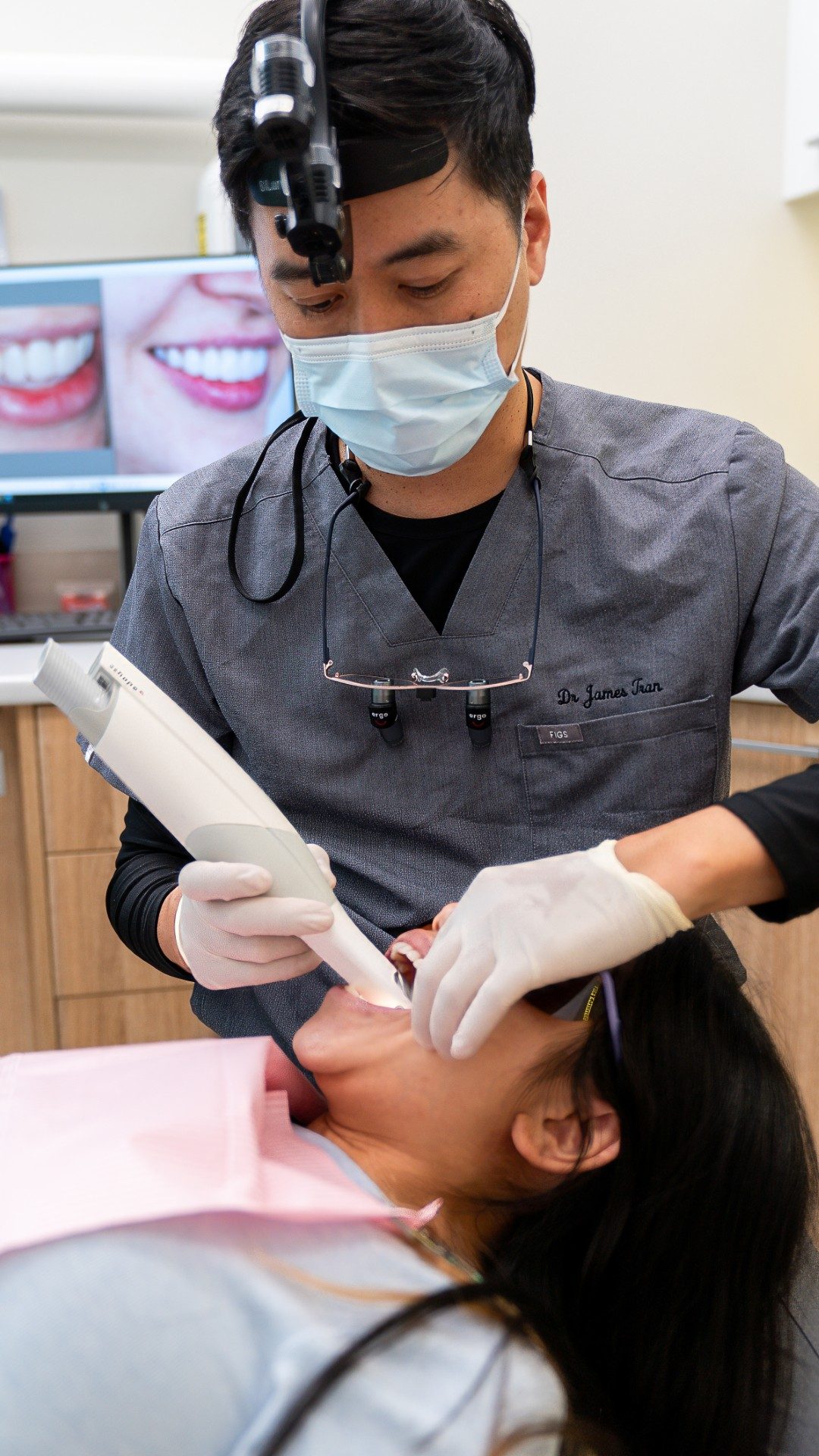
At Lumi Dental, the dentist examines your mouth, takes 3D scans and X-rays where needed, and talks through dentures, relines, implant overdentures and fixed All-on-X bridges. Before a decision, the team can watch you remove your current denture and try cleaning tools in the chair. You can read more about dental implants in Melrose Park.
The oral health therapists then help with cleaning technique and maintenance visits, and carers are welcome to come along.
Questions patients ask
Are implants better than dentures if you have arthritis in your hands?
Not always. A fixed bridge never comes out but needs careful cleaning underneath, while a denture can be easier to clean in the hand. Testing each task in the chair is the best guide.
How can I get my denture out when my fingers hurt?
Break the seal on an upper denture by pushing up at the front, and rock a lower one out by its front teeth. If it still takes a hard pinch, ask for a fit check.
Can a snap-in denture be made easier to take out?
Usually, yes. Many attachment inserts come in different strengths, so a lighter one can often be fitted. Our article on overdenture attachments explains the choices.
What toothbrush is easiest to hold with arthritis?
A thicker handle is usually easier on sore joints, and foam tubing can build up a standard brush. Some people find an electric brush easier.
Should I stop my arthritis medicine before dental implant surgery?
No, not unless your own doctor tells you to. Keep taking your medicines as prescribed and bring the list, and the team at Lumi Dental can write to your GP or specialist before surgery is planned. Our general dentists can talk it through at a check-up.
Dentures or implants with arthritis? Book a denture check or complimentary implant consult in Melrose Park
If arthritis is making your denture hard to manage, a denture check or complimentary implant consult lets you test each option with your own hands. Contact Lumi Dental to book, or read about dental implants in Melrose Park. Patients visit from Ryde, Parramatta, Ermington and Rydalmere, with on-site parking at Melrose Central.
Sources
- Australian Institute of Health and Welfare: Chronic musculoskeletal conditions, all arthritis
- Musculoskeletal Health Australia: Hand conditions and tips for joint protection
- NSW Health: Denture care, tip sheet for carers
- Journal of Dental Research (Müller, Schimmel and colleagues): Implant-supported mandibular overdentures in very old adults, a randomised controlled trial (PMC)
About the author

Dr James Tran is a general dentist at Lumi Dental in Melrose Park. He holds a BDent from the University of Sydney and a Graduate Diploma in Oral Implants, and is a Member of the International Congress of Oral Implantologists (MICOI).
This article is general information only and is not a substitute for an examination and individual advice from a registered dental practitioner. Suitability for any treatment varies from person to person.







