

If you are blind or have low vision, the denture or implant option that tends to suit best is the one you can put in, take out and clean confidently by touch every day, so it helps to hold and feel each type before you decide. Vision Australia estimates that 453,000 people in Australia are blind or have low vision. This guide looks at full and partial dentures, implant overdentures and fixed full-arch bridges from the point of view of hands rather than eyes: fitting, cleaning, sore spots and upkeep.
Written by Dr James Tran, BDent (University of Sydney), MICOI, GradDip (Oral Implants), general dentist at Lumi Dental in Melrose Park.
The short version
- No single option suits everyone. Bone, gums, hands, health and daily routine all shape the choice.
- Ask to hold a denture, an overdenture with attachments and a fixed bridge model at the consult.
- Clean removable dentures over a basin half filled with water or lined with a towel.
- Sore spots under a denture are easy to miss without sight. Pain or a rough patch is a reason to book an adjustment early.
- Fixed bridges have nothing to take out, but cleaning underneath by feel takes practice and regular maintenance visits.
- Our article on dental care tips for low vision and blindness covers brushing routes and arriving at the clinic.
The single rule: choose the option you can handle by touch
If you are deciding between a denture, an implant overdenture and a fixed bridge, start with the one you can clean and handle by touch every day. For many people that is a design with fewer separate parts and edges that are easy to find with a fingertip. For others, a fixed bridge suits better because there is nothing to line up or misplace.
A review of implant treatment in older adults in the journal Geriatrics lists visual impairment, alongside reduced manual dexterity, among the factors that can make self-care harder, and says long-term maintainability belongs in planning. In my experience, people settle best when they have tried each option in their hands before the plan is written.
Full and partial dentures by feel
Putting them in the right way round
An upper full denture has a broad, smooth plate that covers the roof of the mouth. A lower denture is a horseshoe with an open middle for the tongue. That difference is usually enough to tell them apart by touch. Partials take more practice, because each clasp sits on a particular tooth.
If you find it hard, ask whether a small tactile marker, such as a raised dot or notch on one side, could be added when the denture is made. The dental team can say whether it suits your denture. Practising at the fitting visit, with your fingers on each clasp as it seats, helps many people learn the path in.
Cleaning without dropping or bending
Better Health Channel suggests cleaning dentures over a hand basin half filled with water or covered with a towel, so they will not break if dropped, and brushing all surfaces with a denture brush and mild soap and water, because toothpaste can scratch. It warns not to hold a lower denture at its ends, since the U shape can snap, and never to use hot water, which can change the fit.
- Choose a case that opens with one hand and has a lid you can feel click shut.
- Run a fingertip over the fitting surface after brushing. A slippery film means it needs another pass.
Our guide to denture cleaning tablets, soaks and brushing explains what each product does.
Sore spots you cannot see
Better Health notes that dentures can press on the gums and cause a sore spot, and that you should return to your clinic as soon as possible for an adjustment. Without sight, the first sign is usually tenderness when chewing, a rough patch your tongue keeps finding, or a denture that suddenly feels different. Book in rather than waiting.
Implant overdentures: lining up the attachments by feel
An implant overdenture is a removable denture that clips onto two or more implants. It is steadier than a conventional denture, but you still take it out to clean it and the implants.
Clicking it in
Each attachment has a part on the implant and a matching part inside the denture. Without sight, you learn where the denture wants to sit, then press evenly until you feel it click. A review of attachment systems in Cureus notes that magnet-retained overdentures have a degree of self-location over short distances, reducing the need for precise placement, though magnets are generally the least retentive option and tend to need more maintenance. Our article on overdenture attachments: studs, balls and bars compares the trade-offs.
Cleaning and replacing the inserts
The parts on the implants sit slightly above the gum, so you can find each one with a fingertip and brush around it in the same order every time. Many stud attachments grip with a small nylon insert that wears. The Cureus review describes periodic replacement, mostly done chairside, with reviews every three to four months in the first year and about six-monthly once stable. A denture that starts to lift when you speak often needs a new insert.
A study that followed older adults with lower overdentures on two implants for 20 years found almost all of those who completed it still brushed their implants and overdenture independently.

Fixed full-arch bridges: nothing to remove, more to clean underneath
A fixed full-arch bridge is screwed onto several implants, and only the dental team takes it off. For some people that is the appeal. The trade-off is that plaque collects underneath, against the gum, where a normal brush does not reach.
Cleaning under a bridge by feel usually means a water flosser along the gum line and interdental brushes slipped through the gaps near each implant. I usually suggest practising with the oral health therapist guiding your hand until the angles feel familiar. Our guide on how to clean a full-arch implant bridge at home sets out a nightly order to learn by routine.
Lumi Dental's full-arch service is called All-on-X full-arch implants, and our comparison of dentures and All-on-X explains how bone and upkeep shape the choice.
Comparing the options by touch
| Option | Handling by touch | Daily cleaning | Upkeep visits |
|---|---|---|---|
| Full denture | Upper and lower feel different; one piece each | Out to clean over water or a towel; brush gums too | Adjustments for sore spots; relines as gums change |
| Partial denture | Clasps must seat on the right teeth | Clean the denture and the teeth it touches | Checks on clasps and remaining teeth |
| Implant overdenture | Attachments to line up; some designs self-locate | Out to clean; brush around each abutment | Insert changes and regular reviews |
| Fixed full-arch bridge | Nothing to put in or take out | Water flosser and interdental brushes underneath | Professional maintenance, sometimes with the bridge removed |
| Single implant crown | Feels like a tooth | Brush and clean between like a natural tooth | Regular check-ups and cleans |
Information you can use, and choosing how the teeth look
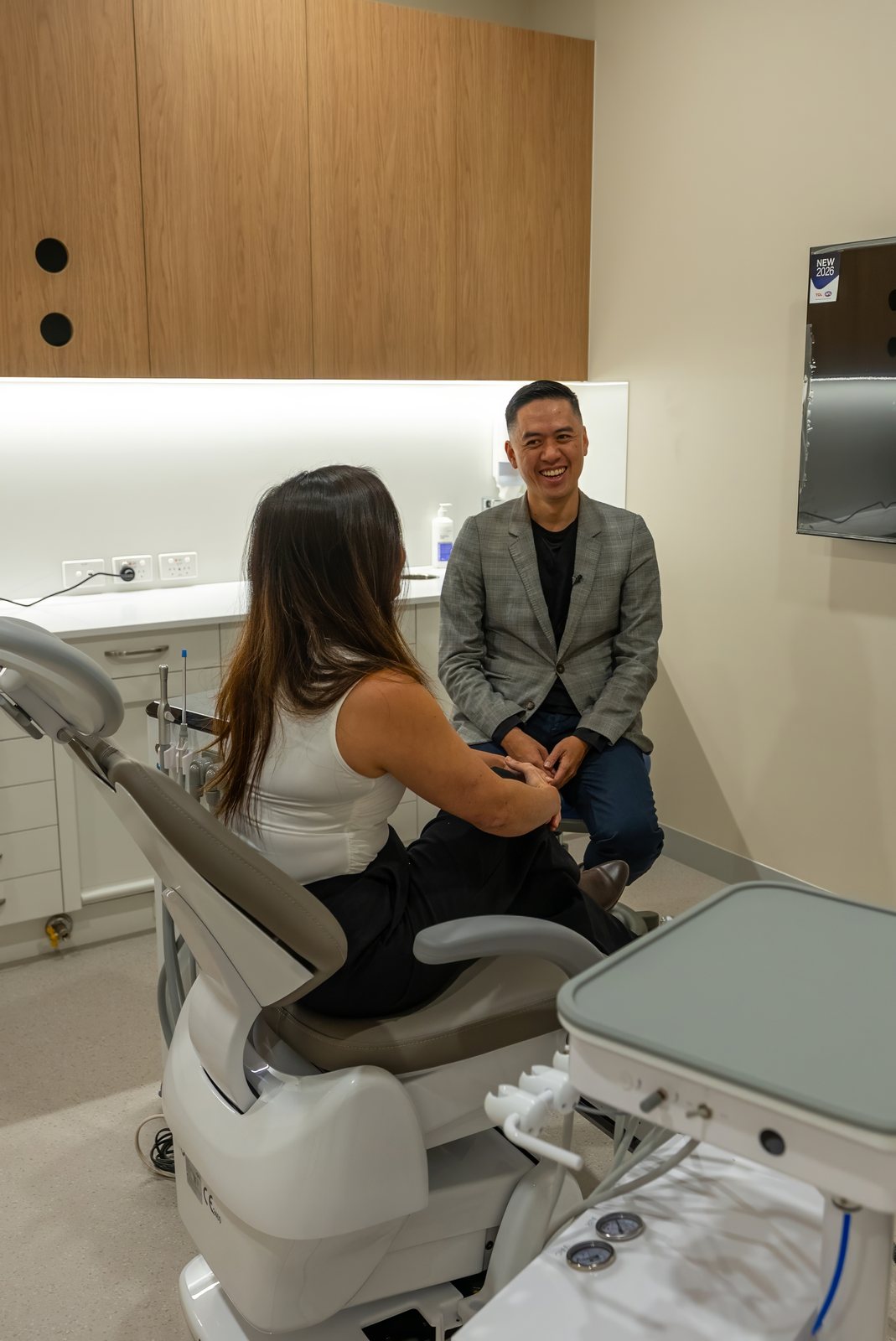
Ask for treatment plans and aftercare in a format that works for you: large print, an emailed copy that reads well with a screen reader, or permission to record the explanation on your phone. A support person is welcome, and the dentist will still speak to you directly.
Shade and tooth shape are usually chosen by eye, so ask for them in words: what the shade is close to, how it compares with any natural teeth, and how the length changes your lip line. A trusted friend can give a second opinion, but the decision stays yours.
Eye conditions, diabetes and planning
Vision Australia lists macular degeneration, cataracts and glaucoma among common eye conditions linked with low vision, and describes diabetic retinopathy as a complication of diabetes that damages blood vessels in the retina. If diabetes is part of your history, the implant team will ask about glucose control, because it affects healing, and can write to your GP or specialist before planning surgery. If your sight is still changing, a design that can be adapted later may be worth discussing.
How we approach this at Lumi Dental
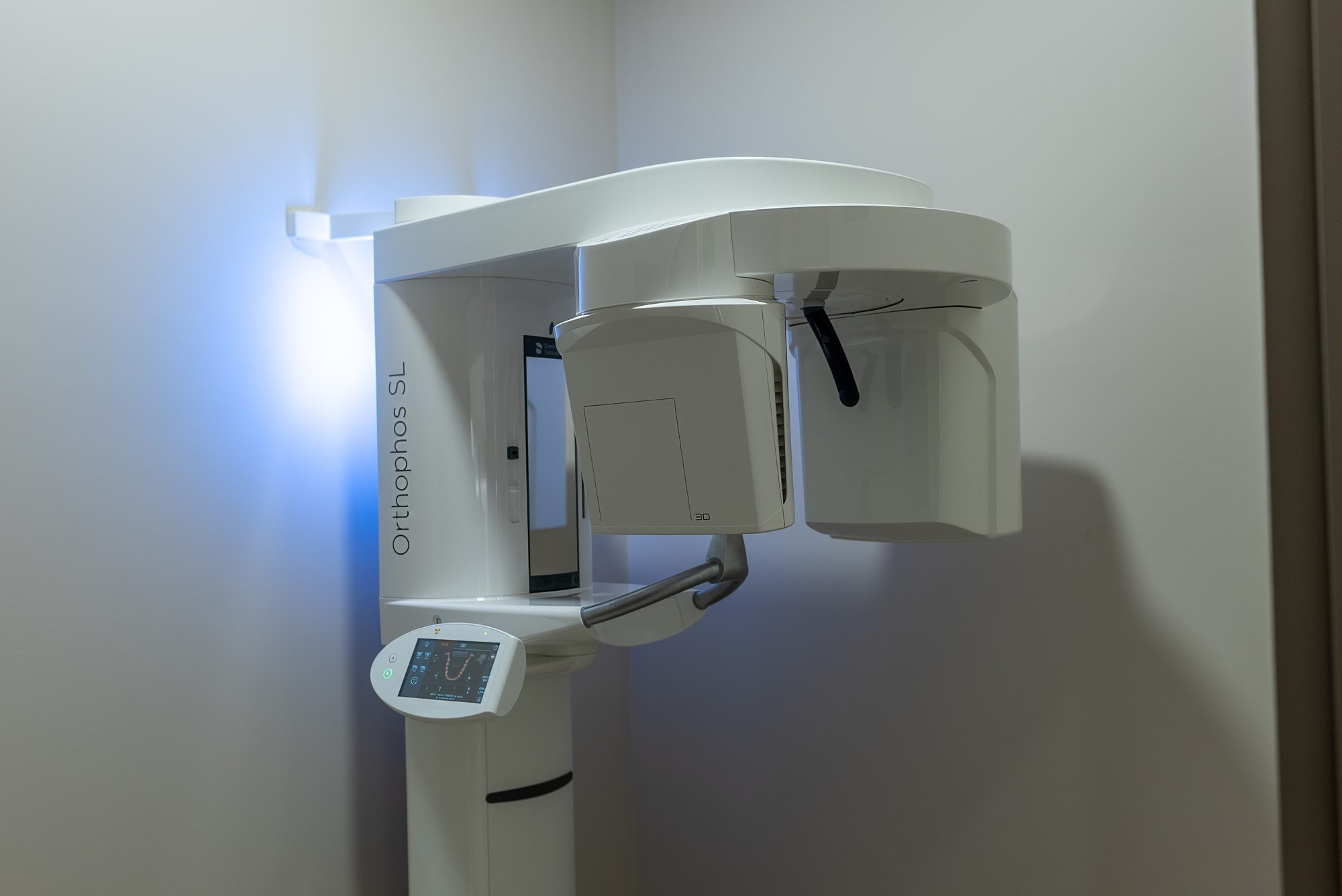
At Lumi Dental, a dentist examines your mouth and plans any implant work with a 3D X-ray and 3D scan taken in house, describing each step aloud rather than relying on a screen. The oral health therapists look after cleans and gum therapy and can practise home care with you hands on. Dentures and relines are available, and specialist cases are referred to registered specialists. Read more about dental implants at Lumi Dental.
Questions patients ask
Are implants better than dentures if you are blind?
Not automatically. Implants can steady a denture or replace it, but they bring their own cleaning and upkeep. The better option is the one you can manage by touch every day.
How do I know my denture is clean if I cannot see it?
Use the same order every time and finish with a fingertip check of every surface. A slippery film means it needs more brushing, and check-ups catch build-up you cannot feel.
Can I put an implant overdenture in without looking?
Yes, most people learn by feel. Find where it sits and press evenly until it clicks, practising first with the team guiding your hands.
How do I stop my dentures getting lost in hospital?
Ask about having your name added, and keep them in a labelled case. Our guide to labelling dentures with your name explains the options.
Can I get instructions in large print or by email?
Yes. Tell reception which format suits you, and the team will do its best to use it.
Considering an implant? Complimentary implant consult in Melrose Park
If you are blind or have low vision and weighing up dentures, an overdenture or a fixed bridge, a complimentary implant consult gives you time to hold each option and ask questions before anything is planned. Contact Lumi Dental to book, mentioning any access needs or a support person, or read more about dental implants in Melrose Park. Patients visit from Ryde, Parramatta, Ermington and Rydalmere, with on-site parking at Melrose Central.
Sources
- Vision Australia: How do you know if you have low vision?
- Better Health Channel: Dentures
- Cureus (Sabbagh and colleagues): Advances in Implant-Supported Overdentures, a Review of Recent Attachment Systems (PMC)
- Clinical Implant Dentistry and Related Research (Bakker and colleagues): Mandibular implant-supported overdentures in (frail) elderly, a prospective study with 20-year follow-up (PMC)
About the author

Dr James Tran is a general dentist at Lumi Dental in Melrose Park. He holds a BDent from the University of Sydney and a Graduate Diploma in Oral Implants, and is a Member of the International Congress of Oral Implantologists (MICOI).
This article is general information only and is not a substitute for an examination and individual advice from a registered dental practitioner. Suitability for any treatment varies from person to person.







