
Implant overdenture attachments fall into three main families, Locator (a low stud), ball and bar, and the right choice for you depends on how much space you have above the gum, how the implants are angled and how well you can clean and handle the denture. An implant overdenture is a removable denture that clips onto two or more implants, and the attachment is the small connector that does the clipping. A systematic review of mandibular overdenture trials found no significant link between the type of attachment and implant survival, so the decision is mostly about retention, space and upkeep rather than whether the implants will last.
Written by Dr James Tran, general dentist at Lumi Dental, Melrose Park. BDent (University of Sydney), Graduate Diploma in Oral Implants.
The short version
- An overdenture is removable. It clips onto implants through attachments, and you take it out to clean it each day.
- Locator attachments are low and stud-like, and tend to suit shallow spaces and implants that are not perfectly parallel.
- Ball attachments are simple and familiar, with a round head and a small rubber or nylon seat in the denture.
- Bar attachments join the implants together with a bar, which can give firm retention but needs more room and more careful cleaning underneath.
- All three have parts inside the denture that wear and are replaced over time, so ongoing visits matter. Our guide to implant-retained overdentures explains the wider picture.
- Brand matters less than planning, fit and maintenance, though your dentist can tell you which system they work with.
What an overdenture attachment does
A conventional denture sits on the gum and relies on suction and the shape of the ridge. It can shift when you talk or eat, particularly on the lower jaw, where the tongue takes up space and the ridge tends to shrink over time. If you are curious about why, read why lower dentures fit worse than upper ones.
With an overdenture, implants are placed in the jaw and allowed to fuse with bone. Each implant carries a small connector. The denture has matching fittings built into the underside, and when you press it into place it clicks onto the connectors. Healthdirect describes these as implant-retained dentures: removable dentures anchored to implants in the jaw. The ADA describes the same idea as a denture held in place by dental implants.
The attachment is what you feel every day. It controls how firmly the denture seats, how it feels to remove, and how much food and plaque collect around it.
Locator attachments
A Locator is a small, low-profile stud that screws into the top of the implant. A nylon insert inside a metal cap in the denture snaps over it. Because the stud is short, it needs less vertical space than most other options, which helps when the denture has little room between the gum and the opposing teeth.
The nylon inserts come in different strengths of grip. They wear with use, so they are replaced from time to time. Many patients find them easy to seat. One review of attachment systems concluded that Locators were advantageous in cases with limited inter-arch space and angled implants, which matches what I see chairside. Locators are not as forgiving if the implants are heavily angled in opposite directions, and then the denture can wear the inserts faster.
Ball attachments
Ball attachments have been used for a long time. A small ball sits on top of each implant, and a socket with a rubber or nylon ring in the denture grips it. The design is simple and the parts are easy to replace.
The ball adds height, so it needs more vertical room than a Locator. It also allows a little movement, with the denture able to rock slightly around the ball. That can be gentle on the implants but is not what everyone wants. In mini implant overdentures, ball attachments have been compared with other designs in a systematic review, and the evidence on which performs better is still being worked out.
Bar attachments
A bar joins two or more implants into one unit, with a metal bar running between them. The denture carries clips or sleeves that grip the bar. Because the implants are splinted together, load is shared between them, and the denture can feel very firm.
The review of attachment systems found that bar attachments showed the strongest retention. The trade-offs are practical. A bar takes up space under the denture, so it needs adequate room, and the tissue underneath it must be kept clean. Food and plaque can sit beneath the bar, and patients need to learn how to use a small brush or floss threader there. A bar is also more involved to make and to repair.
A simple rule for choosing
Start with space and angulation, not with the brand. If you have limited vertical space or implants that do not line up, a low stud is often the practical answer. If you want the firmest hold and are willing to spend time cleaning under the bar, a bar may suit better. If you want simple parts and have enough room, a ball may do the job.
Comparing the three side by side
| Feature | Locator | Ball | Bar |
|---|---|---|---|
| Height above the gum | Lowest | Taller | Needs room for bar and clips |
| Retention | Good, adjustable by insert | Moderate, allows slight movement | Often the firmest |
| Tolerates angled implants | Usually well | Less well | Depends on bar design |
| Cleaning | Easy around each stud | Easy around each ball | Needs care under the bar |
| Parts that wear | Nylon inserts | Rubber or nylon rings | Clips or sleeves |
| Simplicity | Simple | Simple | More involved to make and repair |
These are general patterns. Your jaw, the number of implants and your bite can change the picture, and a dentist can explain which of them applies to you.
How many implants, and which jaw
Lower jaws commonly use two implants, because bone is dense enough in the front of the lower jaw and the ridge is often the problem with conventional lowers. Upper overdentures often use four or more, because upper bone is typically softer and the denture covers a larger area. A bar is more common when more implants are used, since there is more to join together.
If the bone is thin, a scan helps. A 3D X-ray shows where bone is available, and where nerves and sinuses sit. Our article on bone loss after tooth extraction explains why the jaw changes after teeth are lost.
Maintenance you can expect
Healthdirect advises cleaning dentures twice a day and having regular check-ups, at least yearly, because the mouth changes over time. An overdenture adds to that. The inserts or rings wear, and the denture may need relining as the gum changes. Our guide to denture relines versus new dentures sets out when each makes sense.
Patients I see often do well with a short daily routine: remove the denture, brush the attachments and the fitting surface, soak it overnight in the way their dentist advises, and check for loose parts. Soreness, a loose attachment or a clicking sound is worth mentioning early.
How we approach this at Lumi Dental
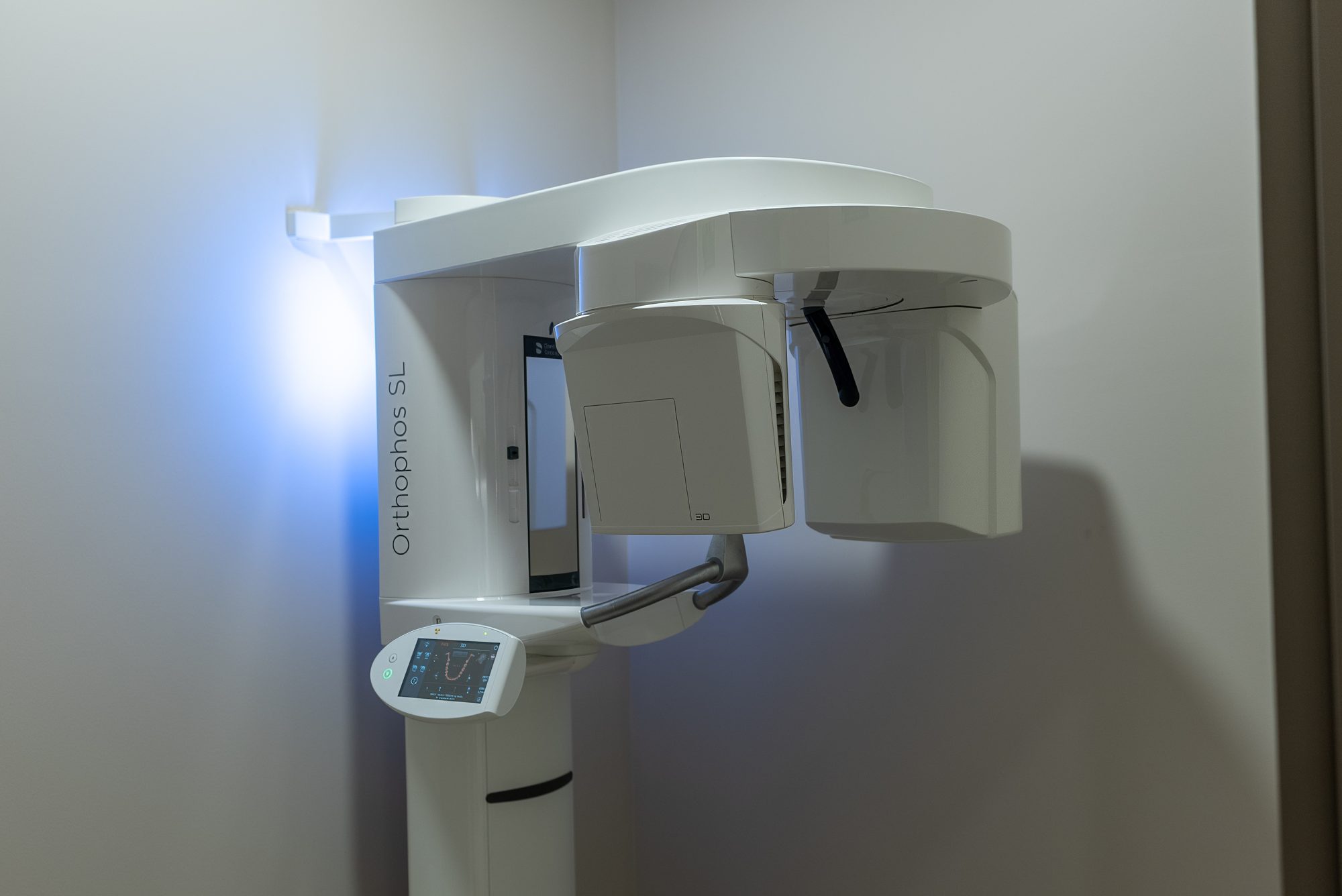
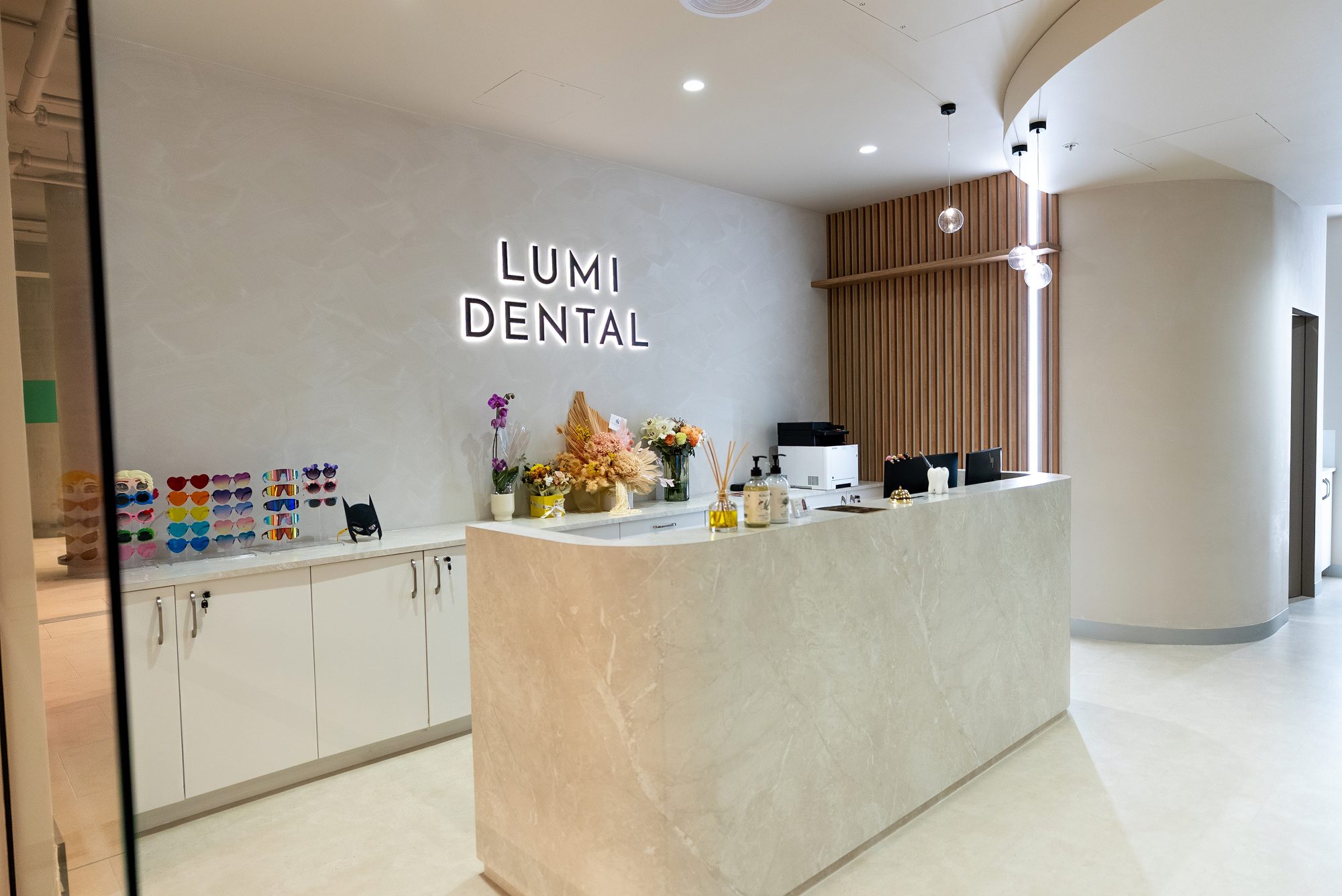
At Lumi Dental in Melrose Central, Melrose Park, implant treatment is planned with in-house 3D intraoral scanning and an Orthophos 3D X-ray unit that takes OPG and 3D scans of the bone. The practice also has in-house 3D printing. Dental implants are offered, and full-arch treatment is called All-on-X, which is a fixed option and different from a removable overdenture.
My postgraduate training includes a Graduate Diploma in Oral Implants, though I practise as a general dentist. The team will talk through which options might suit you after an examination and imaging. Where a case needs a registered specialist, for example complex bone grafting, we refer. You can compare removable and fixed options in our article on dentures versus All-on-X full-arch implants.
Questions patients ask
Which overdenture attachment is right for me?
There is no single winner. A review of mandibular overdenture trials found bar attachments gave the strongest retention, Locators suited limited space and angled implants, and survival of the implants did not differ significantly by attachment type.
How often do overdenture attachments need replacing?
The wearing parts, such as nylon inserts or rubber rings, are typically replaced as they loosen. How often depends on the system and how you use the denture, and your dentist will check them at maintenance visits.
Can I convert my existing denture to an overdenture?
Often, yes. Once implants have healed, the fittings can usually be set into your current denture if it still fits well. Our article on converting a denture to implants explains the steps.
Do I take an overdenture out at night?
Usually, yes. Healthdirect advises that dentures are removed overnight to let the mouth rest, and your dentist will say how to store yours.
Is an overdenture the same as All-on-X?
No. An overdenture is removable and clips onto implants, while a full-arch fixed bridge is attached to implants and not taken out at home.
Sources
- healthdirect: Dentures
- healthdirect: Dental implant procedure
- Australian Dental Association: Dental Implants
- PubMed: Comparative Evaluation of Various Implant Overdenture Attachment Systems, systematic review and meta-analysis (Cureus)
Talk to Lumi Dental about overdentures
If you wear a loose denture and are thinking about implants, the team at Lumi Dental in Melrose Park can examine your mouth, take the imaging needed and explain which attachment options may suit your jaw. Read about dental implants at Lumi Dental, and when you are ready, contact the team to arrange a consult and a written quote. For current offers, see current deals. Patients visit from Ryde, Parramatta, Ermington, Rydalmere and nearby suburbs.
About the author
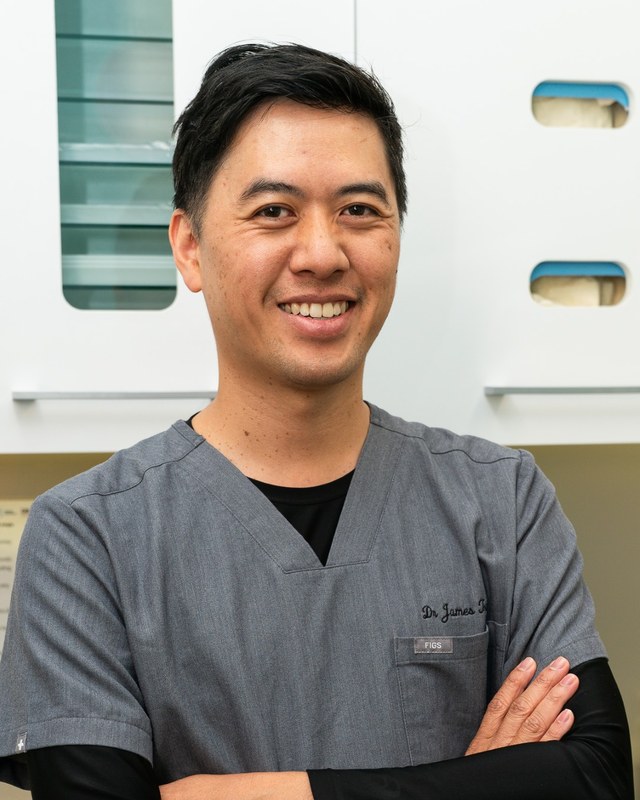
Dr James Tran is a general dentist at Lumi Dental in Melrose Park, Sydney, and is registered with the Dental Board of Australia. He holds a Bachelor of Dentistry from the University of Sydney and a Graduate Diploma in Oral Implants, is a Member of the International Congress of Oral Implantologists (MICOI), and is part of the General Dental Residency faculty. Read more about Dr James.
This article is general information and is not a substitute for advice from your own dentist after an examination. All dental treatment carries risks, and individual results vary.