
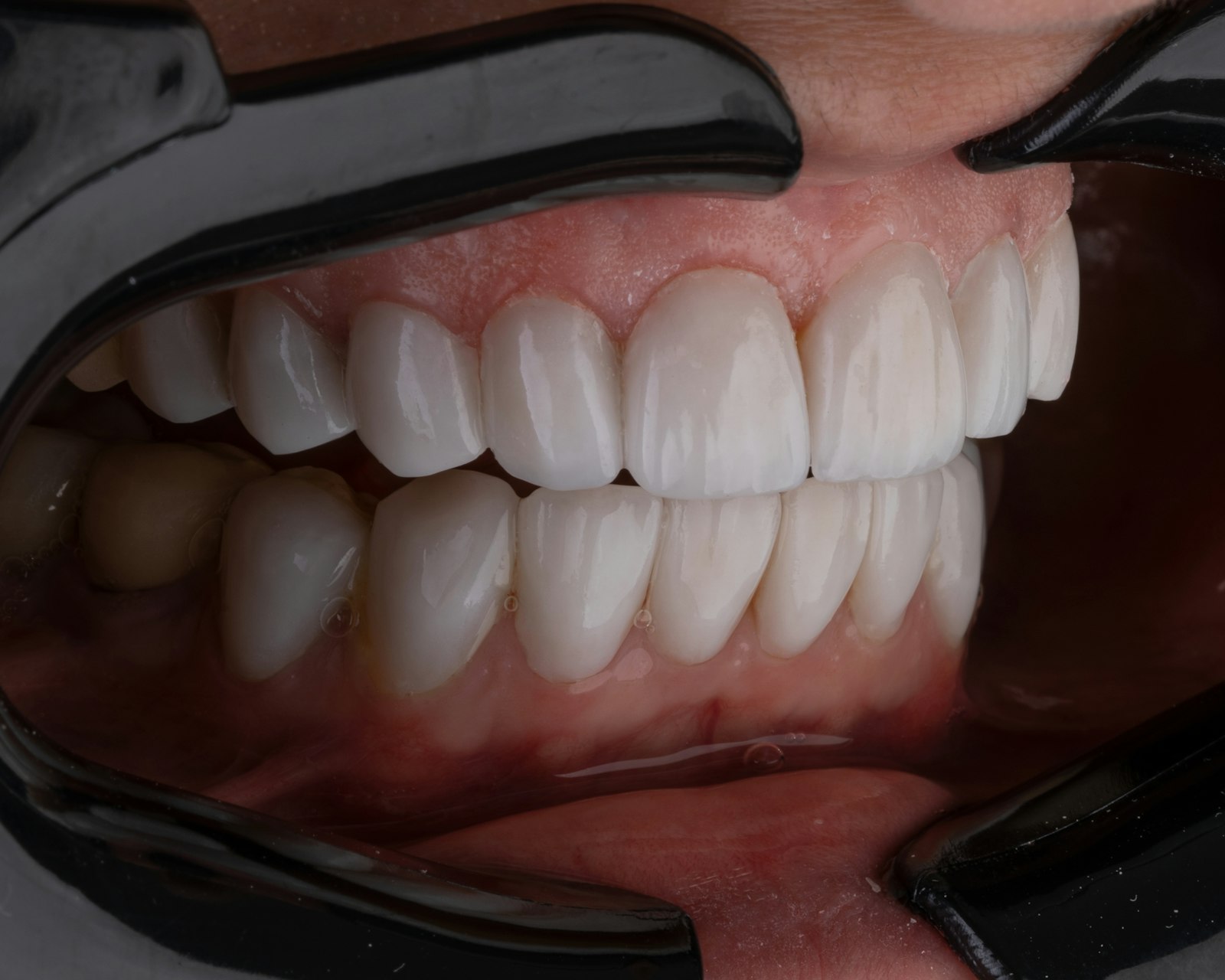

The number of dental implants you need depends on how many teeth are missing, where they are and what will sit on top, and it is rarely one implant per tooth. A single missing tooth typically needs one implant, three missing teeth in a row are commonly replaced with two implants and a bridge, and a full arch of fixed teeth is usually supported by 4 to 6 implants. If you are asking how many dental implants do I need, the most useful starting point is a 3D scan, because bone volume decides as much as the gap itself. This guide covers every common scenario in one place.
Key Takeaways
- One missing tooth usually means one implant. Beyond that, implants can support bridges and full arches, so the count rises more slowly than the number of teeth.
- Three missing teeth in a row are commonly replaced with two implants supporting a three-unit implant-supported bridge.
- A fixed full arch typically uses 4 to 6 implants per jaw. The upper jaw often needs more because its bone is softer.
- A removable lower overdenture is commonly held by 2 implants, while an upper overdenture usually needs around 4.
- Bone volume, bite force, sinus and nerve position, gum health and budget all change the final number.
Why It Is Not One Implant Per Tooth
An implant acts as an artificial root. Natural teeth each have their own roots, but a well-placed implant is strong enough to support more than one tooth when the teeth are joined together as a bridge or an arch. This is why a whole lower jaw of teeth can be held by four or five implants rather than fourteen.
Using fewer implants can mean less surgery, less grafting and a lower overall cost. Using more implants spreads the load and gives a backup if one ever has a problem. The right balance depends on your bone, your bite and what you want the final teeth to feel like. In my experience, patients are often surprised that the plan for a full arch involves fewer implants than they expected, and that the plan for two missing teeth sometimes involves more.
How Many Implants for Each Scenario
The table below sets out the typical implant count for common situations. These are starting points, and your own number is set after an exam and scan.
| Missing teeth | Typical number of implants | What sits on top |
|---|---|---|
| One tooth | 1 | Single implant crown |
| Two teeth side by side | 2, or sometimes 1 in select front cases | Two single crowns, or one crown with a small cantilevered tooth |
| Three teeth in a row | 2 | Three-unit implant bridge |
| Four or more teeth in a row | 2 to 3, depending on the span | Longer implant bridge |
| Full arch, removable lower | 2 | Implant-retained overdenture that clips on |
| Full arch, removable upper | Around 4 | Implant-retained overdenture |
| Full arch, fixed | 4 to 6 per arch | Fixed full-arch bridge |
| Whole mouth, fixed | Often 8 to 12 in total | Fixed upper and lower arches |
One or two missing teeth
For a single gap, one implant with its own crown is the usual approach. It does not involve the neighbouring teeth, and it can be cleaned much like a natural tooth. When two teeth next to each other are missing, two separate implants are common. In some front tooth cases where space or bone is limited, one implant may carry a second tooth as a small cantilever, though this is chosen carefully because of the extra leverage.
How many implants for 3 missing teeth
Three missing teeth in a row are commonly replaced with two implants, one at each end, holding a three-unit bridge with a false tooth in the middle. This avoids a third surgical site while still giving solid support. For four or more teeth in a row, the bridge may be supported by two or three implants depending on the length of the span and the bite forces in that area.
How Many Implants for a Full Arch
When most or all of the teeth in a jaw are missing, the choice is between fixed teeth that stay in and removable teeth that clip onto implants.
Fixed full arch
A fixed full-arch bridge is typically supported by 4 to 6 implants. The upper jaw often needs more implants than the lower because its bone is usually softer and less dense. You may have heard of All-on-4, a treatment concept trademarked by Nobel Biocare, which uses four implants with the back ones angled to avoid the sinus or nerve. Lumi Dental's full-arch service is called All-on-X, where the X reflects that the number of implants is chosen for each patient. Our article comparing All-on-6 and All-on-4 explains when four or six implants may suit.
Removable overdenture
An implant-retained overdenture is a denture that clips onto implants, so it stays much steadier than a conventional denture but can still be removed for cleaning. For the lower jaw, two implants are commonly used. The McGill consensus statement proposed the two-implant overdenture as a minimum standard of care for people with no teeth in the lower jaw, largely because lower dentures tend to move the most. Upper overdentures usually need around four implants because the bone is softer and the denture is under different forces. Our guide to implant-retained overdentures covers how they feel day to day.
Factors That Change Your Number
Two people with the same gap can end up with different plans. These are the main reasons:
- Bone volume and density. A cone beam CT scan shows how much bone is available. Soft or thin bone may need more implants, wider implants or grafting.
- Bite force and grinding. Heavy clenching or grinding increases the load on each implant, which may favour an extra one.
- Opposing teeth. Biting against natural teeth or a fixed arch creates more force than biting against a denture.
- Sinus and nerve position. In the upper back jaw the sinus can limit bone height, and in the lower back jaw the nerve sets a safe depth. A sinus lift or bone graft can add support where needed, as explained in our article on bone grafts and sinus lifts.
- Gum health. Gum disease is treated with gum therapy before implants are placed.
- Fixed or removable. Fixed teeth need more implants than a removable overdenture.
- Budget. Each implant adds cost, so the plan balances support against what makes sense for you.
If You Are Missing Most of an Arch, Start With Fixed or Removable
A simple rule helps here: if you are missing most of the teeth in a jaw, decide first if you want fixed teeth or a removable overdenture, then work out the implant count. That one choice moves the number more than anything else. Fixed teeth typically need 4 to 6 implants per arch, while a lower overdenture may need only 2. For fewer missing teeth, the gap itself guides the count. If you are still weighing up options more broadly, our comparison of implants, bridges and dentures is a useful place to start.
What It Typically Costs
Because cost follows the number of implants and the type of teeth on top, it helps to see the scenarios side by side. These are general market ranges, which vary with complexity and provider; a written quote follows an exam.
| Treatment | General market range in Sydney |
|---|---|
| Single implant with crown | Around $4,000 to $7,000 |
| Three-unit implant bridge on two implants | Around $9,000 to $15,000 |
| Two-implant lower overdenture | Around $8,000 to $15,000 |
| Fixed full arch, per arch | Often around $20,000 to $35,000 or more |
Grafting or a sinus lift adds to these figures. For information on treatment at Lumi Dental, see current deals or ask for a written quote at your consultation.
Common Questions
How many dental implants do I need for a full mouth?
A full mouth of fixed teeth often uses 8 to 12 implants in total, typically 4 to 6 in each jaw. Removable overdentures can use fewer, commonly 2 in the lower jaw and around 4 in the upper.
Can 4 implants hold a full arch of teeth?
Yes, four implants can support a fixed full arch in many patients, particularly in the lower jaw. The upper jaw may need five or six because its bone is usually softer.
Do I need an implant for every missing tooth?
No, implants can be joined together to support bridges and arches. Three missing teeth in a row, for example, are commonly replaced with two implants.
Is it better to have more implants?
More implants spread the load and offer a backup, but they also add surgery and cost. The right number is the one that gives stable support for your bone and bite without unnecessary procedures.
What if I do not have enough bone for implants?
Bone grafting, a sinus lift or angled and shorter implants may make treatment possible. In more complex cases, the team refers to a registered specialist where a case needs one.
Book a Complimentary Implant Consultation in Melrose Park
The quickest way to know how many implants you need is to see your own scan. The team at Lumi Dental in Melrose Park uses 3D imaging to assess your bone and bite, then explains the options from a single implant through to an All-on-X full arch, with a written quote. Read more about dental implants at Lumi Dental, or book a complimentary implant consultation to plan the right number for you.


