
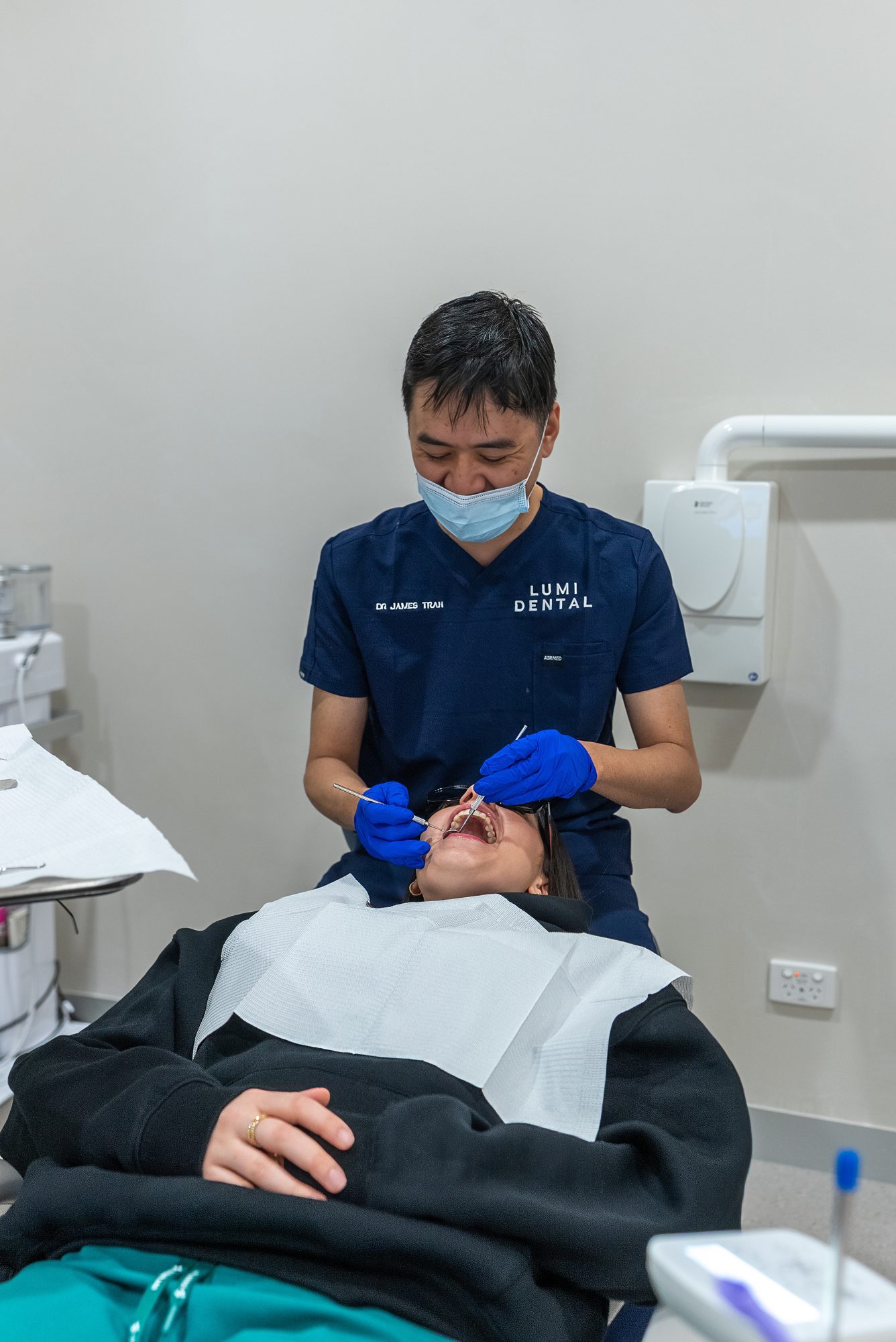

Intermittent fasting is not bad for your teeth in itself; fewer eating episodes a day means fewer acid attacks on enamel. The problems come from what people sip through the fasting window, and from a drier mouth with less to chew. In a survey of 379 drinks published in the Journal of the American Dental Association, 93% measured below pH 4, the level at which enamel starts to dissolve, while black coffee came in at a gentler 5.11 and tap water at 7.2. Here is how to keep a 16:8, 5:2 or one-meal-a-day pattern tooth-friendly.
Written by Dr James Tran, BDent (University of Sydney), MICOI, GradDip (Oral Implants), general dentist at Lumi Dental in Melrose Park.
The short version
- Teeth like long gaps between meals. Each time you eat or drink anything but water, plaque acid softens enamel for around 20 to 30 minutes.
- Water, black coffee and plain tea are fine in the fasting window. Lemon water, vinegar shots, flavoured sparkling water, electrolyte powders and diet soft drinks are acidic and get sipped for hours.
- Fasting breath is mostly a dry-mouth problem. Ketone breath only appears if the fast is long enough to reach ketosis.
- Brush before the eating window opens and after the last meal, not straight after an acidic drink.
- Grazing for eight hours undoes the benefit; two or three proper meals is the tooth-friendly version.
- Time-restricted eating differs from Ramadan fasting, where water is also off the table by day.
Why fewer eating episodes help teeth
Every time sugar or starch reaches plaque, bacteria turn it into acid and the pH at the tooth surface drops. Enamel loses mineral while the pH stays low and regains it as saliva neutralises the acid, a cycle healthdirect puts at about 20 to 30 minutes per episode. Six snacks produce six dips; two meals produce two. Moving from all-day grazing to an eight-hour eating window cuts the number of acid attacks without trying. Frequency matters more than quantity, which is why healthdirect warns that frequent sips of an acidic drink increase acid contact time.

The catch: what you drink in the fasting window
Most fasting plans allow anything without kilojoules, and that is where teeth get into trouble: zero calorie and zero acid are not the same thing.
Black coffee and tea
Brewed black coffee measured pH 5.11 in the JADA survey, mildly acidic and above the pH 4 line the authors used for erosion. The bigger issue is tannin staining and nursing a cup for two hours. Plain tea behaves much the same. Finish the cup, then rinse with water.
Lemon water and apple cider vinegar
These two habits worry me most. Lemon juice was the most acidic item in the whole survey at pH 2.25, and diluting it in a bottle sipped all morning spreads the acid over hours. healthdirect lists citrus fruits and vinegar among the causes of dental erosion. Have either in one go with the first meal and rinse with water; our articles on lemon water and enamel and sparkling water, kombucha and vinegar explain why.
Sparkling water
Plain sparkling mineral water is only mildly acidic: two brands measured 4.96 and 5.25. Flavoured waters get their taste from citric or malic acid and measured around pH 3 to 3.7. Plain bubbles with a meal are fine; a flavoured bottle sipped through the fast is not.
Electrolyte powders and tablets
Most rely on citric acid for taste and fizz. A laboratory study in the Journal of Dental Sciences measured two effervescent vitamin tablets at pH 4.46 and 4.71, below the 5.5 its authors give as the point where enamel begins to soften. Dissolve fully, drink in one sitting and follow with water; our guide to electrolyte tablets and your teeth covers timing.
Diet soft drinks
Sugar-free colas keep the phosphoric and citric acid of the originals: the survey put diet and zero colas between about pH 2.7 and 3.1, its extremely erosive band. The sweetener is not the problem; the acid is. A diet soft drink is a mealtime drink, never a fasting-window one.
Fasting-window drinks at a glance
| Drink | Acidity (JADA survey unless noted) | Effect on teeth | Better choice |
|---|---|---|---|
| Tap water | pH 7.2 | None; carries fluoride | Drink freely |
| Black coffee | pH 5.11 | Staining; mild acidity | Finish the cup, rinse |
| Plain sparkling mineral water | pH 4.96 to 5.25 | Low erosion risk | Fine with meals |
| Flavoured water | About pH 3 to 3.7 | Erosive if sipped | Plain water |
| Lemon water | Lemon juice pH 2.25, diluted | Erosion, especially sipped | Lemon with a meal |
| Apple cider vinegar shot | Acidic (healthdirect) | Erosion | With a meal, then rinse |
| Electrolyte powder or tablet | About pH 4.5 to 4.7 (lab study) | Softens enamel if sipped | Drink in one go, then water |
| Diet or zero soft drink | About pH 2.7 to 3.1 | Extremely erosive | Mealtime only, or not at all |
Dry mouth and fasting breath
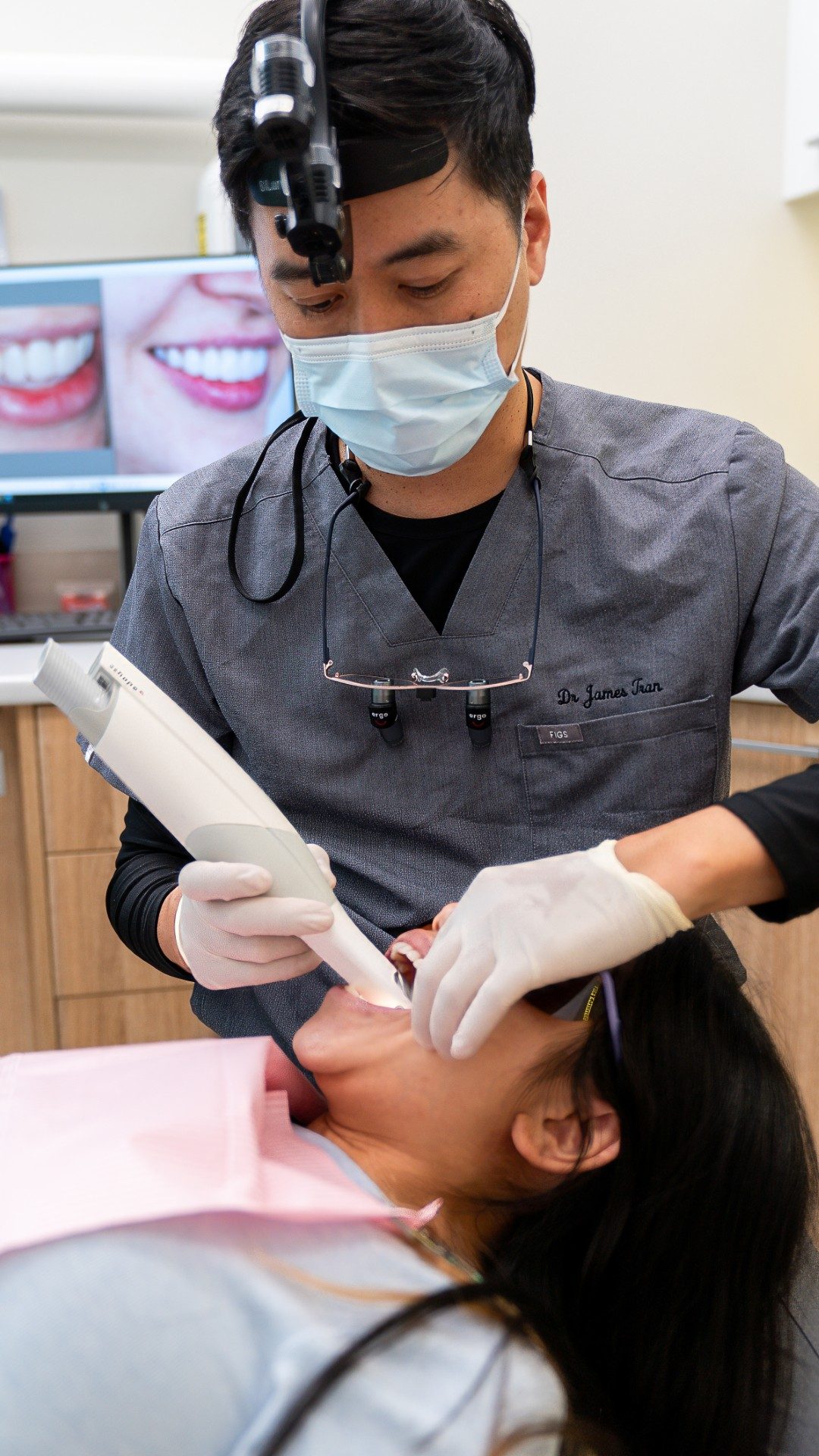
Chewing is the strongest everyday trigger for saliva, so sixteen hours without food means a quieter mouth: less flow to buffer acid, rinse away bacteria and keep the tongue coating in check. Add caffeine and a lower fluid intake, which healthdirect flags because food normally supplies part of the day's water, and the mouth feels sticky by mid-morning. healthdirect also notes that erosion is worse in a dry mouth. That dryness is the usual cause of fasting breath: morning breath, stretched across the day. Ketone breath, the solvent-like smell of acetone, only appears once the body shifts into fat burning, which most 16:8 fasters never reach; see our article on the keto diet and your breath. Water through the morning and a tongue scrape deal with most of the rest.
The single rule: if it is not water, black coffee or plain tea, treat it as a meal
This settles almost every fasting-window question. Anything acidic, sweetened or flavoured counts as an eating episode for your teeth, so it belongs inside the eating window, with food, finished in one sitting. Inside the window the same rule means two or three real meals rather than an eight-hour graze. In my experience the fasting patients with the healthiest mouths treat the window as mealtimes, not as permission.
Brushing timing, clenching and medicines
When to brush
Brush twice a day as usual: before the eating window opens, and after the last meal so nothing sits on the teeth through the long fast and the night. Do not brush straight after coffee, lemon water or vinegar; healthdirect advises waiting at least 30 minutes after an acidic drink because the enamel surface is softer until saliva has done its work. Rinse with water instead. Brushing does not break a fast if you spit rather than swallow.
Clenching with hunger and caffeine
Some patients I see notice jaw tightness or morning headaches after starting a fast. Hunger, caffeine on an empty stomach and poorer sleep can all raise muscle tension, and a clencher may grind more. This is an observation rather than a proven effect, but worn edges or a sore jaw are worth mentioning.
Medicines that need food
healthdirect lists people who take daily medicine with food among those who should not fast without medical advice, and medicines that dry the mouth add to the saliva problem. That conversation belongs with your GP or pharmacist.
Who should ask their GP first
healthdirect states that intermittent fasting is not recommended for children and adolescents, people with a current or past eating disorder, people who are pregnant or breastfeeding, people who are underweight or older adults, and that anyone taking diabetes medicines or having cancer treatment should talk to their doctor first. Those are medical questions; the team at Lumi Dental refers them to the GP.
What the evidence does and does not show
Research on fasting and oral health is young. A trial in the Journal of Clinical Periodontology followed 66 healthy adults who stopped brushing one part of the mouth for nine days while following 16:8 time-restricted eating, a religious daytime dry fast or a normal diet. The dry-fasting group developed less gum bleeding than the controls; the 16:8 group differed from controls only on a fluid marker of gum inflammation, and the authors flagged randomisation problems. It is a hint that fasting may calm gum inflammation, not proof. I tell patients that fasting is neutral to mildly helpful for teeth if the fasting window stays clean, and harmful if it fills with acid.
How we approach this at Lumi Dental
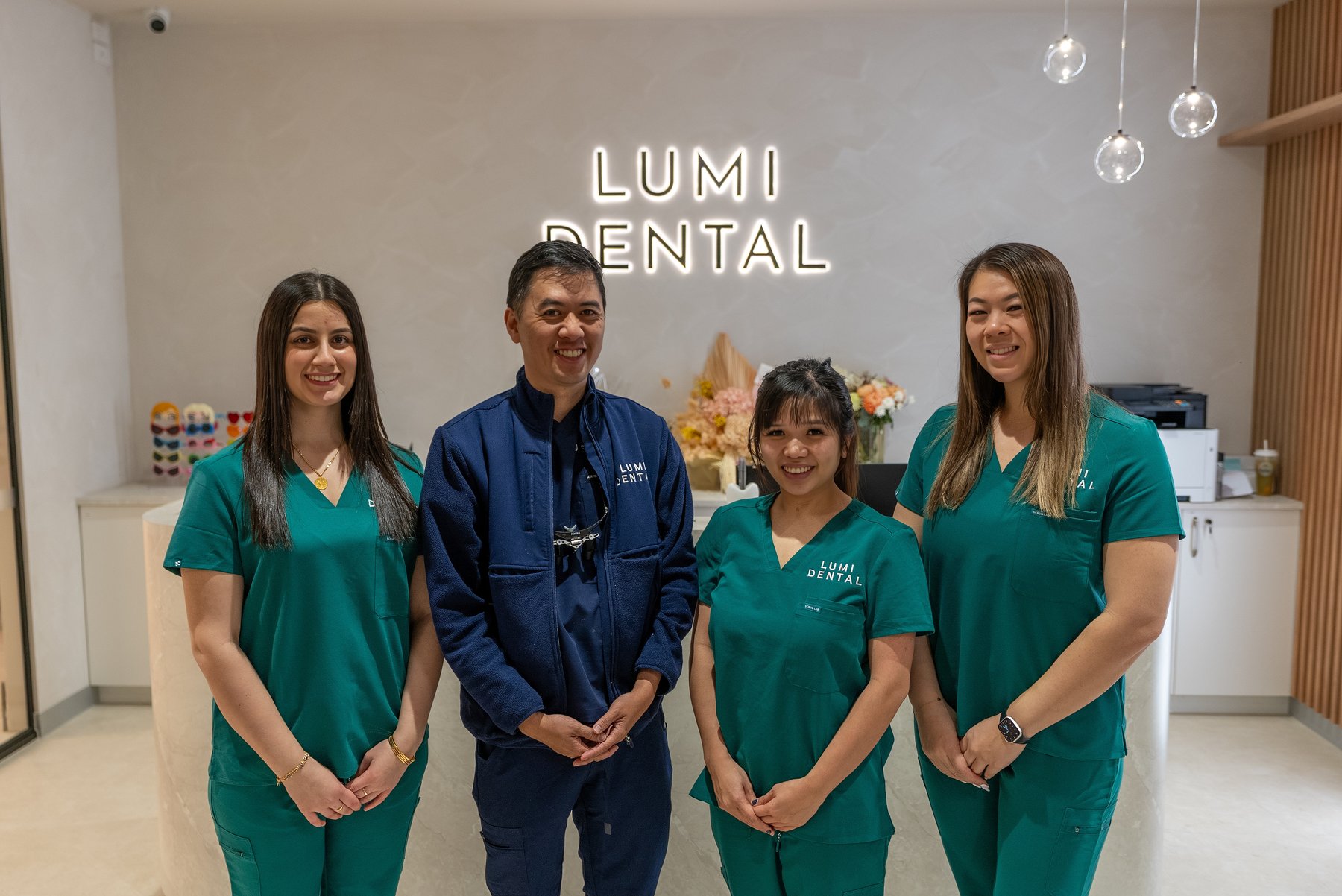
At a check-up at Lumi Dental the dentist examines and diagnoses, looking for the two patterns fasting habits leave: smooth, cupped wear on the chewing edges from acidic drinks, and the staining and dry-mouth signs of a long coffee habit. The hygiene team of oral health therapists does the scale and clean, notes how dry the mouth is and can apply fluoride varnish where enamel is softening. In-house 3D scanning lets the team compare wear between visits. A general check-up is the place to start.
Questions patients ask
Does intermittent fasting cause tooth decay?
Not by itself. Fewer eating episodes mean fewer acid attacks, which favours teeth. Risk rises when the eating window becomes constant snacking or sweetened drinks creep into the fast.
Why does my breath smell when I am fasting?
Usually a drier mouth: less chewing means less saliva, so bacteria and tongue coating build up as they do overnight. Water and tongue cleaning help. Ketone breath only comes with longer fasts.
Can I drink black coffee while fasting without hurting my teeth?
Yes, in moderation. Black coffee is only mildly acidic at around pH 5, so the main cost is staining. Finish the cup rather than sipping for hours, rinse with water, and wait half an hour before brushing.
Is lemon water bad for your teeth during a fast?
It is the fasting-window drink to drop first. Lemon juice is strongly acidic and sipping it through the morning keeps enamel soft for hours. Have lemon with a meal and rinse afterwards.
Does chewing sugar-free gum break a fast?
That depends on your plan's rules. For teeth, sugar-free gum helps during a fast because it stimulates saliva; our article on sugar-free gum and teeth explains how much and when.
Due for a check-up? Book at Lumi Dental in Melrose Park
If fasting has brought a drier mouth, new sensitivity or staining, the team at Lumi Dental can check for early wear and talk through your fasting-window cup. Patients visit Melrose Central from Melrose Park, Ryde, Parramatta, Ermington and Rydalmere, with on-site parking. See our current offers or read about a general check-up at Lumi Dental.
Sources
- Reddy A and colleagues. The pH of beverages in the United States. Journal of the American Dental Association (PMC)
- healthdirect: Intermittent fasting
- healthdirect: Dental erosion
- Pappe CL and colleagues. Intermittent fasting regimes reduce gingival inflammation: a three-arm clinical trial. Journal of Clinical Periodontology (PMC)
About the author

Dr James Tran is a general dentist at Lumi Dental in Melrose Park. He holds a BDent from the University of Sydney and a Graduate Diploma in Oral Implants, and is a Member of the International Congress of Oral Implantologists (MICOI).
This article is general information only and is not a substitute for an examination and individual advice from a registered dental practitioner. Suitability for any treatment varies from person to person.








