
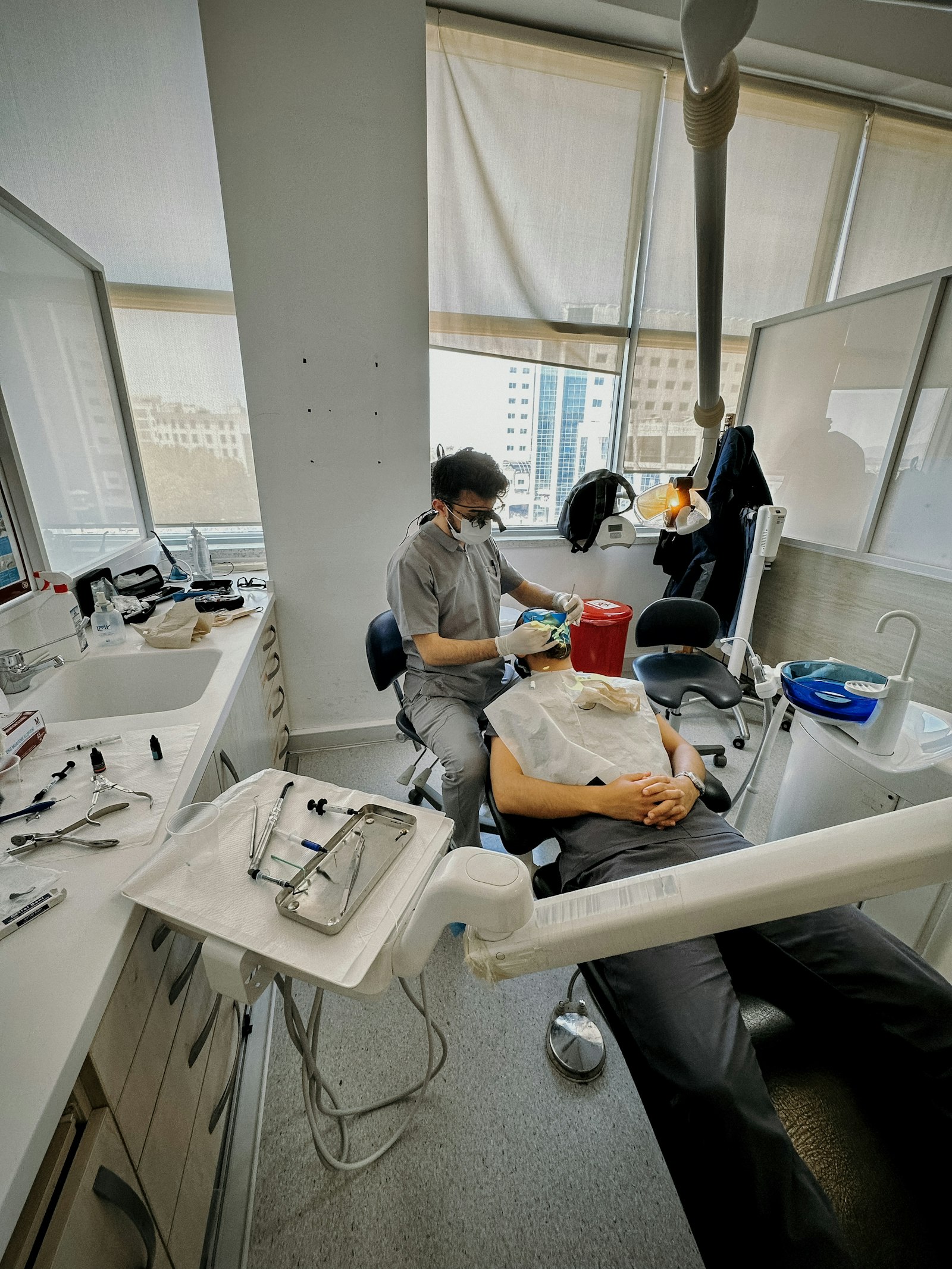

Minimally invasive dentistry means removing as little healthy tooth structure as possible, and managing early decay without cutting at all where that is clinically appropriate. It is a philosophy before it is a set of instruments, and it rests on one uncomfortable fact: a tooth only ever gets smaller. Every time it is drilled, some structure is gone permanently, and the restoration that replaces it will eventually need replacing with something larger.
That is the arithmetic of a filled tooth over a lifetime. A small filling becomes a large filling, a large filling becomes a crown, and a crown sometimes becomes a root canal treatment or an extraction. Slowing that sequence down is worth real effort at the start.
The techniques below are not new or exotic. Most are ordinary tools used earlier and more selectively. What has changed is detection, because you can only treat a lesion conservatively if you find it while it is small.
Key takeaways
- Early enamel lesions may remineralise and do not always need a filling.
- Air abrasion removes less tooth structure than a conventional handpiece and suits small, early pit and fissure lesions.
- Alternative caries removal methods tend to take longer, tend to reduce the need for local anaesthetic, and produce restorations that perform comparably.
- Silver diamine fluoride, resin infiltration and sealants sit in the same family of low intervention options.
- Deep lesions, decay under an existing restoration, and anything close to the nerve are better handled with a conventional handpiece.
- Detection with radiographs and photographs is what makes conservative treatment possible in the first place.
Why every millimetre matters
Enamel does not regenerate. Neither does dentine, beyond a limited defensive response inside the tooth. Once structure is cut away, the replacement is a material bonded or cemented into place, and no material has yet matched natural tooth for durability at the join.
Restorations also fail at their margins over time. When they are replaced, the new preparation is almost always slightly larger, because the old material and any decay beneath it has to come out. Each cycle costs a little more tooth.
The clinical implication is that the decision to drill is not neutral. It carries a lifetime cost. Where a lesion can be arrested or remineralised instead, that is not doing less, it is doing something different.
The toolkit, from least invasive to most
Monitoring and remineralisation
Early decay confined to enamel, the white spot stage, has not yet formed a cavity. Enamel at this stage can take up mineral again, and lesions can arrest or partly reverse with high fluoride products, better plaque control between teeth, and reduced frequency of sugar exposure. This requires review at set intervals rather than being ignored. Our article on whether early decay can be reversed covers what realistically responds.
Silver diamine fluoride
A liquid painted onto a lesion that arrests active decay without removing tooth structure. It is useful for young children who cannot yet cope with restorative treatment, for older patients with root decay and limited access, and for stabilising a tooth while a longer term plan is organised. The trade off is that treated decay stains black permanently, which limits its use on visible surfaces. See our guide to silver diamine fluoride.
Resin infiltration
A low viscosity resin drawn into the porous body of an early enamel lesion, which halts its progress and often improves the appearance of white spots. There is no drilling and usually no anaesthetic. It suits early interproximal lesions and post orthodontic white marks. Our guide to resin infiltration for white spots explains what it can and cannot address.
Fissure sealants
Preventive rather than restorative. A flowable material sealing the deep grooves of a back tooth so plaque and food cannot lodge there. Most useful on newly erupted permanent molars. Our overview of dental sealants for children covers timing and durability.
Air abrasion
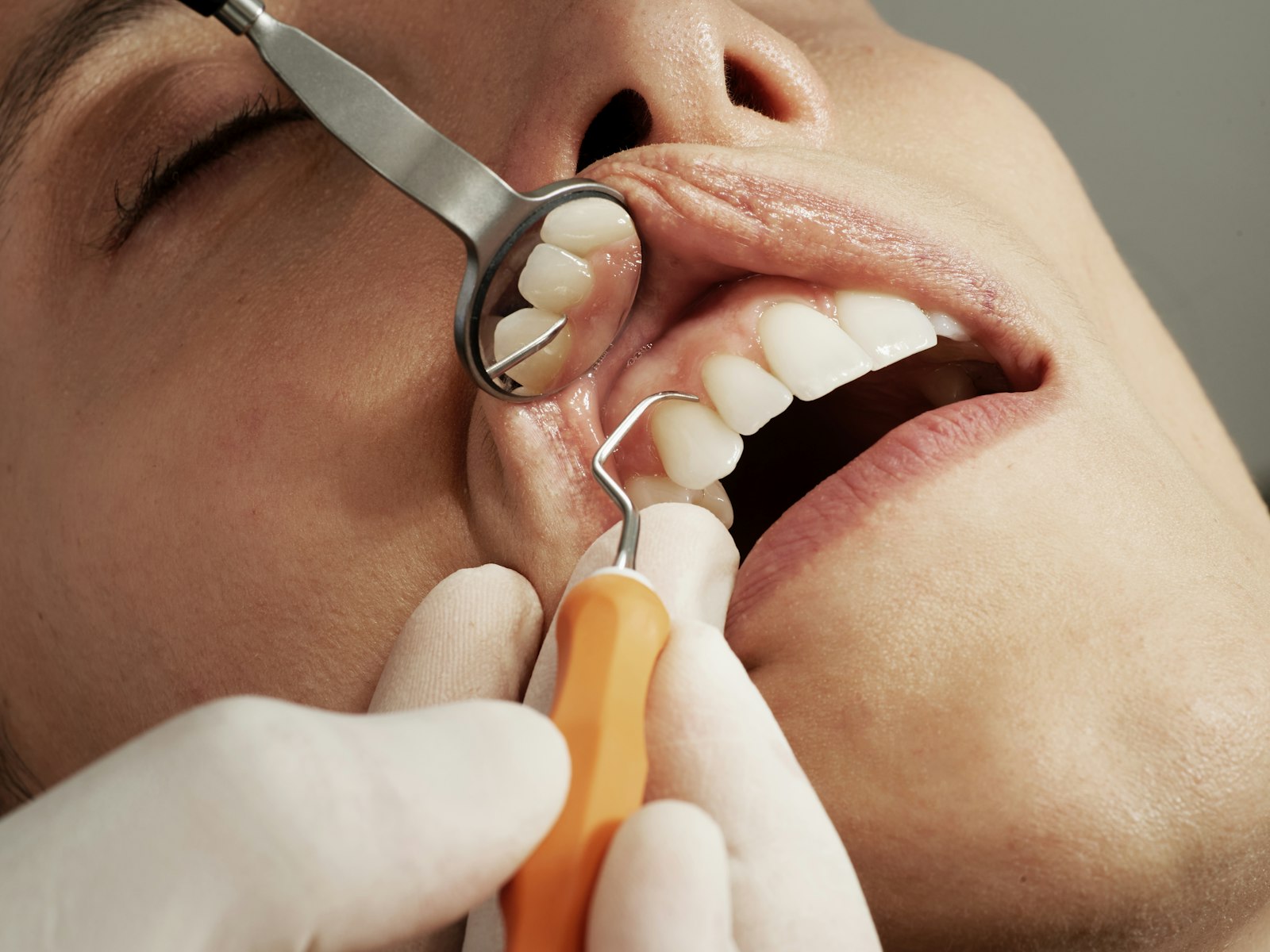
A fine stream of abrasive particles directed at the tooth under air pressure, removing decayed structure without a rotating bur. There is no vibration, no whine, and often no need for anaesthetic. Studies have shown it removes less tooth structure than a conventional handpiece, and it is best indicated for small, early lesions in the pits and fissures of back teeth.
Conventional handpiece and filling
Still the workhorse, and still the right answer for the majority of established cavities. It is fast, controlled, and effective on every material and every depth.
Comparing the approaches
| Approach | Best suited to | Anaesthetic usually needed? | Main limitation |
|---|---|---|---|
| Monitoring and remineralisation | White spot lesions confined to enamel, no cavitation | No | Depends heavily on the patient changing plaque control and diet, and needs scheduled review |
| Silver diamine fluoride | Arresting active decay, young children, root surface decay | No | Stains treated decay black permanently, so poorly suited to visible surfaces |
| Resin infiltration | Early enamel lesions between teeth, post orthodontic white marks | Usually not | Only works before the surface has broken down into a cavity |
| Fissure sealant | Deep grooves in newly erupted permanent molars | No | Preventive only, and needs monitoring for wear or loss |
| Air abrasion | Small, early pit and fissure lesions | Often not | Cannot cut old amalgam or metal, struggles with deep dentine decay, and takes longer |
| Conventional handpiece | Established cavities, deep lesions, replacing old restorations | Usually yes | Removes more tooth structure than the alternatives |
What the evidence actually says
A systematic review of alternative caries removal methods found a consistent pattern. The alternatives tended to take longer than conventional rotary instruments. They tended to reduce the need for local anaesthetic. They were all effective at reducing cariogenic bacteria, and the restorations placed afterwards performed comparably to those placed after conventional preparation. The same review noted that air abrasion and sono-abrasion in particular need further research.
That is a reasonable, unexciting summary, and it is more useful than the marketing. These techniques are legitimate and they work within their indications. They are not a wholesale replacement for the drill.
Detection is the real enabler
None of this is possible if decay is found late. A lesion that has been growing quietly for three years between two molars is past the point where infiltration or air abrasion is relevant.
Bitewing radiographs at appropriate intervals remain the mainstay for seeing between teeth, where the eye cannot reach. Intraoral photographs make it possible to compare a suspicious groove across visits rather than relying on memory. Regular examinations at an interval matched to your risk are what convert a potential filling into a watch and remineralise plan.
The Australian Institute of Health and Welfare has reported that untreated decay in permanent teeth remains common among Australian adults, and much of that reflects delayed attendance rather than unusual disease. Timing changes the options available.
When conventional drilling is the better choice
This is where most articles on the subject go quiet, because minimally invasive sells well. Being honest about the limits is more useful.
A conventional handpiece is faster, safer and simply better in several situations. Deep lesions into dentine, where control and visibility matter and where air abrasion becomes slow and imprecise. Decay underneath an existing restoration, because air abrasion cannot cut amalgam, gold or ceramic. Anything approaching the nerve, where careful, controlled removal matters more than conserving an extra fraction of a millimetre. A tooth that already needs a crown, where the preparation removes that structure anyway. And any case where treatment time is a genuine constraint, such as a young child with limited cooperation or a long list of teeth to restore.
Choosing the drill there is not a failure of philosophy. Minimally invasive means the least intervention that reliably solves the problem, not the least available.
What the marketing oversells
Three claims deserve tempering.
The first is no drill, no needle. Air abrasion frequently avoids anaesthetic for small lesions, which is genuinely valuable for anxious patients and children. It does not do so for deep or extensive decay. Presenting it as a universal alternative sets up disappointment. Our article on whether you can have a filling without a needle covers the realistic scenarios.
The second is that it is quicker. It usually is not. Alternative removal methods tend to take longer, and a practice offering them is trading chair time for tooth structure.
The third is that it replaces the drill entirely. It does not. Air abrasion cannot cut metal restorations and does not handle deep dentine decay well. In practice, many appointments use both, with air abrasion opening a small lesion and a bur used where it is genuinely needed.
Common questions
Does air abrasion hurt?
Most people describe a cold, gritty sensation with no vibration and no drill noise. Because there is no heat or vibration, anaesthetic can often be avoided for small, shallow lesions. Deeper preparations are a different matter and usually still require numbing.
Can a cavity be treated without drilling?
Early lesions confined to enamel can often be managed without drilling, using remineralisation, resin infiltration or silver diamine fluoride. Once the surface has broken down into a genuine cavity, the decay generally has to be removed and the tooth restored. The dividing line is whether the surface is still intact.
Is minimally invasive dentistry suitable for children?
It is often particularly well suited to children, because avoiding the needle and the drill can make treatment far more manageable and reduce the risk of long term dental anxiety. Silver diamine fluoride and sealants are widely used for this reason. The suitability still depends on how deep the decay is.
Is air abrasion more expensive than a normal filling?
Fees vary between practices and are usually based on the item number for the restoration placed rather than the method of removal. Appointments can take longer, which sometimes affects the fee. Ask for a written, itemised quote before treatment so there are no surprises.
How do I know if my decay was caught early enough?
Your dentist can show you on a radiograph or an intraoral photograph how far the lesion extends. Ask directly whether the surface is intact, whether the lesion has reached dentine, and whether monitoring is a reasonable option. If it is borderline, ask what would need to change at the next review for treatment to be recommended.
Finding it early enough to have options
The least invasive option is only available if decay is found while it is still small, which is an argument for examinations at an interval matched to your risk rather than a fixed habit. The team at Lumi Dental in Melrose Park will show you what has been found and set out the conservative options where they apply. Read more about general dentistry at Lumi Dental or see current offers.







