

Second-stage implant surgery is a short, planned appointment in which the dentist uncovers an implant that has been healing under the gum, removes its cover screw and fits a healing abutment, a small metal dome that sits just above the gum and shapes it ready for the crown. It belongs to the two-stage approach, where the implant is buried for a few months while bone fuses to it; Cambridge University Hospitals describes it as a second, minor procedure under local anaesthetic to uncover the implant and connect it to the mouth. Here is what happens in the chair, how the healing abutment feels, and what the first weeks look like.
Written by Dr James Tran, BDent (University of Sydney), MICOI, GradDip (Oral Implants), general dentist at Lumi Dental in Melrose Park.
The short version
- Two-stage surgery buries the implant under the gum with a cover screw; the second stage swaps that screw for a healing abutment. Our guide to one-stage versus two-stage implant surgery explains why your dentist chose one route.
- It is done under local anaesthetic and is usually short, often quicker than the original placement.
- The gum is opened with a small tissue punch or a short incision; any stitches are reviewed about a week later.
- The healing abutment is temporary. It is not the final post and not the crown; it holds the gum open and shapes it.
- Expect mild tenderness for a few days, soft foods and gentle brushing around the dome. Research found the gum around healing abutments settled at around six weeks, then the crown is scanned or impressed.
Why some implants need a second stage at all
The clinical reference StatPearls describes the two-stage protocol: the implant body sits below the soft tissue while the bone heals, usually two to three months in the lower jaw and three to six in the upper, and at the second stage the soft tissue is reflected to attach the part that passes through the gum. Cambridge University Hospitals puts the healing period at three to six months, longer after a bone graft; Healthdirect says around three months. Burying the implant keeps it still while it fuses; our article on osseointegration explains what the bone is doing during those months.
The one-stage alternative fits the healing abutment on the day of placement, so there is no second surgery; dentists choose two stages when the implant needs more protection, such as a graft at the same time, softer bone or a denture resting on the area.
The single rule: a second stage is a planned step, not a sign something went wrong
Patients I see are sometimes rattled by hearing the word "surgery" a second time. It was always part of the plan: the day the dentist confirms the implant has fused and gives the gum its new shape. There is no drilling into bone, and most people are back to normal within a day or two.
What happens in the chair, step by step
Numbing and opening the gum
Local anaesthetic numbs the gum, and the dentist confirms the implant's position against the X-ray. There are two common ways in. When the position is known precisely and there is enough firm gum, a tissue punch removes a small circle of gum over the cover screw; it is flapless, and a clinical teaching article on uncovering implants describes seating the healing collar within minutes. When the position is less certain, several implants are being uncovered, or the dentist wants to move gum to a particular spot, a short incision is made along the ridge and a small flap lifted instead. In my experience the punch suits most back teeth; front teeth often get the incision because the gum shape matters more there.
Cover screw out, healing abutment in
The cover screw is a flat disc that kept bone and gum out of the implant's internal thread. The dentist unscrews it, rinses the top of the implant and checks that it is solid, then hand-tightens the healing abutment, a dome-shaped collar of titanium or sometimes zirconia, into the same thread. You feel pressure, not pain.
Stitches, if any
A punch rarely needs stitches. A flap gets one or two, often dissolving. The study we cite removed sutures one week after second-stage surgery, and Cambridge University Hospitals describes a review about a week after implant surgery to check healing and remove stitches. Our guide to stitches after dental implant surgery covers the care in between.
What the healing abutment is, and what it is not
Once the anaesthetic wears off you will feel a smooth metal dome with your tongue. Its job is to stop the gum growing back over the implant and to guide it into a round collar, the emergence profile, so the crown looks as though it grows out of the gum. It is not the final abutment that will carry the crown, and it is not meant to be chewed on.
How long it stays varies. Some dentists take the impression a couple of weeks after uncovering; a retrospective study that measured the gum around healing abutments with an intraoral scanner found the tissue height tended to stabilise at around six weeks. I usually allow longer at the front of the mouth, where every half millimetre of gum shows.
Recovery: the first day to two weeks
Second-stage recovery is gentler than the placement surgery because no bone was drilled. Our dental implant surgery recovery timeline covers the first operation; this table is for the uncovering visit.
| When | What is normal | What to do |
|---|---|---|
| First few hours | Numb lip or cheek, a hard dome under the tongue, a little ooze | No hot drinks until feeling returns; chew on the other side |
| Day one to three | Mild tenderness, slight swelling if a flap was lifted | Simple pain relief as advised, soft foods, warm salt water rinses from the next day |
| Around one week | Review; stitches removed or checked | Report any looseness of the abutment or persistent pain |
| Two to six weeks | Gum forms a firm pink collar around the abutment | Scan or impression once the dentist is happy with the shape |
Eating and cleaning around the healing abutment
Eat on the other side for a few days and keep food soft. Avoid anything that could catch the dome, such as crusty bread or chewing gum; the abutment is hand-tightened, so a hard knock can loosen it. From the day after the procedure, brush the dome and the gum around it with a soft brush and light strokes, and rinse with warm salt water two or three times a day for the first week. Leave floss and interdental brushes off that site until the dentist says so, and skip alcohol-based mouthwash, which stings a healing wound.
Warning signs that need a call
- The healing abutment feels loose, spins or comes out. Keep it, do not screw it back in, and ring the practice; the gum can close over an open implant within days.
- Pain that gets worse after day three rather than better.
- Spreading swelling, a bad taste, or pus around the dome.
- The implant itself feels as though it moves. This is rare and needs an examination the same day.
What comes next: the scan and the crown
Once the gum has settled, the healing abutment is unscrewed for a few minutes and a scan body or impression coping is fitted so the laboratory knows exactly where the implant sits. The healing abutment goes back on while the crown is made and comes off for good when the final abutment and crown are fitted. Cambridge University Hospitals notes that the whole process usually takes at least a year; the second stage is a milestone, not the finish line.
How we approach this at Lumi Dental
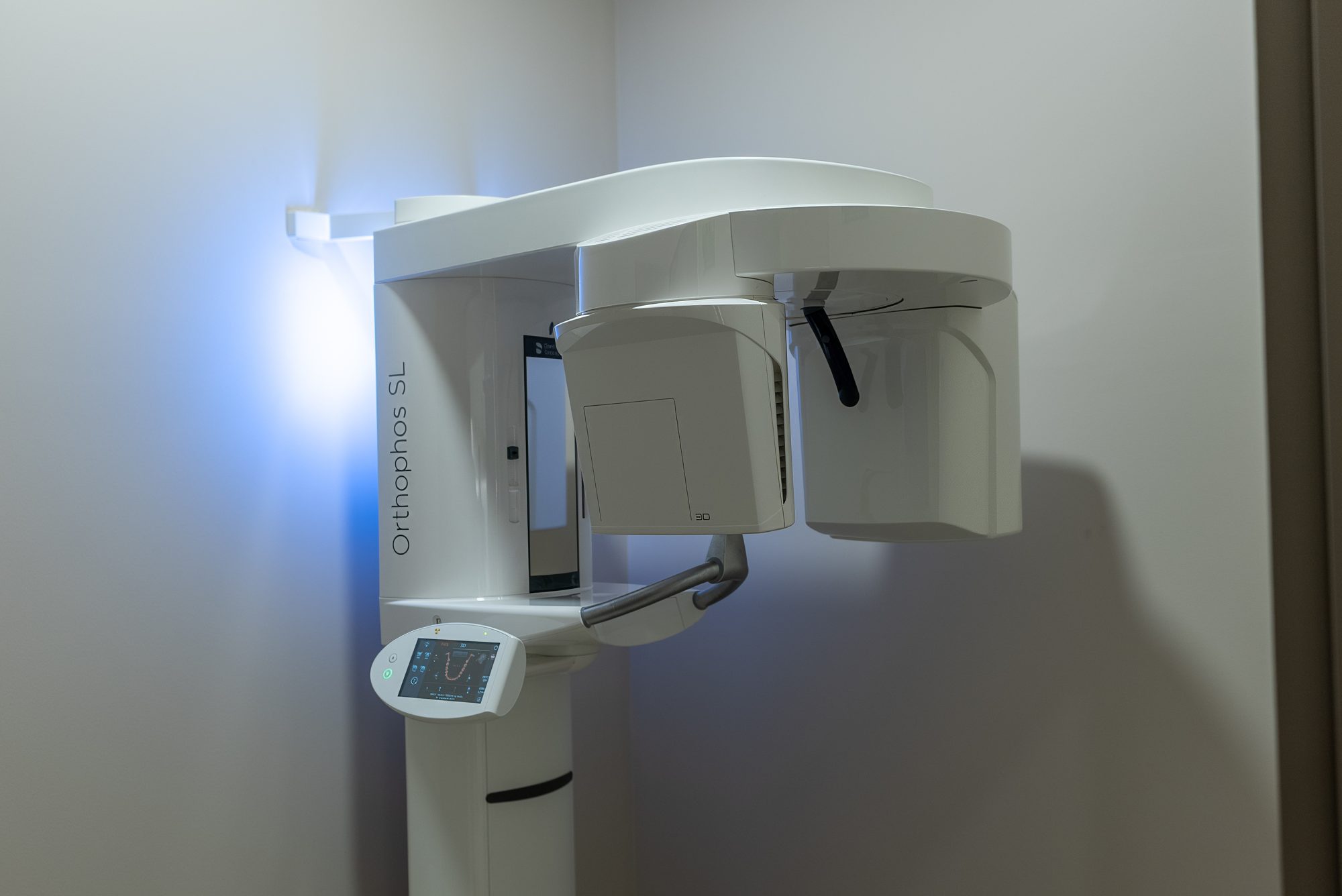
At Lumi Dental in Melrose Park, implant treatment is planned by a dentist using the 3D X-ray and intraoral scan taken in house, and the decision to bury an implant or fit a healing abutment on the day is made at that planning stage and explained to you. A second stage is booked as its own short appointment, with a review about a week later. For patients with a complex medical history, the team at Lumi Dental writes to your GP or specialist before planning surgery. The dental implants page outlines the stages, and the technology page describes the 3D X-ray and scanner.
Questions patients ask
Does second-stage implant surgery hurt?
Not during the procedure, because the gum is numbed, and afterwards most people describe tenderness rather than pain. In my experience it is milder than the placement surgery, and simple pain relief for a day or two is usually enough. See our article on whether getting a dental implant hurts.
How long does the healing abutment stay on?
Until the gum has settled and the crown is ready, commonly a few weeks; the study we cite found gum height stabilised at around six weeks. Our explainer on the parts of a dental implant shows how it differs from the final abutment.
What happens if my healing abutment falls out?
Keep it clean, do not try to refit it, and call the practice the same day. The gum can begin to close over the implant within a day or two, which may mean reopening it.
Can I brush the healing abutment?
Yes, from the day after the procedure, with a soft toothbrush and light strokes over the dome and the gum around it. Hold off on floss and interdental brushes at that site until the dentist says the gum has healed.
Why did my friend not need a second surgery for their implant?
Because their dentist used a one-stage approach, where the healing abutment is fitted at placement. The choice depends on how firm the bone was, whether a graft was placed and what will rest on the area while it heals. Neither route is better in every case.
Planning dental implants? Complimentary implant consult in Melrose Park
If you have an implant healing under the gum, or you are weighing up implant treatment and would like the stages explained first, the team at Lumi Dental in Melrose Park can walk you through it at a complimentary implant consult. Contact Lumi Dental to book, or read about dental implants at Lumi Dental. Patients visit from Ryde, Parramatta, Ermington, Rydalmere and nearby suburbs.
Sources
- healthdirect: Dental implant procedure
- Cambridge University Hospitals NHS Foundation Trust: Dental implants in restorative dentistry
- NCBI Bookshelf (StatPearls): Dental Implants
- PMC (Clinical Oral Implants Research): Supracrestal tissue height changes around the healing abutment after second-stage implant surgery measured by intraoral scanning
About the author

Dr James Tran is a general dentist at Lumi Dental in Melrose Park. He holds a BDent from the University of Sydney and a Graduate Diploma in Oral Implants, and is a Member of the International Congress of Oral Implantologists (MICOI).
This article is general information only and is not a substitute for an examination and individual advice from a registered dental practitioner. Suitability for any treatment varies from person to person.








