

Everyone in a family, including young children, should have their own toothbrush, stored upright so it can air-dry, with the heads not touching other brushes. The American Dental Association advises that toothbrushes should not be shared because sharing can pass bodily fluids and microorganisms from one person to another. For most families the risk from an occasional mix-up is low, but a few simple storage habits keep children's brushes apart and make swapping less likely.
Written by Dr James Tran, BDent (University of Sydney), MICOI, GradDip (Oral Implants), general dentist at Lumi Dental in Melrose Park.
The short version
- One toothbrush per person, every time, including toddlers and visitors.
- Gums can bleed a little during brushing, which is why NSW Health lists toothbrushes among the personal items that can spread hepatitis B.
- Decay-causing bacteria are shared within families in other ways too; our article on whether cavities and gum disease spread by kissing covers that.
- Store brushes upright in open air, not in closed covers while wet.
- If a child uses the wrong brush once, the risk is usually low: rinse your mouth, replace the brush and move on.
- Colours, names and separate slots stop most sibling swaps.
Why sharing a toothbrush is advised against
A used toothbrush is not clean. A review of the research on toothbrush contamination found that the brushes of both healthy adults and adults with oral disease become contaminated with bacteria from dental plaque, from the environment, or both. Moisture and debris left in the bristles help those bacteria survive.
Blood-borne viruses
Brushing can make gums bleed, especially when they are inflamed. NSW Health's hepatitis B fact sheet explains that the virus spreads when infected blood or body fluids enter another person's bloodstream, including through the lining of the mouth, and lists toothbrushes alongside razors and needles as shared personal items that can carry it. The same fact sheet notes that hepatitis B is not spread by hugging, kissing on the cheek or sharing food or utensils. A toothbrush is different because of the blood. Our article on hepatitis B and C and dental treatment explains how dental care is managed for people living with these infections.
Colds, flu and tummy bugs
The same contamination review describes laboratory findings that viruses can survive on toothbrushes for 24 hours. That does not prove a shared brush passes on a cold, but it is one more reason to keep brushes separate when someone in the house is unwell.
Decay-causing bacteria
Streptococcus mutans, one of the main bacteria linked to tooth decay, can pass from mother to child. A systematic review of 36 studies found that all but one confirmed this by genetic testing. The studies matched bacterial strains in mothers and children; they did not identify toothbrushes as a route, but avoiding shared brushes is a simple precaution while a child's teeth are young.
The single rule: one brush per person, upright, dry and apart
Every person has their own brush, and every brush stands upright to dry in the open air without touching another brush. That covers almost every situation a family runs into.
The American Dental Association recommends rinsing the toothbrush thoroughly after each use, storing it upright, and letting it air-dry. It also notes that a moist brush stored in a closed container grows more microorganisms than one left in the open air. The contamination review supports this: studies found higher bacterial counts on brushes kept in closed containers or capped heads than on brushes left to dry in room air.

Storing family toothbrushes
The shared cup problem
Many families keep every brush in one cup by the sink. The heads lean together, the wet bristles touch, and water collects at the bottom of the cup. I usually suggest a holder with a separate slot for each brush, or a separate cup for each person, so the heads stay apart and dry. Clean the holder regularly.
Covers and travel cases
A cover is useful for carrying a brush in a bag, but it should not stay on a wet brush at home. Let the brush dry before covering it, or use a cover with ventilation holes.
The toilet question
The American Dental Association notes that toothbrushes can carry bacteria, including bacteria that can be released into the air when the toilet is flushed, and also that there is no evidence these bacteria cause harm. In a small bathroom it is still sensible to keep brushes as far from the toilet as practical and to close the lid before flushing.
Cleaning and replacing
The American Dental Association does not recommend microwaving brushes or putting them in the dishwasher, because high heat may damage them. It advises replacing a brush every three to four months, or sooner if the bristles are matted or frayed. Our article on how often to replace your toothbrush covers replacement after an illness as well.
Electric toothbrushes in a family
Many families share one electric handle and give each person their own brush head. That can work if each head is clearly marked and stored apart from the others. Follow the manufacturer's instructions for cleaning the handle and the base, wipe the handle after use, and do not swap heads. Our guide to electric toothbrushes for children covers sizes and when children are ready for one.
When someone uses the wrong brush
It happens in most houses with more than one child, and patients I see are often more worried about it than they need to be.
| Situation | Risk in plain words | What to do |
|---|---|---|
| A sibling used the wrong brush once | Low for most families | Replace the brush and label both |
| A toddler chewed a parent's brush | Low | Replace it; give the toddler their own brush to hold |
| Brushes stored in one cup with heads touching | Low but avoidable | Separate slots or cups for each person |
| Brush kept in a closed case while wet | More bacterial growth on the bristles | Let it dry first or use a vented case |
| Someone has bleeding gums | Higher, because blood can be on the bristles | Never share; book a check-up for the gums |
| Someone in the house has hepatitis B or another blood-borne virus | Higher | Keep their brush and razor clearly separate; talk to your GP about testing and vaccination for household members |
| A family member has a cold, flu or gastro | Low to moderate while they are unwell | Keep their brush apart; replace it once they recover |
If the person whose brush was used has bleeding gums or a blood-borne virus, mention it to your GP, who can advise on testing. NSW Health advises that people who live with someone with chronic hepatitis B should have a blood test and be vaccinated if they are not immune. Bleeding when brushing is a reason for a check-up in itself; our article on bleeding gums when brushing explains the usual causes.
Tips to stop siblings swapping brushes
- Colour code. Give each child one colour for their brush, cup and towel, and keep it the same each time you replace the brush.
- Names or stickers. A waterproof name label or a sticker on the handle helps younger children who cannot tell similar brushes apart.
- Different shapes. A character handle or a different brush style for each child makes mix-ups less likely.
- Their own slot. Children like having a place that belongs to them. A labelled slot in the holder works better than a shared cup.
- Brush at the same time. A parent can see who picks up which brush, and children copy the adults.
If brushing itself is a battle, our article on a child who will not brush their teeth has practical ideas.
Travel, sleepovers and school camps
Pack one brush per child in its own labelled case, ideally one with ventilation holes. Tell children before a camp that brushes are not lent or borrowed, even between friends. On arrival, take the brush out of the case so it can dry overnight. If a brush is lost, buy a cheap replacement rather than borrowing one.
How we approach this at Lumi Dental
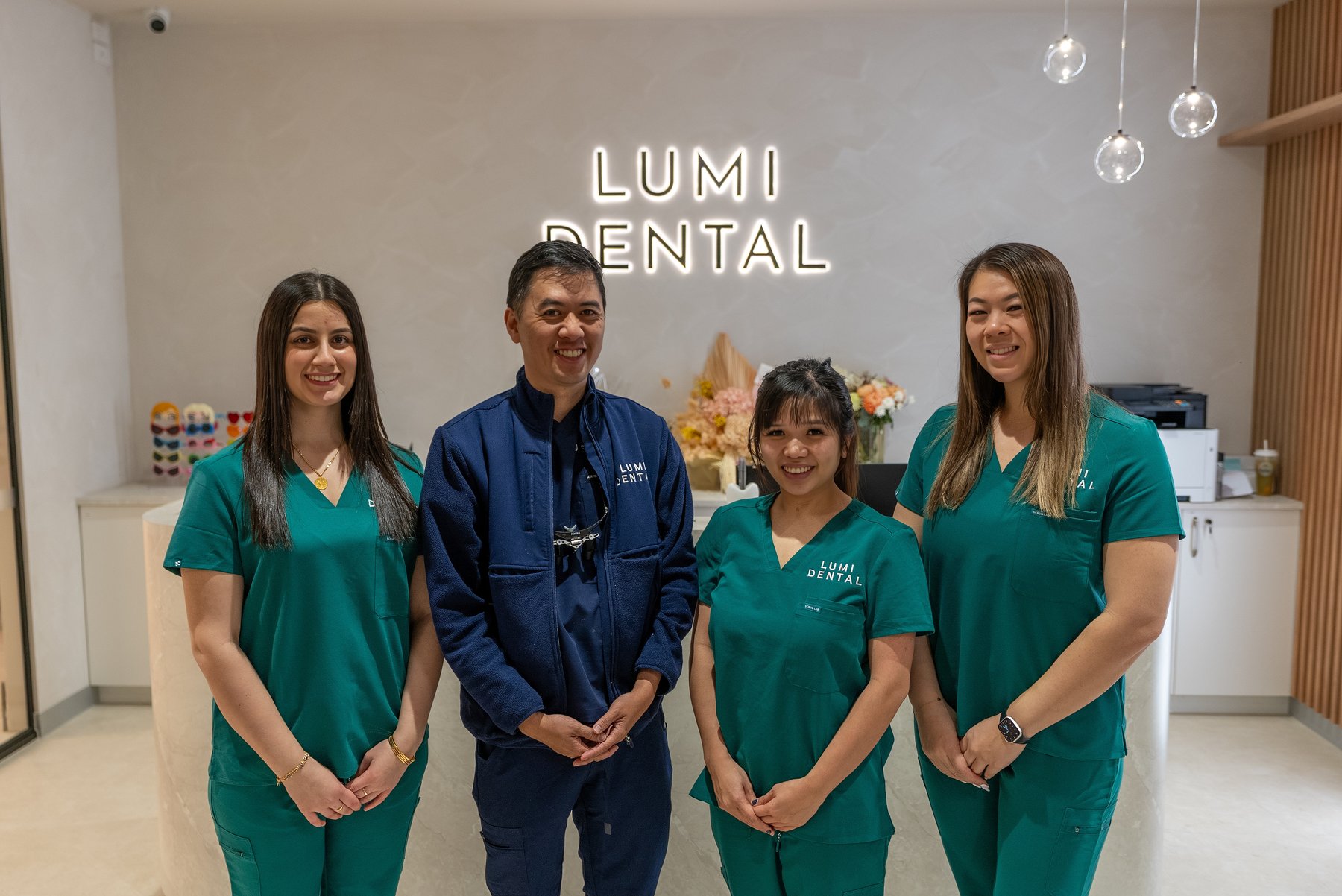
At a family check-up, the oral health therapists at Lumi Dental go through brushing technique, toothbrush choice and storage with parents and children together, and the dentist examines each person's teeth and gums. Bleeding gums are checked and treated, because they are the main reason a shared brush carries more risk. The whole practice accepts the Child Dental Benefits Schedule for eligible children; read about children's dentistry at Lumi Dental.
Questions patients ask
Is it bad to share a toothbrush with your partner?
It is not recommended. Sharing can pass bacteria and, if either of you has bleeding gums, small amounts of blood. Kissing already shares some saliva, but a brush also reaches the gum line, which is why each person should have their own.
What should I do if my child used my toothbrush?
For most families the risk is low. Replace the brush, label both and keep them in separate slots; our guide to replacing your toothbrush covers when else to swap it. If you have bleeding gums or a blood-borne virus, ask your GP for advice.
Can you catch hepatitis B from a toothbrush?
It is possible, because hepatitis B spreads through blood, and NSW Health lists toothbrushes among the personal items that should not be shared. NSW Health describes vaccination as the best protection and recommends it for all children, starting at birth.
Should toothbrushes touch each other in the holder?
Ideally no. Brushes that touch share moisture and whatever is on the bristles. A holder with separate slots, or one cup per person, keeps them apart and lets them dry.
Should I use a toothbrush cover at home?
Not on a wet brush. The American Dental Association notes that a moist brush in a closed container grows more microorganisms than one left in the open air. Use covers for travel, preferably vented ones.
Book your family's check-ups at Lumi Dental in Melrose Park
If you would like a hand with brushing routines, toothbrush choice or bleeding gums, the team at Lumi Dental can see the whole family. See current offers, read about children's dental care, or check your child's eligibility under the Child Dental Benefits Schedule. Lumi Dental is at Melrose Central in Melrose Park, with on-site parking, and sees families from Ryde, Parramatta, Ermington and Rydalmere.
Sources
- American Dental Association: Toothbrushes (oral health topics)
- NSW Health: Hepatitis B fact sheet
- Frazelle and Munro: Toothbrush contamination, a review of the literature (PMC)
- Evidence-Based Dentistry: Mother-to-child transmission of Streptococcus mutans (PubMed)
About the author

Dr James Tran is a general dentist at Lumi Dental in Melrose Park. He holds a BDent from the University of Sydney and a Graduate Diploma in Oral Implants, and is a Member of the International Congress of Oral Implantologists (MICOI).
This article is general information only and is not a substitute for an examination and individual advice from a registered dental practitioner. Suitability for any treatment varies from person to person.








