
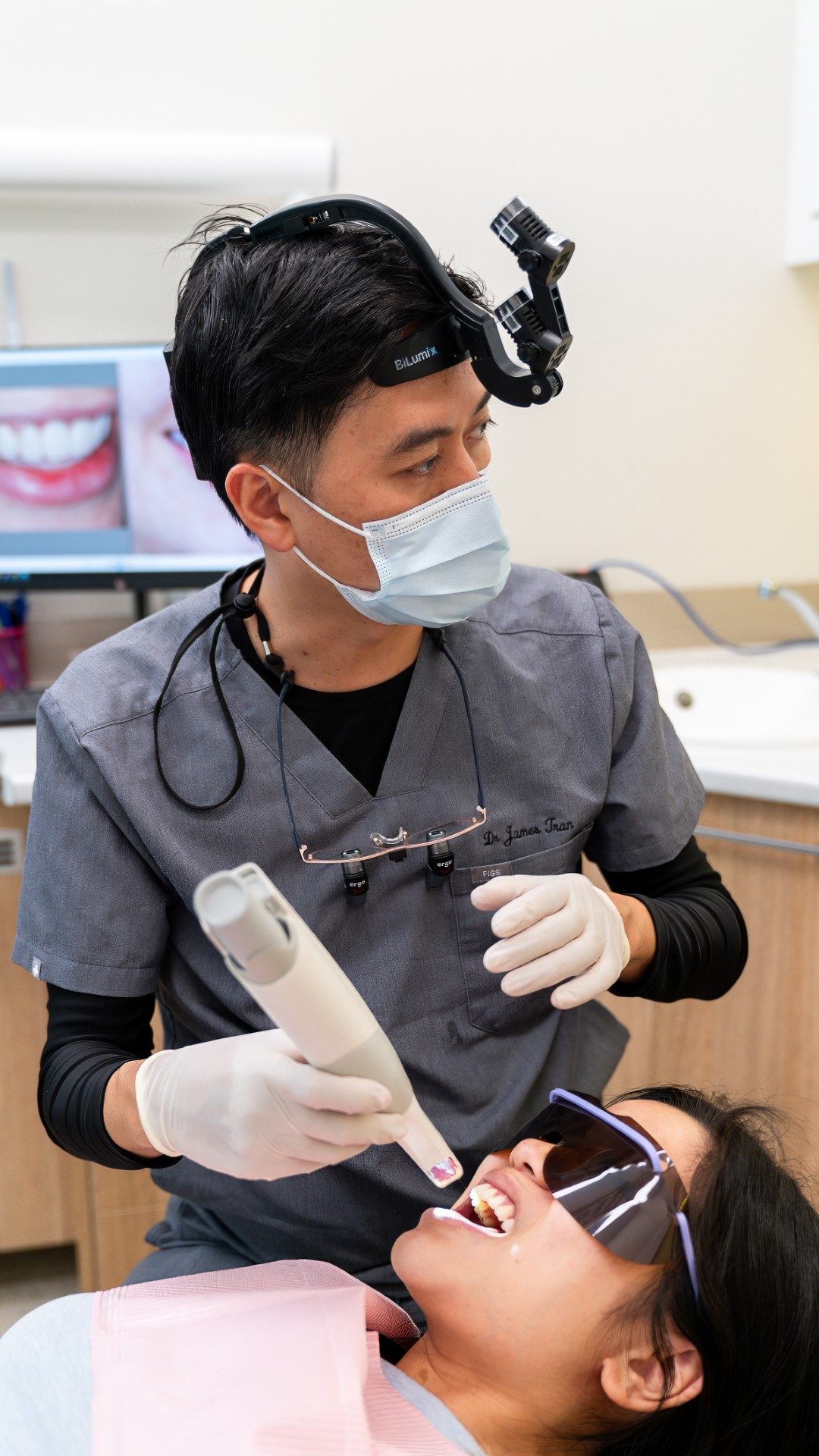

A suction lower denture is a conventional full lower denture made with a closed-mouth impression technique, so that its whole border seals against the moving floor of the mouth, cheeks and lips and air pressure holds it down without implants or adhesive. It suits people with a reasonable amount of remaining ridge and healthy, mobile soft tissue, and it does not work for everyone. An international consensus statement from McGill University still names a two-implant overdenture as the first-choice standard of care for a toothless lower jaw, so the practical question is which option fits your mouth and your budget.
Written by Dr James Tran, BDent (University of Sydney), MICOI, GradDip (Oral Implants), general dentist at Lumi Dental in Melrose Park.
The short version
- Lower dentures are harder to keep in than uppers. Our guide to why lower dentures fit worse than uppers explains the anatomy.
- A suction lower denture is not a different material or a gadget. It is a standard acrylic denture shaped by a particular impression method.
- Suction works best with a reasonable ridge, defined retromolar pads and soft tissue that moves freely. A flat ridge, a dry mouth or a restless tongue make the seal hard to hold.
- Expect a longer impression visit and a trial fitting before the final denture.
- An implant overdenture clips onto two implants and does not depend on a seal; a fixed full-arch bridge does not come out at all.
- If your lower denture lifts when you talk or eat, have the fit assessed before buying another tube of adhesive.
The single rule: if the denture lifts when you talk, assess the ridge before reaching for adhesive
If a lower denture floats, clicks or lifts off the gum while you speak or chew, the first step is an examination of how much ridge is left and how the tongue, cheeks and floor of the mouth move, because that decides what can help. A suction denture is worth considering when the ridge is reasonable and the tissue healthy and mobile. If the ridge is flat and the floor of the mouth sits above it, in my experience no impression technique produces a lasting seal, and the conversation turns to implants. Adhesive hides the problem rather than fixing it.
How a suction lower denture works
In the lower jaw the denture border sits against tissue that moves, so a seal recorded with the mouth open and the tongue still breaks as soon as you close and swallow.
A closed-mouth impression that moves with you
The suction-effective technique was described by the Japanese prosthodontist Dr Jiro Abe and is set out in the reference text Mandibular Suction-Effective Denture. The final impression is taken with the mouth closed while you do the things that normally dislodge a denture: swallowing, moving the tongue from side to side, pushing it forward and pursing the lips. The finished border is shaped by the moving tissue instead of fighting it.
A seal around the whole border
If the border is right, the lips, cheeks, floor of the mouth and the retromolar pads (the firm cushions of tissue behind the last molars) close over the edge of the denture all the way round. Air cannot get underneath, so when the denture lifts, atmospheric pressure pushes it back down. In a published case report of a severely resorbed lower jaw, the retention of a 3D-printed denture made this way was measured with a digital force gauge at around two newtons, roughly the pull of a 200 gram weight: lower than the figures typically reported for implant attachments, but judged adequate and described as a practical, non-surgical option. A good suction denture feels secure for talking and for soft to moderate chewing, not clamped in place.
Who suits a suction lower denture, and who does not
Not everyone can achieve suction, and reported results vary from mouth to mouth.
Features that favour suction
- A reasonable remaining ridge height, so there is a slope for the border to seal against.
- Well-defined retromolar pads and a floor of the mouth that moves freely rather than sitting high against the ridge.
- Healthy, moist mucosa. Saliva is part of the seal, so a dry mouth from medicines works against it.
Features that make suction unlikely
- A flat or knife-edge ridge after many years without teeth, where little height is left for a border to grip.
- Loose, mobile ridge tissue, sometimes called a flabby ridge, which deforms under the denture and breaks the seal.
- A strong, restless tongue or a clenching habit that repeatedly levers the denture up.
- A wish to chew hard foods with confidence; here an implant overdenture is the more reliable answer.
Being in the second group is not a dead end. It usually means the implant conversation happens first, with the denture designed to clip onto them. Our guide to implant-retained overdentures explains that option.
Suction denture, implant overdenture or fixed full arch?
The McGill consensus, drawn up by prosthodontists and implant researchers, concluded that a two-implant overdenture placed at the front of the lower jaw should be the first-choice standard of care for an edentulous mandible. A systematic review and meta-analysis comparing 400 people with conventional lower dentures and 412 with two-implant overdentures found that overall satisfaction, comfort, speech, chewing and stability all favoured the implant overdenture, while appearance was no different and hygiene was not better. A suction denture is the option for people who want better retention without surgery, or who are not yet ready for implants.
| Option | How it stays in | Surgery | Chewing confidence | Suits best |
|---|---|---|---|---|
| Conventional lower denture | Fit, muscle control, often adhesive | None | Soft to moderate foods | Good ridge, experienced wearer |
| Suction lower denture | Border seal and atmospheric pressure | None | Soft to moderate foods, more secure for speech | Reasonable ridge, healthy mobile tissue, moist mouth |
| Two-implant overdenture | Clips onto two implants; removable | Minor, usually under local anaesthetic | Most foods | Flat ridge, failed suction, dry mouth |
| Fixed full-arch bridge (All-on-X) | Fixed to four or more implants | Larger procedure | Close to natural teeth | People who want nothing removable and have enough bone |
Lumi Dental's fixed full-arch service is All-on-X.
What the appointments involve
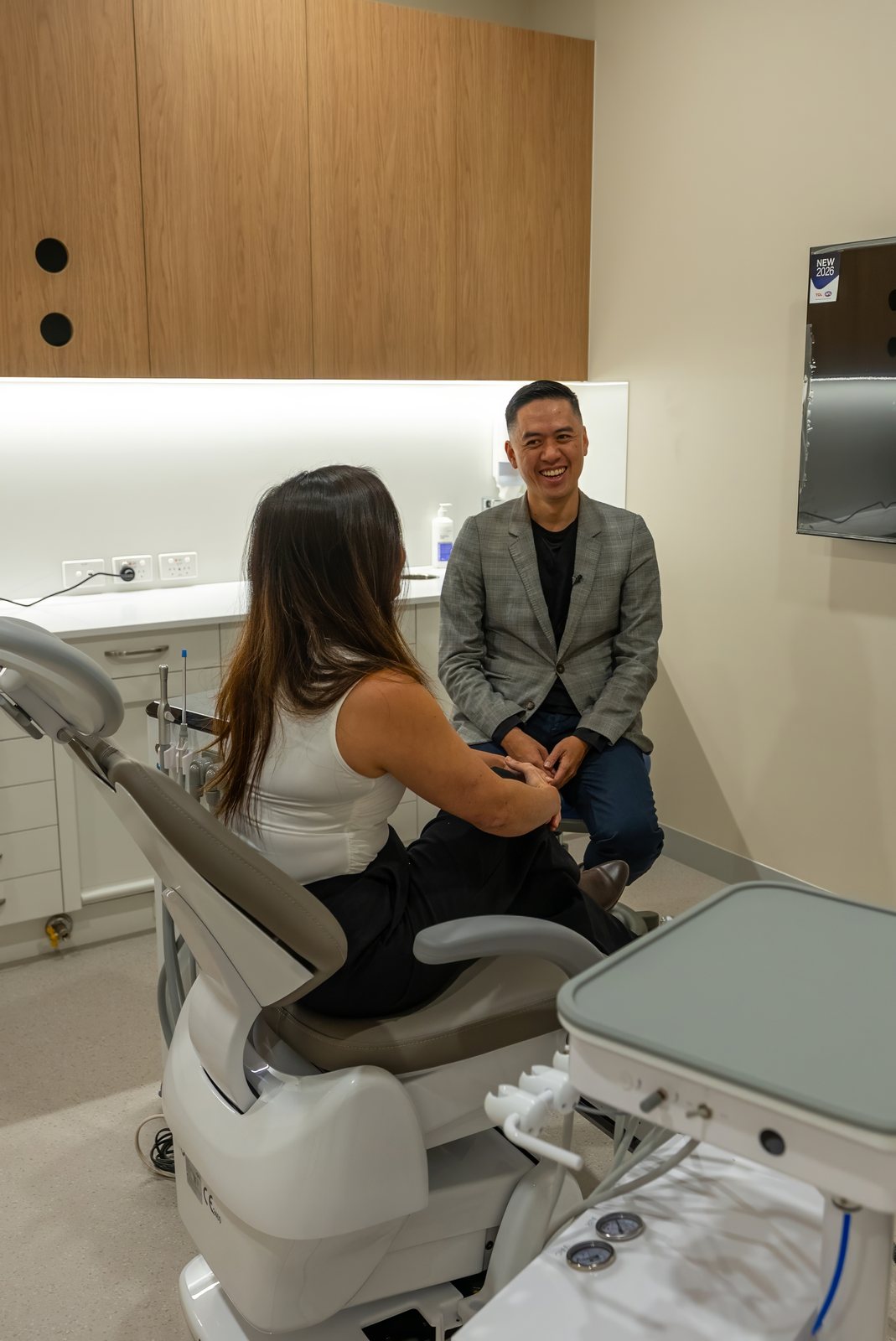
Better Health Channel notes that several visits are usually needed so the fit can be checked. A suction lower denture follows the same path with extra care at two points.
- Examination and planning. The ridge, retromolar pads, floor of mouth and tongue are assessed, and the dentist says plainly whether suction is likely. After extractions, Better Health advises that measurements usually start two to three months later so the bone and gum can settle.
- Preliminary impression or scan. A digital scan can capture the ridge, though the moving borders still need a physical functional impression.
- The closed-mouth functional impression. A custom tray is trimmed to the ridge and the border material is shaped while you swallow, move your tongue and purse your lips. This visit decides whether suction is achieved.
- Trial denture. Speech, appearance and the seal are tested while you talk and swallow. Where 3D printing is available a trial denture can be printed and adjusted before the final one is made.
- Fitting and review. Sore spots are adjusted over the following weeks. Better Health advises returning promptly if the denture presses on the gum, and I usually book a review within the first fortnight.
Tissue does not stay the same. Bone keeps shrinking slowly, so a denture that held well may loosen over the years and need a reline; our guide to relines versus new dentures explains when each is the better call. Never clean a denture in hot water, which can change its shape and with it the seal.
How we approach this at Lumi Dental
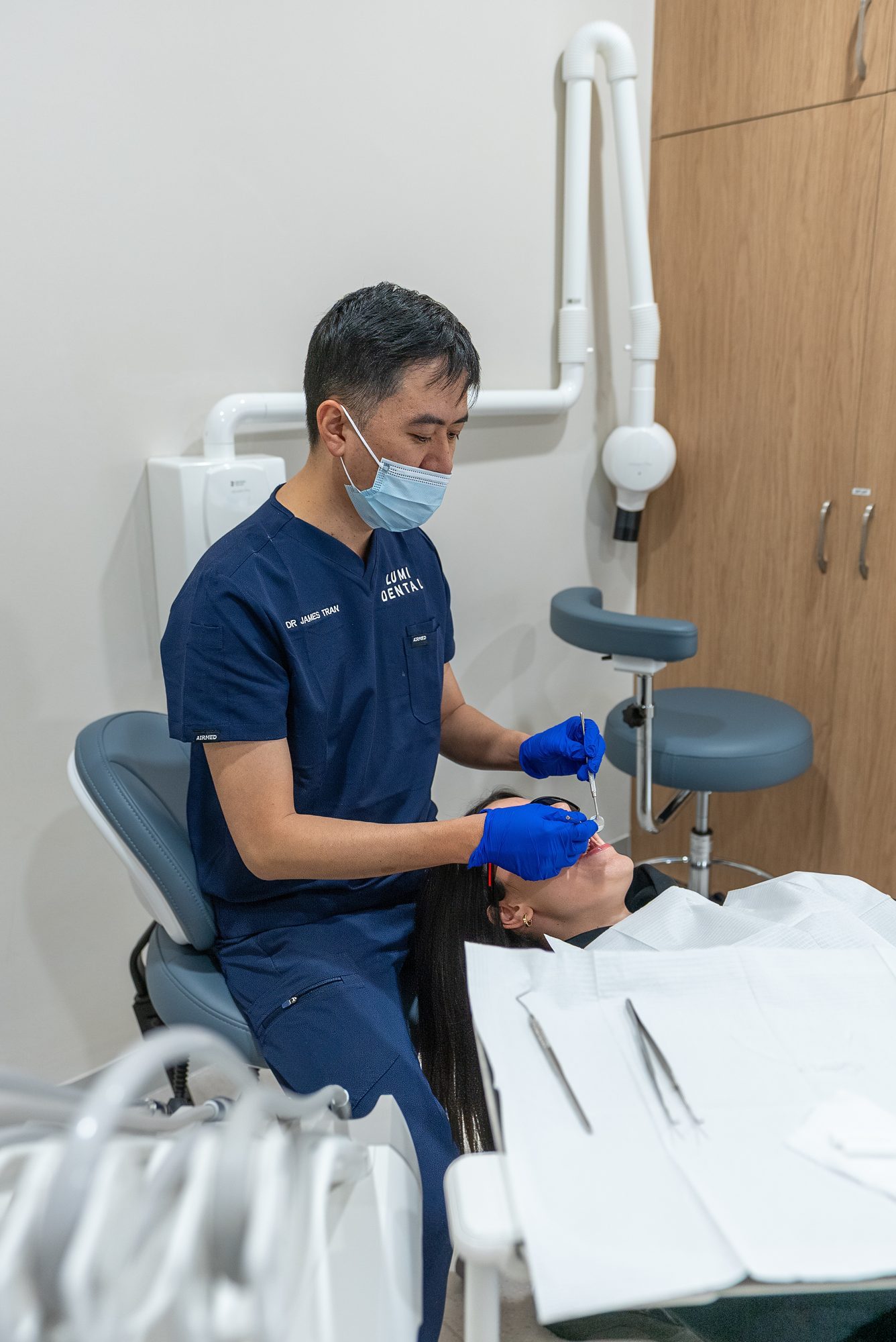
At Lumi Dental in Melrose Park, a loose lower denture starts with an examination by a dentist. The ridge, soft tissue, tongue and opposing teeth or denture are assessed, and a 3D X-ray (CBCT) is taken in house when implants are part of the discussion. Dentures and denture relines are offered at the practice, with digital intraoral scanning and in-house 3D printing used where they help, including printed trial denture designs. Where the ridge makes suction unlikely, the team at Lumi Dental talks through an implant overdenture or the All-on-X fixed option, and complex prosthodontic cases may be referred to a registered specialist. Read more about dental implants at Lumi Dental.
Questions patients ask
What is a suction lower denture?
It is a full lower denture whose border has been shaped with a closed-mouth impression so that it seals all the way round against the lips, cheeks and floor of the mouth. Air cannot get underneath, so atmospheric pressure holds it down.
Do suction dentures really work?
For the right mouth, yes, though the published evidence is mostly technique descriptions and case reports rather than large trials, and not everyone achieves suction. A reasonable ridge, healthy mobile tissue and a moist mouth are the main predictors.
Can I still use denture adhesive with a suction denture?
You can, but needing it every day suggests the seal is not holding and the fit should be checked. Our denture adhesive guide covers how to use it sparingly and when it is masking a problem.
Is a suction denture better than implants?
It is less invasive and usually less costly, but an implant overdenture is more retentive and does not depend on a seal. A meta-analysis found that satisfaction, comfort, speech, chewing and stability all favoured two-implant overdentures over conventional lower dentures. Many patients I see choose suction first and keep implants in reserve.
Why has my lower denture become loose after years of fitting well?
Usually because the bone under it has slowly shrunk, so the border no longer seals. Weight loss and medicines that dry the mouth also loosen a denture; our article on dentures loosening after weight loss or GLP-1 medication explains why.
Struggling with a loose lower denture? Complimentary consult in Melrose Park
If your lower denture lifts when you talk or only stays put with adhesive, the team at Lumi Dental in Melrose Park can assess whether a suction lower denture, a reline or an implant overdenture is the sensible next step. Contact Lumi Dental to book a complimentary consult, or read about dental implants at the practice. Patients visit from Ryde, Parramatta, Ermington, Rydalmere and nearby suburbs.
Sources
- PMC (case report): 3D-Printed Complete Dentures for Patients With Limited Mandibular Residual Ridges
- PMC: Two implant overdenture, the first alternative treatment for patients with complete edentulous mandible (McGill Consensus)
- PMC: Quality of life and satisfaction with complete dentures versus mandibular overdentures, systematic review and meta-analysis
- Better Health Channel: Dentures
About the author

Dr James Tran is a general dentist at Lumi Dental in Melrose Park. He holds a BDent from the University of Sydney and a Graduate Diploma in Oral Implants, and is a Member of the International Congress of Oral Implantologists (MICOI).
This article is general information only and is not a substitute for an examination and individual advice from a registered dental practitioner. Suitability for any treatment varies from person to person.








