
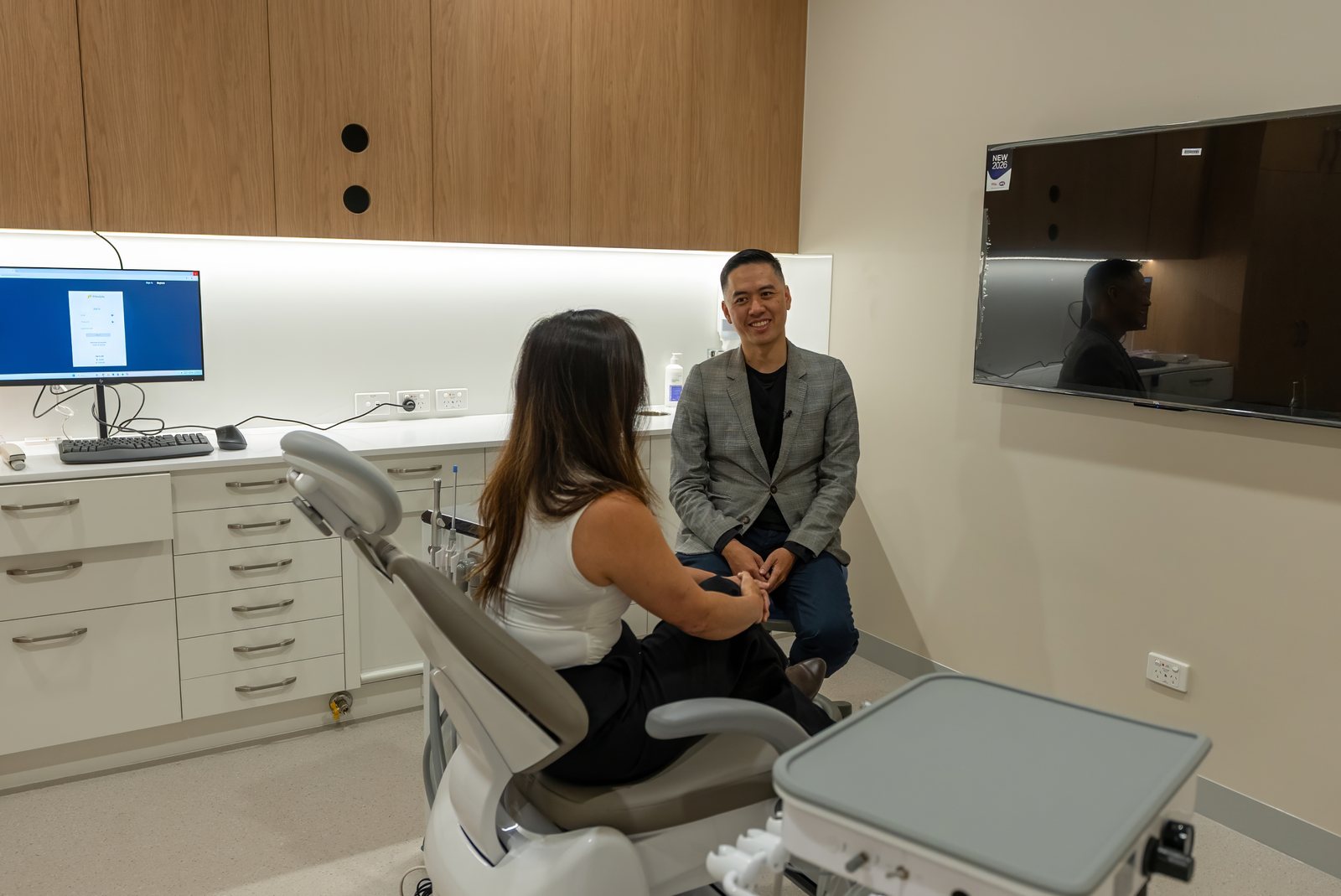

Teeth whitening after an organ transplant is usually possible, but because it is elective, it waits until your transplant team says you are past the early high-risk period and stable, and until any gum problem, ulcer or decay has been treated. DonateLife reports that around 1,400 Australians receive an organ transplant from a deceased donor in a single year. Once you are stable, whitening works in much the same way as it does for anyone else, with the gums and soft tissues watched more closely.
Written by Dr James Tran, BDent (University of Sydney), MICOI, GradDip (Oral Implants), general dentist at Lumi Dental in Melrose Park.
The short version
- Whitening is cosmetic, so it never comes before transplant recovery. Your transplant team decides when elective dental care can start.
- Before any whitening, the dentist checks for gum overgrowth, thrush, ulcers, decay and gum disease, and treats these first.
- Anti-rejection medicines do not stop peroxide working on the tooth, but they can change the gums, the fit of trays and how quickly sore spots heal.
- Questions about antibiotic cover go to your transplant team. Nothing about whitening is a reason to stop or change a transplant medicine.
- Our guide to dental care for organ transplant recipients covers care before surgery and in the early months. This article is only about whitening.
- Crowns, veneers and fillings do not change colour, so front-tooth restorations are planned around.
The single rule: stable first, a healthy mouth second, whitening third
A fact sheet from the US National Institute of Dental and Craniofacial Research advises that, apart from emergency care, people who receive an organ transplant should avoid dental treatment for at least three months. It explains that immunosuppressant doses are highest early on, when the risk of rejection is greatest, and that the new organ typically stabilises within three to six months, after which treatment can go ahead once the medical team gives clearance. Practice varies between transplant units and organs, so your own team sets the timing. Once you are cleared, the dentist fixes anything that should come before cosmetic work, and only then talks about shade. In my experience, people who have been through a transplant are used to this kind of sequencing.
| Situation | What may happen with whitening |
|---|---|
| The first months after the transplant | Whitening waits. Only urgent dental care goes ahead, planned with the transplant team. |
| Gum overgrowth | The gums are treated and allowed to settle first, and trays are made once the gum line is stable. |
| Thrush or mouth ulcers | Whitening waits until they have cleared and the cause is understood. |
| A rejection episode or a change in anti-rejection medicine | Elective care is paused until the transplant team says you are stable again. |
| Dry mouth | Sensitivity may be more noticeable, so shorter sessions, fluoride and regular sips of water may help. |
| Crowns, veneers or large fillings on front teeth | These keep their colour, so the shade goal is set around them or replacements are planned afterwards. |
Why elective dental work waits in the early months
Anti-rejection medicines lower the body's ability to fight infection. The same NIDCR fact sheet notes that bacterial, viral and fungal infections are more common in transplant recipients, especially soon after the operation, and that these medicines can hide the usual signs of a dental infection. It also advises only emergency dental care while an organ is being rejected.
Whitening gel does not cut the gum, but the visits around it may: a clean beforehand, a check of the gum pockets or a small repair. The timing question covers the whole plan, not just the gel.
Antibiotic cover is a question for the transplant team
Transplant Australia advises that if you are having dental work that may injure the gums, you should contact your transplant doctor in advance, as you may need antibiotics beforehand. Whether that applies to the clean before whitening is for your transplant team to decide. I usually ask patients to raise it before the first appointment.
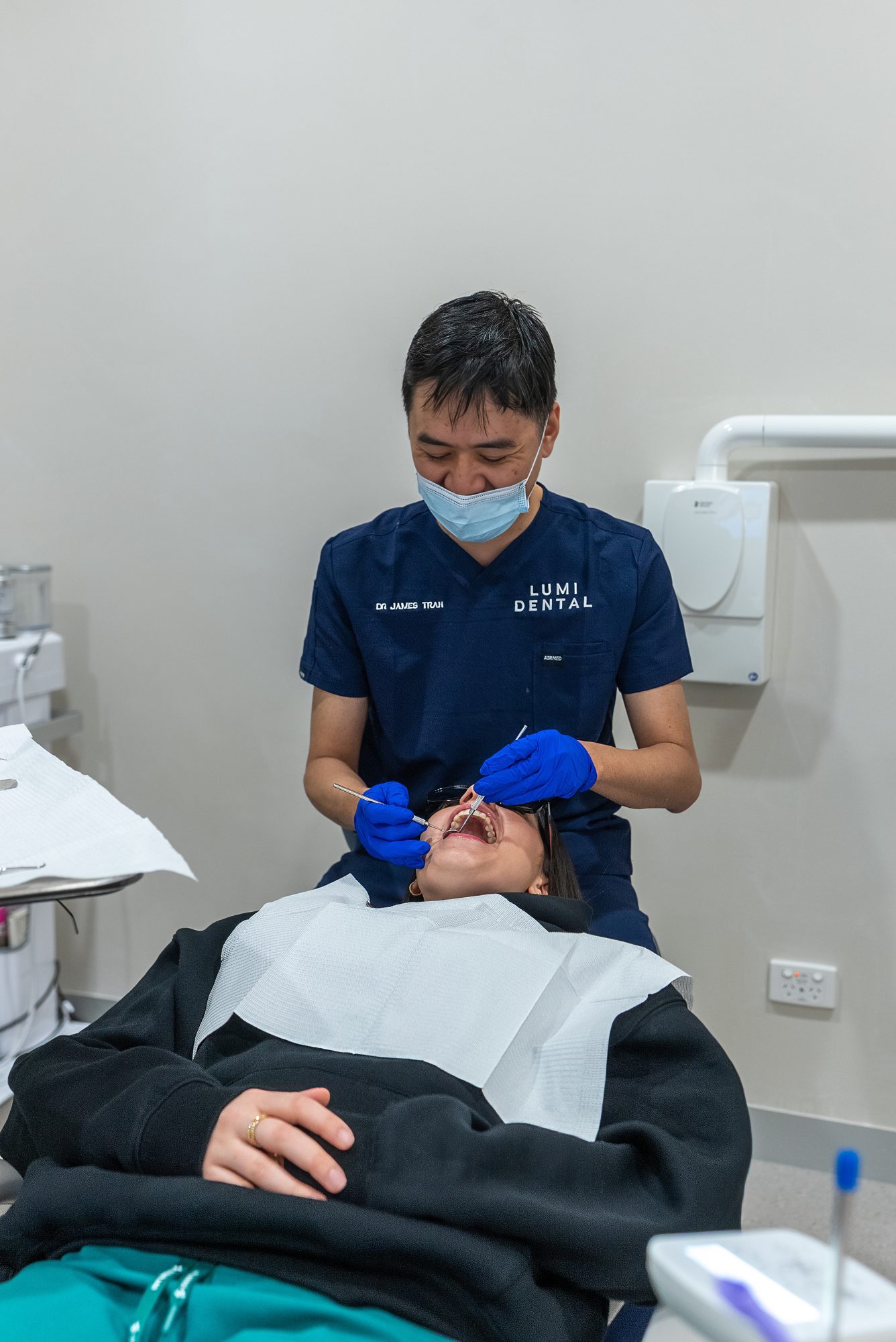
Gum overgrowth, tray fit and an uneven gum line
Some anti-rejection medicines can make the gums thicken and grow over the teeth. A case report with a literature review in BMJ Case Reports describes gum overgrowth in about 30% of people taking ciclosporin, with reported rates ranging very widely between studies. Some blood pressure medicines in the calcium channel blocker group, such as amlodipine and nifedipine, are also linked with gum overgrowth, and the NIDCR fact sheet notes that they may make the problem worse when taken with ciclosporin. It also notes that tacrolimus, which is now often used instead, causes less overgrowth. Our article on medicines and gum overgrowth explains why plaque plays such a large part in how much the gum grows.
Why it matters for whitening
- Trays made over swollen gums fit poorly, and gel can pool against the gum instead of the tooth.
- Overgrown gum covers part of each tooth. If the gum later shrinks back after treatment, a band of unwhitened tooth can show near the gum line.
- An uneven gum line looks more uneven once the teeth are lighter.
So the dentist usually treats the gums first with cleaning and gum therapy, lets them settle, then takes the scans for trays. Any change to the medicine is a decision for your medical team, and gum surgery, where needed, is by referral to a periodontist, a registered gum specialist.
Thrush, ulcers and cold sores come first
The NIDCR fact sheet lists oral thrush, reactivated cold sore virus and mouth ulcers among the mouth problems linked with immunosuppression. It notes that tacrolimus is associated with mouth ulcers, and that ulcers linked with high sirolimus levels should be referred back to the transplant team.
Peroxide on broken or inflamed tissue stings, so whitening waits until these have cleared. Our guide to oral thrush in adults explains how it is recognised and treated, and our article on whitening with a cold sore or mouth ulcer covers how long to wait. If ulcers keep coming back, tell both teams.
The lips and mouth get a closer look
Transplant Australia notes that transplant medicines make the skin extra sensitive and more susceptible to skin and lip cancers. The NIDCR fact sheet also lists cancers of the mouth and lip among those that sometimes occur with long-term immunosuppression, and advises dentists to screen at every appointment.
So the whitening consultation includes a look at the lips, tongue, cheeks and floor of the mouth, not just the teeth. It is a routine check, not a reason for alarm. Mention any sore or rough patch that has not healed, and keep up the skin checks your doctor has arranged.
Dry mouth, sensitivity and choosing a whitening method
Transplant Australia lists dry mouth among the dental problems transplant recipients should watch for, alongside decay, ulcers and gum disease. A dry mouth can make whitening sensitivity more noticeable. The NIDCR fact sheet suggests saliva substitutes and fluoride rinses for transplant patients with a dry mouth. Our article on whitening with a dry mouth explains how wear times and products can be adjusted.
If you had a kidney transplant after years on dialysis, older stains, enamel wear or long-standing dryness may still be present. Our guide to whitening with kidney disease or on dialysis covers that earlier stage.
Take-home trays or in-chair whitening
Take-home trays let you set the pace and skip a night if a tooth or gum feels sore. In-chair whitening uses a barrier painted over the gums, which some people prefer if their gums irritate easily. Patients I see after a transplant often start slowly with trays, because it is easy to pause.
Crowns, fillings and realistic shade goals
Peroxide lightens natural tooth, not porcelain, composite or metal. A crown or bonded filling on a front tooth keeps its shade, so the dentist sets a goal that blends with it or plans to replace it once the new shade has settled.
How we approach this at Lumi Dental
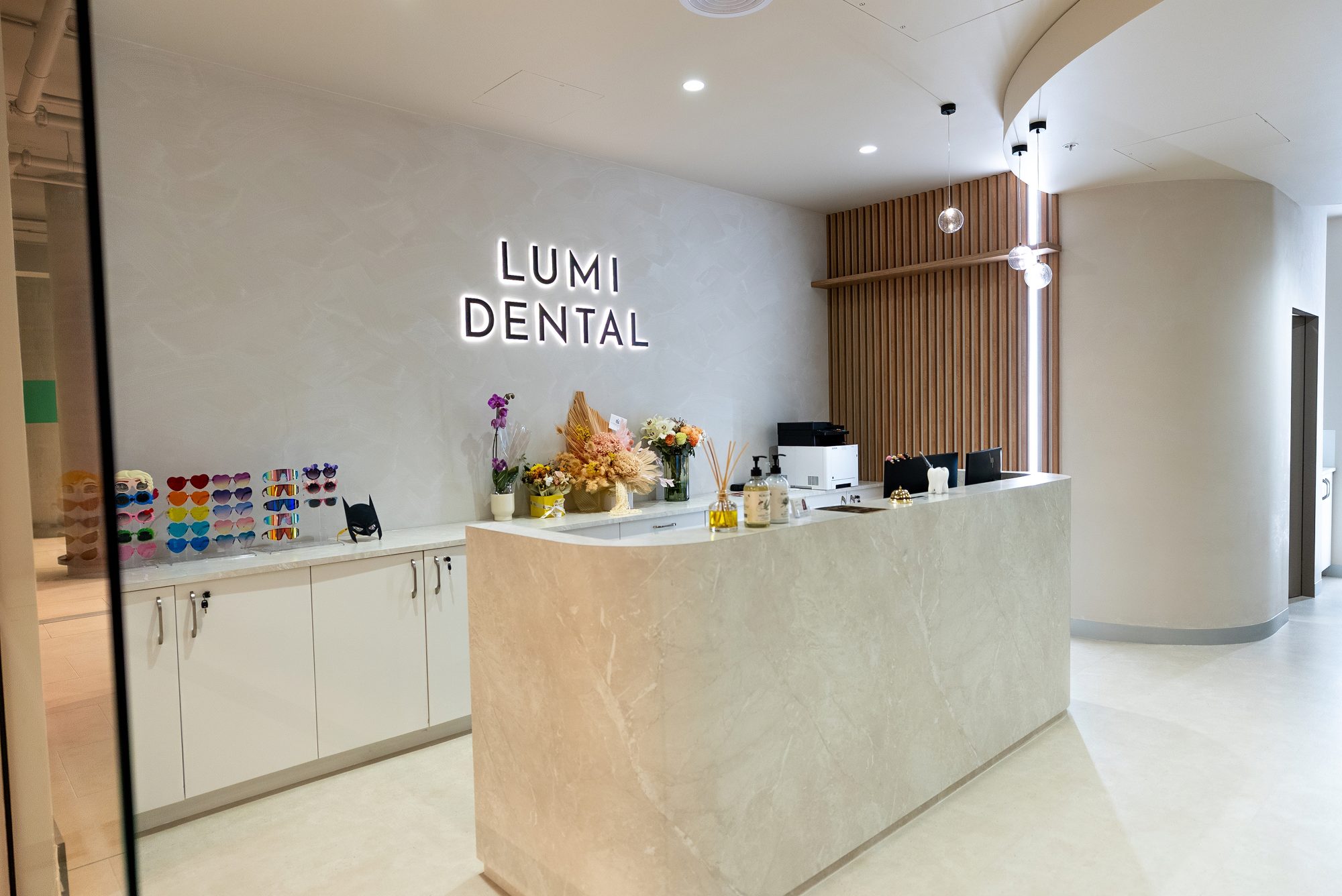
At Lumi Dental, whitening starts with an examination by a dentist, who asks when your transplant was, which organ, who your transplant team is and which medicines you take. Bring an up-to-date medicine list. Where it helps, the team at Lumi Dental writes to your transplant team or GP before planning treatment, and the oral health therapists manage cleaning and gum therapy first if the gums need it. The whitening options are named Lumi Home, Lumi Refresh and Lumi Radiance, and the dentist will explain which may suit you once your mouth is ready. You can read more on the teeth whitening page.
Questions patients ask
Can I get my teeth whitened after a kidney transplant?
Usually yes, once your transplant team says you are stable and any gum problems, ulcers or decay have been treated. The whitening itself is much the same as for anyone else.
How long after a transplant can I whiten my teeth?
There is no single number. One widely used fact sheet advises avoiding routine dental treatment for at least three months, and your transplant team sets the timing for you. Our guide to dental care after a transplant explains why the early months are different.
Do I need antibiotics before teeth whitening after a transplant?
That is a decision for your transplant team. Whitening gel does not cut the gum, but a clean beforehand may, so ask your team before the first visit.
Will anti-rejection medicine stop whitening from working?
Not as a rule. Peroxide acts on the tooth; the medicines matter more for the gums, healing and dry mouth.
Can whitening make gum overgrowth worse?
Gum overgrowth is linked to certain medicines and to plaque at the gum line, which is why the gums are treated before whitening. Gel on swollen gum can sting, so the dentist will want the gum settled first. If you are unsure, ask through the contact page before booking.
Thinking about whitening? Complimentary cosmetic consult in Melrose Park
If you have had an organ transplant and would like a brighter smile, the team at Lumi Dental can check your teeth, gums and lips, talk with your transplant team where needed and help you plan when whitening may suit you. Book a complimentary cosmetic consult at Melrose Central in Melrose Park, or read about teeth whitening options at Lumi Dental. Patients visit from Ryde, Parramatta, Ermington and Rydalmere, and there is on-site parking.
Sources
- DonateLife: Australian donation and transplantation data
- Transplant Australia: Bone and dental health
- National Institute of Dental and Craniofacial Research: Dental management of the organ or stem cell transplant patient
- PMC (BMJ Case Reports): Cyclosporine A and amlodipine induced gingival overgrowth in a kidney transplant recipient, case presentation with literature review
About the author

Dr James Tran is a general dentist at Lumi Dental in Melrose Park. He holds a BDent from the University of Sydney and a Graduate Diploma in Oral Implants, and is a Member of the International Congress of Oral Implantologists (MICOI).
This article is general information only and is not a substitute for an examination and individual advice from a registered dental practitioner. Suitability for any treatment varies from person to person.







