


Teeth whitening after bariatric surgery is best left until eating has settled and any vomiting or reflux is under control, and then started only after a dentist has checked for erosion and sensitivity. Whitening does not repair enamel worn by stomach acid, and on thin enamel it can make sensitivity worse. A scoping review in Obesity Surgery found that tooth wear was worse after surgery in four of the six studies that measured it, which is why the check comes first.
Written by Dr James Tran, BDent (University of Sydney), MICOI, GradDip (Oral Implants), general dentist at Lumi Dental in Melrose Park.
The short version
- Our article on bariatric surgery and your teeth covers wear patterns, reflux, grazing and rinsing after vomiting. This one is only about whitening.
- The early weeks of liquids, purée and soft food are for healing. Whitening can wait until eating has settled.
- Regular vomiting or daily reflux comes first. Peroxide on acid-softened, thin enamel is more likely to sting.
- Shakes and flavoured drinks sipped through the day add stain and acid; iron supplements can leave dark surface marks that a clean removes.
- A dentist checks for erosion and sensitivity before choosing gel strength and wear time.
- Your bariatric team and GP manage nutrition and supplements. Nothing is skipped or changed for whitening.
The single rule: settle first, check the enamel, then whiten gently
If you have had a sleeve gastrectomy or gastric bypass and want whiter teeth, start with timing, not shade. Wait until eating has settled and vomiting or reflux is under control. Then have a dentist look for erosion and sensitivity, because that decides whether whitening suits you, what strength of gel is used and for how long. Whitening never fixes erosion, and on thin enamel it can make teeth more sensitive. In my experience, people who follow that order have a more comfortable course.
| Stage or situation | What to do before whitening |
|---|---|
| First months after surgery | Focus on healing and supplements; book a check-up rather than whitening |
| Regular vomiting or regurgitation | Tell your surgical team or GP, rinse with water afterwards, and wait until it settles |
| Daily reflux | Raise it with your GP or surgical team and whiten only once it is controlled |
| Taking iron supplements | Keep taking them as prescribed; any dark surface stain is cleaned off first |
| Sipping shakes through the day | Finish drinks within a set time and follow with water |
| Erosion found at the examination | Protect what is left first; a lower-strength gel, shorter wear, or no whitening at all |
| Stable and well | Whitening can usually go ahead after an examination and a clean |
The early months: healing comes first
After a sleeve or bypass, eating is rebuilt in stages. A patient leaflet from Chelsea and Westminster Hospital, a London hospital with a bariatric service, describes about six weeks of modified textures: smooth liquids, then purée, then soft food, then a regular diet. It advises sipping little and often, and warns that big gulps or eating too much can bring on discomfort, nausea, sickness and regurgitation. Your own team's plan may differ, and theirs is the one to follow.
The same leaflet says that daily, lifelong vitamin and mineral supplements are essential after surgery. Early on, the mouth is coping with frequent sips, possible nausea and new supplements. It is not the moment to add peroxide gel and trays, which can be unpleasant when you already feel queasy.
There is no fixed waiting time for whitening. A sensible marker is that you are eating regular textures comfortably, vomiting has stopped or become rare, and your surgical team is happy with your progress.
Vomiting, regurgitation and reflux
The Chelsea and Westminster leaflet lists eating too quickly, not chewing food well enough and eating too much among the common causes of vomiting after surgery. It also describes dumping syndrome, where sugary or fatty food moves into the small intestine too fast, with symptoms usually within 30 to 60 minutes. If vomiting keeps happening and the cause is unclear, it advises contacting your surgeon or GP.
Stomach acid softens enamel. Peroxide on enamel that has just been through an acid attack is more likely to sting, and frequent acid over months thins the surface that whitening relies on. So whitening waits during any stretch when vomiting or regurgitation is regular. Once you have started a course, a practical rule is simple: if you are sick, rinse with plain water and skip that day's session rather than seating trays straight afterwards.
Reflux after surgery is worth raising with your team. Our guide to whitening with acid reflux or GORD explains the three questions a dentist asks first, and the same approach applies here. Managing the reflux is your GP's or surgical team's job; the dentist works around it.
Shakes, flavoured waters and supplements
Protein shakes and flavoured drinks are useful after surgery, but sipping them over an hour or two keeps the teeth bathed in sugar, acid or colour for longer. Finishing a drink within a set time and following it with plain water helps both your teeth and any whitening result last. Once you are back to regular meals, the Chelsea and Westminster leaflet advises against grazing through the day, which also suits the teeth.
Iron and dark surface stain
Iron supplements are often part of the plan after surgery. The NHS lists black-stained teeth among the common side effects of ferrous sulfate, an iron medicine, and advises rinsing the mouth with water after taking drops and not sucking or chewing the tablets. The Chelsea and Westminster leaflet notes that, once you are through the texture stages, supplements may be prescribed as tablets or chewable forms.
Keep taking your supplements exactly as your team prescribes, and ask your pharmacist or GP if staining bothers you. Iron stain sits on the surface, so it usually comes off with a professional clean rather than whitening. Our article on stain removal versus teeth whitening explains the difference, and why a clean often comes first.

Dry mouth, sensitivity and thin enamel
Fluid intake is often lower in the early months, and some people notice a dry mouth. The research is mixed: the Obesity Surgery scoping review found conflicting evidence about saliva after surgery. If your mouth does feel dry, whitening tends to feel more sensitive and stain can return faster, as our article on whitening with dry mouth explains.
Erosion is the bigger question. When enamel thins, more of the yellower dentine underneath shows through, so worn teeth can look darker and whiten less. Our guide on whether you can whiten teeth with enamel erosion covers this in detail. Where some wear is found, the dentist may suggest a lower-strength gel, shorter wear times, fewer sessions a week, or a sensitivity toothpaste before and during the course. Where wear is significant, bonding or protecting the teeth may come before any whitening.
Not everyone ends up with worn teeth. A study in the Journal of Clinical Medicine compared 62 people with severe obesity, half of whom had had surgery, and found similar erosive wear scores in both groups. The authors suggested that good education before surgery and consistent supplement use could help avoid significant erosive wear afterwards. An examination tells you which group you are in.
Your reasons for whitening
Many people start thinking about their smile after a big change in health and weight: new photos, a new role, or simply feeling ready to do something for themselves. That is a perfectly good reason. Whitening is a cosmetic treatment, though, and the order matters more than the speed. If your weight change came from a weight loss medicine rather than surgery, our article on whitening on Ozempic or other GLP-1 medicines covers that situation.
How we approach this at Lumi Dental
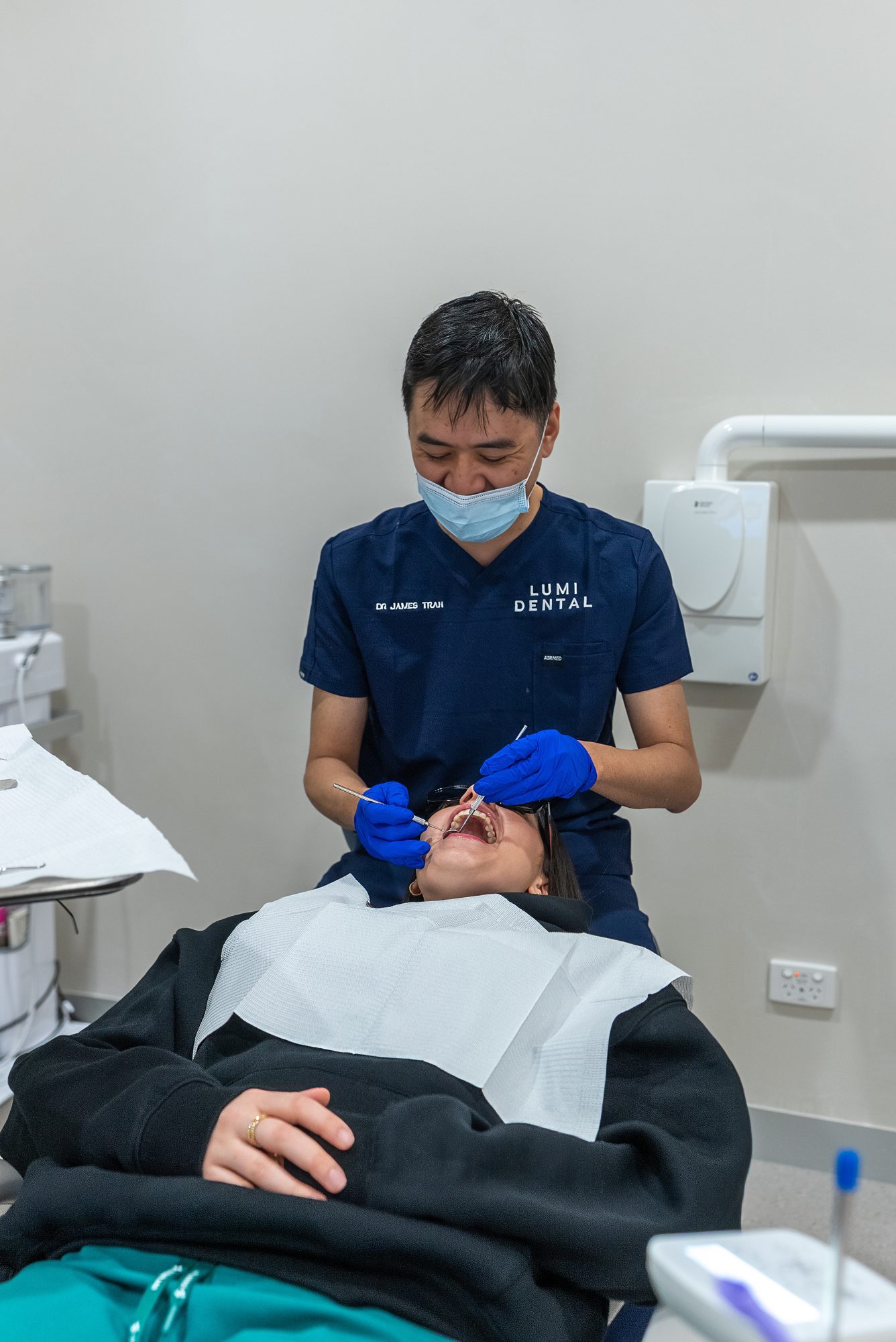
At Lumi Dental, whitening starts with an examination by a dentist, who checks for erosion, worn edges, sensitivity and decay, and takes clinical photographs so the shade and any wear can be compared over time. The dentist asks about your operation, vomiting, reflux and the supplements you take, without judgement. An oral health therapist (OHT) usually cleans the teeth first, which removes surface stain from iron or drinks. The whitening options are named Lumi Home, Lumi Refresh and Lumi Radiance, and the dentist will explain which may suit you, or whether protecting the enamel should come first. You can read more on the general dentistry page.
Questions patients ask
How long after gastric sleeve surgery can I whiten my teeth?
There is no fixed time. Wait until you are eating regular textures comfortably, vomiting has stopped or become rare, and reflux is under control. A dental examination then shows whether your enamel suits whitening.
Can I whiten my teeth if I still vomit sometimes after a bypass?
Occasional vomiting does not always rule it out, but frequent vomiting does. Tell your surgical team or GP, and if you are sick during a course, rinse with water and skip that day's session.
Why are my teeth more sensitive since my weight loss surgery?
Acid from reflux or vomiting can thin enamel and expose dentine, which reacts to cold. A dentist should check this before any whitening, because peroxide can make existing sensitivity worse.
Will my iron supplements stain my teeth?
Liquid iron can leave black surface stain. Rinsing with water after each dose helps, and a professional clean usually removes it. Keep taking your supplements as prescribed.
Is take-home or in-chair whitening better after bariatric surgery?
It depends on your enamel and how settled your stomach is. Take-home trays allow lower-strength gel and shorter sessions, while an in-chair visit avoids wearing trays on days you feel queasy. More detail is on our teeth whitening page.
Thinking about whitening? Complimentary cosmetic consult in Melrose Park
If you have had a sleeve or bypass and would like a brighter smile, the team at Lumi Dental can check your enamel, talk through vomiting, reflux and supplements, and suggest a plan that suits where you are in recovery. Book a complimentary cosmetic consult at Melrose Central in Melrose Park, or read about teeth whitening options at Lumi Dental. Patients visit from Ryde, Parramatta, Ermington and Rydalmere, with on-site parking.
Sources
- Chelsea and Westminster Hospital NHS Foundation Trust: Dietary guidance after gastric bypass or sleeve gastrectomy surgery
- PMC (Obesity Surgery): Oral health in individuals after bariatric surgery, a systematic scoping review
- PMC (Journal of Clinical Medicine): Dental erosion in obese patients before and after bariatric surgery
- NHS: Side effects of ferrous sulfate
About the author

Dr James Tran is a general dentist at Lumi Dental in Melrose Park. He holds a BDent from the University of Sydney and a Graduate Diploma in Oral Implants, and is a Member of the International Congress of Oral Implantologists (MICOI).
This article is general information only and is not a substitute for an examination and individual advice from a registered dental practitioner. Suitability for any treatment varies from person to person.







