

Adults with Down syndrome can have their teeth whitened, and the order matters most: the dentist checks and treats the gums and cleans the teeth first, and the adult makes the decision, with support where they want it. The Better Health Channel notes that gum disease is more common in people with Down syndrome, and peroxide gel on inflamed gums stings and can give a patchy result. This guide to teeth whitening for adults with Down syndrome is written for the adult and for the family members and support workers who help.
Written by Dr James Tran, BDent (University of Sydney), MICOI, GradDip (Oral Implants), general dentist at Lumi Dental in Melrose Park.
The short version
- Wanting whiter teeth is a reasonable choice. Whitening is elective, so the adult's own wishes carry the most weight.
- Gums first, then whitening. Our article on Down syndrome and oral health explains why the gums need attention from early in life.
- Crowns, bonding and fillings on the front teeth do not change colour.
- A large tongue, mouth breathing or a dry mouth can move gel off the teeth. Small amounts of gel and well-fitting trays help.
- Take-home trays need a daily routine and often a helper. In-chair visits suit people who prefer the team to do it.
- Tell the team about any heart condition. Medicines stay exactly as prescribed.
The single rule: gums first, then whitening
Gum disease in Down syndrome tends to start early and move quickly. A systematic review in PLOS ONE describes it as severe, generalised and fast-progressing, and notes that brushing habits alone may not explain it, because differences in the immune system play a part. A University of Washington dental fact sheet calls early-onset severe gum disease the most significant oral health problem for adults with Down syndrome.
So the first visit is an examination, not a shade appointment. If the gums are red, swollen or bleeding, an oral health therapist (OHT) treats them and the team reviews them before any gel goes near the teeth. Our article on whitening with gum disease explains why waiting gives a better, more comfortable result. The same review found gum results were better with more frequent visits and when parents, carers or support staff took part in daily cleaning.
| Situation | What may help |
|---|---|
| Gum disease present | Gum therapy with the hygiene team and a review first. Whitening waits until the gums are settled. |
| Mouth breather or dry mouth | Very small amounts of gel, shorter wear times, sips of water, lip balm, and a decay check first |
| Needs help with trays | A support person loads the gel, a picture checklist on the mirror, and the same time each day |
| Anxious about the chair | A visit to meet the team first, short appointments, the same clinician and a support person in the room |
| Crowns or bonding on front teeth | A talk about colour match first. These will not whiten and may need redoing afterwards. |
| Sensitive teeth | Fewer tray days, a desensitising toothpaste if the dentist suggests one, and an agreed way to say it hurts |
A brighter smile is the adult's choice
Caring about how your smile looks is reason enough to ask. The Better Health Channel asks health professionals to make people with Down syndrome active participants in all discussions, use supported decision making, assume capability and speak directly to the person rather than their support person. I usually explain whitening in small steps, with photos, a shade guide and a tray the person can hold, and I ask the adult what they want before anyone else. A family member can help them weigh it up; the choice is still theirs.
Consent in NSW, in general terms
NCAT's "person responsible" fact sheet states that the patient usually gives consent to their own treatment. Only when a patient lacks capacity can a person responsible consent, in a set order: a guardian with authority for medical and dental treatment, then a spouse or partner, then an unpaid carer, then a close relative or friend. A person responsible cannot consent to treatment the patient objects to. If the adult is unsure or says no, whitening simply waits. Our article on implants for adults with Down syndrome covers consent for larger treatment. This is general information, not legal advice.
Teeth that may not whiten evenly
Peroxide lightens natural enamel and dentine, not crowns, veneers, bonding or white fillings. The University of Washington fact sheet lists missing and small teeth as common in Down syndrome, and the Better Health Channel notes that adult teeth may be irregularly spaced. Small front teeth are often built up with bonding, which stays its original shade while the teeth around it lighten.
Before starting, the dentist checks for bonding or crowns that would need redoing to match, worn edges or exposed roots that could become sensitive, decay that needs treating, and surface stain that may simply polish off. Our checklist on who should not whiten their teeth covers the rest.
Tongue, mouth breathing and dry mouth
The University of Washington fact sheet lists a large or protruding tongue, tongue thrust, mouth breathing and a dry mouth among the oral features of Down syndrome. Each affects whitening gel:
- A tongue that presses forward can lift trays and squeeze gel onto the gums.
- Mouth breathing dries the gel and the lips, which can sting.
- A dry mouth often goes with more decay and sensitive roots, so both are checked first.
Smooth, well-trimmed trays, very small amounts of gel and shorter wear times usually help. Wearing trays awake, not overnight, makes a moved tray easier to notice. Our article on mouth breathing in adults explains when it is worth raising with the GP.
Take-home trays: a routine that holds up on ordinary days
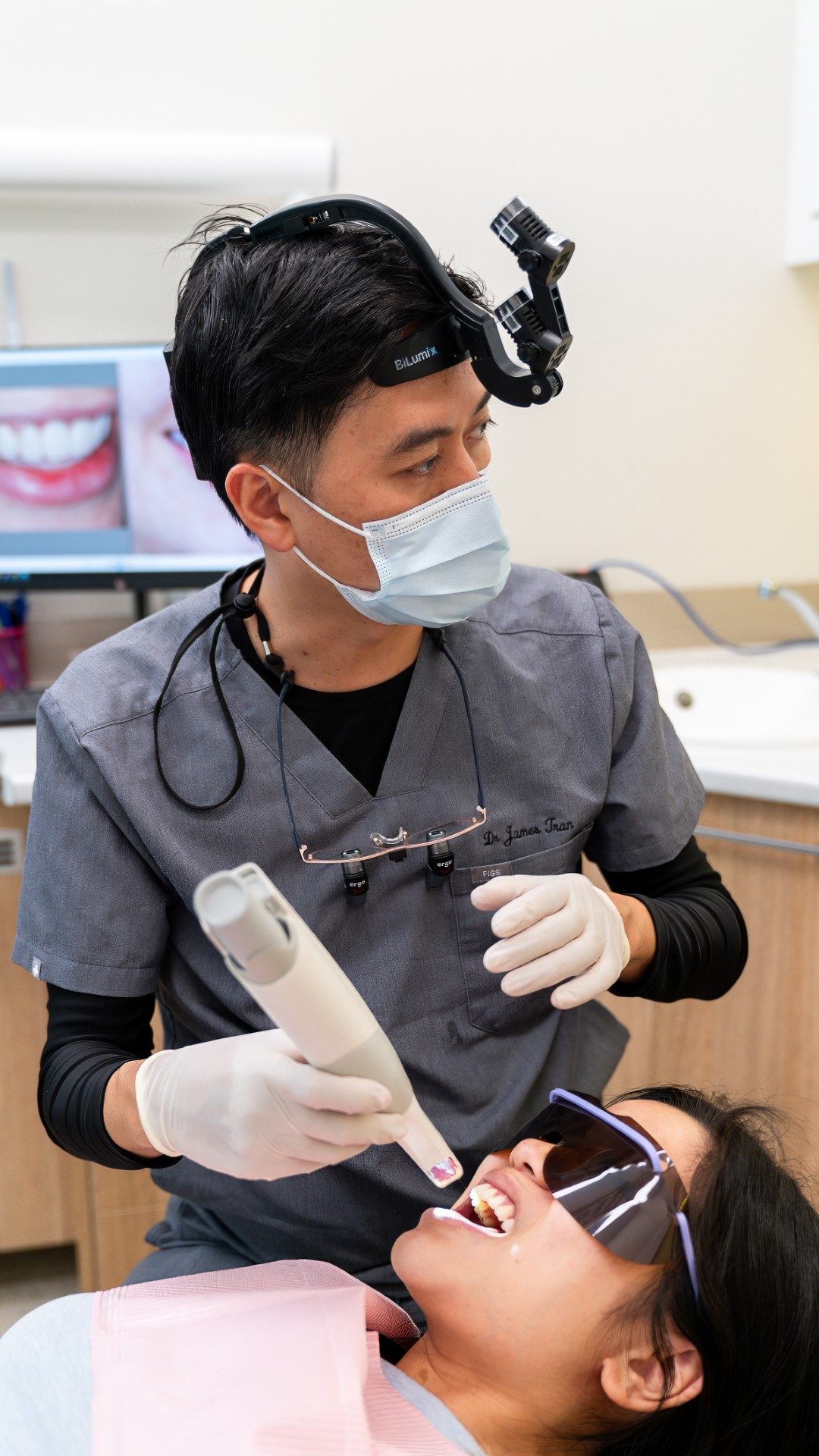
Custom trays are made from a scan taken with an intraoral 3D scanner, a small wand that many people find easier than a mouthful of impression putty. The question I ask is not whether someone can manage trays on a good day, but whether the routine will still happen on a tired one. What often helps:
- A picture checklist on the mirror: brush, load, seat, wipe away extra gel, remove, rinse, clean the tray.
- The same time each day, linked to something that already happens, such as the evening brush.
- A support person who loads the gel, because the amount is very small and easy to overdo. The dentist shows you how much.
- A tray case kept in one spot, so trays are not wrapped in a tissue and lost.
Sensitivity and how to tell the team
Short-lived sensitivity is a common side effect of whitening. The Better Health Channel notes that people with Down syndrome do not always localise pain well and may not be able to say how much something hurts. Agree on a simple way to report it, such as a face scale or a thumbs-down, and watch for signs like avoiding cold drinks. If sensitivity appears, pause the trays and call the team.
In-chair whitening: lying back, retractors and a support person
In-chair whitening suits adults who would rather the team handle everything, though lying back with a retractor holding the lips apart asks more on the day. The University of Washington fact sheet notes an increased gag reflex in many people with Down syndrome, and our article on whitening with a strong gag reflex explains what can be adjusted. Things that help:
- A short first visit to see the room, sit in the chair and hold the retractor.
- "Tell, show, do" for each step, and the same clinician where possible.
- A support person in the room and an agreed stop signal, such as a raised hand.
- A neck pillow and a less reclined chair, especially if the GP has mentioned neck instability.
Heart conditions and other health checks
The Better Health Channel notes that a large percentage of babies with Down syndrome are born with a congenital heart defect, and the University of Washington fact sheet advises dentists to consider heart status and whether a medical consult is needed. Whitening does not involve cutting the gums, but the clean before it can. Bring a current medicines list and any cardiologist's letter. The dentist checks current guidance and, where needed, the team writes to the GP or cardiologist first.
How we approach this at Lumi Dental
At Lumi Dental, a dentist examines the teeth, gums, tongue and any bonding or crowns, and talks directly with the adult about what they would like. Where the gums need attention, an oral health therapist provides gum therapy and the dentist reviews them before whitening is planned. A support person is welcome in the room. The whitening options are named Home, Refresh and Radiance, and the dentist will explain which may suit. See the teeth whitening page for more.
Questions patients ask
Is teeth whitening safe for someone with Down syndrome?
It can be, once the gums are healthy and the dentist has checked for decay, worn areas and bonding. Whitening on inflamed gums is uncomfortable and less predictable, so gum treatment comes first.
Can a parent or carer consent to whitening for an adult with Down syndrome?
NCAT states that patients usually consent to their own treatment, and a person responsible consents only when the adult lacks capacity. A person responsible cannot consent to treatment the adult objects to. This is general information, not legal advice.
Are whitening trays or in-chair whitening better?
Trays suit a steady daily routine with someone to help load them. In-chair whitening suits people who would rather not handle gel and are comfortable lying back.
Will whitening work on bonding or built-up small teeth?
No. Bonding, fillings and crowns keep their colour, so they may look darker once the natural teeth lighten.
What if the dental chair makes them anxious?
Start with a visit just to meet the team and sit in the chair, then keep appointments short with a support person present. The dental anxiety page describes other ways the team can help.
Thinking about whitening? Complimentary cosmetic consult in Melrose Park
If you, or the adult you support, would like a brighter smile, the team at Lumi Dental can check the gums and teeth, talk through trays and in-chair whitening, and plan visits around the person. Book a complimentary cosmetic consult at Melrose Central in Melrose Park, or read about teeth whitening options at Lumi Dental. Patients visit from Ryde, Parramatta, Ermington and Rydalmere, with on-site parking.
Sources
- Better Health Channel: Down syndrome and health
- NSW Civil and Administrative Tribunal: Person Responsible fact sheet
- PMC (PLOS ONE): Prevention and periodontal treatment in Down syndrome patients, a systematic review
- University of Washington School of Dentistry: Oral health fact sheet, adults with Down syndrome
About the author

Dr James Tran is a general dentist at Lumi Dental in Melrose Park. He holds a BDent from the University of Sydney and a Graduate Diploma in Oral Implants, and is a Member of the International Congress of Oral Implantologists (MICOI).
This article is general information only and is not a substitute for an examination and individual advice from a registered dental practitioner. Suitability for any treatment varies from person to person.







