If one implant in a full-arch bridge fails, the bridge is rarely the end of the story: the failed implant is removed, the site heals or is grafted, a replacement is placed, and the bridge is modified or remade, with the number of implants placed at the start deciding whether the bridge can stay fixed in the meantime. Research has reported that around 7% of patients with an immediately loaded full-arch bridge lost at least one implant over an average of about five years: uncommon, but not rare enough to ignore. In my experience the question to ask before treatment is not whether an implant could ever fail but what the plan is if one does.
Written by Dr James Tran, BDent (University of Sydney), MICOI, GradDip (Oral Implants), general dentist at Lumi Dental in Melrose Park.
The short version
- Implant survival in full-arch bridges is high, around 98% to 99% at the implant level in pooled studies, but a few people in every hundred will lose one implant.
- Most losses are early, during healing. Late losses are usually peri-implantitis or overload.
- With four implants, a bridge on three is usually not kept fixed long term. With five or six, the bridge can often stay fixed while the site heals.
- The rescue is remove, heal or graft, replace the implant, then modify or remake the bridge. Acrylic on a titanium bar is easier to modify than monolithic zirconia.
- Our guide to dental implant failure signs covers what to watch for.
How often does an implant in a full-arch bridge fail?
A systematic review that pooled 55 studies reported implant survival of about 99% at one year for four-implant arches, falling to around 98% at five years and beyond. A study that followed 561 full-arch cases for 3 to 17 years reported cumulative implant survival of about 97% in the upper jaw and about 99% in the lower.
Those are implant-level figures. At the patient level, in a cohort of 943 patients with nearly 6,000 implants, about 7% lost at least one implant over an average five years, even though implant-level loss was only about 1.2% to 1.6%.
Early failure and late failure: why the timing changes the plan
Early failure happens before the final bridge is fitted, or within the first few months, and is usually a failure to osseointegrate: the bone never bonded to the implant. In the four-versus-six cohort, roughly two-thirds or more of all losses were early, within 180 days of placement. Late failure happens after integration and is usually infection around the implant (peri-implantitis) or excessive load, often from grinding.
An early failure under a provisional bridge is usually the simpler problem: the provisional is acrylic, often 3D printed, so it can be cut and relined. A late failure under a finished zirconia bridge is more disruptive, because the bridge was designed around positions that have now changed.
The arithmetic of four, five and six implants
All-on-4, a treatment concept trademarked by Nobel Biocare, places two upright implants at the front and two tilted implants further back, with a molar cantilevered behind them. The pooled studies show comparable survival for four and six implants. The difference appears on the day one is lost.
With four implants, losing one leaves three, often with the cantilever side unsupported. A fixed bridge on three is usually not something that can be relied on long term, so the bridge is typically shortened, unloaded on that side or taken out of service until a replacement has integrated. With five or six implants spread around the arch, the bridge can often stay fixed on the remaining implants while the site heals. In the large cohort, lower-jaw implant loss affected about 4.7% of patients with four implants and 2.8% with six, not a significant difference: extra implants are margin, not a lower failure rate. Our comparison of All-on-6 versus All-on-4 goes through where that margin is worth having.
The single rule: margin is designed in before the first implant is placed
A well-planned full-arch bridge treats the loss of one implant as a repairable setback rather than a restart. That is decided at the planning stage: implant number and spread, cantilever length, bridge material and a night guard for grinders. Where bone allows, a fifth or sixth implant is often placed for this reason. Where it does not, four is still a reasonable design, provided the patient understands what a lost implant would mean.
What actually happens, step by step, when one implant is lost
- Confirm it is the implant, not the bridge. The bridge is removed, each implant is tested and a 3D X-ray shows the bone.
- Remove the failed implant. It has lost its bone contact and usually comes out easily under local anaesthetic. The socket is cleaned, and grafted if the bony walls are damaged.
- Decide what the bridge does in the meantime. If enough implants remain, the opening is sealed and the bridge goes back on, sometimes shortened. If not, a 3D-printed acrylic provisional or a removable temporary denture carries the patient through healing.
- Let the site heal for three to six months, longer after a graft.
- Place the replacement implant, often at a slightly different position or angle, guided by a new CBCT scan.
- Modify or remake the bridge. An acrylic-and-titanium bridge can often be adapted. A monolithic zirconia bridge usually cannot, and is remade using the old one as the template.

Can the existing bridge be reused?
It depends on the material and where the replacement implant ends up. Acrylic teeth on a milled titanium bar are the design most easily patched: the acrylic is cut away, a new cylinder bonded in and the bridge relined. Monolithic zirconia cannot be drilled and bonded in the same way, so a materially different implant position usually means a new bridge. Our guide to zirconia versus acrylic full-arch bridges sets out the trade-off.
If a replacement implant is not advisable, a bridge on two or more well-spaced remaining implants can be converted to a removable implant overdenture: a step down in fixity, but well above a conventional denture.
Planning features that reduce the risk
The studies reporting the highest long-term survival share a pattern: careful 3D planning, implants spread front to back, conservative cantilevers, a bridge the patient can clean, and recall every three to six months.
| Design choice | What happens if one implant fails | Typical response |
|---|---|---|
| Four implants, two tilted | Little spare support; a fixed bridge on three is usually not kept long term | Remove, graft if needed, provisional, replacement implant, modify or remake the bridge |
| Five or six implants spread around the arch | The bridge can often stay fixed during healing | Remove, heal, place the replacement, adapt or remake the bridge |
| Long cantilever behind the back implant | Losing a back implant leaves a long lever on the rest | Shorten the bridge until the replacement has integrated |
| Acrylic teeth on a titanium bar | Can usually be cut, patched and relined | Adapt the existing bridge, remake later if needed |
| Monolithic zirconia bridge | Hard to adapt to a new implant position | Usually a new bridge, copied from the old one |
The avoidable risks: smoking, diabetes and hygiene
In the 3-to-17-year study, implant-level survival was about 97.9% in smokers against 99.2% in non-smokers. Poorly controlled diabetes is a recognised risk for failure and peri-implantitis. Our article on dental implants and smoking explains what a quit plan before surgery changes. A bridge that cannot be cleaned underneath will eventually inflame the gum around the implants, so I treat cleaning access as a design requirement rather than an afterthought.
How we approach this at Lumi Dental
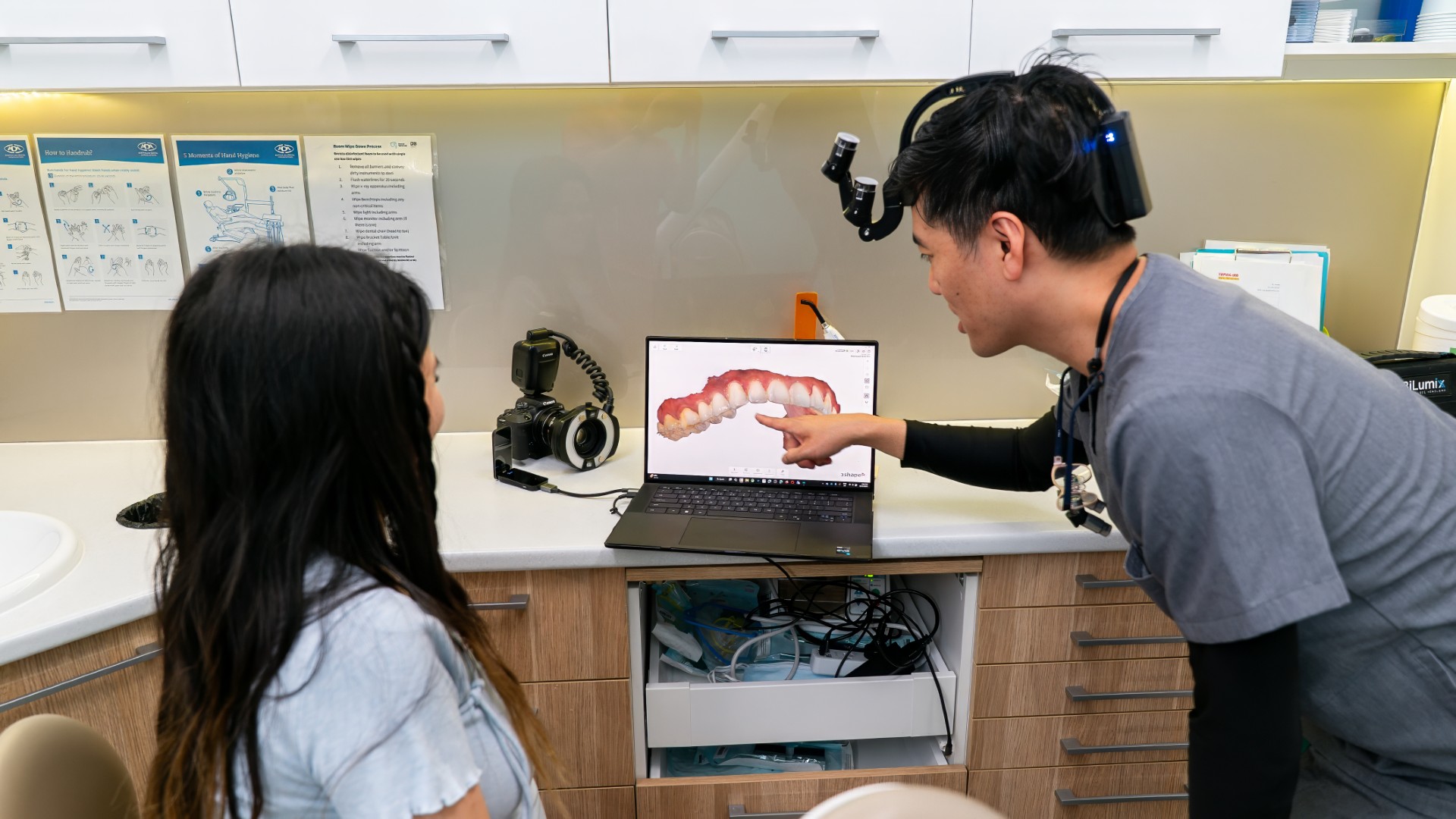
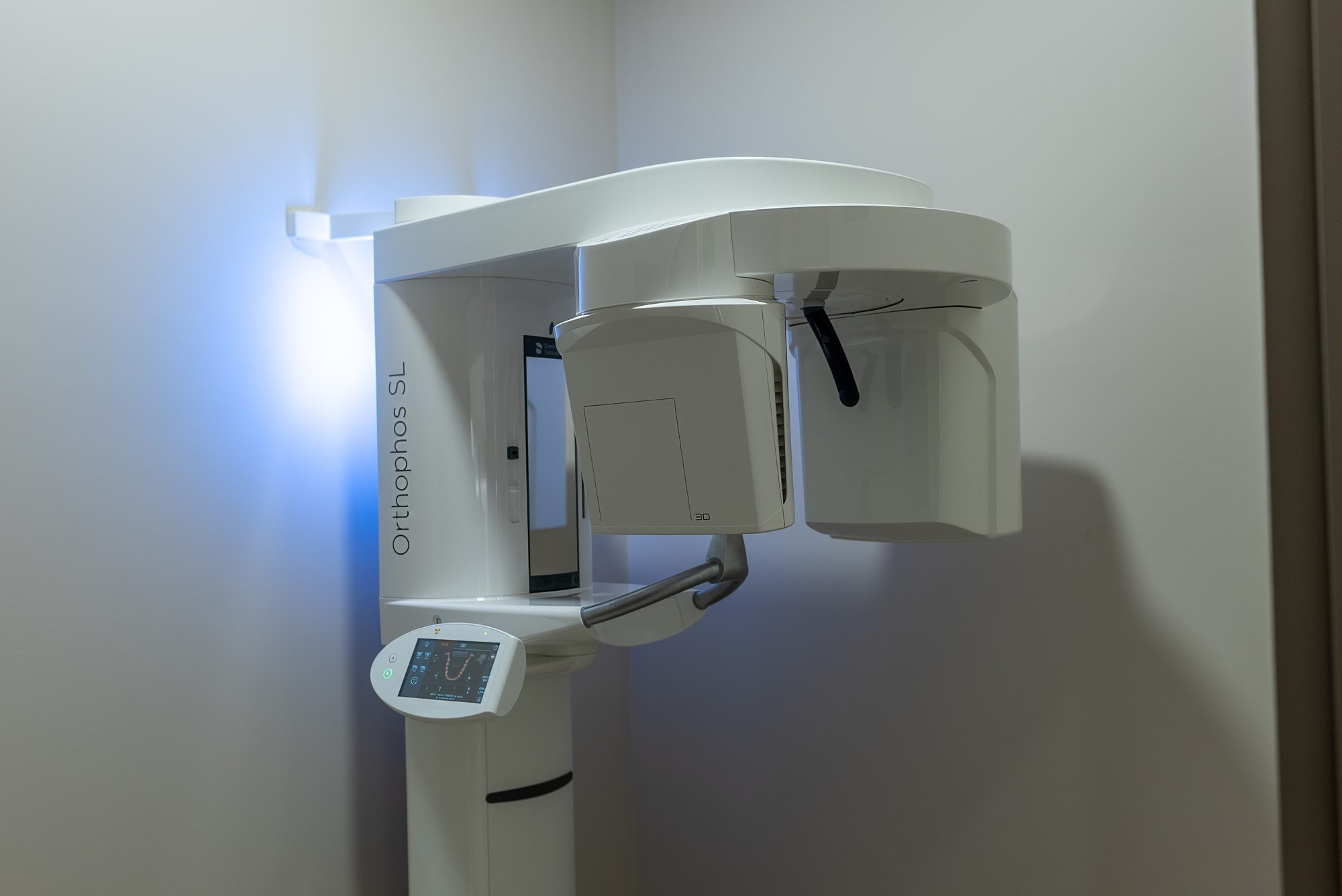
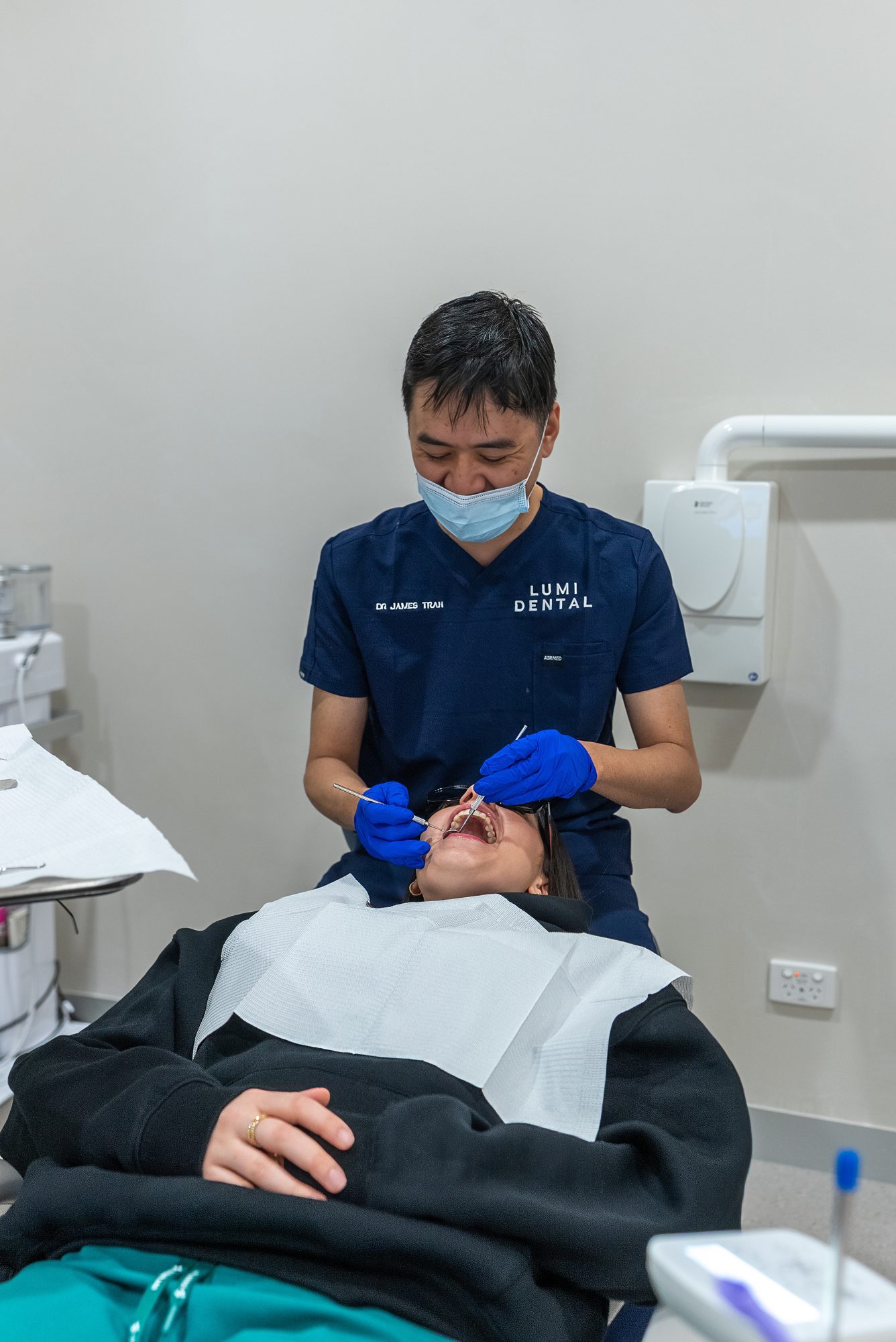
At Lumi Dental in Melrose Park, full-arch planning starts with a 3D intraoral scan and an in-house 3D X-ray (CBCT) so the dentist can measure bone volume and decide how many implants the arch can take and where they should sit. Provisional bridges are designed digitally and 3D printed in-house, so a provisional can be adjusted or reprinted if an implant is lost during healing. The All-on-X full-arch service is planned with that margin in mind. Cases that need a specialist are referred to a registered specialist.
Questions patients ask
Can a full-arch bridge stay in if one implant fails?
Often, if five or six implants were placed and the remaining ones are healthy. With four, a fixed bridge on three is usually not kept for long, so it is modified, shortened or swapped for a provisional until a new implant has integrated.
How often do All-on-4 implants fail?
Pooled research has reported implant survival of around 99% at one year and about 98% beyond five years for four-implant arches. At the patient level, around 7% of people in one large cohort lost at least one implant over about five years.
Will I have to pay for a new bridge if an implant fails?
It depends on the written treatment agreement and on when and why the implant failed. No dental treatment can be guaranteed, so ask before surgery what is covered and for how long; our article on what a warranty means in dentistry lists the questions.
What are the signs one of my implants is failing?
A bridge that feels loose or rocks, pain or swelling around one implant, pus or a bad taste, or a gap opening between the bridge and the gum on one side. Any of these needs a prompt review.
Can a failed implant be replaced in the same spot?
Often, after the site has healed for three to six months, sometimes with a graft first. If a replacement is not advisable, a removable implant overdenture on the remaining implants is the usual fallback.
Planning a full-arch rebuild? Complimentary All-on-X consult in Melrose Park
If you are weighing up a full-arch bridge, the team at Lumi Dental in Melrose Park can review your scan and explain what would happen if one implant were lost. Contact Lumi Dental to book a complimentary All-on-X consult, read about the All-on-X full-arch service, or start with dental implants at the practice. Patients visit from Ryde, Parramatta, Ermington and Rydalmere, with on-site parking at Melrose Central.
Sources
- PMC: Four vs. six implant full-arch restorations, a direct comparative retrospective analysis in a large controlled treatment cohort
- PMC: The All-on-four concept for fixed full-arch rehabilitation of the edentulous maxilla and mandible, a longitudinal study with 3 to 17 year follow-up
- PubMed: All-on-4 and All-on-6 implant-supported fixed prostheses for the edentulous jaw, a systematic review and meta-analysis
- Wikipedia: All-on-4
About the author
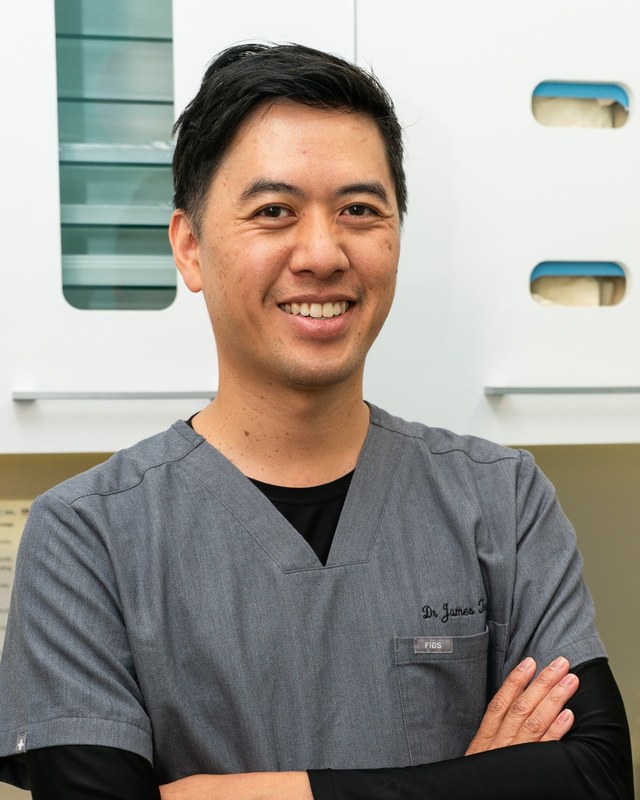
Dr James Tran is a general dentist at Lumi Dental in Melrose Park. He holds a BDent from the University of Sydney and a Graduate Diploma in Oral Implants, and is a Member of the International Congress of Oral Implantologists (MICOI).
This article is general information only and is not a substitute for an examination and individual advice from a registered dental practitioner. Suitability for any treatment varies from person to person.