

Nine people out of 1,500. That was the count of positive titanium allergy tests among the implant patients of one Spanish clinic, about 0.6 per cent, and eight of the nine had already shown allergy-type symptoms after an implant or had an implant fail without a clear reason. Titanium allergy does exist, but it is uncommon, it is hard to prove, and many problems blamed on it around an implant turn out to have other causes.
Written by Dr James Tran, BDent (University of Sydney), MICOI, GradDip (Oral Implants), general dentist at Lumi Dental in Melrose Park.
Who was tested in the 1,500-patient study
The study, by Sicilia and colleagues in Clinical Oral Implants Research (2008), did not test everyone. From 1,500 patients treated or examined between 2002 and 2004, the team selected 35 for skin testing. Sixteen had allergy-like reactions after implant placement or an implant failure that could not be explained, and 19 had other risk factors, such as a history of allergies. A comparison group of 35 people was tested at an allergy centre.
Half of the symptomatic group reacted to titanium on testing, compared with one of the 19 in the risk factor group and none of the controls. The authors concluded that the estimated prevalence was low and that allergy testing could be recommended for people who show an allergy-compatible response after implant surgery. So the history, rather than routine screening, is what points to who needs a closer look.
Pure titanium and the alloys around it
An implant is several parts. The screw in the bone is usually commercially pure titanium, grade 4. A 2022 systematic review in the International Journal of Implant Dentistry notes that grade 5 titanium alloys and other metal alloys are used in abutments, in the frameworks that carry crowns and bridges, and in some implant designs. A 2021 review in Contemporary Clinical Dentistry adds that titanium products from different manufacturers have been shown to carry traces of nickel, up to 0.034 per cent by weight, as a by-product of manufacture.
That is why the question at an implant consultation is less "titanium or no titanium" and more "which metals have you reacted to, and which component would they be in". Our article on the parts of a dental implant explains what each piece does.
Titanium also behaves differently from nickel. It forms a thin, stable oxide layer on its surface almost immediately, and the 2022 review argues that much of what is labelled titanium sensitivity looks more like an inflammatory response than a classic allergy: macrophages in the tissue reacting to tiny titanium particles released from the surface, rather than the T-cell reaction behind a nickel rash.
Signs reported in suspected cases, and what usually explains them
A 2023 literature review in Dentistry Journal by Watanabe and colleagues gathered twelve studies of implant failures attributed only to allergy. The most common signs of titanium allergy were eczema and overgrowth of the gum (gingival hyperplasia), with lip inflammation, swelling and mucosal pain also described. Eight of the cases with titanium hypersensitivity also tested positive to nickel, mercury, chromium or cobalt. Ten of the papers reported symptoms improving after the titanium implants were removed, in some cases with zirconia implants placed instead.
Each of those signs has a more common explanation, which is why a dentist works through the likely causes first.
| What you notice | Most common cause | What is usually checked |
|---|---|---|
| Red, swollen or bleeding gum around an implant | Peri-implant mucositis or peri-implantitis, or cement left under the crown | Probing depths, bleeding, an X-ray compared with earlier films |
| A rash on the skin | Dermatitis unrelated to the implant, or a different metal | When it started relative to surgery, other metal contact, referral to a GP or dermatologist |
| An implant that failed with no obvious reason | Infection, bite overload, smoking, bone quality or a medical factor | Mobility, X-rays, the bite and the medical history |
| Burning or a metallic taste | Dry mouth, reflux, medicines or other dental metals | Saliva flow, the medicine list and other restorations |
Inflammation around an implant is far more often a plaque problem than an allergy. Our guide to peri-implantitis treatment covers it in detail.
Allergy tests give part of the picture
Three kinds of test come up: skin patch testing, and two blood tests, known as LTT and MELISA, that measure how a sample of lymphocytes responds to titanium. The 2022 systematic review by Müller-Heupt and colleagues found ten studies suitable for analysis, rated their risk of bias as high overall, and concluded that the results were inconsistent in reliability and validity, so the tests should be regarded cautiously. The authors suggested that clinical signs of inflammation should lead the assessment.
Patch testing has its own problem. A retrospective study by de Graaf and colleagues in Contact Dermatitis (2018) reviewed 458 people patch tested with titanium salts and found at least one positive result in 5.7 per cent. They concluded that titanium dioxide, the material often used, is not sensitive enough to identify titanium allergy, and that no single salt was reliable on its own. The Watanabe review reached a similar point: there is no definitive test, so diagnosis rests on the clinical course together with testing.
Where testing makes sense, it is usually arranged through your GP with an allergist, immunologist or dermatologist. For reactions to other dental materials, see our guide to allergic reactions to latex, metals and anaesthetic.
Tell your dentist about every metal reaction before surgery
Useful things to mention at the first appointment include rashes from jewellery, watch backs, belt buckles or piercings; orthopaedic plates, screws or joint replacements and how they have behaved; eczema or multiple allergies; and any earlier implant that failed or never felt right. Watanabe and colleagues advise caution with implant treatment in people who have any allergies before surgery, and that history is what decides whether an allergist's opinion is sought first.
If problems appear after an implant is in place, the more common causes are dealt with first: gum inflammation is treated, and where another metal is suspected, the abutment and crown can sometimes be changed to different materials. Removing an implant that has joined to the bone is a bigger step, considered once other explanations have been worked through. If it does come to that, our article on removing and replacing an implant explains what is involved.
Where zirconia fits
Zirconia is a ceramic, so it avoids metal altogether, and it is the alternative most often discussed when titanium is a genuine concern. It has its own design trade-offs, which we set out in our comparison of titanium and zirconia implants and our overview of zirconia ceramic implants.
Planning implants when you have a metal allergy history
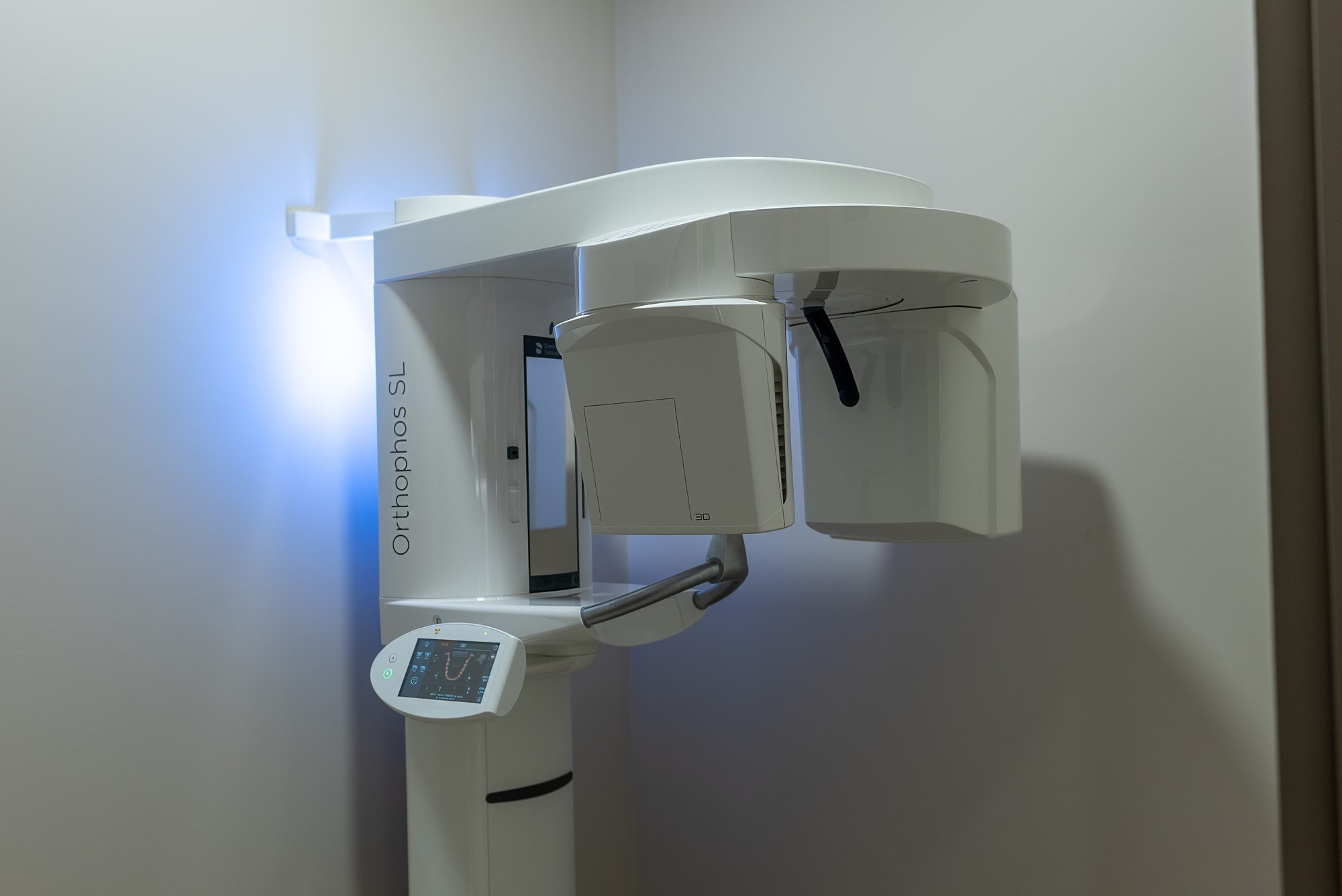
At Lumi Dental, implant planning starts with an examination, a full medical, medicine and allergy history, a 3D X-ray and an intraoral scan, all done in the practice. If you have reacted to metals, we may suggest involving your GP so that specialist advice is in place before surgery is booked, and the materials chosen for the implant, abutment and crown are recorded in your file. If an existing implant has inflamed gum around it, the area is examined and X-rayed first, and our oral health therapists can help with gum care where plaque is the cause. More detail is on our dental implants page.
If metal allergies are part of your history and you are thinking about an implant, a free implant consult is a sensible first step. You can contact us to book at Melrose Park, and see current offers on our deals page.
Sources
- Sicilia A and colleagues. Titanium allergy in dental implant patients: a clinical study on 1500 consecutive patients. Clinical Oral Implants Research, 2008
- Müller-Heupt LK and colleagues. Diagnostic tests for titanium hypersensitivity in implant dentistry: a systematic review. International Journal of Implant Dentistry, 2022
- Watanabe M and colleagues. Are allergy-induced implant failures actually hypersensitivity reactions to titanium? A literature review. Dentistry Journal, 2023
- Tanwar N and colleagues. Titanium allergy in dentistry: a new allergen in rapidly evolving implant dentistry. Contemporary Clinical Dentistry, 2021
- de Graaf NPJ and colleagues. A retrospective study on titanium sensitivity: patch test materials and manifestations. Contact Dermatitis, 2018
About the author

Dr James Tran is a general dentist at Lumi Dental in Melrose Park. He holds a BDent from the University of Sydney and a Graduate Diploma in Oral Implants, and is a Master of the International Congress of Oral Implantologists (MICOI).
This article is general information only and is not a substitute for an examination and individual advice from a registered dental practitioner. Suitability for any treatment varies from person to person.








