
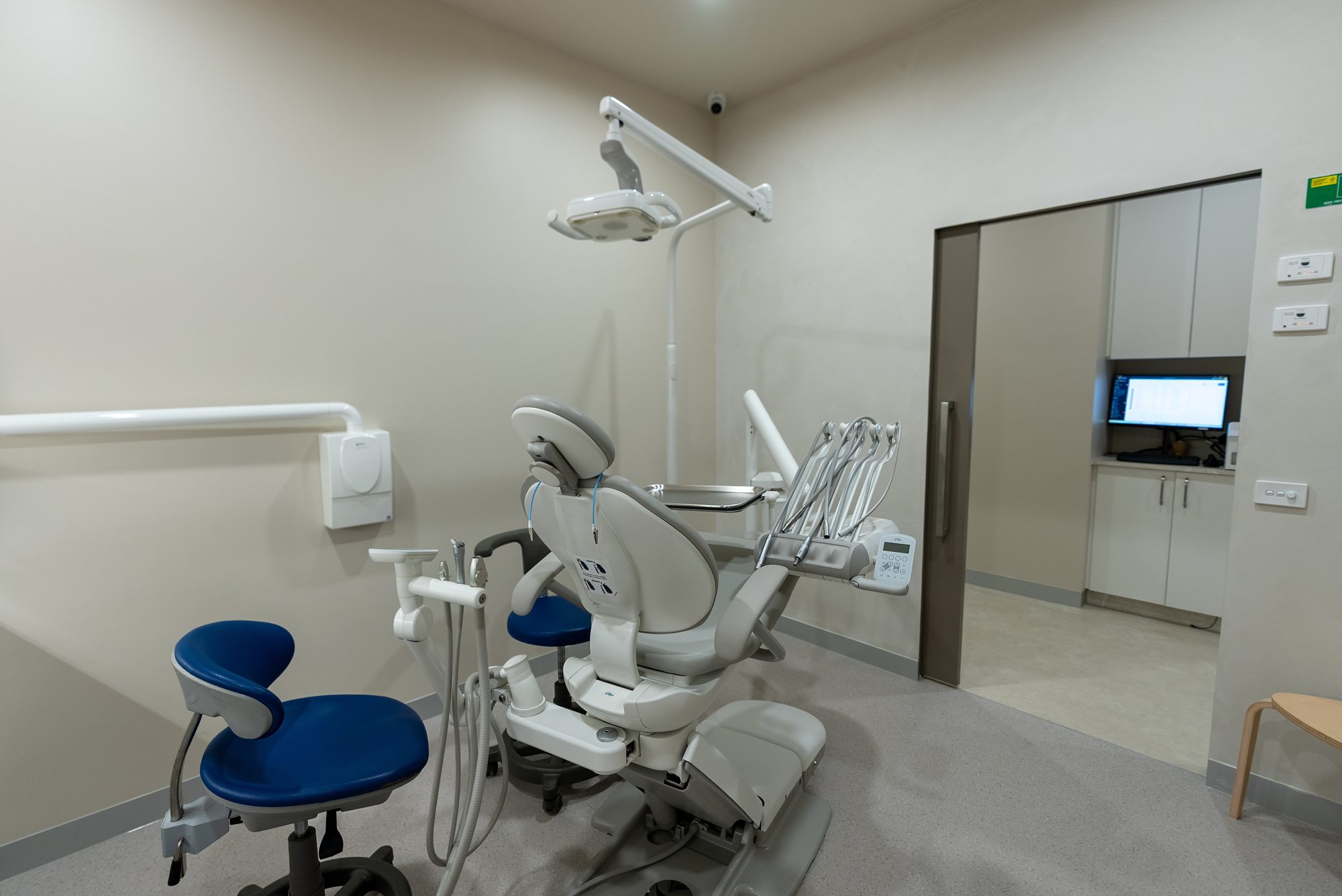

A strong gag reflex rarely rules out clear aligners, because the trays cover the teeth rather than the roof of the mouth, and the two hardest moments, the records scan and the first days with each new tray, can both be planned for. Gagging at the dentist is common: in a study of 478 dental patients published in the Journal of the American Dental Association, almost half said they had gagged at least once during dental visits, and 7.5% said they almost always or always gagged. Telling the team before the scan and practising with your trays at home can make both moments easier.
Written by Dr James Tran, BDent (University of Sydney), MICOI, GradDip (Oral Implants), general dentist at Lumi Dental in Melrose Park.
The short version
- Clear aligners fit over the teeth like a thin, close-fitting shell. They do not cover the palate the way many removable plates and dentures do.
- A digital scan usually replaces impression trays and putty, and it can be paused if you need a break.
- Tell the team about your gag reflex when you book, not halfway through the scan.
- Seat each new tray from the front teeth to the back, slowly, while breathing through your nose.
- The causes of gagging and general self-help tips are covered in our guide to the gag reflex at the dentist. This article is about aligners.
The single rule: plan for the scan and the first days of each tray
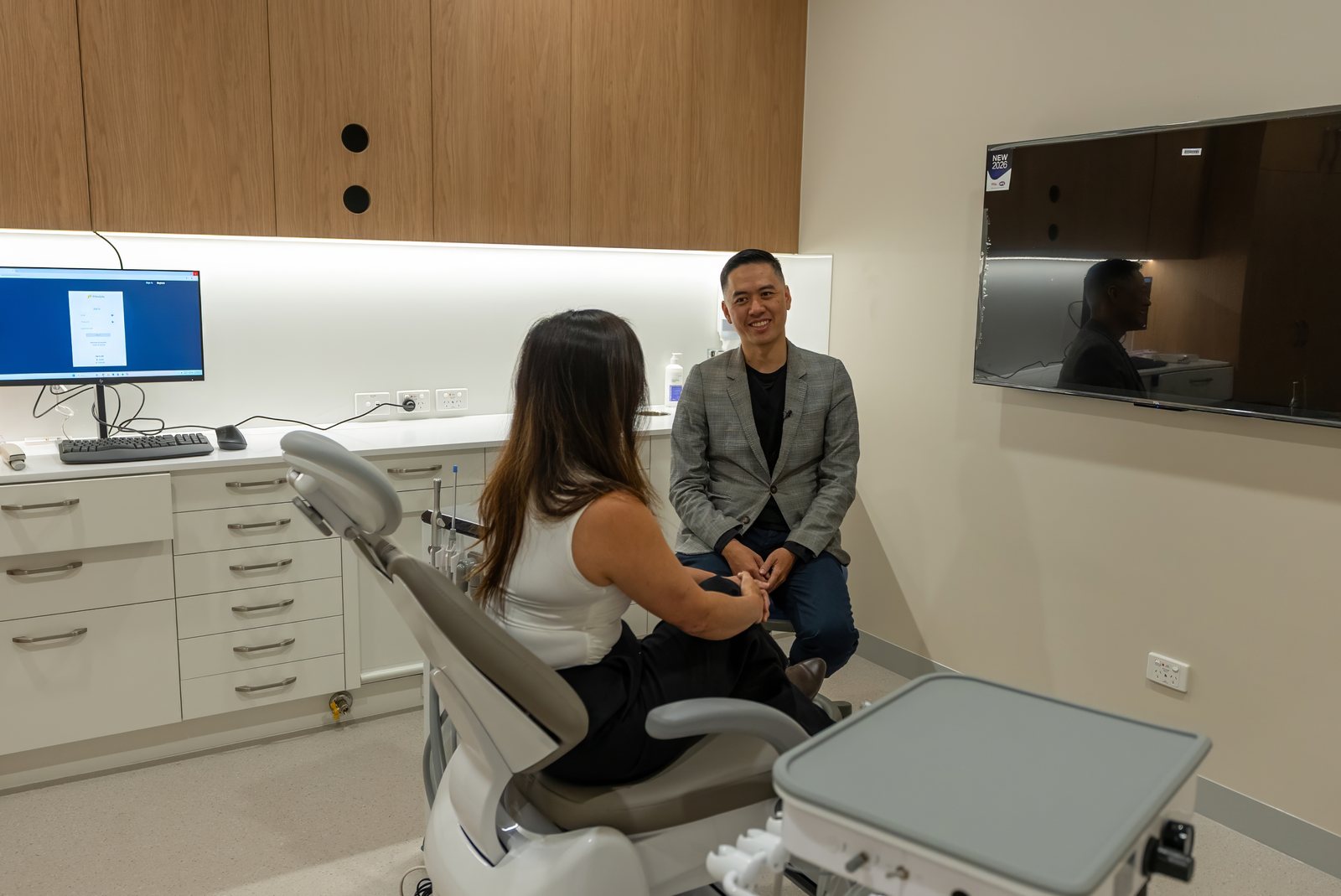
If you have a strong gag reflex, start by telling the team before the records appointment, then practise putting trays in and taking them out slowly at home. Wearing trays through the day tends to be easier than people expect, because a well-made tray sits on the teeth and stays clear of the soft palate.
In my experience, the patients who worry most about gagging often prepare best, and usually get through the scan without much trouble.
| Stage | What may help |
|---|---|
| Consultation | Mention the gag reflex, what sets it off and what has helped before; agree a stop signal |
| Digital scan | Short sections with breaks; front teeth first; sitting more upright; nose breathing |
| Attachments | A template tray that sits only over the teeth; breaks between upper and lower arches |
| First tray | A practice run in the chair; seating from front to back; a check that the back edges are smooth |
| Each tray change | Changing trays at night before sleep; chewies used slowly; a day or two of extra saliva expected |
| Cleaning trays | A mild, low-flavour toothpaste or plain soap; rinsing well before the tray goes back in |
| Retainers | Comparing a clear retainer with a bonded wire, based on which you can tolerate long term |
The scan: why it is usually easier than impressions
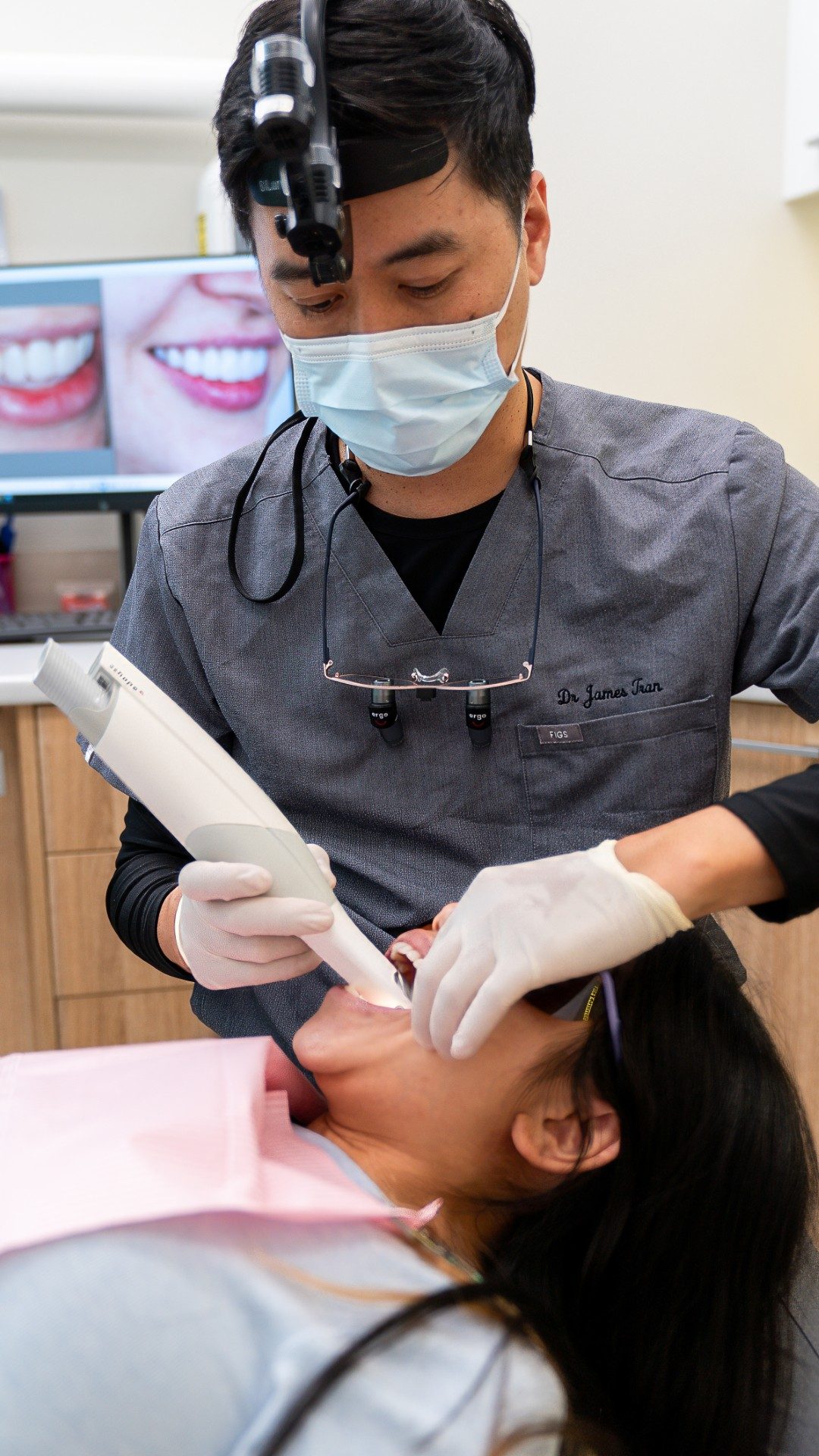
Older-style impressions use a tray of soft material held against the teeth for a few minutes, and the material can spread towards the back of the mouth. A digital intraoral scanner is a small wand moved over the teeth while a computer builds a 3D model. A critical review of intraoral scanners in orthodontics found that the studies looking at gagging all reported it was much reduced, or absent, with digital methods, and the authors suggested scanning could be the method of choice for people with a severe gag reflex. Our article on digital scans versus dental impressions compares the two in more detail.
Scanning in sections
A scan does not have to be done in one long pass. Research on scanning strategy has found that a full arch scanned in two segments and then merged appears to be as reliable as a single continuous scan. In practice, I usually scan part of the arch, take the wand out while you breathe and swallow, then carry on.
The trickiest parts
The back teeth and the upper palate are usually the hardest areas, because the wand comes closest to the soft palate and tongue. Things that may help:
- scanning the front teeth first, then the back teeth in short bursts,
- sitting more upright rather than lying flat,
- breathing slowly through your nose, and raising a hand when you need a pause.
Aligner trays, the palate and the first days
Orthodontics Australia describes clear aligners as transparent trays custom-made to fit snugly on your teeth, a bit like a small mouthguard. Unlike an upper denture or a plate-style appliance, they do not cover the roof of the mouth, and that is a large part of why many people who gag cope with them. If the back edge of a tray feels long or sharp, the dentist can often smooth it.
Putting trays in and taking them out
- Seat the tray over the front teeth first, then press it up or down over the back teeth with your fingertips.
- Keep breathing through your nose and keep your tongue relaxed and forward.
- To remove a tray, start at the back on one side, ease it off, then work forward.
Saliva and swallowing
Many people make more saliva and swallow more often for the first day or two with a new tray, while the mouth gets used to it. That can set off gagging in some people, but it usually settles. Our article on the first week in clear aligners covers the ache, a brief lisp and the rough feel of attachments.
Wear time still matters
Orthodontics Australia advises wearing each aligner for 20 to 22 hours a day. If gagging makes you leave a tray out, tell the team early rather than skipping hours, because the fit of later trays depends on it.
Chewies, attachments and the bumpy feel
Chewies are small soft cylinders you bite on to seat a tray fully. For people who gag, they are useful because they push the tray home without fingers at the back of the mouth. Bite slowly, working from front to back. Our guide to aligner chewies explains how to use them.
Attachments are small tooth-coloured bumps bonded to some teeth so the trays can grip. Placing them uses a thin template tray over the teeth, not impression material, and the upper and lower arches can be done separately with a break between. They feel rough to the tongue for a few days, then most people stop noticing them.
Cleaning trays without setting off the reflex
Strong mint toothpaste and the feel of a brush near the back teeth can trigger gagging for some people. When cleaning trays, a mild, low-flavour toothpaste or plain unscented soap may suit better, rinsed off well before the tray goes back in. Our guide to cleaning clear aligners covers which products to avoid.
If gagging comes with heartburn, reflux, regular nausea or a sour taste, see your GP. They are worth checking in their own right.
Retainers after treatment
Once teeth are in position, a retainer holds them there. Orthodontics Australia notes that removable retainers are generally worn every night after aligner treatment. A clear retainer fits much like an aligner, so if you managed trays, it is usually manageable. A bonded wire is glued behind the front teeth, so there is nothing to put in or take out, which some people who gag prefer, although cleaning around it takes more care. Our article on fixed versus removable retainers compares the two.
When sedation may be considered
Most people who gag complete aligner records with planning, breaks and nose breathing. If anxiety and gagging are both severe, sedation for the scan may be discussed after an assessment of your health and history. IV sedation is available at Lumi Dental after assessment; read more on the dental anxiety page. Lumi Dental does not provide general anaesthetic itself and refers where it is needed.

How we approach this at Lumi Dental
At Lumi Dental, clear aligner treatment starts with an examination by a dentist, who checks the teeth, gums and bite and asks about your gag reflex before any records are taken. Scans are taken with the in-house 3D intraoral scanner, in sections with breaks where needed. Lumi Dental offers clear aligners rather than braces, and where a case is better suited to a registered specialist orthodontist, the team refers you. The hygiene team, including oral health therapists, helps with cleaning and gum health during treatment. You can read more on the clear aligners page.
Questions patients ask
Can you get clear aligners if you have a bad gag reflex?
Usually, yes. Aligners cover the teeth rather than the palate, and a digital scan can replace impression trays.
Will the scan for aligners make me gag?
It might, especially at the back teeth, but it can be paused and done in sections. Tell the team before you start and agree a stop signal.
How do I stop gagging when putting my aligners in?
Seat the front teeth first, then press the back down, breathing through your nose with your tongue forward. Practise slowly, and use a chewie instead of fingers at the back. Our guide to using aligner chewies has more detail.
Does the gagging feeling with aligners go away?
For most people it eases within a few days of each new tray, as the extra saliva settles. If it persists, the dentist can check whether a tray edge is too long.
Can teenagers with a strong gag reflex have clear aligners?
Often, yes, if they can wear trays for the advised hours each day. Practising at home with a parent nearby and agreeing a stop signal before the scan may help. Suitability depends on an examination.
Thinking about clear aligners? Free aligner consultation in Melrose Park
If a strong gag reflex has put you off straightening your teeth, the team at Lumi Dental can talk through the scan, the trays and what may help. Book a free aligner consultation at Melrose Central in Melrose Park, or read about clear aligner treatment at Lumi Dental. Patients visit from Ryde, Parramatta, Ermington and Rydalmere, and there is on-site parking.
Sources
- Journal of the American Dental Association: Gagging and associations with dental care-related fear, fear of pain and beliefs about treatment
- International Journal of Environmental Research and Public Health: Intraoral scanners in orthodontics, a critical review
- Journal of Advanced Prosthodontics: Impact of scanning strategy on the accuracy of complete-arch intraoral scans
- Orthodontics Australia: Clear aligners
About the author

Dr James Tran is a general dentist at Lumi Dental in Melrose Park. He holds a BDent from the University of Sydney and a Graduate Diploma in Oral Implants, and is a Member of the International Congress of Oral Implantologists (MICOI).
This article is general information only and is not a substitute for an examination and individual advice from a registered dental practitioner. Suitability for any treatment varies from person to person.







