

ADHD does not rule out clear aligners, but aligners only move teeth while they are in, for about 20 to 22 hours a day, so the routine that carries your wear time should be planned for a hard day, not a good one. The Australian ADHD guideline estimates that around 6 to 8% of Australian children and 3 to 5% of adults have ADHD, more than a million people in all. When aligners go off track, it is usually trays left out after eating, trays lost, or tray changes that drift.
Written by Dr James Tran, BDent (University of Sydney), MICOI, GradDip (Oral Implants), general dentist at Lumi Dental in Melrose Park.
The short version
- Clear aligners with ADHD can work well. Success depends on systems that work without remembering, not on willpower.
- Give the case one home, set alarms tied to meals rather than the clock, and keep a spare case where you eat.
- Trays wrapped in a napkin or left on a plate are a common way they get lost.
- Dry mouth and afternoon grazing can come with ADHD medicine. Our article on ADHD medication and your teeth covers both; your prescriber manages the medicine itself.
- If full-time wear feels unrealistic, ask whether fixed braces through a registered specialist orthodontist would suit you better.
- Retainers follow treatment, and the same systems keep them in.
The single rule: plan for the hard day
Orthodontics Australia says aligners need to be worn for 20 to 22 hours a day, removed only to eat or drink, and that someone unlikely to manage this may not be a good candidate. That leaves around two to four hours a day for meals, drinks and brushing. The question before starting is what happens on a day with a late meeting, a birthday lunch or a bad night's sleep. If your routine still holds on that day, aligners are likely to work. If it does not, plan more support first, or talk about braces. In my experience, people with ADHD who plan the routine before the first tray goes in tend to do better than people who plan it after a few weeks of slips.
| Common slip | What may help |
|---|---|
| Forgetting to put trays back after lunch | An alarm set for 30 minutes after each usual meal time; trays go back in before leaving the table |
| Losing trays | One case with a fixed home, a bright case or lanyard, never a napkin, and a spare case at work or school |
| Skipping tray changes | Change days entered as repeating calendar events, with the next set placed beside the toothbrush the night before |
| Chewing or clicking trays | A planned fidget alternative, and checking the tray fit at review for cracks or loose seating |
| Missing check-ins | Booking the next review before leaving, with a calendar alert the day before and on the morning |
| Retainer not worn | Linking the retainer to the last brush of the night, and keeping its case on the pillow or bedside table |
What research says about ADHD and orthodontic treatment
A systematic review in BMC Oral Health brought together 20 observational studies of orthodontic treatment in people formally diagnosed with ADHD. People with ADHD consistently had higher rates of appliance breakage, lower cooperation scores and more frequent treatment disruptions than people without ADHD. Grinding, nail biting and poorer oral hygiene were also reported more often. The authors noted that most studies carried a moderate or serious risk of bias and only three were rated low risk, so the findings are a signal rather than a firm measure.
Little of that research is about clear aligners specifically, but it suggests the extra difficulty sits in daily habits, which is where planning helps.
Do reminders work?
The evidence is mixed. In a small randomised trial in Dublin, 59 teenagers starting a removable orthodontic appliance were either sent a text every three days or received the usual instructions only. Sensors in the appliances recorded wear time. The text group's median wear was about 17.7 hours a day against about 13.8 hours in the usual-care group, but the difference was not statistically significant. My reading is that a general reminder every few days is not enough on its own. Reminders seem more useful when they arrive at the exact moment the trays tend to stay out, which for most people is straight after eating.

Systems that carry wear time without relying on memory
One home for the case
Pick one place the case always lives: a pocket, a lanyard, a clip on your bag. Keep a spare case at work, at school or in the car, so there is never a reason to wrap trays in something else.
Alarms tied to meals, not the clock
An alarm at a fixed time fires whether or not you have eaten. An alarm set for after your usual lunch, or a timer started when the trays come out, catches the moment that matters.
Stacking it onto brushing
Brushing after meals is already part of aligner care, so link the two: trays out, eat, brush, trays in. Our article on clear aligners at work covers coffee, meetings and desk routines.
Tray changes you can see
Put change days into your calendar as repeating events. A simple checklist on the bathroom mirror or in a notes app, ticked each night, gives a visual record of wear days that is easier to trust than memory.
Eating out, snacking and lost trays
Trays are often lost in the few minutes between taking them out and putting them back in. A tray in a napkin goes out with the rubbish; a tray on a plate goes back to the kitchen. The fix is a rule with no exceptions: trays go into the case, and the case goes into your pocket or bag before the food arrives.
Grazing is the other problem: every snack is another chance to forget the trays. Grouping food into fewer sittings protects both wear time and teeth. If a tray does go missing, our guide to a lost or damaged aligner tray explains whether to go back a tray or forward.
Dry mouth, chewing and fidgeting with trays
A dry mouth under trays is less comfortable and leaves sugars sitting against the teeth for longer. Water is the one drink to have with trays in, so keep a bottle nearby. Any question about the medicine itself belongs with your prescriber; nothing about aligners is a reason to change it.
Some people chew, click or push their trays with their tongue without noticing, especially when concentrating. Repeated flexing can crack a tray or stop it seating fully. A planned alternative, such as a fidget toy or sugar-free gum when the trays are out for a meal, may help. Tell the dentist if trays crack often, so fit and wear can be checked.
Teenagers with ADHD: shared responsibility without nagging
For teenagers, wear time is the deciding factor, as our guide to clear aligners for teenagers explains. With ADHD, constant reminders from a parent can turn into conflict. It often works better to agree the systems together first: who sets the alarms, where the spare case lives at school, and one short check at night rather than many during the day. Let the teenager own the routine, with the parent as a backstop rather than a supervisor.
Retainers, and when braces may suit better
Straight teeth tend to drift without a retainer, so retention continues after aligners finish. A removable retainer only works while it is worn, and a fixed wire bonded behind the front teeth works without remembering but needs careful cleaning. Our comparison of fixed and removable retainers sets out the trade-offs.
For some people, a fixed appliance is the better fit. Orthodontics Australia notes that braces are glued to the teeth and apply consistent forces, and are likely to suit major corrections. Lumi Dental offers clear aligners rather than braces, so where braces look more suitable, the dentist refers you to a registered specialist orthodontist.
How we approach this at Lumi Dental
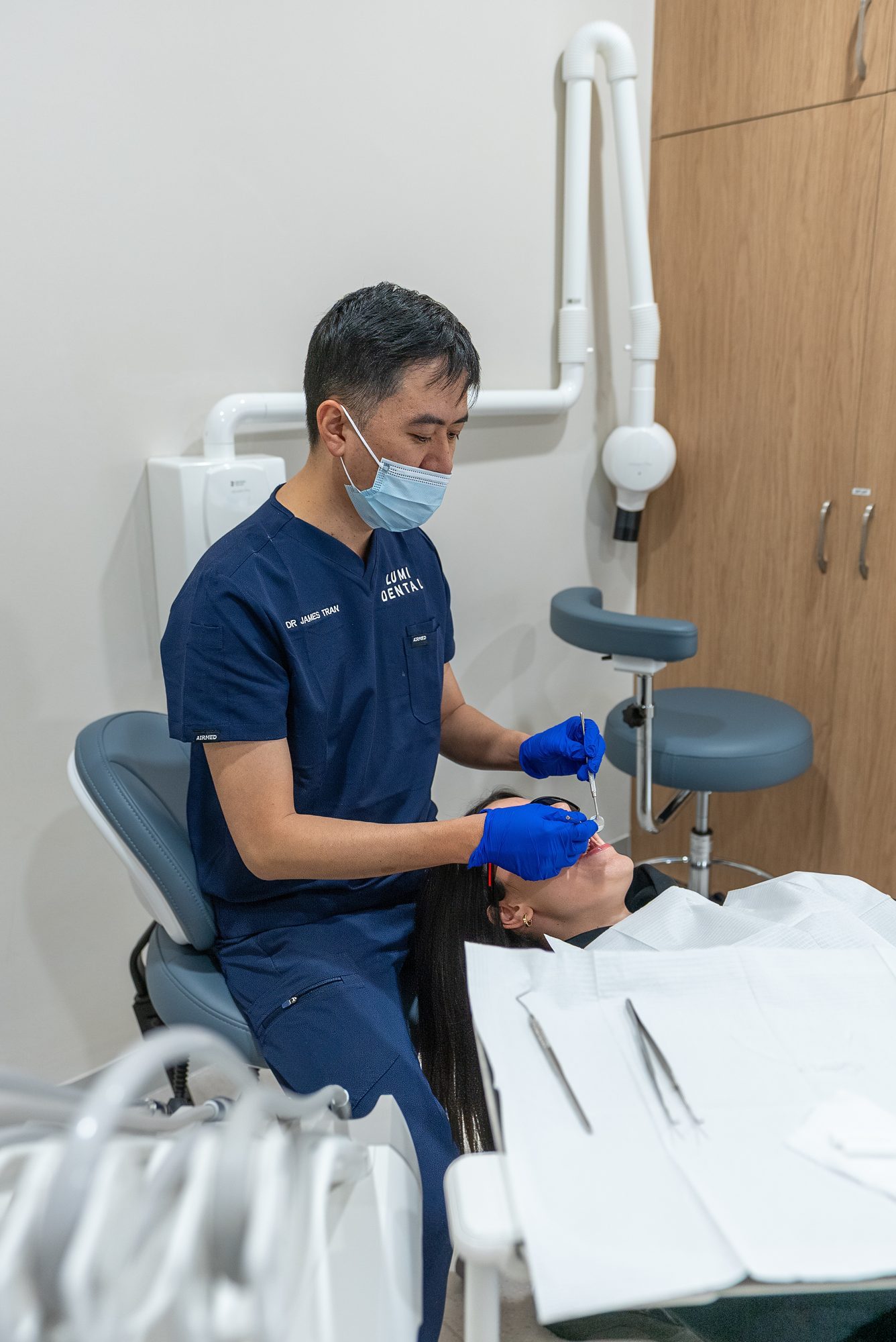
At Lumi Dental, clear aligner treatment starts with an examination by a dentist and a 3D intraoral scan. The dentist asks about your daily routine, work or school, and what has helped you stick with habits before, then talks through whether aligners are realistic for you. You are welcome to mention ADHD; it helps the team plan reminders, spare cases and review timing with you. Complex bites, or cases where braces may suit better, are referred to registered specialists. You can read more on our clear aligners page.
Questions patients ask
Can you get clear aligners if you have ADHD?
Yes, many people with ADHD do. The deciding factor is whether you can keep trays in for about 20 to 22 hours a day, so plan the routine before you start.
What happens if I forget to wear my aligners for a day?
Put them back in as soon as you remember, and ask the practice whether to stay in the current tray a little longer before changing. If the tray will not seat, call.
How do I stop losing my aligners?
Give the case one home, keep a spare where you eat, and never wrap trays in a napkin. If one does go missing, our guide to a lost aligner tray explains what to do next.
Are braces better than aligners for people with ADHD?
Not automatically. Braces work without being put back in, which suits some people, while others prefer removable trays. The dentist can talk it through and refer you to a registered specialist orthodontist if braces look more suitable.
Will I need to wear a retainer forever?
Usually retainers are needed long term. If a retainer goes missing or is swallowed, our article on a lost or swallowed retainer explains the next steps.
Thinking about clear aligners? Free aligner consultation in Melrose Park
If you have ADHD and are thinking about straightening your teeth, the team at Lumi Dental can check your teeth, talk through your routine and help you decide whether clear aligners are realistic for you. Book a free aligner consultation at Melrose Central in Melrose Park, or read about clear aligners at Lumi Dental. Patients visit from Ryde, Parramatta, Ermington and Rydalmere, and there is on-site parking.
Sources
- Australian ADHD Clinical Practice Guideline (AADPA): Factsheet for people with lived experience of ADHD
- Orthodontics Australia: Clear aligners
- PMC (BMC Oral Health): The association between attention deficit hyperactivity disorder and orthodontic outcomes, a systematic review
- PMC (Journal of Orthodontics): The effect of text message reminders on compliance with Twin Block appliances, a randomised controlled trial
About the author

Dr James Tran is a general dentist at Lumi Dental in Melrose Park. He holds a BDent from the University of Sydney and a Graduate Diploma in Oral Implants, and is a Member of the International Congress of Oral Implantologists (MICOI).
This article is general information only and is not a substitute for an examination and individual advice from a registered dental practitioner. Suitability for any treatment varies from person to person.







