


Well-managed type 1 or type 2 diabetes does not usually rule out clear aligners, but the gums need to be healthy and stable before any tooth is moved, and treating a hypo always comes before wear time. Diabetes Australia notes that the risk of periodontitis is greater in people with diabetes, particularly when blood glucose sits outside the recommended range, and that with good glucose management the risk is the same as for someone without diabetes. That is why the first appointment for clear aligners with diabetes looks at the gums before the teeth.
Written by Dr James Tran, BDent (University of Sydney), MICOI, GradDip (Oral Implants), general dentist at Lumi Dental in Melrose Park.
The short version
- Diabetes on its own is not a reason to avoid aligners. Gum health and glucose management decide the timing.
- Gum inflammation is treated first. Our article on diabetes and gum disease explains the two-way link.
- Research on tooth movement in diabetes is mostly from animal studies. It suggests high glucose may affect bone remodelling, so stable management matters.
- If you feel a hypo coming on, take the trays out and treat it straight away. Wear time can wait.
- Sweet drinks and lollies trapped under a tray sit against the teeth, so rinse or brush before the trays go back in.
- Dry mouth and thrush are more common with diabetes and are worth checking before trays cover the teeth for most of the day.
The single rule: gums stable first, and hypo treatment before wear time
Well-managed diabetes does not rule out aligners, but gums must be healthy and stable before teeth are moved, and hypo treatment has to fit around wear time, never the other way round. If your gums bleed or have deep pockets, start with gum therapy. If your glucose has been running high, start with your GP or endocrinologist. If both are in a good place, aligners can usually be planned much as they would be for anyone else, with a few extra habits.
| Situation | What to check first |
|---|---|
| Well-managed type 2 diabetes | A full gum check, X-rays of the bone levels and a normal aligner assessment |
| Type 1 on insulin with occasional hypos | Your hypo plan, where you keep fast-acting glucose, and how trays come out quickly |
| HbA1c not at your target | A conversation with your GP or endocrinologist first; gum care can start while that settles |
| Current gum disease | Gum therapy and a stable period before any tooth movement |
| Dry mouth | Saliva, decay risk and extra fluoride, because trays cover the teeth for most of the day |
| On a GLP-1 medicine | Any nausea, reflux or vomiting, and how to rinse before reseating trays |
Diabetes, gum inflammation and bone
Aligners move teeth by gently pressing them through the bone that holds them. That relies on bone being removed on one side and laid down on the other, and inflamed gums make it less predictable.
Diabetes Australia describes periodontitis as the most commonly recognised mouth complication of diabetes, and notes that it causes irreversible recession of the gum and bone around affected teeth. The same page notes that professional gum treatment has been shown to produce a mild improvement in blood glucose, although in the studies so far it lasted only around three months. So there is a reason beyond aligners to get the gums right.
If you have had gum disease, our guide to clear aligners after gum disease sets out the order of steps: assessment, gum therapy, re-evaluation and maintenance, then aligners. The same sequence applies with diabetes.
What research says about tooth movement
The honest answer is that we know less than we would like. A systematic review in the Journal of Clinical Medicine looked at fourteen studies of diabetes and orthodontic treatment. Eleven were animal experiments; only three involved people. The review reported that diabetes was linked with more gum bleeding, less efficient tooth movement, more root shortening and disturbed bone remodelling, and that insulin or metformin appeared to partly reduce these effects. The authors stressed that animal findings should be interpreted with caution and that clinical studies in humans are needed.
An earlier review of seven animal studies, published in Progress in Orthodontics, found more bone loss and less bone rebuilding in diabetic animals in every study. On speed, the results disagreed: diabetes slowed tooth movement in one study and sped it up in another.
What this means in the chair is modest. I usually plan gentler steps and a few more reviews for people with diabetes, but those with well-managed diabetes are not expected to behave very differently from anyone else. Both reviews point the same way: stable glucose before and during treatment, and close attention to the gums.
Treating a hypo with trays in
Diabetes Australia describes a hypo as a blood glucose level below 4 mmol/L and says it needs immediate treatment with quick-acting glucose, followed by a recheck. Follow your own hypo plan. Aligners change only the order of a few small steps:
- Take the trays out and put them in their case, or on a tissue if the case is not handy.
- Treat the hypo straight away with your usual fast-acting glucose. Do not wait to finish a meal or brush first.
- Recheck as your plan advises and have the follow-up snack if you need one.
- Once you feel well, rinse well with water, and brush if you can.
- Put the trays back in.
Never delay hypo treatment to protect wear time. A missed half hour of aligner wear makes no real difference to a course; a delayed hypo can. Diabetes Australia also advises that anyone who is drowsy, unconscious or unable to swallow should be given nothing by mouth, and an ambulance called on 000.
Juice and lollies sealed under a tray
A tray holds whatever is on the teeth against them for hours. Sugar from juice, regular soft drink or jellybeans sealed under plastic gives decay bacteria a long feed. That is why the trays always come out for hypo treatment, and why a rinse at the very least comes before they go back in. Our article on what you can eat and drink with clear aligners explains the same problem with everyday drinks.

Wear time when you need to eat often
Many aligner plans ask for around 22 hours of wear a day, which leaves about two hours for every meal, snack, drink other than water, and cleaning. If you use insulin and eat to a schedule, or need snacks between meals, that budget goes quickly. In my experience, a few habits make it workable:
- Group snacks with meals where your diabetes plan allows, rather than grazing.
- Keep a travel toothbrush and a small bottle of water with your hypo kit.
- Choose plain water between meals, which can be drunk with trays in.
- Tell the dentist about your eating pattern at the start.
If wear time often falls short, the team can lengthen the course rather than push you to cut meals or snacks your diabetes plan needs.
Dry mouth, thrush and keeping trays clean
Diabetes Australia notes that dry mouth is more common in people with diabetes, especially with complications such as neuropathy, and that thrush can occur because high glucose raises the glucose in saliva and allows the fungus to grow. Saliva protects teeth against decay, and trays block much of it from reaching the covered surfaces.
Before starting, the dentist checks saliva, existing fillings and any exposed roots. A high-fluoride toothpaste, sugar-free gum between wears and daily tray cleaning are common suggestions. Our guide to cleaning clear aligners covers the routine, and white patches or soreness under the trays should be checked rather than brushed harder.
Sensors, pumps and attachments
Glucose sensors and insulin pumps sit on the skin, well away from the mouth, and nothing about aligners is likely to interfere with them. The small tooth-coloured attachments bonded to some teeth, and any light polishing between teeth to make space, involve minor contact with the gums that is usually expected to settle quickly. Mention it if a sore spot lasts longer than a few days.
How we approach this at Lumi Dental
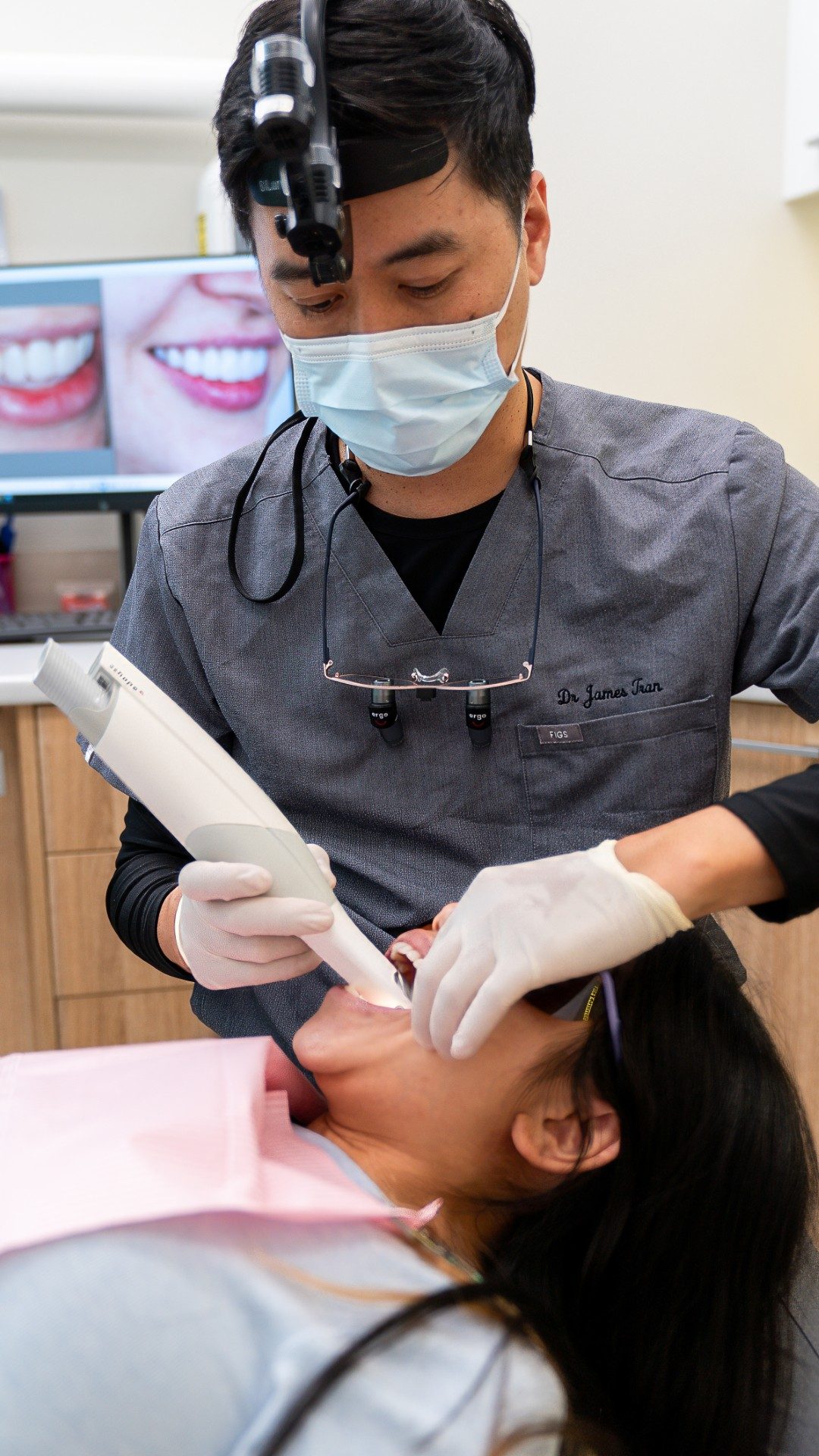
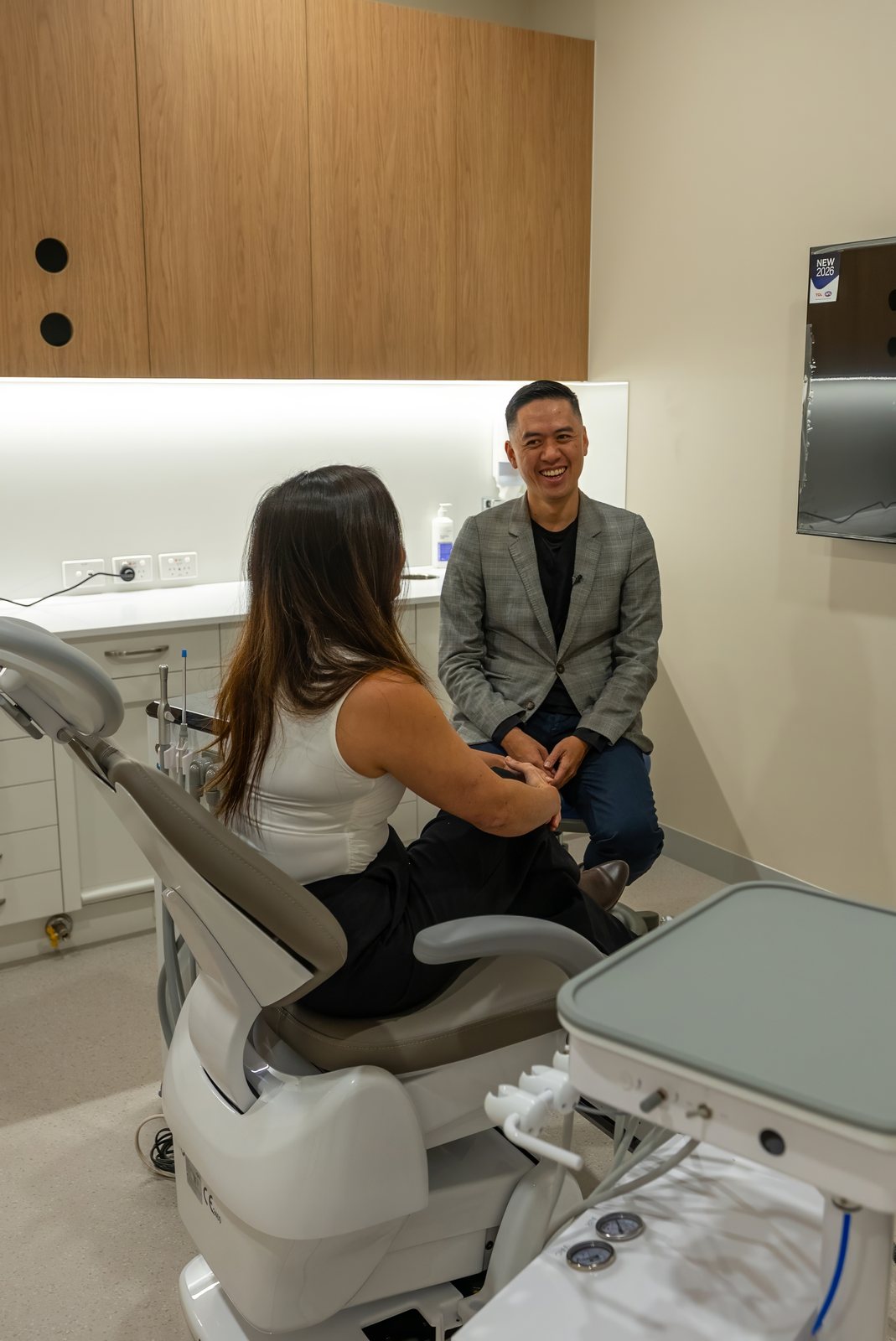
At Lumi Dental, an aligner assessment starts with a dentist examining the teeth and gums, taking X-rays to check bone levels, and asking about your diabetes, medicines and hypo pattern. Where the gums need attention, an oral health therapist provides gum therapy first and continues regular maintenance during treatment. Lumi Dental offers clear aligners, not braces; if braces or advanced gum care would suit better, the team refers you to a registered specialist. With your consent, the team can write to your GP or endocrinologist. You can read more on the general dentistry page.
Questions patients ask
Can I get clear aligners if I have diabetes?
Usually yes, if your diabetes is well managed and your gums are healthy. Gum disease is treated first, and the plan allows for your hypo routine and eating pattern.
Does diabetes slow down tooth movement?
It might when glucose is high, but the research is mostly in animals and the results disagree. Stable glucose and healthy gums are the practical focus.
What do I do if I have a hypo while wearing aligners?
Take the trays out and treat the hypo straight away, as your plan says. Once you feel well, rinse or brush and put them back in.
Can I drink juice with my aligners in?
No. Juice or soft drink sealed under a tray bathes the teeth in sugar. Take the trays out, and rinse before they go back in. A dry or sour-smelling mouth under trays is covered in our article on aligners, bad breath and dry mouth.
Should I tell my doctor about aligners?
It is worth mentioning, especially if your HbA1c is above target or your medicines are changing. Your doctor manages your diabetes; the aligner plan fits around it.
Thinking about clear aligners? Free aligner consultation in Melrose Park
If you have diabetes and would like straighter teeth, the team at Lumi Dental can check your gums, talk through your hypo plan and explain whether aligners suit you. Book a free aligner consultation at Melrose Central in Melrose Park, or read more about clear aligners at Lumi Dental. Patients visit from Ryde, Parramatta, Ermington and Rydalmere, with on-site parking.
Sources
- Diabetes Australia: Dental health
- Diabetes Australia: Hypoglycaemia (hypo) and hyperglycaemia
- PMC (Journal of Clinical Medicine): The influence of diabetes on orthodontic treatment, a systematic review
- PMC (Progress in Orthodontics): Uncontrolled diabetes and periodontal tissues during orthodontic tooth movement, a review of animal studies
About the author
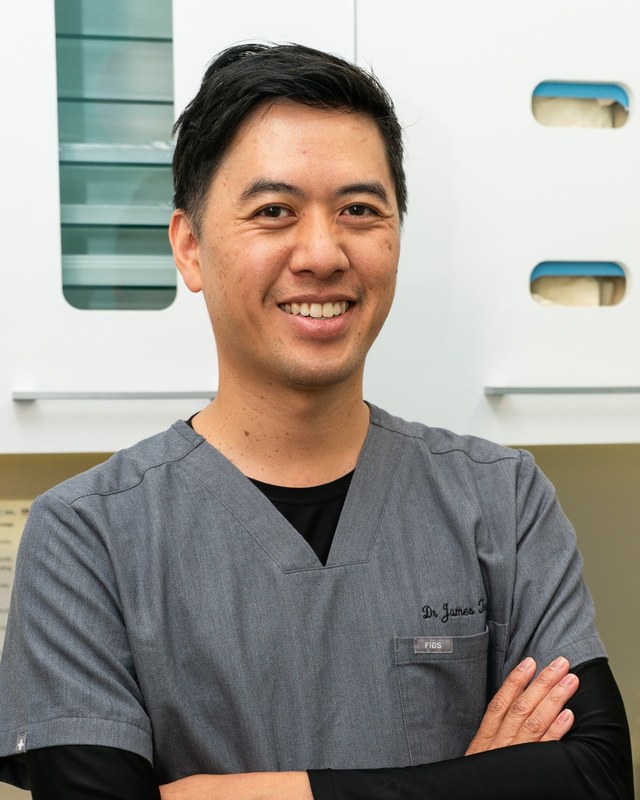
Dr James Tran is a general dentist at Lumi Dental in Melrose Park. He holds a BDent from the University of Sydney and a Graduate Diploma in Oral Implants, and is a Member of the International Congress of Oral Implantologists (MICOI).
This article is general information only and is not a substitute for an examination and individual advice from a registered dental practitioner. Suitability for any treatment varies from person to person.







