

A new dental implant crown that feels high or hits first in the first few days is common and is usually fixed with a short bite adjustment, not a new crown; a crown that was comfortable for months and then starts to feel high is a different signal and needs an examination. Research has reported that a natural tooth sinks tens of microns on its ligament when you bite, while an implant fused to bone moves only around 3 to 5 microns, so an implant crown is set to touch slightly lighter than the teeth beside it. In my experience the tongue finds a high spot within an hour of leaving the chair.
Written by Dr James Tran, BDent (University of Sydney), MICOI, GradDip (Oral Implants), general dentist at Lumi Dental in Melrose Park.
The short version
- Natural teeth cushion on a ligament; an implant does not, so its crown is set to touch lightly and a small error feels large.
- Feeling high, wide or "in the way" for two or three days is common.
- The fix for a new crown is usually a bite check: marking paper, a thin shim and a few seconds of polishing.
- A crown that was fine for months and now feels high points to a change: a loose screw, a lifted crown, a neighbouring tooth that has moved, or inflamed gum.
- The same early feeling happens after fillings; see our guide to a bite that feels high after a filling.
- If it still hits first after three days, book a bite check.
Why an implant crown can feel high even when it looks right
A natural tooth hangs in its socket on the periodontal ligament, which works as a shock absorber and a sensor. A review in The Open Dentistry Journal describes the ligament as a mechanoreceptor that regulates bite force, and notes that an implant is a solid piece embedded in bone whose tactile perception is "not as sensitive as the periodontal ligament", so the authors infer that implants are more exposed to overload than teeth.
A literature review on implant occlusion reports that teeth move roughly 25 to 100 microns along their axis under load while an osseointegrated implant moves 3 to 5 microns. A study in BMC Oral Health recommends about 10 to 30 microns of clearance on an implant-supported single crown, so that when the neighbouring teeth compress under a firm bite the implant crown shares the load instead of taking it first. That is why you are asked to tap gently and then clench on the day the crown goes in: on a light tap it should barely touch, and on a clench it should meet the opposing tooth at the same moment as its neighbours. Our article on whether dental implants feel like real teeth covers the sensation side.
What you notice, what it often means and what the dentist does
| What you notice | What it often means | What the dentist does |
|---|---|---|
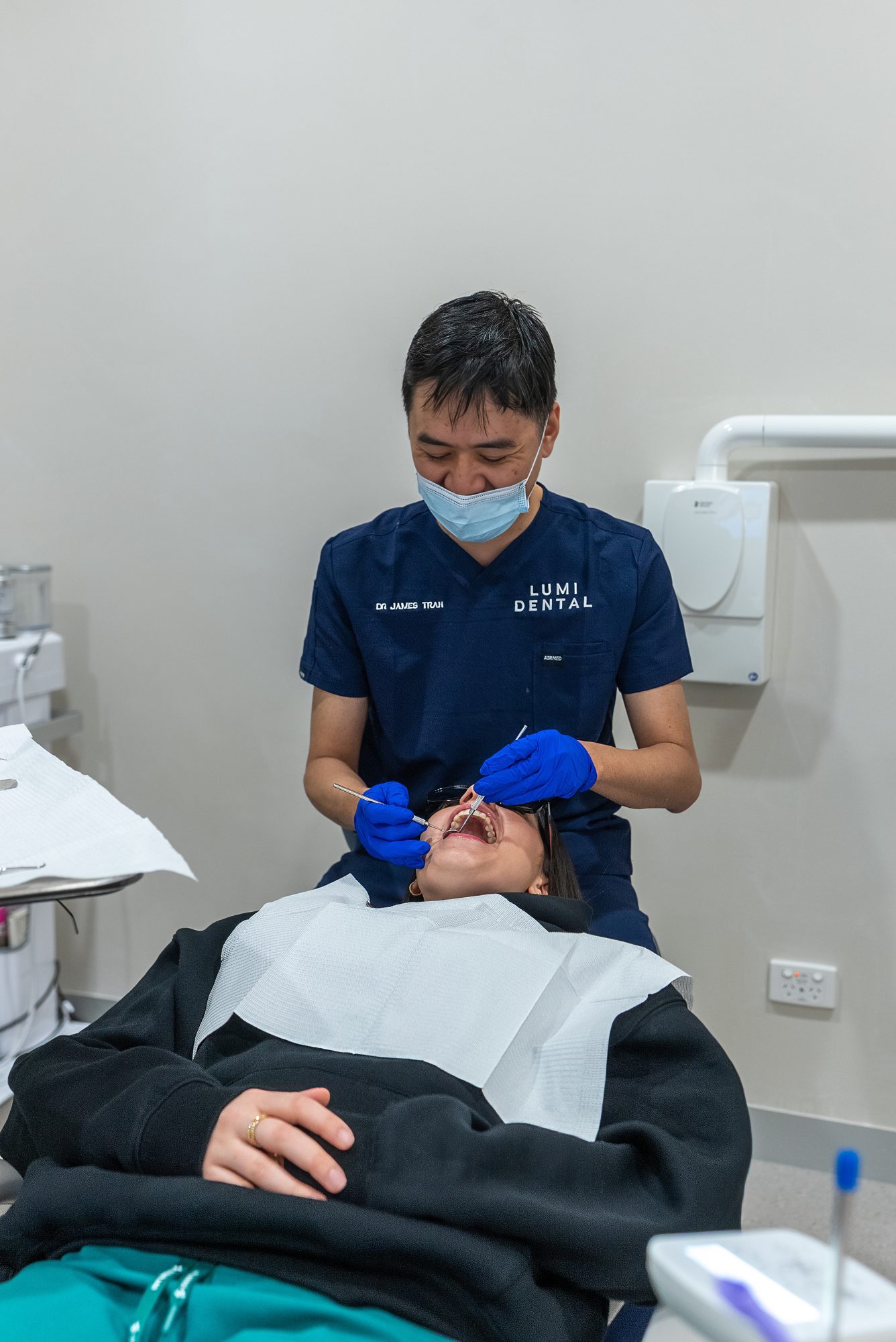
| Touches first when you close, from day one | Crown slightly high in the closed bite | Marks with articulating paper and a shim, polishes the high spot, rechecks the bite |
| Fine closing straight, catches when you slide sideways or forward | A cusp is in the way during movement | Reshapes the cusp slope so the canine or front teeth guide the slide |
| Feels wide or bulky; the tongue keeps finding it | Shape rather than height; common in the first week | Leaves it to settle, or slims the cheek or tongue side |
| Jaw muscles ache on waking, or the opposite tooth is tender | Overload from a high spot, often with night clenching | Bite adjustment, then a night guard if grinding is involved |
| Comfortable for months, now feels high or rocks | A loose abutment or crown screw, or a lifted crown | X-ray, retightens or re-cements the crown, rechecks the bite |
| Pressure against the next tooth and food packs there | The contact point has opened as a neighbour drifted or wore | Checks the contact, adds to the crown or restores the neighbour |
| Gum around the crown is puffy or bleeds and the crown feels tall | Inflamed gum; sometimes trapped plaque or cement | Cleans around the implant, checks for cement, reviews home cleaning |
The single rule: if it still hits first after three days, book a bite check
Most of the high feeling from a brand new crown settles within two or three days as the neighbouring teeth shift fractionally, the chewing muscles relearn the closed position and any gum swelling from the fitting goes down. What does not settle on its own is a true high spot, because an implant cannot sink out of the way as a tooth can. So the rule I give patients is simple: if the implant crown still touches first after three days, or you wake with an aching jaw or a tender opposite tooth, book a bite check. If you clench or grind, read our guide to dental implants and bruxism, because a night guard may be part of the answer.
What a bite check on an implant crown involves
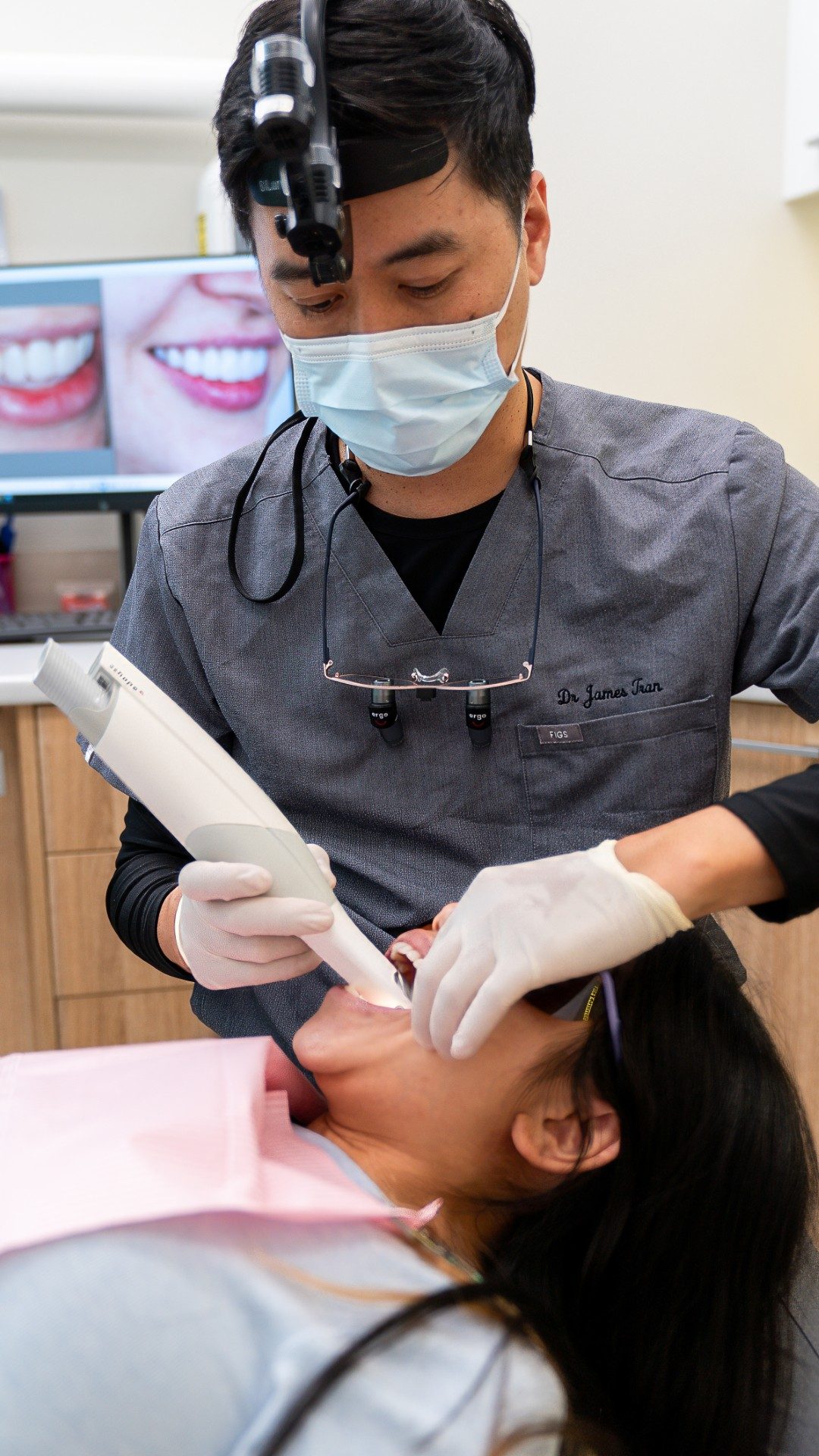
You bite on coloured articulating paper in a few positions: closed, clenched, sliding left and right, and sliding forward. A thin plastic shim is then drawn between the teeth while you bite; on an implant crown it should slip through on a light tap and hold on a firm clench. The high mark is polished with a fine bur and the spot is repolished so adjusted porcelain does not roughen the opposing tooth. I usually book a second look a week later, because muscles that were guarding a high spot relax and sometimes reveal a smaller one.
When a crown that was fine starts to feel high
A crown that has been comfortable for months or years and then feels high, tall or slightly mobile usually means something has moved, and in my experience the commonest culprit is the small screw holding the abutment or crown to the implant. A review in the British Dental Journal lists loosening of the occlusal and abutment screws, and loss of cement retention, among the recurring mechanical complications over ten years. Our guide to why a dental implant feels loose separates a loose crown from a loose implant, which is far less common and far more serious.
Other causes are slower. The same review points out that natural teeth keep moving through adult life while an implant stays put, so a neighbouring tooth that wears, tips or over-erupts can change which tooth touches first. A chipped cusp or inflamed gum can also change how the crown feels. Each of these shows up on a bite check and an X-ray.
Why a high implant crown should not be left
The British Dental Journal review reports that over ten years ceramic chipping is the most frequent complication of implant restorations, affecting around one crown in five, with screw loosening and loss of cement retention behind it, and that risks from biting forces are higher where bruxism is present. It adds that evidence linking overload to bone loss around a well-integrated implant in people is poorly reported. Either way, a high spot concentrates force on one crown, and the porcelain or the screw gives way first. The review also recommends an occlusal check at each annual implant maintenance visit.
How we approach this at Lumi Dental
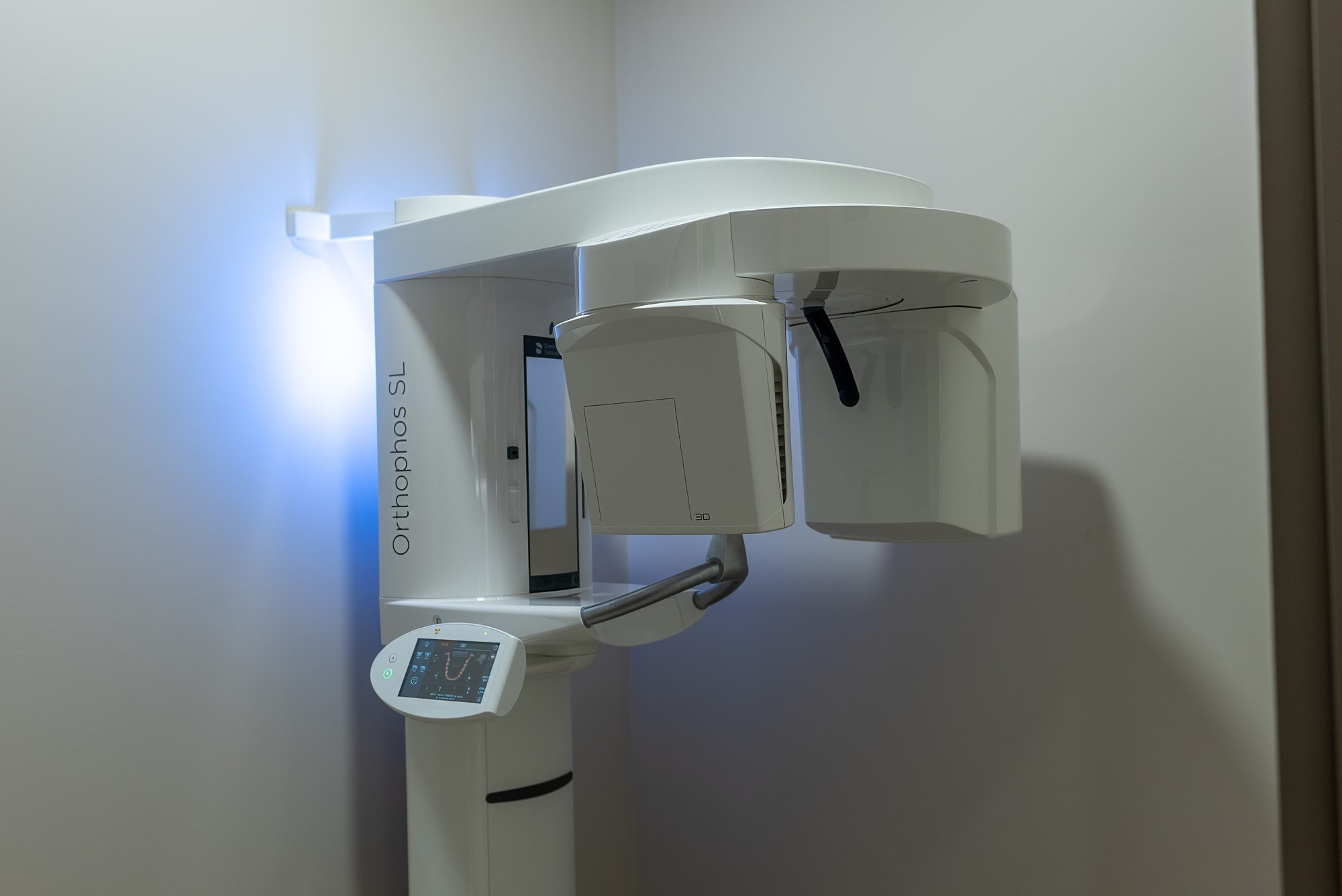
At Lumi Dental in Melrose Park the bite on a new implant crown is checked with articulating paper and shim stock on the day it is fitted, and patients are asked to come back if it still hits first after three days. A crown that has started to feel high after being comfortable is examined by a dentist with an in-house X-ray, the screw is checked before the bite is touched, and the hygiene team reviews the gum around the implant. Read more about dental implants at Lumi Dental and the scanning and imaging used at the practice.
Questions patients ask
Is it normal for a new implant crown to feel high?
Yes, for the first two or three days. The crown is set to touch slightly lighter than your natural teeth, and the muscles and neighbouring teeth take a few days to adjust. If it still touches first after three days, book a bite check.
Why does my dentist want the implant crown to touch lighter than my other teeth?
Because natural teeth sink tens of microns under load and an implant moves only a few. Research recommends roughly 10 to 30 microns of clearance so the implant crown shares a firm bite.
Can a high implant crown damage the implant?
More often it damages the crown or the screw than the implant itself. Ceramic chipping and screw loosening are the most frequent complications reported, and both are more common with grinding. Our article on chipped or worn implant crowns explains what happens if porcelain breaks.
My implant crown was fine for a year and now feels high. What happened?
Something has moved. The usual finding is a loosened abutment or crown screw; less often a neighbouring tooth has drifted, a cusp has chipped, or the gum is inflamed. An X-ray and a bite check sort out which. Food catching beside the crown is a clue; see food stuck around an implant crown.
Does adjusting the bite weaken the crown?
Not when it is a small high spot polished and smoothed afterwards. Removing a large amount of porcelain is a different decision and may mean remaking the crown, which the dentist discusses first.
Implant crown feeling high? Book a bite check or a complimentary implant consult in Melrose Park
If a new implant crown is still hitting first after three days, or an older one has started to feel high, the team at Lumi Dental in Melrose Park can check the bite and X-ray the implant in one short visit. Contact Lumi Dental to book a bite check, or read about dental implants at the practice. Patients visit from Ryde, Parramatta, Ermington, Rydalmere and nearby suburbs.
Sources
- PMC (BMC Oral Health): Occlusal contact and clearance of posterior implant-supported single crowns designed by two different methods
- PMC (Journal of Periodontal and Implant Science): Occlusion for implant-supported fixed dental prostheses in partially edentulous patients, a literature review and current concepts
- PMC (British Dental Journal): Occlusal considerations in maintaining health of implants and their restorations
- PMC (The Open Dentistry Journal): The role of occlusion in the dental implant and peri-implant condition, a review
About the author

Dr James Tran is a general dentist at Lumi Dental in Melrose Park. He holds a BDent from the University of Sydney and a Graduate Diploma in Oral Implants, and is a Member of the International Congress of Oral Implantologists (MICOI).
This article is general information only and is not a substitute for an examination and individual advice from a registered dental practitioner. Suitability for any treatment varies from person to person.








