
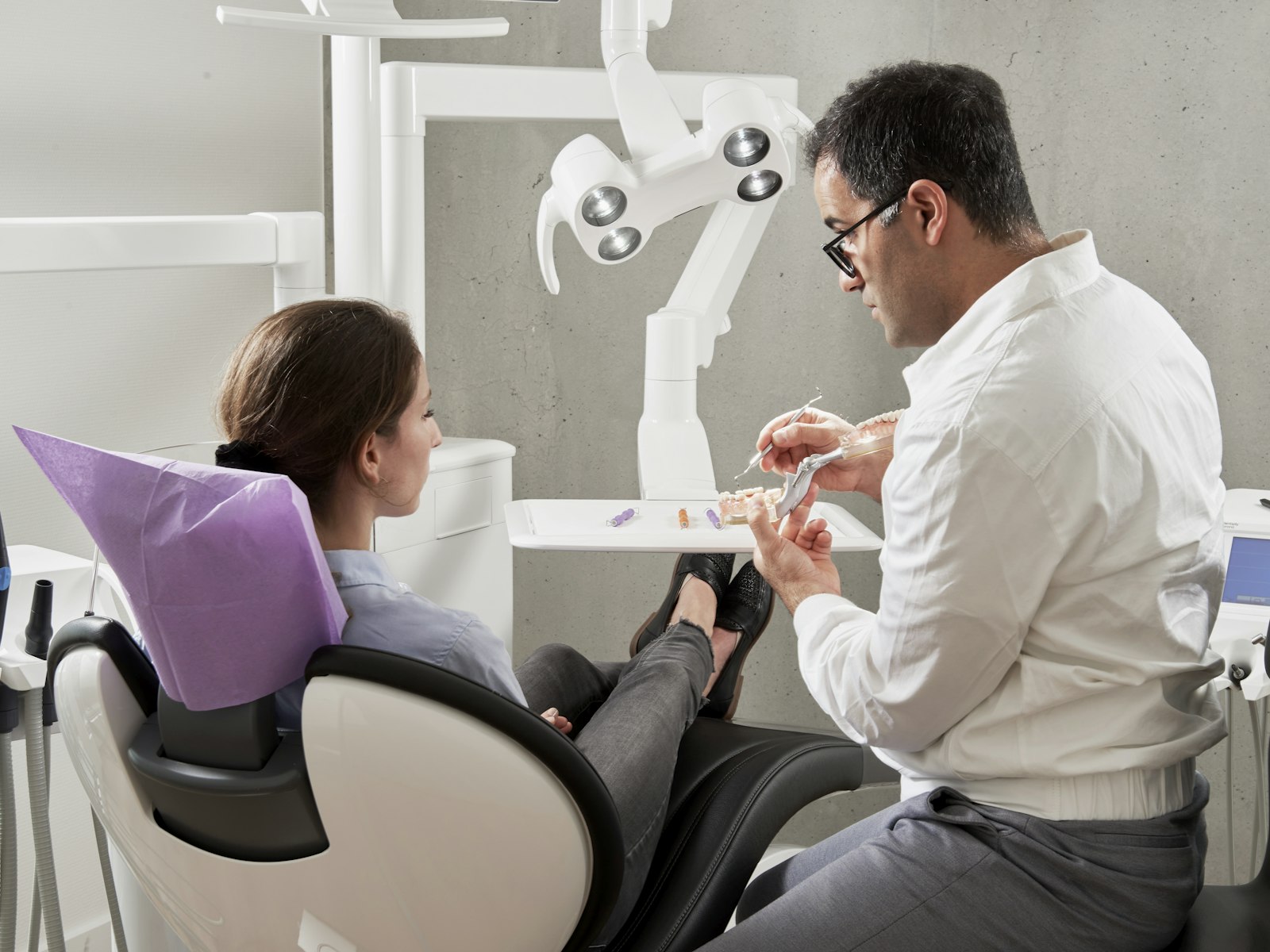

Most people find that a well-made dental implant feels and works much like a natural tooth when they chew, talk and smile, although it is not identical. If you are asking whether dental implants feel like real teeth, the clinical answer is "very close, with a few differences worth knowing before treatment." The main one is that an implant has no periodontal ligament, the thin cushioning layer of fibres, typically around a fifth of a millimetre wide, that suspends a natural tooth in its socket and feeds back fine pressure information to the brain. Understanding what that changes, and what it does not, helps you set realistic expectations.
Key Takeaways
- For chewing, biting and speaking, most patients report that an implant feels close to a natural tooth once healing is complete.
- An implant is fused directly to bone through osseointegration, so it lacks the slight give and fine pressure sense of a natural tooth.
- Implant crowns do not feel hot or cold, because there is no nerve inside them.
- The first few weeks often feel unusual: swelling, a new contour for the tongue to explore, and sometimes temporary numbness.
- Fixed full-arch teeth usually feel more secure than removable dentures, and an upper fixed bridge leaves the palate uncovered.
- Crown shape, bite adjustment and gum contour all influence how natural the final result feels.
Why Implants Feel So Similar to Natural Teeth
A dental implant is a small titanium or ceramic post placed in the jawbone. Over a period of weeks to months the bone grows into close contact with its surface, and once that bond is established a crown is attached on top. The result is a tooth that is anchored in bone rather than resting on the gums, which is why it does not move, click or slip when you eat. If you would like the full sequence of steps, our guide on how dental implants work walks through each stage.
Because the crown is shaped to match the teeth around it and to meet the opposing teeth in a balanced way, your tongue, lips and cheeks quickly treat it as part of the mouth. In my experience, patients with a long-standing single implant often need a moment to remember which tooth it is.
What Feels Different: No Periodontal Ligament
A natural tooth is not rigidly fixed. It sits in a socket, held by the periodontal ligament, and it moves very slightly under load. That ligament is packed with pressure receptors. They let you sense a grain of sand or a fish bone, and they help your jaw muscles judge how hard to bite.
An implant is fused directly to bone, so it moves only a tiny fraction of what a natural tooth does and has none of those ligament receptors. Research comparing the two has generally reported that tactile sensitivity is lower on implants: a thicker object or a firmer force is typically needed before an implant patient notices it, with some studies describing thresholds several times higher than for natural teeth.
Osseoperception: the brain adapts
Implant patients are not without feedback. Researchers describe a phenomenon called osseoperception, where the brain picks up signals through the surrounding bone, muscles, jaw joint and gum. Over months, many people report that their sense of the implant improves as the brain adapts to these new pathways.
Biting harder without noticing
One practical consequence is that some patients can bite harder on an implant than they realise, because the early warning from the ligament is missing. This is one reason dentists check and fine-tune the bite carefully, and why a night guard may be suggested for people who clench or grind. A crown that sits slightly high on an implant may not announce itself the way it would on a natural tooth.
Temperature, Taste and Everyday Sensations
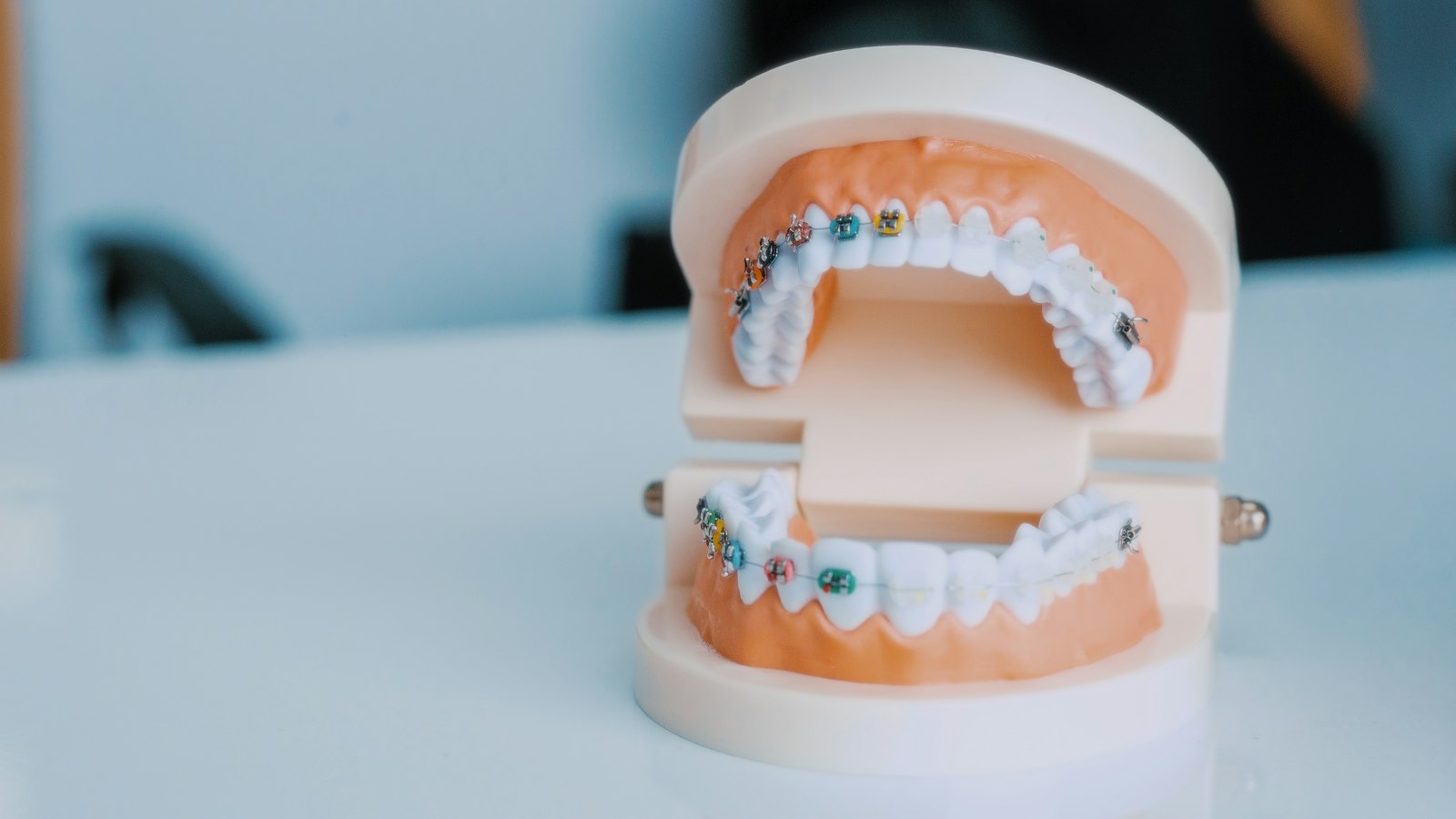
A natural tooth has a living pulp, so very cold or hot drinks can cause a brief twinge. An implant crown has no nerve inside it, so it does not react to temperature at all. Some patients find it slightly odd at first that one tooth is "silent" with iced water.
Taste is not affected, because taste comes from the tongue and palate rather than the teeth. Speech is usually unchanged for a single implant once the area has healed. Food trapping is the sensation people mention most often in practice. An implant crown can have a slightly different shape at the gum line than the tooth it replaced, and small gaps can catch fibrous food such as meat or leafy greens. A well-designed contour and good daily cleaning minimise this, and our guide on how to clean dental implants at home covers the tools that help.
The First Weeks Feel Different From the Long Term
How an implant feels in the first month is not how it will feel at the end. During healing it is common to notice:
- Swelling and tenderness around the site for several days
- Your tongue repeatedly exploring a healing cap or temporary tooth
- A new contour or a slightly different bite while tissues settle
- Occasionally, numbness or tingling in the lip or chin, which usually settles but should always be reported; our article on numbness after implant surgery explains what is expected and what needs review
Once the final crown is fitted and the bite is adjusted, most patients describe a period of a few weeks before the tooth feels like "theirs." That adjustment is normal.
How Implants Compare With Bridges and Dentures
The feel of an implant is easiest to understand next to the alternatives. The table below summarises the general picture. For a fuller comparison, see implant vs bridge vs denture.
| Option | How it feels | Chewing | Temperature sensitivity | Cleaning |
|---|---|---|---|---|
| Natural tooth | Slight give, fine pressure sense from the ligament | Full natural function | Yes, the pulp responds to hot and cold | Brush and clean between teeth daily |
| Single implant | Firm and stable, lower fine tactile sense | Close to natural for most foods | No, the crown has no nerve | Brush and clean between teeth daily, with extra care at the gum line |
| Tooth-supported bridge | Fixed and stable, pressure felt through the supporting teeth | Good, relies on the neighbouring teeth | The supporting teeth may still feel temperature | Floss threaders or brushes under the false tooth |
| Removable partial or full denture | Covers gum, and an upper denture often covers the palate; can move | Often noticeably reduced, especially with hard foods | Gum and palate coverage can dull temperature and texture | Removed daily for cleaning |
Full-Arch Implants: Fixed Teeth vs Dentures
For people missing most or all of their teeth in one jaw, the difference in feel is often larger than with a single tooth. A conventional full upper denture covers the roof of the mouth to gain suction. Many wearers say this dulls their sense of food temperature and texture, and lower dentures in particular can move during eating and speaking.
A fixed full-arch bridge supported by several implants does not cover the palate on the upper jaw, does not rely on suction, and is not removed at night. Biting force with full dentures is often quoted as a fraction of natural bite force, and research has generally reported that implant-supported fixed teeth allow people to bite and chew more firmly than with conventional dentures. Lumi Dental's full-arch service is called All-on-X. Some patients will have heard the term All-on-4, a treatment concept trademarked by Nobel Biocare; the general principle of a fixed arch on multiple implants is similar. Our article on dentures vs All-on-X full-arch implants compares these options in more depth.
Fixed full-arch teeth still feel different from a full set of natural teeth. The tactile sense is lower across the whole arch, and some people notice a change in speech for the first couple of weeks while the tongue adapts to the new shape.
What Affects How Natural Your Implant Feels
If you remember one rule, make it this: if an implant feels "wrong" after the first few weeks, start with a bite check before assuming anything is wrong with the implant itself. Several details influence how natural the result feels:
- Crown shape. A crown that is too bulky or too flat at the gum line can trap food or feel unfamiliar to the tongue.
- Bite adjustment. Because implants give less feedback, careful bite checking matters. A high contact on an implant may not be painful but can overload it and the opposing tooth.
- Gum contour. Healthy gum tissue that hugs the crown feels smoother and helps keep food out.
- Contacts with neighbouring teeth. Contacts that are too loose let food pack in, while contacts that are too tight make flossing difficult.
Common Questions
Can you tell the difference between an implant and a real tooth?
Most people cannot tell during normal eating and speaking once healing is complete. The differences are subtle: less fine pressure sense and no response to hot or cold.
Do dental implants have feeling?
The implant itself has no nerve, but you still sense pressure through the surrounding bone, gum, muscles and jaw joint. This is known as osseoperception, and it tends to improve as the brain adapts.
Will an implant feel strange in my mouth at first?
It often does for the first few weeks. Swelling, a new crown contour and an adjusted bite take time to settle, and the tongue usually stops noticing the tooth within a few weeks of the final crown being fitted.
Can I eat normally with dental implants?
Yes, once the implant has integrated and the final crown is fitted, most foods can be eaten normally. Very hard items such as ice or hard lollies should be avoided, as they should for natural teeth.
Do All-on-X teeth feel like natural teeth?
Fixed full-arch teeth typically feel more stable than dentures and leave the palate uncovered, but they do not have the fine tactile sense of natural teeth. Most patients adapt well within the first few months.
Talk Through Your Options at Lumi Dental
If you are weighing up an implant and want to know how it is likely to feel in your mouth, the team at Lumi Dental in Melrose Park can examine the area, explain what to expect for a single tooth or a full arch, and provide a written quote. Read more about dental implants in Melrose Park, then book a complimentary implant consult to discuss your situation with Dr James Tran.
This article is general information and is not a substitute for individual advice from a dentist who has examined you.


