
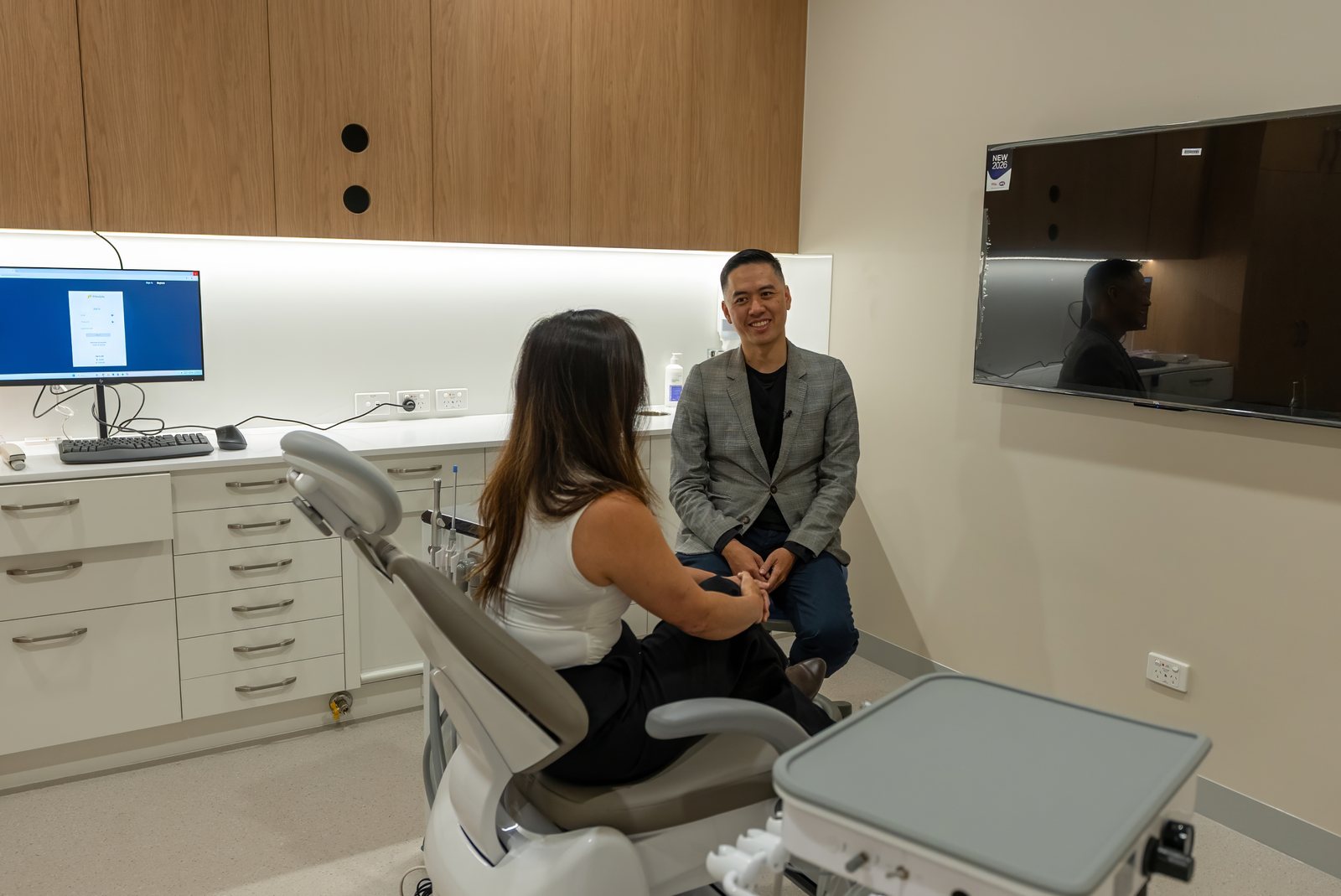

An implant that has been comfortable for years and then starts to ache has not grown a nerve. Once an implant has bonded to bone it has no nerve supply of its own, so the discomfort is coming from something next to it or on top of it: the gum, the bone, the screw and crown, a neighbouring tooth or, in the upper jaw, the sinus. Most of these causes can be treated, and an examination with an X-ray usually shows which one is responsible.
Written by Dr James Tran, BDent (University of Sydney), MICOI, GradDip (Oral Implants), general dentist at Lumi Dental in Melrose Park.
Why an implant gives so little warning
A natural tooth sits in a thin ligament packed with nerve endings. It cushions biting and tells you quickly when something is wrong. An implant is joined straight to the bone with no ligament in between, so the early stages of a problem often go unfelt. By the time an old implant aches, there is often something a dentist can see or measure, such as a deeper gum pocket, bleeding, pus, bone loss on an X-ray or a loose crown.
That is why "wait and see" rarely helps. Bone that is lost around an implant does not grow back by itself, and a loose screw often gets looser.
Gum and bone infection around the implant
The most important cause to rule out is peri-implantitis, an infection of the gum that has spread to the bone holding the implant. It is not rare. A 2022 meta-analysis in BMC Oral Health (Diaz and colleagues) estimated it affects about 20% of people with implants and about 13% of individual implants, with wide variation depending on how it was defined.
It usually starts quietly. You might notice the gum around the implant bleeding when you clean, looking puffy or darker, a bad taste or a little pus, while the crown itself still feels solid. Pain tends to come later. A history of gum disease, smoking and difficulty cleaning around the implant all raise the risk. Treatment ranges from professional cleaning of the implant surface to surgery to clean and reshape the area when bone loss is advanced; our guide to peri-implantitis treatment explains the options, and cleaning dental implants at home covers prevention.
A loose screw, crown or cement
The parts on top of the implant can wear and loosen even when the implant itself is sound. In a 2012 systematic review of single implant crowns in Clinical Oral Implants Research (Jung and colleagues), about 8.8% had a screw loosen within five years, about 4.1% lost retention and came loose, and about 3.5% chipped their porcelain.
A slightly loose screw often causes a dull ache on biting that comes and goes. The crown may feel high, rock a little or start trapping food. A crown that has lost its cement can click or lift. These are usually repairable: the crown is removed, the screw is replaced or tightened, and the crown is refitted or remade. If a screw keeps coming loose, that can be a sign the implant is carrying too much load, which deserves a closer look. Our articles on a loose implant crown and a chipped or worn implant crown go into the fixes.
Grinding and a bite that has changed
Teeth move slightly over the years, but an implant does not. A bite that was balanced when the crown was fitted can gradually put more force on the implant, especially if you grind or clench. A 2019 review in the International Journal of Implant Dentistry (Sadowsky) noted that the role of overload in bone loss around implants is still debated, but that clinical studies have linked grinding and clenching with implant failure.
In practice, overload usually shows up as chipped porcelain, a screw that keeps loosening or an ache on waking. A bite adjustment and a night splint are the usual protection, as explained in our guide to implants and teeth grinding.
A neighbouring tooth or the sinus
Dental pain is often hard to pin to one spot. A cracked tooth, a deep filling or an infected nerve next to the implant can easily be mistaken for implant pain. Cold tests, bite tests and an X-ray of the neighbouring roots usually settle it.
In the upper back jaw, the tips of implants sit close to the floor of the sinus. The Better Health Channel lists aching teeth in the upper jaw, facial pain that is worse when leaning forward and a blocked nose among the symptoms of sinusitis. If several upper teeth ache together during a cold or hay fever, the implant may simply be in the area. Our article on sinus toothache and referred pain explains how the two are told apart.
Rarely, the implant itself
Late failure of a well-integrated implant is uncommon. In the Jung review, about 95% of implants supporting single crowns were still in place at ten years. When it does happen, it is usually the end result of untreated peri-implantitis or long-term overload, and occasionally a fracture. Movement of the whole implant, rather than just the crown, is the key sign.
What happens when you come in
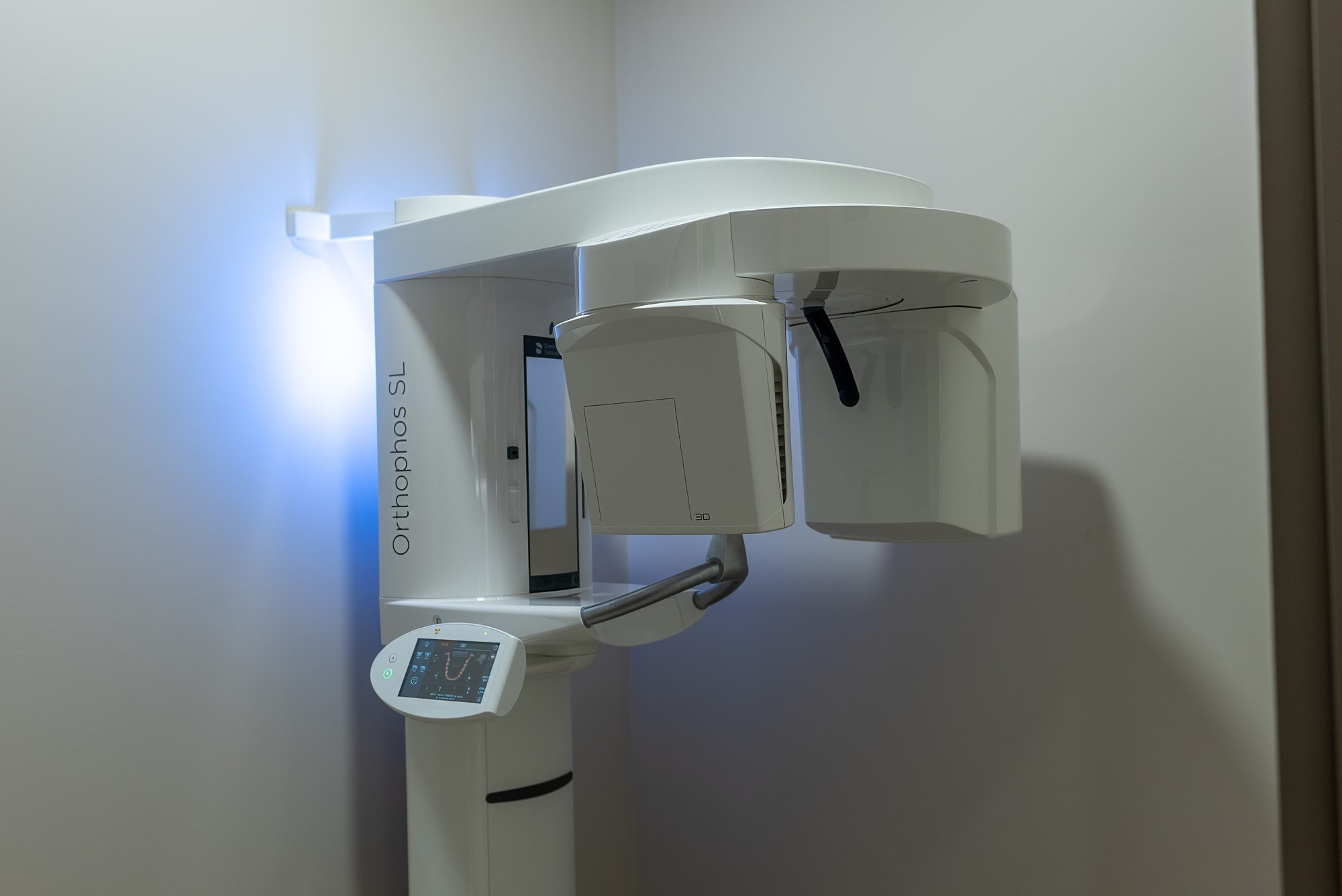
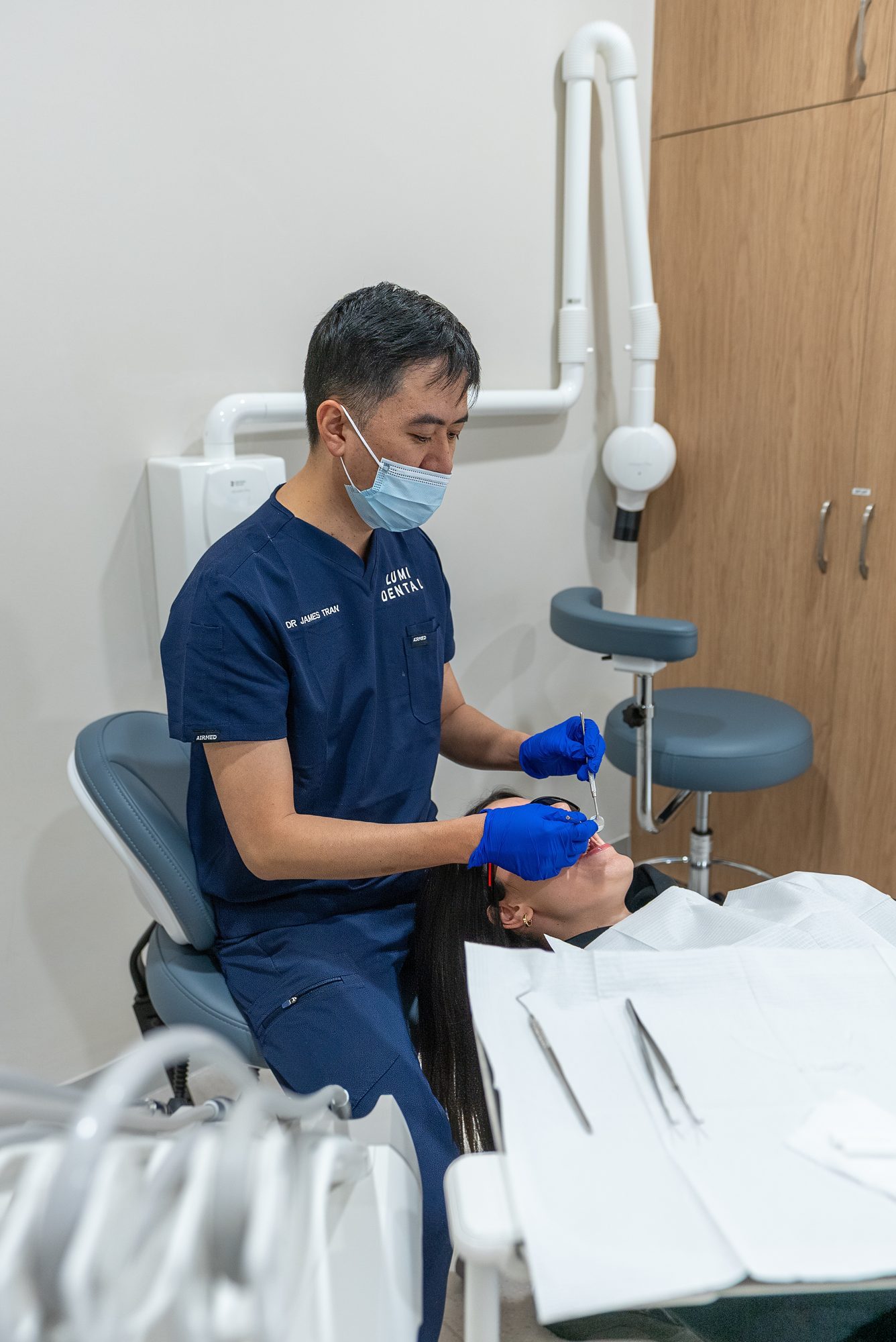
The dentist will ask when the ache started and what makes it worse. The gum is gently probed all the way around the implant and checked for bleeding or pus, the crown is tested for movement, and the bite and neighbouring teeth are checked. An X-ray is compared with the earliest one on your record, because small amounts of bone loss are only obvious side by side. At Lumi the Orthophos 3D X-ray is on site if a 3D scan is needed. If the implant was placed elsewhere, bringing any records or old X-rays helps.
Gum treatment and implant maintenance may be done by an oral health therapist, while the dentist handles screws, crowns, bite adjustment and splints. A maintenance interval is usually set at the end.
Some signs should not wait for a routine booking: facial swelling, fever, pus, a bad taste that will not clear, or a crown or implant that moves. Those need same-day attention, and our emergency dental care page explains how to reach us.
What patients ask about an aching old implant
Can an implant get infected years after it was placed?
Yes. Peri-implantitis can develop at any stage and often starts without pain. Bleeding, puffiness or a bad taste around an implant are reasons to have it checked before it aches.
Is it normal for an implant to hurt when I bite?
No. Pain on biting most often points to a loose screw or crown, a bite that now sits high on the implant, or a problem with a neighbouring tooth. Our guide to signs of a failing implant covers what else to watch for.
Does a loose crown mean the implant has failed?
Usually not. A loose crown is normally a loose screw or washed-out cement, with the implant still firmly in the bone. Only movement of the implant itself suggests failure.
Getting an old implant checked
If an implant that has been comfortable for years has started to ache, an examination and X-ray will usually show why. Lumi Dental in Melrose Park can check implants whether or not they were placed here, and free implant consults are available. Contact us to book, or read more about dental implants at Lumi.
Sources
- Diaz P and colleagues. What is the prevalence of peri-implantitis? A systematic review and meta-analysis. BMC Oral Health, 2022
- Jung RE and colleagues. Survival and complications of single crowns on implants with a mean follow-up of 5 years. Clinical Oral Implants Research, 2012
- Sadowsky SJ. Occlusal overload with dental implants: a review. International Journal of Implant Dentistry, 2019
- Better Health Channel: Sinusitis
About the author

Dr James Tran is a general dentist at Lumi Dental in Melrose Park. He holds a BDent from the University of Sydney and a Graduate Diploma in Oral Implants, and is a Master of the International Congress of Oral Implantologists (MICOI).
This article is general information only and is not a substitute for an examination and individual advice from a registered dental practitioner. Suitability for any treatment varies from person to person.








