
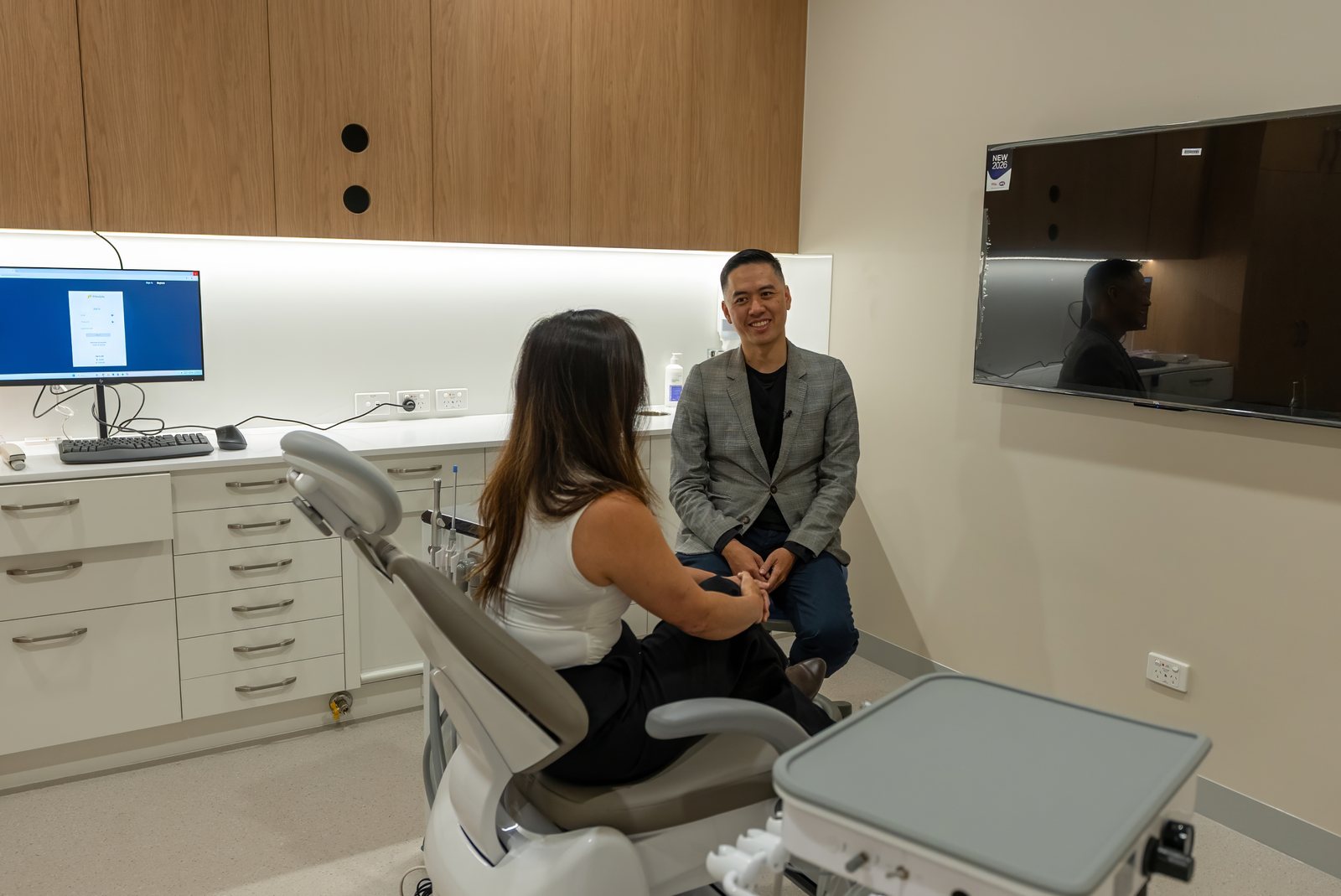

Many women assume that bone loss after menopause puts implants out of reach. For most, it does not. The jaw is assessed on its own, hormone therapy is usually continued, and the detail that changes planning most is any medicine you have ever been prescribed for osteoporosis.
Written by Dr James Tran, BDent (University of Sydney), MICOI, GradDip (Oral Implants), general dentist at Lumi Dental in Melrose Park.
Bone density falls after menopause, but a hip scan does not describe your jaw
Oestrogen helps keep bone strong, and its fall at menopause speeds up bone loss. The Better Health Channel (Victoria) reports that women lose, on average, up to 10 per cent of their bone density in the first five years after menopause, and that about one in two women over 60 will have at least one fracture due to osteoporosis.
Those numbers come from the skeleton as a whole. A DXA scan, the test behind a T-score, usually measures the lower spine and upper hip. It says nothing direct about the ridge of bone where a missing tooth used to be. A woman with osteopenia on her hip report can still have a firm, wide ridge at the implant site, and someone with normal hip density can have a thin ridge after years without a tooth.
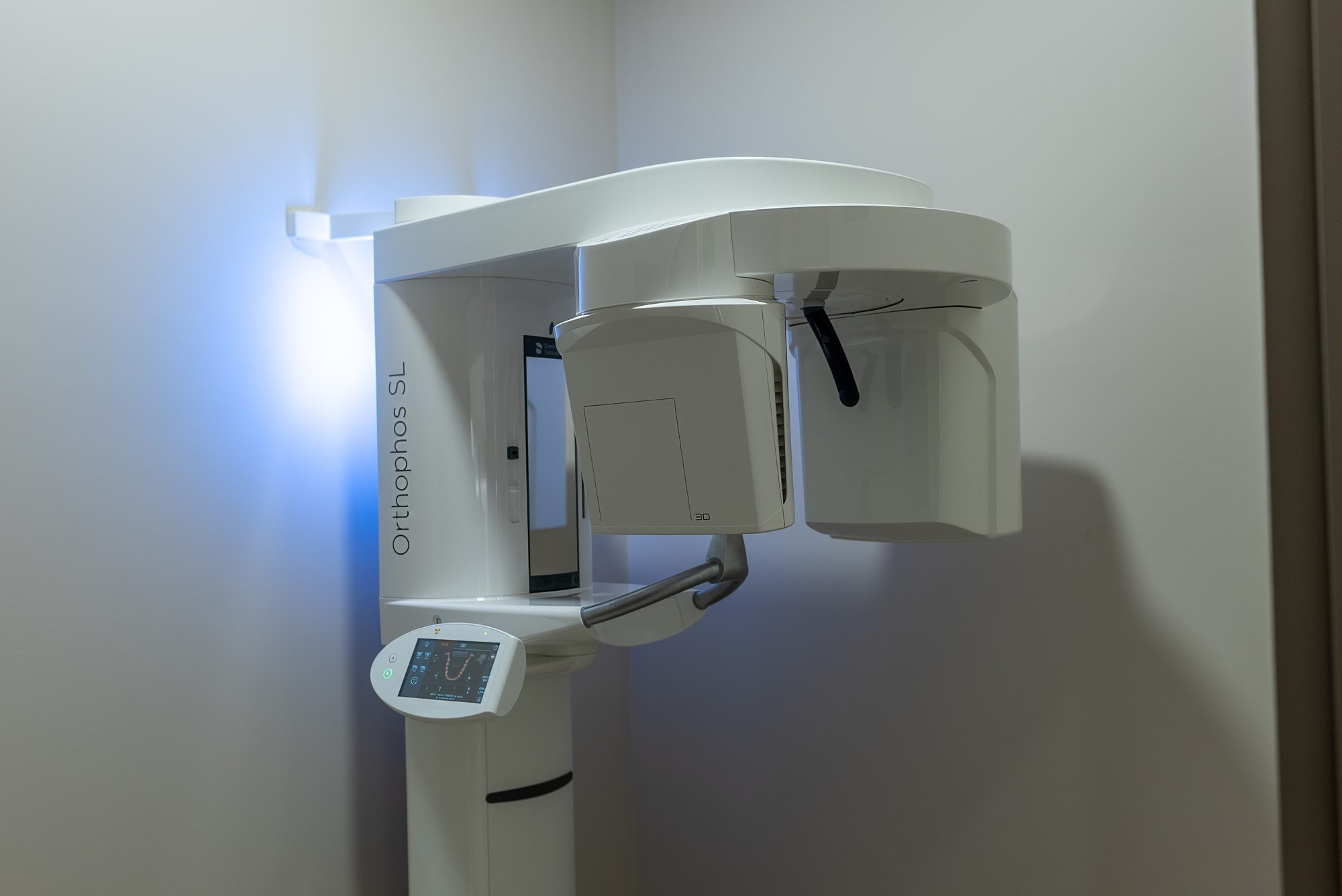
So the jaw is measured directly with a 3D X-ray of the site. Our guide to bone density and dental implants explains how bone quality is judged, and osteoporosis and jaw bone health covers the wider picture. Where the bone is softer, the plan usually adapts rather than stops: the implant size, the way the site is prepared and the healing time before the crown can all be adjusted.
Hormone therapy: the evidence is thin and points both ways
Menopausal hormone therapy (MHT, often still called HRT) protects the skeleton. Better Health notes that taken soon after menopause, around age 50, it can prevent bone loss. Whether that carries over to dental implants is far less clear.
One of the few direct studies, by Koszuta and colleagues (Menopause Review, 2015), followed 101 patients, 20 of them postmenopausal women taking HRT. Age, sex and menopausal status did not significantly change implant success. The women on HRT did show more bone loss around their implants, and the authors suggested they be told of a possibly higher risk. The study was small, and the authors themselves describe earlier research with conflicting results.
In practical terms, HRT is not a reason to avoid implants, and nothing suggests that stopping it helps. Decisions about hormone therapy belong with you and your GP or menopause doctor, not your dentist. What the dentist does is note it and keep a closer eye on bone levels around the implant at maintenance visits.
Osteoporosis medicines are the conversation to have first
Bisphosphonates (tablets or an infusion) and denosumab (an injection) are the medicines most often used for osteoporosis. Both slow the turnover of bone. That protects the hip and spine, but the jaw relies on turnover to heal after an extraction or implant surgery. Rarely, an area of jaw bone fails to heal and stays exposed. This is called medication-related osteonecrosis of the jaw, or MRONJ.
The risk at osteoporosis doses is low. A systematic review by Crupi and colleagues (International Journal of Molecular Sciences, 2025) screened 608 papers and included five studies. It concluded that implants may not be linked to a higher risk of jaw osteonecrosis in people taking low-dose bone-modifying medicines, and that long-term implant survival in osteoporotic patients on oral antiresorptive tablets was similar to that in healthy people. Five studies is a small base, and the risk is higher with the much larger doses used in cancer care.
Two details are easy to miss. Bisphosphonates can stay in the skeleton long after the last dose, so a course taken years ago still counts. And denosumab should not simply be stopped: reviews describe rapid bone loss and a higher risk of spinal fractures when it is stopped without a follow-on plan. For both reasons, the dentist does not pause or change these medicines. Timing is worked out with the prescribing doctor. Our article on dental implants and osteoporosis medication goes into more detail.
What to gather before your implant consult
Much of what the dentist needs can be collected ahead of time, often from your GP, pharmacy or My Health Record:
- Your most recent bone density report, if you have had one.
- Every osteoporosis medicine you have taken, past or present, with names, approximate dates and whether it was a tablet, infusion or injection.
- The type of hormone therapy you use and how long you have used it.
- Other medicines that affect healing or surgery, such as steroids, blood thinners and diabetes medicines.
- If you smoke or vape, since smoking slows healing.
- Any recent vitamin D result, if your GP has checked it.
Where any of this needs a medical opinion, we check with your GP or specialist before surgery is planned. Our guide to vitamin D and oral health explains why that result can be worth knowing.

Gums and saliva change too, and implants need clean surroundings
Lower oestrogen can leave the gums thinner and more tender, and some women notice a dry or burning mouth. These changes are covered in our article on menopause and oral health. A drier mouth lets plaque build up faster, and the gum around an implant is attached differently from the gum around a natural tooth, which can make inflammation harder to contain.
That is why any gum disease is treated before implant surgery and why maintenance is booked from the start. Daily cleaning around the crown with an interdental brush, and regular visits with a dentist or OHT, give an implant its best chance of staying healthy.

How implant planning works at Lumi
Planning starts with an examination by a dentist, a full medicine history, an intraoral scan and a 3D X-ray taken in the practice, so the bone at the site is measured rather than assumed. If you have taken an osteoporosis medicine or have a bone density result that needs interpreting, we contact your doctor before any surgery date is set. Gum treatment with our oral health therapists comes first if it is needed. More detail is on our dental implants page.
Common questions
Is there an age after menopause when implants stop being an option?
No set age. General health, the bone at the site, medicines and the ability to keep the implant clean matter far more than years since menopause.
Will healing take longer?
It can. In softer bone the dentist may allow extra time before the crown is attached, and an X-ray helps confirm the timing. If anything feels loose or sore while you wait, contact us rather than waiting for the next appointment.
What if there is not enough bone?
Options can include a shorter or wider implant, or grafting to build up the site. Our comparison of short implants and a sinus lift explains one of the common choices in the upper jaw.
If you would like these questions answered against your own history, book a free implant consult with us at Lumi Dental in Melrose Park through the contact page (see current offers). We will examine the site, take a 3D X-ray and talk through what your medicines mean for treatment.
Sources
- Better Health Channel (Victoria): Menopause and osteoporosis
- Koszuta P and colleagues. Effects of selected factors on the osseointegration of dental implants. Menopause Review, 2015
- Crupi A and colleagues. Dental implant survival and risk of medication-related osteonecrosis of the jaws in patients undergoing antiresorptive therapy: a systematic review. International Journal of Molecular Sciences, 2025
- Ahmad and colleagues. Managing rebound bone loss after denosumab discontinuation. Drug Design, Development and Therapy, 2026
About the author

Dr James Tran is a general dentist at Lumi Dental in Melrose Park. He holds a BDent from the University of Sydney and a Graduate Diploma in Oral Implants, and is a Master of the International Congress of Oral Implantologists (MICOI).
This article is general information only and is not a substitute for an examination and individual advice from a registered dental practitioner. Suitability for any treatment varies from person to person.








