


If you or a parent wear dentures and may spend time in hospital, respite or aged care, ask for the dentures to be permanently labelled with a name now, because a labelled denture that goes missing can be traced back to its owner and an unlabelled one often cannot. Dentures are small, look alike and travel easily between beds, meal trays and wards. One English hospital that tracked its denture incidents over five years found that 97 of the 109 dentures reported lost were never found. This guide covers labelling dentures with your name, what to do on admission, and what to do if dentures go missing.
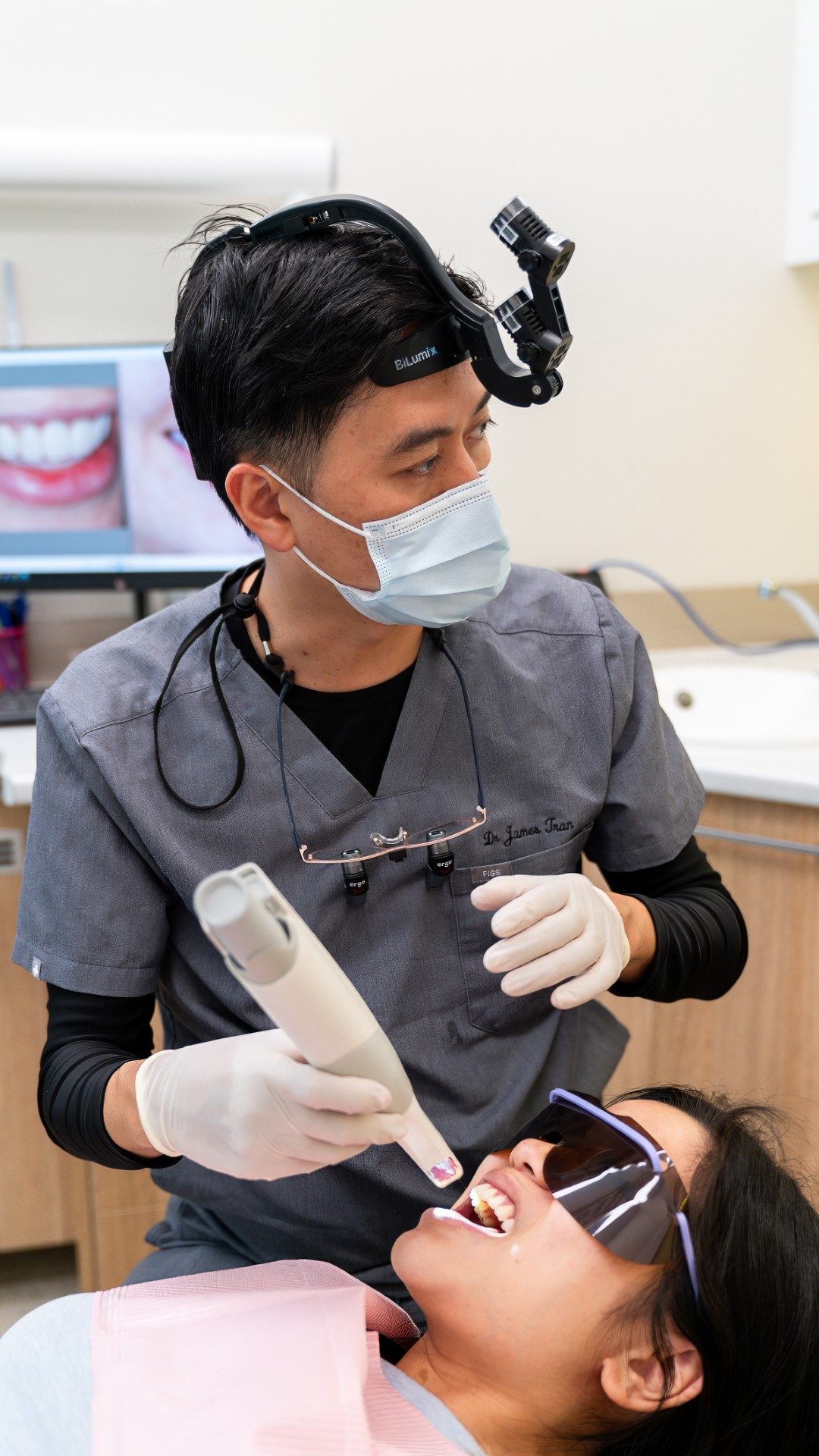
Written by Dr James Tran, BDent (University of Sydney), MICOI, GradDip (Oral Implants), general dentist at Lumi Dental in Melrose Park.
The short version
- The single rule: if a hospital stay, respite or a move into care is likely, have the dentures labelled before it happens, not after the first loss.
- A name label is usually built into the acrylic when a new denture is made or during a reline. Marks on the surface are quicker but can wear off.
- Put a first initial and surname on the label. Never a Medicare number, date of birth or address.
- Tell the ward or facility about the dentures on day one, and use a named, lidded container rather than a tissue or napkin.
- If dentures go missing, report it the same day to the nurse in charge and ask about the lost property process.
- Our guide to oral care in residential aged care covers daily mouth care and the questions to ask a facility.
How often dentures go missing in hospital and care
The clearest data comes from the UK. A quality improvement study at an acute hospital in Surrey, published in the British Dental Journal, recorded 123 denture incidents over five years, most of them losses. Of the dentures reported lost, 89% were not found again. The most common reasons were:
- transfer between wards or hospitals, about 30%
- cleared away from a meal tray, about 24%
- lost while the patient was sleeping, about 23%
- during an operation or procedure, about 8%
The authors think denture loss is under-reported in many hospitals. They also suggest labelling may help most in care homes, where a denture that turns up in a shared bathroom or laundry can still be matched to its owner. In my experience, families are often surprised how alike two upper dentures look from across a room.
Why a lost denture is hard to replace
NHS England's guidance on denture loss says remaking a denture can take up to six to eight weeks, that many patients are too frail or unable to cooperate with having moulds taken, and that older adults often cannot comfortably wear new dentures that fit differently from their old ones.
A new denture may be better made and still feel foreign. Our article on relines versus new dentures explains why the familiar shape counts for so much.
How dentures are labelled
A label inside the acrylic
The dentist or dental lab places a thin printed strip with the name into the denture base while the denture is being made, or during a reline, when a new layer of acrylic is added. NHS England's guidance describes laminated paper carrying the first initial and surname being built in during fabrication, with the person's consent.
A review of denture marking methods in the journal Bioinformation describes these inclusion methods as more durable than surface marks, because the label is sealed inside the acrylic. It also notes that thin paper labels can wear or discolour if they are not fully sealed in.
Surface marking
Surface methods include engraving the name onto the denture, or kits where the name is written on and sealed over. The review notes that surface marks can deteriorate over time. NHS England suggests marker kits for dentures that are already made and have no label. Unsealed household marker pen is likely to rub off with brushing.
NSW Health's denture care tip sheet for carers puts it simply: when someone gets new dentures made, ask for the person's name to be included on the inside of the new denture.
What to put on the label, and where it goes
A first initial and surname, as NHS England describes, is usually enough for a ward or facility to match a denture to its owner. Do not put a Medicare number, date of birth, address or phone number on a denture.
- Full acrylic dentures. The label usually sits towards the back, where it does not show when you smile.
- Metal partial dentures. A label needs acrylic to sit in, so on a metal-framed partial it usually goes in the pink acrylic section that holds the replacement teeth, if there is room. Very small partials may only fit initials.
- Implant overdentures. These have an acrylic base like any denture, so a label can often be added when the denture is made or relined. Our guide to implant-retained overdentures explains how they attach.
The single rule, by situation
| Situation | What to do with the dentures |
|---|---|
| Planned surgery | Ask about a label at your next denture visit. Pack a named, lidded container and tell the admitting nurse you wear dentures. |
| Emergency admission | Ask staff for a labelled denture container and check the dentures are on the property list. |
| Respite stay | Label the dentures before the first stay. Send a named container and a short note on how they are worn and cleaned. |
| Moving into aged care | Have the dentures labelled before or soon after the move, and ask that they appear in the care plan. |
| Living with dementia | Label every set, including any spare. Keep one fixed place for the container and tell staff where dentures tend to turn up. |
| Partial with a metal frame | Ask the dentist whether there is enough acrylic for a label. Record it as a metal partial on admission. |
On admission: what to tell the ward or facility
NHS England's guidance lists what a ward or care home should record, which makes a useful checklist for families anywhere: upper, lower or both; metal or plastic; whether there is a storage container; and that the dentures are on the property list.
It recommends named, lidded denture pots, and its list of common ways dentures are lost starts with being wrapped in tissue and left on a meal tray. If dentures are not being worn during the stay, it suggests families take them home. Our article on mouth care during a hospital stay covers the small kit worth packing.
Someone living with dementia may take dentures out and leave them in a pocket, a handbag or another resident's room. A label will not stop that, but it means the denture can come back. Our guide to dementia and dental care for carers covers routines that help.
If dentures go missing
Act the same day, before linen goes to the laundry and trays are cleared.
- Tell the nurse in charge or the nurse unit manager. In aged care, tell the facility manager or the registered nurse on duty.
- Ask staff to check where the person has been, including other wards, the bed linen and the meal trolley.
- Ask how the hospital or facility records lost items and what its lost property process is.
- If it is not resolved, ask for the hospital's patient liaison or feedback service.
- Contact the dentist who made the dentures. Records and scans can help when a replacement is planned.
Who pays for a replacement depends on the circumstances and on the hospital or facility's own policy. In England, NHS guidance says there should be a standardised reimbursement process where the loss is the responsibility of the hospital or care setting. What applies in a particular Australian hospital or home is for that facility to explain, so ask directly.
For someone who relies on one denture to eat and talk, a labelled copy denture is a sensible backup. Our guide to spare and copy dentures explains how a copy is made.
How we approach this at Lumi Dental
At Lumi Dental, a dentist checks the denture fit, the gums and any natural teeth before discussing relines, repairs or a new set. If you or a family member are likely to spend time in hospital or care, ask about labelling at your denture appointment; a reline or a new denture is a natural time to raise it.
I usually suggest families bring the denture container to the visit. You can read more about general dentistry in Melrose Park, including denture care.
Questions patients ask
Can you put your name on dentures?
Yes. A dentist or dental lab can place a name label inside the acrylic when a denture is made or relined. This usually lasts longer than a surface mark.
Can existing dentures be labelled?
Often, yes. A label can usually be added during a reline, and surface marking kits exist for dentures that are not due for one. Ask your dentist which suits the denture.
What should be written on a denture label?
A first initial and surname is usually enough. Leave off any Medicare number, date of birth or address.
What happens if a hospital loses your dentures?
Report it to the nurse in charge the same day and ask about the hospital's lost property and feedback process. Who pays depends on that hospital's policy, so ask the hospital directly.
Should dentures be taken out in hospital?
Usually at night, and before some procedures. Keep them in a named, lidded container, never in a tissue or on a meal tray, as our guide to mouth care in aged care also advises for shared settings.
Need new or replacement dentures? Book a denture consult in Melrose Park
If a hospital stay or a move into care is coming up, or a denture has already gone missing, the team at Lumi Dental can check the fit, talk through a reline, a copy or a new set, and discuss labelling at the same visit. Contact Lumi Dental to book a denture consult, or read about dental implants in Melrose Park if you are weighing up implant-supported options. Patients visit from Ryde, Parramatta, Ermington and Rydalmere, with on-site parking at Melrose Central.
Sources
- NHS England: Guidelines for preventing and managing denture loss in hospitals and community residential settings
- British Dental Journal (Doshi and colleagues): The impact of a quality improvement initiative to reduce denture loss in an acute hospital (PMC)
- NSW Health: Denture care tip sheet for carers
- Bioinformation: Innovations in denture marking, forensic applications and clinical implications, a review (PMC)
About the author

Dr James Tran is a general dentist at Lumi Dental in Melrose Park. He holds a BDent from the University of Sydney and a Graduate Diploma in Oral Implants, and is a Member of the International Congress of Oral Implantologists (MICOI).
This article is general information only and is not a substitute for an examination and individual advice from a registered dental practitioner. Suitability for any treatment varies from person to person.







