

In a well known long term study of complete denture wearers, published by Tallgren in 1972, the front of the lower jaw lost roughly four times as much height as the front of the upper jaw over 25 years. That shrinkage starts with losing the teeth, not with the denture. Whether the denture adds to it is still debated, and the answer seems to depend on how well it fits and how it is worn.
Written by Dr James Tran, BDent (University of Sydney), MICOI, GradDip (Oral Implants), general dentist at Lumi Dental in Melrose Park.
Tooth loss starts the shrinkage
Bone that holds a tooth is kept busy. Each time you bite, the root pulls on its ligament, and that load tells the bone around it to keep renewing itself. When a tooth is removed, the ligament goes with it. The socket heals and fills with bone, but the ridge that once supported the root slowly remodels to a lower, narrower shape. Dentists call this residual ridge resorption. It continues for the rest of life, slowing over time, and lost height does not come back on its own. Our guide to bone loss after tooth extraction describes the early healing in more detail.
Most change happens in the first year
Studies that measure ridges on X-rays agree that the first months after extraction see the fastest change, with a slower, steady loss afterwards. How much any one person loses varies widely, and researchers have found it hard to predict at the time teeth are removed. How long the teeth have been gone and how the denture fits and is used have been linked to the rate. General health factors have also been suggested, although one study of 100 denture wearers found body mass index made no difference.
This early change is why a new denture made soon after extractions often feels loose within months. It is not a faulty denture. The gum and bone underneath have changed shape, and a reline or remake is usually planned once things settle. The choice between the two is set out in relines versus new dentures.
Where the denture fits into the story
There are two views. One holds that a denture presses on the gum, the gum presses on the bone, and the bone retreats faster. The other holds that the extractions explain nearly all of the loss. The evidence sits somewhere in between.
A randomised trial in the Journal of the Indian Prosthodontic Society fitted lower dentures with and without a soft cushioning liner and found less ridge loss over a year in the cushioned group, which suggests the way force reaches the ridge matters. Other studies have linked faster loss to poorly fitting dentures. Yet reviews describe the causes of ridge loss as a mix of anatomical, metabolic and mechanical factors that are still not fully understood, so the denture is unlikely to be the whole story.
A sensible reading is that a well made denture does not drive the loss much either way, while one that rocks, is worn day and night or takes heavy biting on a thin ridge probably adds to it. Those are the parts you and your dentist can influence.
The lower ridge carries more load on less bone
An upper denture spreads biting force across the palate. A lower denture sits on a narrow horseshoe of bone with the tongue in the middle, so the same force passes through a much smaller area. That is the usual explanation for the faster lower loss seen in long term studies. The two jaws also shrink in different directions, the upper inward and the lower outward, so over many years the way the dentures meet can change. Our article on why lower dentures fit worse than upper dentures covers what that means day to day.
Signs the ridge is changing
Few people notice bone loss directly. They notice the denture. Food starts to slip underneath it, the lower one lifts when talking or laughing, adhesive that was once optional becomes necessary, or sore spots keep coming back in the same place. The face can also look slightly shorter between nose and chin when the dentures are in, because the bite has closed a little as the ridges shrank. Any of these is a reason to have the fit checked rather than adding more adhesive.
Habits and choices that may slow it
Nothing here reverses lost bone. Each step removes a reason for it to go faster.
- Keep the fit good. Have dentures checked every year or two, and get sore spots and rocking seen to early.
- Give the ridge a rest. Leaving dentures out overnight is long standing advice; the reasons, including gum and fungal infections, are covered in our article on sleeping with dentures in.
- Ask whether a soft liner suits a thin, tender lower ridge.
- Keep healthy roots where possible. Retaining a few roots or teeth under a denture has been reported to reduce bone loss in that area.
- Raise implants early if relines are becoming more frequent, while there is still bone to place them in.
What implants can and cannot do for the bone
An implant carries chewing force into the bone the way a root did, and reviews have reported less bone loss in jaws restored with implants than under conventional dentures. That benefit is greatest around the implants themselves. Evidence on whether two implants under a lower denture protect the back of the jaw is less clear, so they are usually chosen for grip and confidence in chewing rather than as a guarantee against all further shrinkage. A fixed full arch bridge on several implants loads more of the arch. The options are compared in our guides to implant retained overdentures and dentures versus full arch implants.
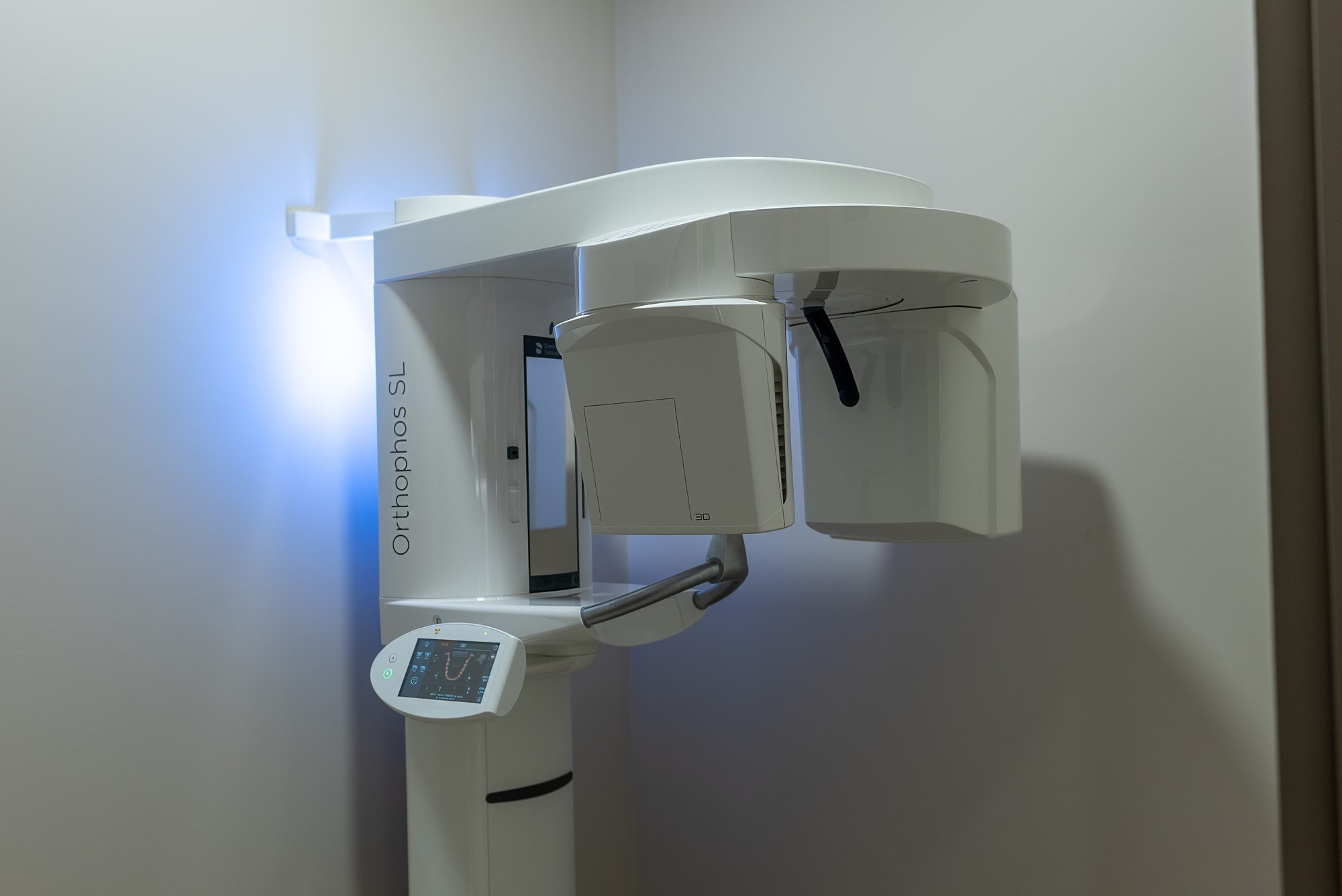
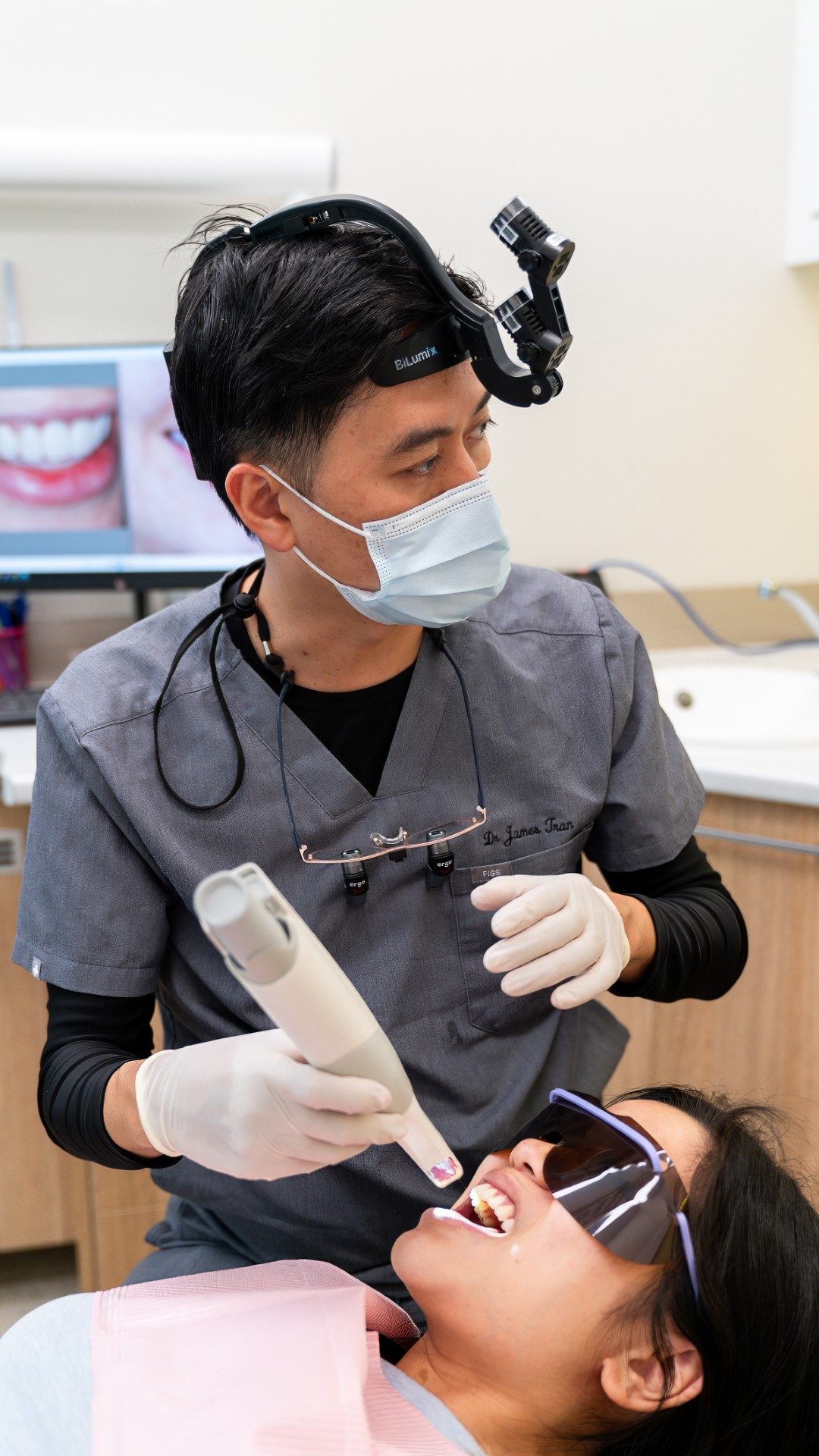
Where the ridge is already very thin, grafting or other approaches may still allow implants, but planning becomes more involved. At Lumi Dental, a denture review starts with the gum, the ridge and the denture, and when implants are being considered the in-house 3D X-ray and intraoral scan show how much bone is available rather than guessing from the fit. Dental implants are placed at the practice.
Questions we are often asked
Will my jaw bone grow back if I stop wearing dentures?
No. Lost ridge height does not return on its own. Grafting can rebuild bone in a specific site for an implant, which is a different thing from regrowing the whole ridge.
Is it the denture or the missing teeth?
Mostly the missing teeth. The ridge starts to shrink once the roots are gone, whether or not a denture is worn. A poorly fitting or constantly worn denture may add to it.
Should I wait before having implants?
Implants need enough bone to sit in, and the ridge keeps changing, so it is worth discussing implants sooner rather than after several relines.
Has your denture started to loosen?
If your denture needs adhesive more than it used to or has been relined more than once, the team at Lumi Dental in Melrose Park can check the ridge and talk through relines, implant retained overdentures and the full arch implant option. Contact us to arrange a visit, see our current deals, or read about dental implants at Lumi Dental.
Sources
- Better Health Channel (Victoria): Dentures
- Tallgren A. The continuing reduction of the residual alveolar ridges in complete denture wearers: a mixed-longitudinal study covering 25 years. Journal of Prosthetic Dentistry, 1972
- PubMed (Collegium Antropologicum): Influence of body mass index and the time of edentulousness on residual alveolar ridge resorption in complete denture wearers
- PMC (Journal of the Indian Prosthodontic Society): Effect of denture soft liner on mandibular ridge resorption in complete denture wearers, a prospective randomised clinical study
- PMC (Journal of Advanced Prosthodontics): Implant and root supported overdentures, a literature review and some data on bone loss in edentulous jaws
About the author

Dr James Tran is a general dentist at Lumi Dental in Melrose Central, Melrose Park. He holds a Bachelor of Dentistry (BDent) from the University of Sydney and a Graduate Diploma in Oral Implants, and is a Master of the International Congress of Oral Implantologists (MICOI).
This article is general information only and is not a substitute for an examination and individual advice from a registered dental practitioner. Suitability for any treatment varies from person to person.








