
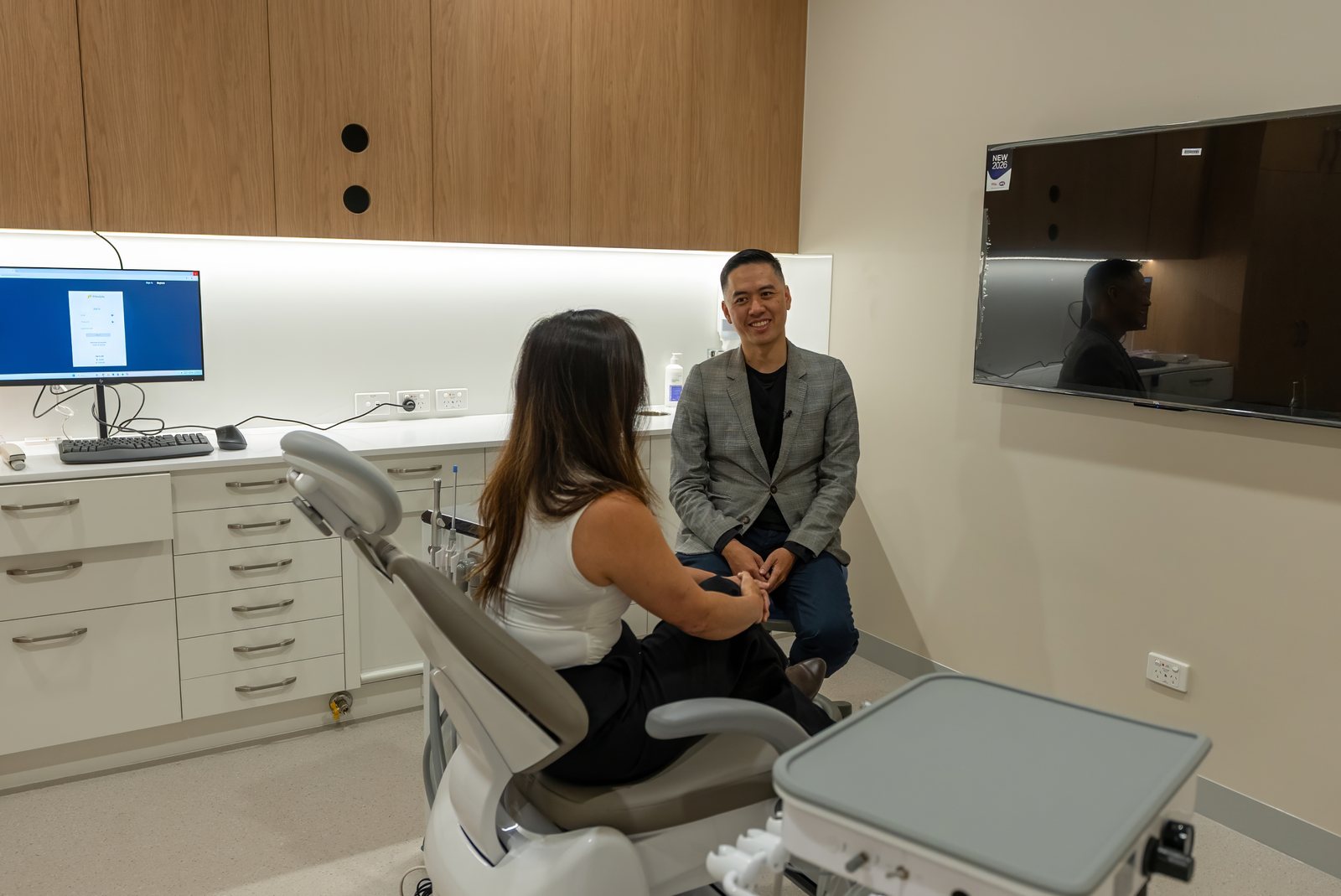

Teeth whitening with a partial denture lightens your natural teeth only, so the order matters: whiten first, wait about two weeks for the shade to settle, then have the denture teeth matched or the denture remade, never the reverse. teeth.org.au, the Australian Dental Association's patient site, states that whitening gel lightens tooth enamel only and will not change crowns, veneers or white fillings; acrylic denture teeth behave the same way. The Australian Institute of Health and Welfare has reported that around 1 in 10 adults has fewer than 21 teeth, and in my experience this question arrives in the first week of trays, when the mismatch is already showing.
Written by Dr James Tran, BDent (University of Sydney), MICOI, GradDip (Oral Implants), general dentist at Lumi Dental in Melrose Park.
The short version
- Peroxide gel lightens enamel and dentine. Acrylic and composite denture teeth are coloured through the material and do not change.
- Whiten with the denture you have and the contrast grows. Our article on whether dentures can be whitened covers the denture itself; this one is about the order of events.
- The reverse mistake is as common: a denture matched to stained teeth, then whitening later, leaves the denture teeth too dark.
- Wear the trays with the denture out, and have the clasp teeth checked first for worn enamel or exposed root.
- Afterwards, choose between new denture teeth on the existing base, a new denture, or a bridge or implant instead.
Why denture teeth do not whiten, and the mismatch it creates
Peroxide gel is thought to break down pigment held within enamel and the dentine beneath it. A denture tooth is a block of acrylic or composite resin with its colour mixed through the polymer in the factory, so there is nothing for the gel to act on.
A study in the Journal of Esthetic and Restorative Dentistry exposed two brands of acrylic denture teeth to consumer cleansers, including a peroxide effervescent cleanser, for ten hours a day for 48 weeks and found colour changes below the level a person can see. If almost a year of daily soaking in oxidising cleansers does not shift a denture tooth noticeably, two weeks of whitening gel will not either.
So your teeth move and the denture teeth do not. The reverse happens too: patients I see who had a partial made to match tea-stained teeth, then whitened the following year, end up with a denture that is the darkest thing in the smile. The same logic applies to whitening with crowns or veneers, except that a denture is easier to change.
The single rule: whiten first, wait about two weeks, then match
Teeth dry out slightly during a whitening course and look lighter than they will once they rehydrate; over the following days the shade drops back a little and then holds, which our article on whitening rebound explains. A denture shade chosen the day the trays stop would be too light. About two weeks after the final session is the figure I usually give before any shade goes to the laboratory.
| Step | What happens | Who is involved |
|---|---|---|
| 1. Consultation and shade record | Examination, photographs, starting shades recorded, clasp teeth checked | Dentist |
| 2. Whitening course | Take-home trays with the denture out, or an in-chair session | Dentist and hygiene team |
| 3. Settling period | About two weeks with no gel while the shade stabilises | You |
| 4. Shade selection | New shade taken against a shade guide and photographed | Dentist and laboratory |
| 5. Denture work | New teeth on the existing base, or a new denture | Dentist, laboratory or dental prosthetist |
| 6. Maintenance | Top-up whitening keeps the natural teeth near the denture shade | You and the hygiene team |
What whitens and what does not
| Material | Does whitening gel lighten it? | What to expect |
|---|---|---|
| Natural enamel | Yes | The target of the treatment |
| Exposed root surface (dentine) | Only a little | Common at the gum line of clasp teeth; often more sensitive |
| Acrylic denture teeth | No meaningful change | Below the visible threshold after 48 weeks of daily cleanser exposure in the laboratory |
| Composite resin denture teeth | No meaningful change | Replaced rather than lightened |
| Cobalt chrome clasps and framework | No | Keep gel off the metal |
| Pink acrylic base | No lightening | Slight colour drift reported after long peroxide cleanser exposure |
| Crowns, veneers and white fillings on remaining teeth | No | May need replacing if they no longer match, per teeth.org.au |
Wearing whitening trays with a partial denture
Take-home trays are made from a 3D scan or impression taken with the denture out, so the tray seats fully on every natural tooth, and they are worn with the denture out as well. Gel on clasps or the fitting surface is wasted or ends up on the gum, where teeth.org.au warns that stronger gels can cause chemical burns that ulcerate before they heal. Rinse and brush the gel off before the denture goes back in. Since teeth.org.au also advises taking dentures out while you sleep, an overnight tray session fits the existing routine.
The teeth that carry the clasps
After some years with a partial there is often a groove where the clasp rests, a little recession, or exposed root at the gum line. Root surface has no enamel, so it whitens less and can be markedly more sensitive; teeth.org.au notes that whitening can make teeth sensitive to cold, sometimes severely. The dentist checks these teeth first, treats any decay under a clasp, may suggest a desensitising toothpaste beforehand, and can trim the tray or use a gentler gel around an exposed root.
Choosing the shade for the new denture teeth
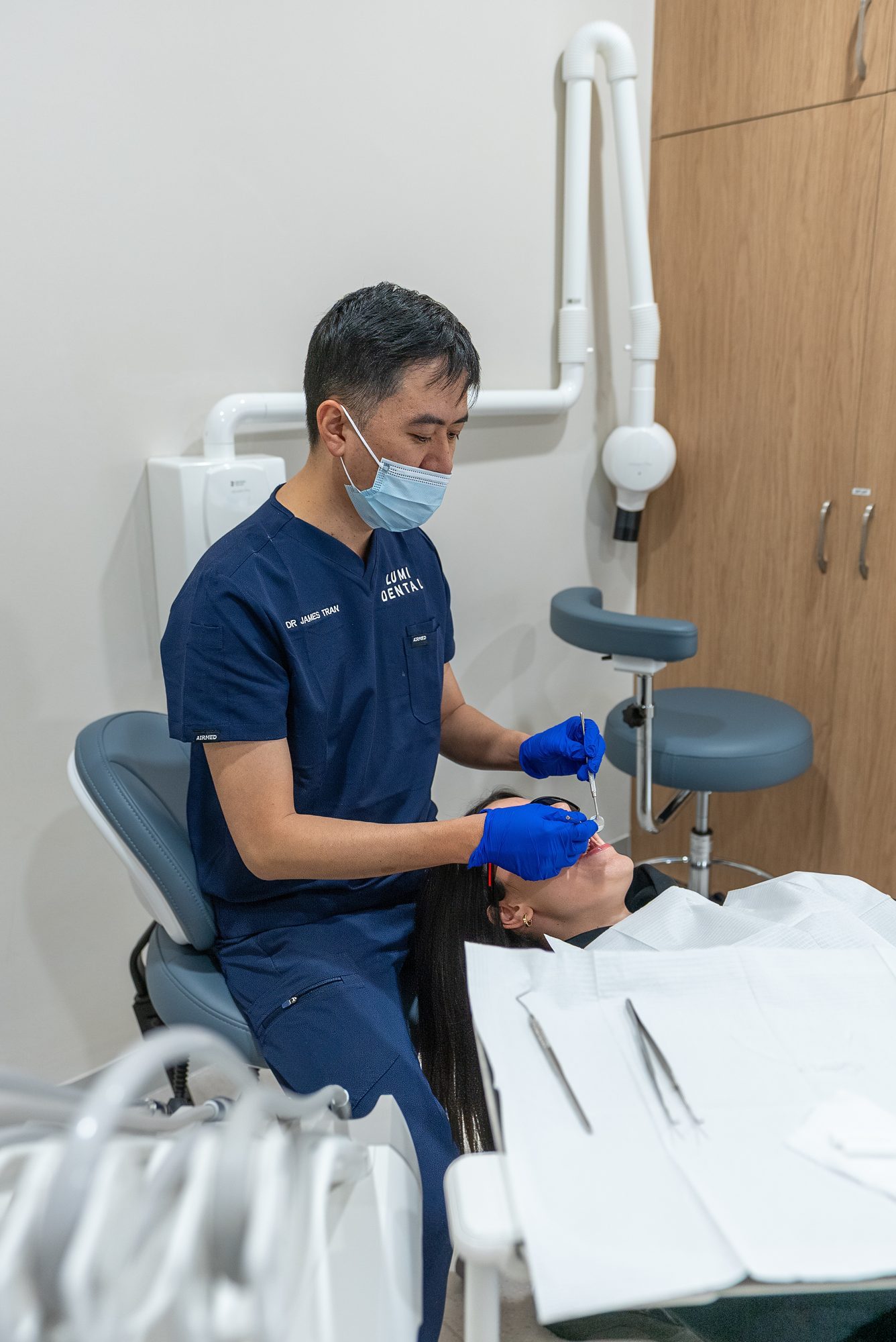
Denture teeth come in a fixed range of shades, so the laboratory selects the closest tab rather than blending a custom colour. teeth.org.au notes that denture teeth can match the colour and shape of your own, and that match is only as good as the moment it is recorded: once the natural teeth have finished changing, in daylight-balanced light, with a photograph of the shade tab beside the teeth so the laboratory sees the comparison for itself.
The laboratory matches the neighbours of the gap, not the brightest tooth in the mouth; canines usually run a shade darker than the front incisors. One more point I make at this stage: from here the denture shade is fixed, so later top-up whitening keeps the natural teeth close to it.
After whitening: new teeth on the old base, a new denture, or something else
There are three paths. The first is to change only the denture teeth: where the base and clasps still fit well, a laboratory can sometimes set new teeth in the new shade onto the existing base, though this depends on the material; our comparison of flexible, acrylic and chrome partial dentures explains why some bases are easier to rework. The second is a new denture, the cleaner route if the existing one is loose, worn or due for a reline anyway. The third is to reconsider the gap: a bridge or an implant replaces the tooth without acrylic or clasps, with the ceramic matched to the finished shade from the start. Our guide to implants, bridges and dentures sets out the trade-offs.
Cleaning the denture during the whitening course
Whitening gel belongs in the trays on your teeth; denture cleanser belongs in the cup with the denture. teeth.org.au recommends brushing a denture morning and night with a soft brush and liquid hand soap rather than toothpaste, which is too rough for the plastic, soaking it in a denture cleaning solution, and keeping it out overnight. Check the cleanser packet if your partial has metal clasps, as not every product suits metal parts. Our denture care and reline guide covers the routine in detail.
How we approach this at Lumi Dental
At Lumi Dental in Melrose Park the dentist examines first, checking the clasp teeth and the fit of the denture. The starting shade is recorded with clinical photographs in the practice's photography studio and a 3D intraoral scan; our technology page describes the equipment. Whitening is planned using Lumi Home, Lumi Refresh or Lumi Radiance, with the denture out during every gel session, and the hygiene team (OHTs) advises on sensitivity and maintenance. About two weeks after the final session the new shade is recorded and the denture work, or a bridge or implant instead, is planned, with a written quote after the examination.
Questions patients ask
Will partial denture teeth whiten along with natural teeth?
No. Denture teeth are acrylic or composite coloured through the material, and whitening gel has nothing to act on. In laboratory testing their colour stayed below the level the eye can detect after months of daily peroxide cleanser exposure.
Should you whiten before or after getting a new partial denture?
Before. Whiten, wait about two weeks for the shade to settle, then have the new denture teeth chosen. A denture matched to teeth that are whitened later ends up too dark.
Do you take the denture out to wear whitening trays?
Yes. The trays fit the natural teeth with the denture out, and gel on acrylic or clasps is wasted. Clean the gel off before the denture goes back in.
How many shades lighter will teeth go, and will the denture still match?
It varies with the starting colour, gel strength and length of the course; our article on how many shades whitening can achieve explains what is realistic. The existing denture will not match once the teeth lighten.
Can a denture be soaked in whitening gel or a whitening cleanser?
Gel does not lighten acrylic, so there is no benefit, and cleansers sold as whitening act on surface stain rather than the colour of the acrylic. If the denture teeth look dull, ask for them to be polished.
Thinking about whitening? Complimentary cosmetic consult in Melrose Park
If you wear a partial denture and are weighing up whitening, the team at Lumi Dental can check the clasp teeth and set out the sequence so the denture matches at the end. Book a complimentary cosmetic consult at Melrose Central in Melrose Park, or read about teeth whitening at Lumi Dental. Patients visit from Ryde, Parramatta, Ermington and Rydalmere, with on-site parking.
Sources
- Australian Dental Association (teeth.org.au): Teeth whitening
- Australian Dental Association (teeth.org.au): Dentures
- Moon A, Powers JM, Kiat-Amnuay S. Color stability of denture teeth and acrylic base resin subjected daily to various consumer cleansers. Journal of Esthetic and Restorative Dentistry (PubMed)
- Australian Institute of Health and Welfare: Oral health and dental care in Australia, Healthy mouths
About the author

Dr James Tran is a general dentist at Lumi Dental in Melrose Park. He holds a BDent from the University of Sydney and a Graduate Diploma in Oral Implants, and is a Member of the International Congress of Oral Implantologists (MICOI).
This article is general information only and is not a substitute for an examination and individual advice from a registered dental practitioner. Suitability for any treatment varies from person to person.








