

Crowded or overlapping teeth can be whitened, but whitening gel only lightens the enamel it touches, so the slivers of tooth tucked behind a neighbour tend to finish a shade darker than the surfaces that face the room. Whether that matters depends on whether the overlap shows when you smile. Teeth whitening with crowded teeth works well for mild crowding: in a study where smile photographs were digitally whitened, a lighter shade improved how attractive judges rated straight and mildly crowded teeth (1 to 3 mm of crowding), but made no difference to moderate or severe crowding. This guide explains why overlapping teeth whiten unevenly, how to get gel into the awkward spots, and when to straighten first.
Written by Dr James Tran, BDent (University of Sydney), MICOI, GradDip (Oral Implants), general dentist at Lumi Dental in Melrose Park.
The short version
- Gel lightens the enamel it sits on, so the strip hidden behind an overlapping neighbour lags behind.
- Research has reported that whitening improves the look of mildly crowded teeth about as much as straight ones, and does little for moderate or severe crowding.
- Flat strips and stock trays cannot follow a crowded arch, so saliva leaks in and gel squeezes onto the gum. See how custom whitening trays work.
- Tartar forms fastest behind the lower front teeth, so a scale and clean before whitening matters more when teeth overlap.
- The rule: if the overlap shows when you smile, straighten first and whiten at the end. If it hides, whiten now and accept a small lag at the hidden edges.
- If you align first, plan the whitening for the retainer stage; earlier trays will not fit.
The rule: if the overlap shows, straighten first; if it hides, whiten now
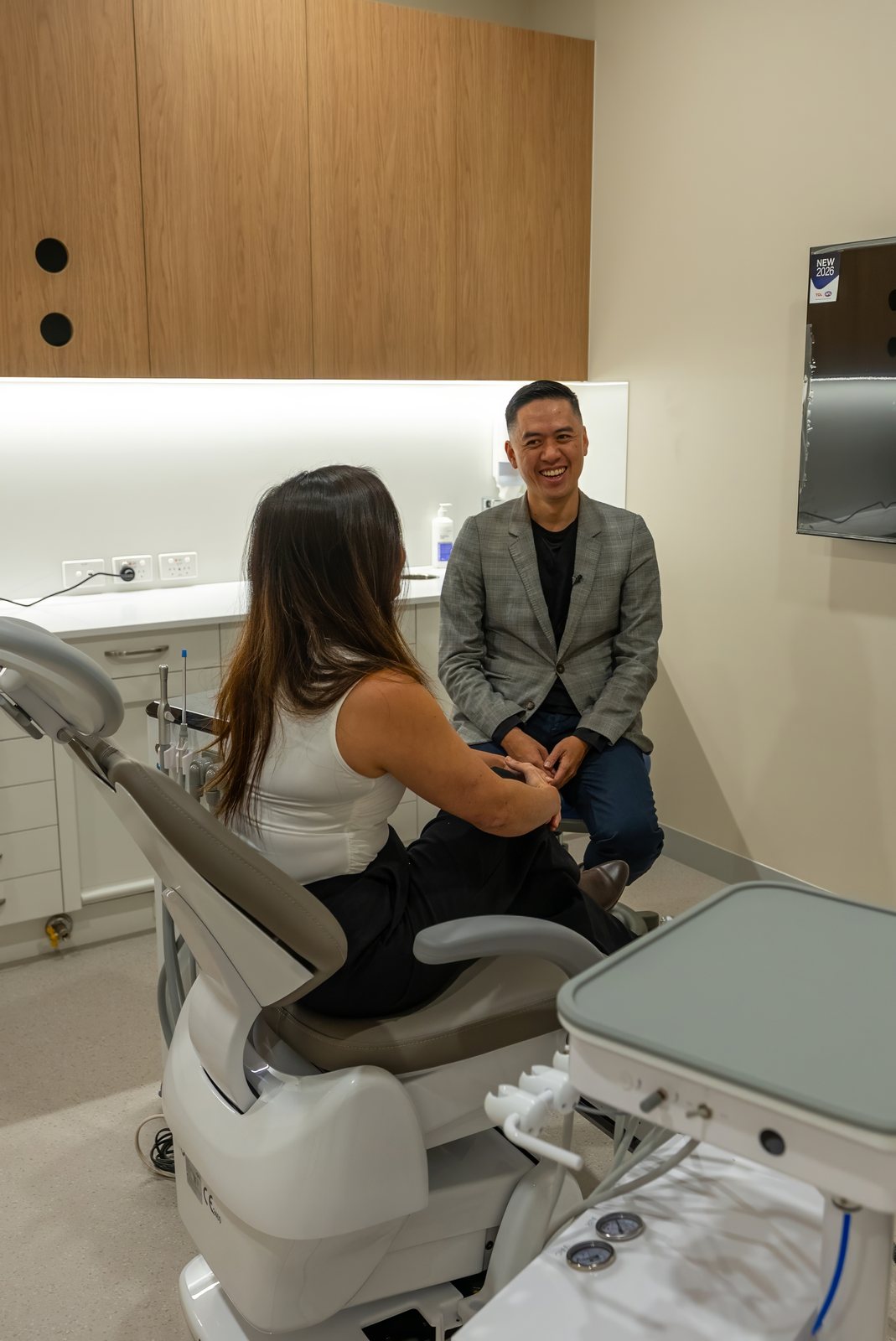
My answer in the chair comes down to one check. I ask the patient to smile naturally in a mirror and we look at where the overlaps sit. If the lapping edge is on the lower front teeth under the lip, or at the back corner of a canine that turns away from view, whitening now is reasonable. The hidden strip stays slightly darker, but nobody sees it.
If the overlap is on the upper front teeth and the darker edge would show every time you smile, whitening first tends to disappoint, because the lighter shade makes the shadow line at the overlap more obvious. Aligners or braces first, then whitening once the teeth are in line, gives an even result in a single course. Our comparison of braces versus aligners for adults covers that first step.
Why overlapping teeth whiten unevenly
Shading
Whitening works when hydrogen peroxide (or carbamide peroxide, which breaks down into it) soaks into enamel and breaks apart the coloured molecules held there, so the gel has to touch the surface. When a lateral incisor sits behind the edge of the central incisor beside it, a strip of its enamel is covered, and an in-chair light does not reach it either. That strip lightens as peroxide diffuses sideways through the tooth, but more slowly than the exposed face.
Tray and strip fit
Whitening strips are flat and boil-and-bite trays are close to flat; a crowded arch is not. Where a tooth steps back, a strip bridges the gap and leaves an air pocket that saliva fills, diluting the gel. On the prominent tooth beside it, the strip presses too hard and gel squeezes onto the gum, which is how the white, stinging patches appear. healthdirect describes dentist-supplied take-home whitening as thin plastic trays custom-made to fit your teeth, with gel at a strength chosen for you. That fit is the difference between gel on enamel and gel on gum.
What the research says about whitening a crowded smile
A group of orthodontic researchers tested whether a whiter shade could hide crowding. They photographed smiles with mild (1 to 3 mm), moderate (3 to 6 mm) and severe (6 to 9 mm) crowding, digitally whitened the images to three shades, and asked 30 laypeople, 30 dentists and 30 orthodontists to rate each smile. Whitening improved the ratings only for the straight and mildly crowded smiles; moderate and severe crowding scored poorly whatever the shade. Laypeople and dentists rated light, mildly crowded teeth as attractive as straight ones, while orthodontists were swayed more by alignment than colour.
In my experience that matches what patients report. A couple of millimetres of lower crowding is barely noticed once the teeth are lighter; a rotated upper lateral incisor still looks rotated, now with a visible dark edge. The authors concluded that for moderate to severe crowding, orthodontic treatment, bonding or veneers are likely to give a better result than whitening alone.
Getting gel where it needs to go
- Use a custom tray made from a scan or impression. It follows each rotation and step in the arch, so gel sits against enamel rather than in an air pocket.
- Ask about reservoirs. A dentist can build small spacers into the tray over the teeth that lag, so more gel is held against them.
- Seat the tray from the back, then press the front, so overlapping front teeth do not trap air.
- Do not overload. Extra gel does not speed up whitening; it pools on the gum. Wipe any excess off with a tissue.
- Expect the hidden strips to lag, and leave them. Chasing them mostly produces sensitivity. Our guide to uneven or blotchy teeth after whitening explains which patterns settle on their own.
Crowded lower front teeth: clean first
Overlapping teeth hide plaque and tartar, and peroxide does not pass through either; whitening over tartar bleaches the tartar, not the tooth. The tongue side of the six lower front teeth is where tartar forms most readily: the submandibular salivary glands open just behind them, so the plaque there sits in a fast-moving salivary film that keeps it thin and alkaline, the condition that lets it harden into calculus. Add overlapping edges the toothbrush skips and you have the spot most likely to be carrying tartar when you start whitening.
Research in young adults has reported that crowded teeth did not collect more plaque than straight ones when people cleaned between them properly, though gums around crowded front teeth were slightly more inflamed, so technique matters more than the crowding itself. A scale and clean beforehand removes the tartar and the stain on top of it; our article on whitening before or after a scale and clean covers the timing.
Problem, cause and fix
| What you notice | Why it happens with crowded teeth | What helps |
|---|---|---|
| A darker strip where one tooth overlaps another | The covered enamel is shaded from gel and light | Accept the lag if it hides; align first if it shows |
| Patchy result across the front teeth | Flat strips or stock trays bridge the steps in the arch; saliva dilutes the gel | Custom tray from a scan, seated from the back |
| Lower front teeth whiten less than the uppers | Tartar and stain behind and between crowded lower incisors | Scale and clean first, then whiten |
| One tooth stays yellow after the rest lighten | A rotated tooth the tray never fully contacted, or a filling | A tray reservoir over that tooth; fillings do not whiten |
Whiten now or align first: sequencing the two
If you plan to straighten your teeth anyway, the order matters for two reasons. First, trays: a tray made today fits today's arch, and after a few months of aligners the teeth have moved and the tray rocks, leaks and stops working. Second, overlap zones: once teeth are aligned, the hidden strips become visible, so whitening after alignment gives an even result in one course rather than two.
In my experience the people happiest with a whiten-now decision have mild lower crowding, a lip line that hides it, and an event coming up. Those happiest with an align-first decision are bothered by the crowding itself; for them, whitening alone would be money spent on the wrong problem.
How we approach this at Lumi Dental
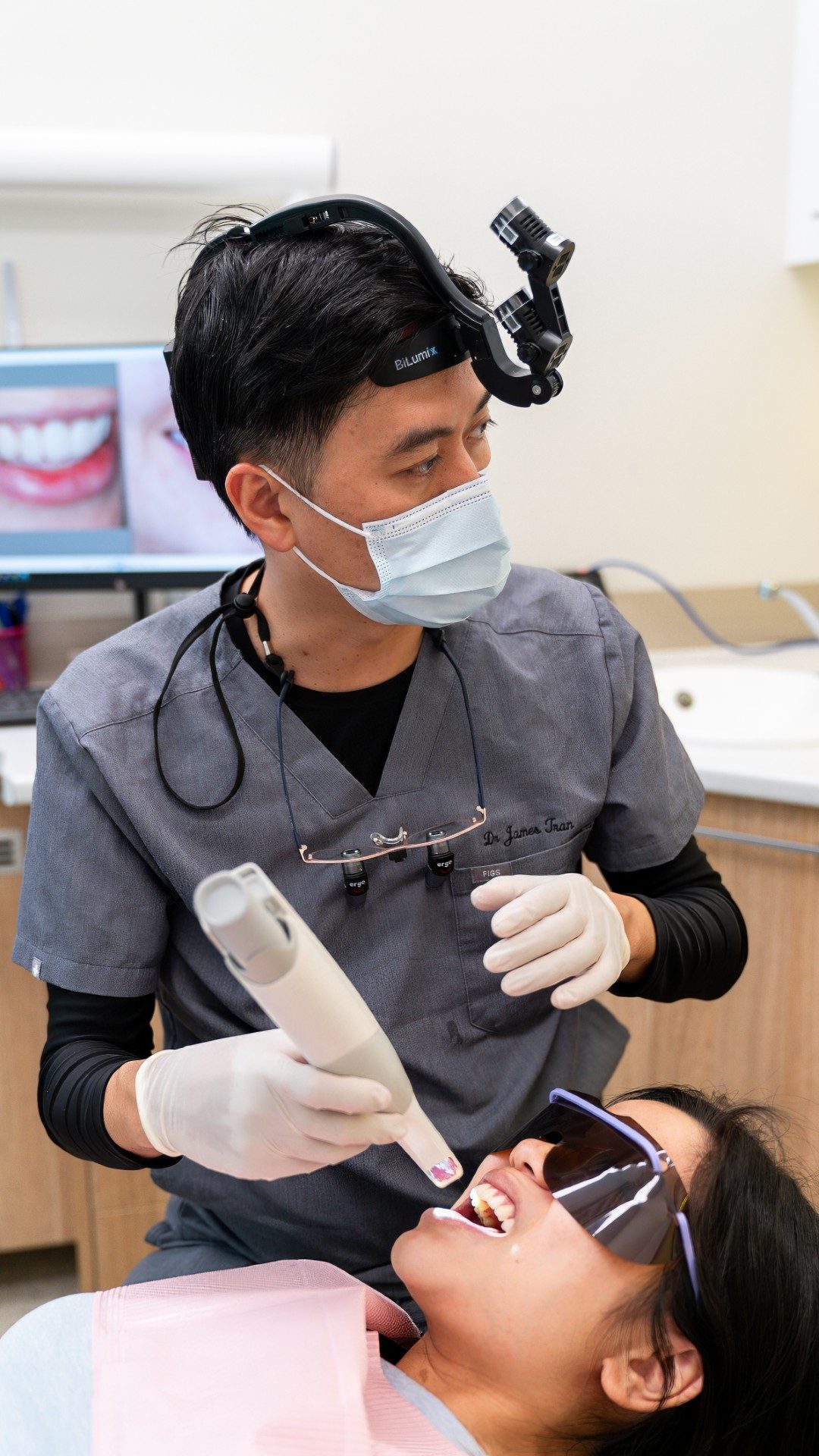
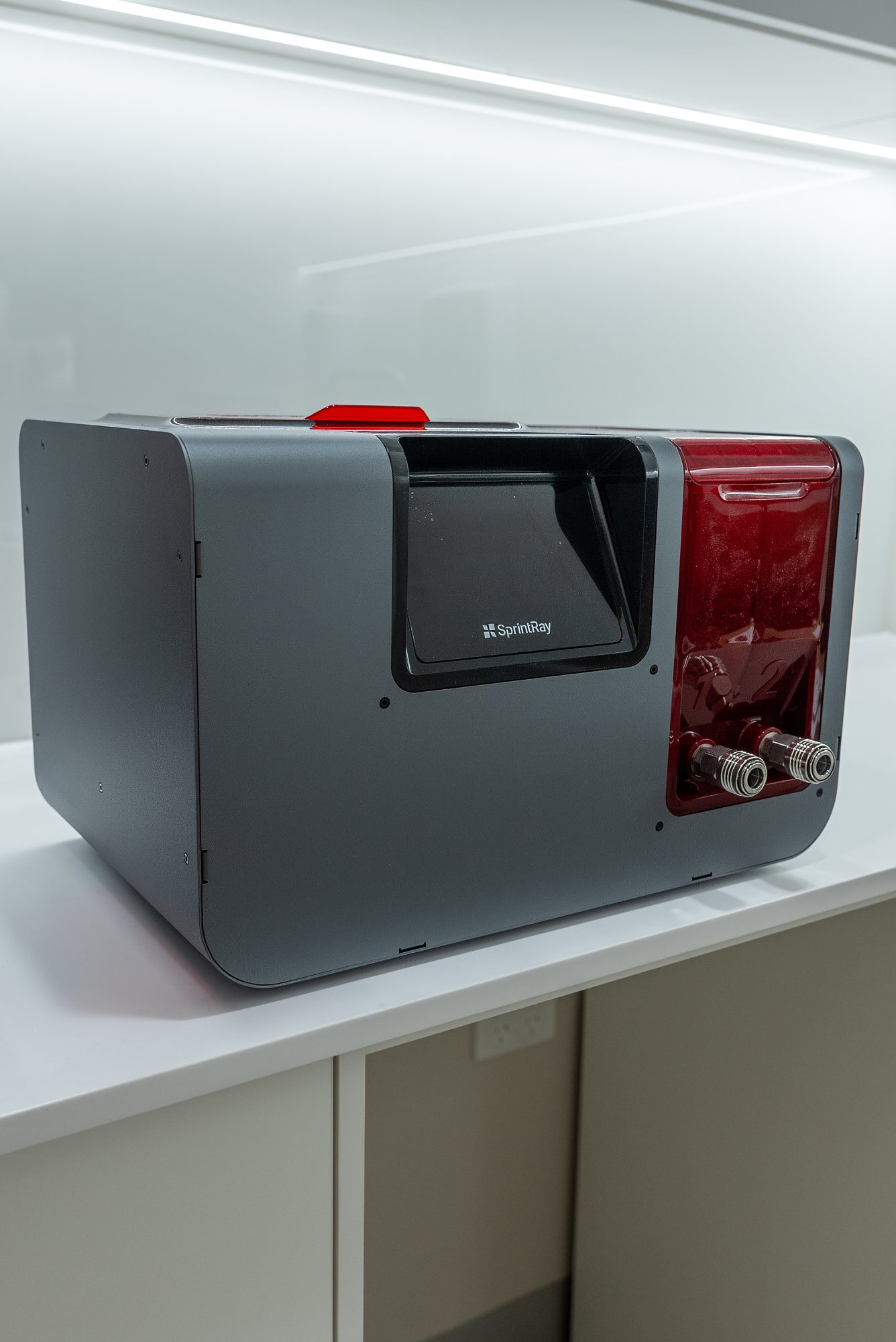
At Lumi Dental in Melrose Park, whitening starts with an examination by a dentist, who checks for cracks, decay, gum inflammation and fillings that will not change colour, and records the starting shade. If the teeth are crowded, we run the smile check above and discuss whether clear aligners make sense first. A 3D intraoral scan replaces the impression for custom trays, which matters for a crowded arch because it captures each rotation and step. The whitening options are named Home, Refresh and Radiance. The hygiene team of oral health therapists does the scale and clean beforehand and whitening maintenance afterwards.
Questions patients ask
Can you whiten crooked teeth?
Yes. Crowded teeth whiten with the same gels as straight teeth, and for mild crowding research has reported the result looks as attractive to most observers as a straight smile. In aligners, our guide to teeth whitening with braces or aligners explains the options.
Why are the overlapped parts of my teeth still yellow after whitening?
Because the gel never reached them properly; the covered enamel is shaded from gel and light. If the edge is still obvious after a full course, the fix is usually alignment rather than more whitening.
Should I whiten my teeth before or after clear aligners?
Usually after, because the teeth will have moved and the hidden surfaces will be on show. Whitening at the retainer stage gives one even result with trays that keep fitting. Our article on whitening after braces come off covers the blotchy phase and the timing.
Does whitening make crowded teeth look worse?
It can, when the overlap is on the upper front teeth in full view, because a lighter shade makes the shadow line more noticeable. For mild crowding, especially in the lower arch, the smile simply reads as brighter and tidier.
Can whitening strips work on crowded teeth?
Not well. Strips are flat and a crowded arch is not, so they bridge the recessed teeth and press too hard on the prominent ones; saliva dilutes the gel in the gaps and gel leaks onto the gum at the high points. A custom tray fixes both problems.
Crowded teeth and an uneven shade? Complimentary cosmetic consult in Melrose Park
If you are weighing up whether to whiten now or straighten first, the team at Lumi Dental in Melrose Park can examine your teeth, run the smile check and map out either sequence. Book a complimentary cosmetic consult, or read more about teeth whitening at Lumi Dental. Patients visit from Ryde, Parramatta, Ermington, Rydalmere and nearby suburbs.
Sources
- Decisions in Dentistry: Effects of tooth whitening on the appearance of crowding and buccal corridors
- healthdirect: Teeth whitening
- Australian Dental Association (teeth.org.au): Teeth whitening
- PubMed (Journal of the Canadian Dental Association): Why does supragingival calculus form preferentially on the lingual surface of the 6 lower anterior teeth?
About the author

Dr James Tran is a general dentist at Lumi Dental in Melrose Park. He holds a BDent from the University of Sydney and a Graduate Diploma in Oral Implants, and is a Member of the International Congress of Oral Implantologists (MICOI).
This article is general information only and is not a substitute for an examination and individual advice from a registered dental practitioner. Suitability for any treatment varies from person to person.








