
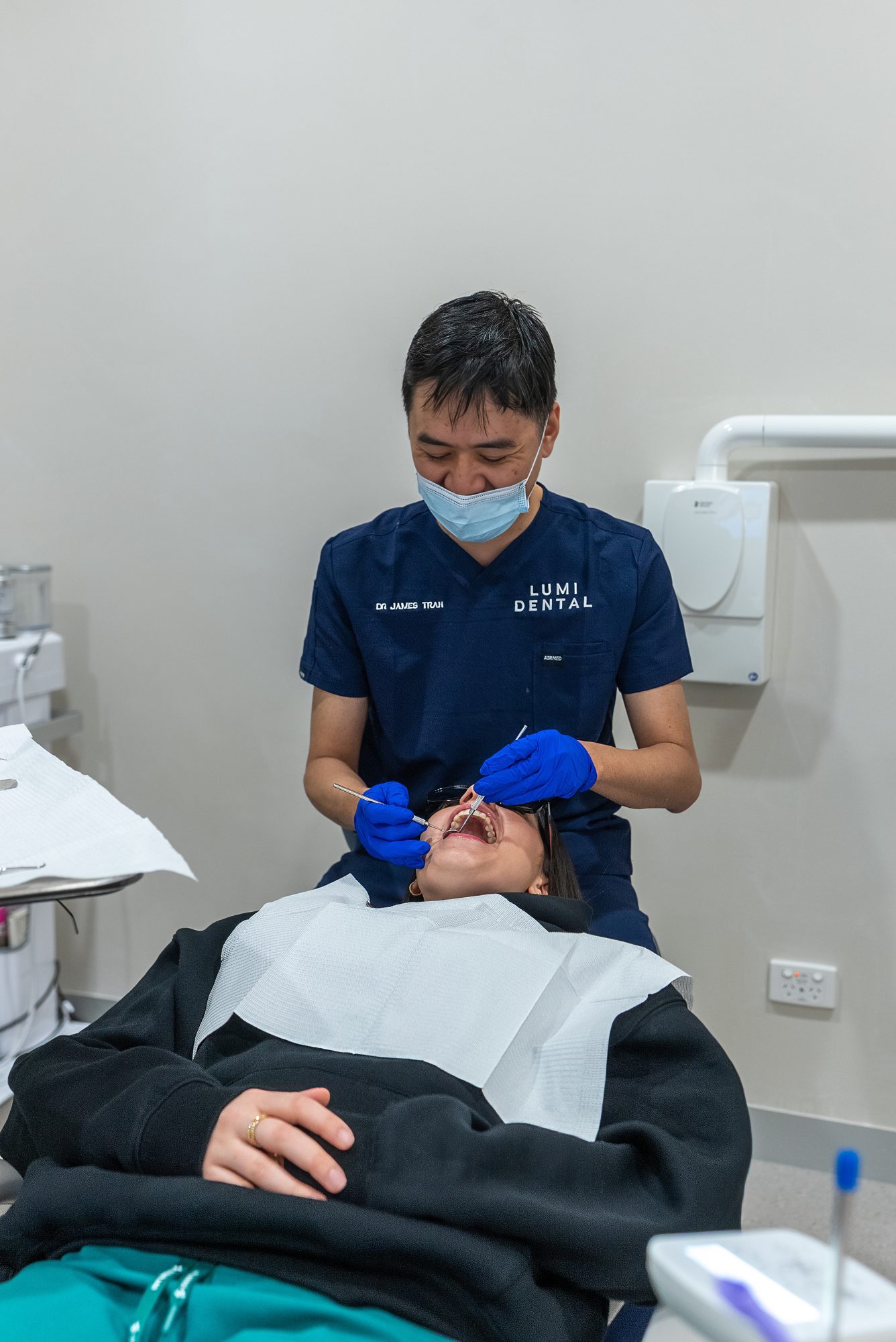

Teeth whitening with diabetes is usually possible when the diabetes is well managed and the gums are healthy; the gel does not alter insulin or diabetes tablets, and what needs checking first is the gums, the saliva, the root surfaces and any decay, which change how you whiten, not whether. Diabetes Australia estimates that almost 1.9 million Australians live with diabetes, and the Australian Dental Association notes that the best-known complication in the mouth is periodontitis, with dry mouth, root decay, thrush and slow healing close behind. Each changes how peroxide gel behaves on the teeth and gums. This guide explains what a dentist checks before whitening someone with diabetes, and how the course is adjusted.
Written by Dr James Tran, BDent (University of Sydney), MICOI, GradDip (Oral Implants), general dentist at Lumi Dental in Melrose Park.
The short version
- Well-managed diabetes is not a reason to avoid whitening. The ADA notes that with good blood glucose management the risk of gum disease is the same as for someone without diabetes.
- The real issues are gum inflammation, dry mouth, exposed roots, decay and slower healing. Each raises the chance of stinging gums or sensitivity, so the course is made gentler.
- Gum health comes first. Periodontitis and diabetes affect each other in both directions; our guide to diabetes and gum disease explains the link.
- Healthdirect lists gum disease, cracks or holes in the teeth and untreated dental problems among the reasons whitening is not recommended until they are dealt with.
- Whiten more gently: custom trays with a good gum-line seal, a lower strength gel, shorter wear, nights off and a desensitising toothpaste.
- Keep your usual medicines and meals on whitening days. Nothing about a whitening course should change how you manage your diabetes.
Why diabetes changes the plan, not the answer
Whitening gel is hydrogen or carbamide peroxide that sits on enamel for a set time and lightens the colour inside the tooth. It is not a medicine taken into the body, so it does not interfere with insulin or diabetes tablets, and a course does not move blood glucose. What diabetes changes is the state of the mouth the gel goes into. The ADA and Diabetes Australia list the same oral complications, and each matters for whitening.
| What diabetes can change | Why it happens | What it means for whitening |
|---|---|---|
| Gums | Higher risk of periodontitis, especially when blood glucose sits outside the 4 to 7 mmol/L range; bleeding, swelling and recession | Inflamed gums sting and blanch more easily under gel; whitening waits until the gums are healthy |
| Saliva | Less saliva is more common in diabetes, particularly with neuropathy; some medicines dry the mouth further | Less dilution of the gel, slower enamel repair, more sensitivity |
| Root surfaces | Recession from periodontitis exposes root, which is softer than enamel and decays more readily | Roots do not whiten like enamel and feel the gel more; root decay must be filled first |
| Healing | Changes in blood flow and immune response slow wound healing in the mouth | A gel burn or ulcer on the gum takes longer to settle, so prevention matters more |
| Thrush and taste | Glucose in saliva and lower immunity favour candida; taste can be altered | Sore or infected tissue is treated before any peroxide goes near it |
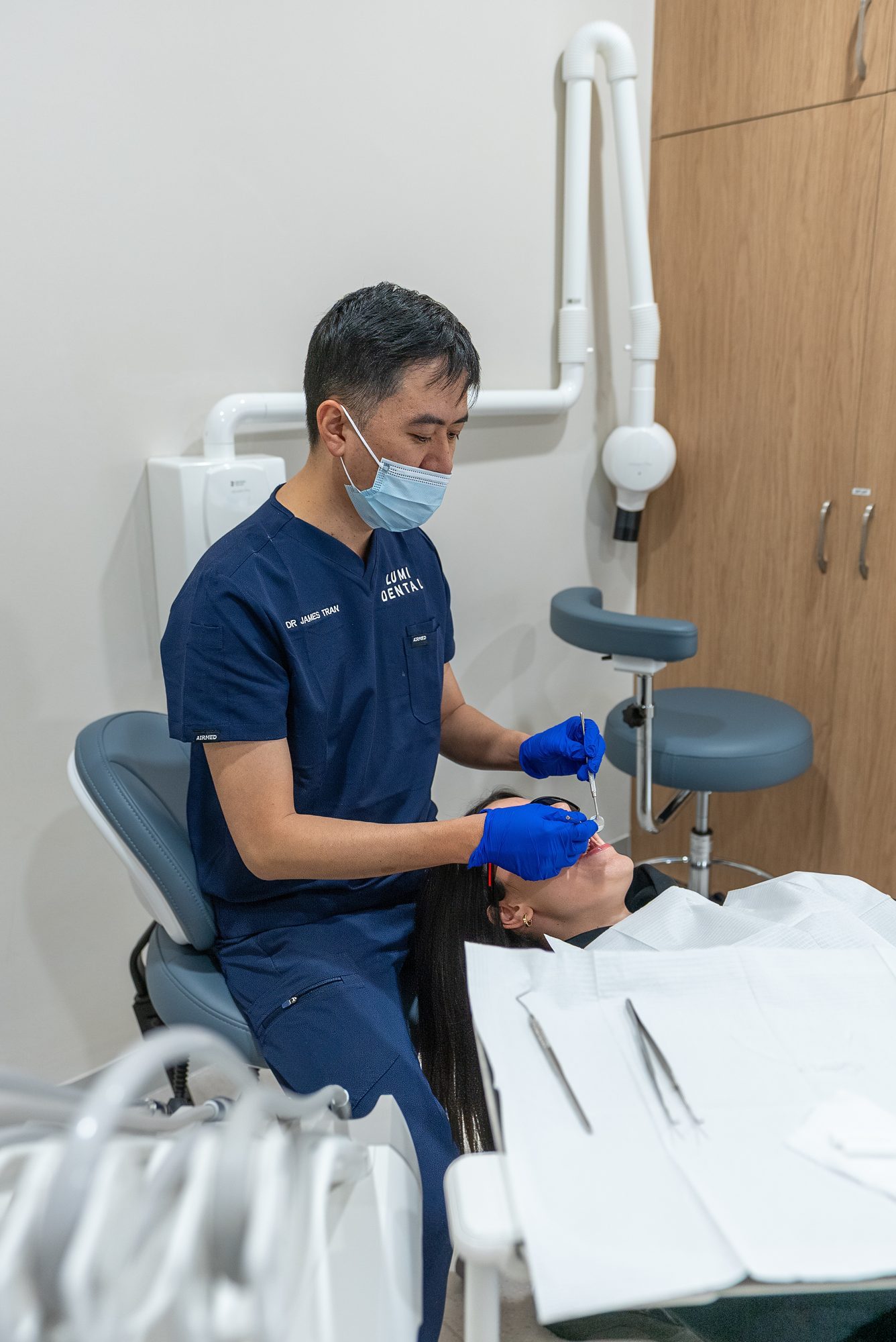
The single rule: healthy gums and a moist mouth first, then whiten more gently
If you have diabetes, the order is fixed. Get the gums healthy, get any dryness managed, have decay and exposed roots dealt with, and only then start whitening, at a lower strength and a slower pace than the standard course. In my experience the patients who skip the first steps are the ones who ring on day three with stinging gums and a tooth that jumps at cold water. The ADA's point is encouraging: good glucose management brings gum disease risk back to that of anyone else, so for many people the checklist below is short.
Check these first: the pre-whitening checklist
How the diabetes is tracking
Bring your most recent HbA1c and the date of your last GP or diabetes educator review. The ADA and Diabetes Australia both ask people with diabetes to tell the dentist how well the condition is controlled and to list every medicine. Poorly controlled glucose is not an absolute bar, but it usually means treating the gums first and reviewing more often.
The gums
Bleeding when brushing, swelling, bad breath, gums pulling back and teeth that look longer are the signs of periodontitis the ADA lists. Gel over inflamed gums stings, and healing is slower in diabetes. A scale and clean, or gum therapy where pockets are deep, comes before whitening, and the gums are given time to tighten before trays are made, because a tray made over swollen gums fits badly once they shrink.
Saliva
If your mouth feels dry or you wake at night for water, say so. Dry mouth changes where decay starts and how much the gel irritates. Our guide to whitening with dry mouth covers the adjustments; the short version is lower strength, shorter wear and no alcohol-containing mouthwash.
Roots and decay
Root decay along the gum line is more common in diabetes, for the two reasons the ADA gives: recession exposes the root, and less saliva protects it. Decay is filled first; our article on whitening with cavities or untreated decay explains why gel and an open cavity do not mix. Exposed roots that are sound are mapped so the gel can be kept off them.
Thrush, ulcers and dentures
White patches that wipe off, a sore corner of the mouth or a slow-healing ulcer are treated first. Partial denture wearers should know that gel does not change acrylic, so a stained denture beside whitened teeth is a common disappointment.
A gentler whitening protocol when you have diabetes
Once the mouth is ready, the changes are practical rather than dramatic. Healthdirect notes that teeth can be sensitive to cold straight after whitening and gums can feel irritated, and that anything lasting more than a day or two should be checked. The adjustments below keep you inside that normal range.
- Custom trays with a close gum-line seal, keeping gel off tissue that is slower to heal. Less gel per tooth, wiped away if it oozes.
- A lower strength to start. Step up only if the first week is comfortable. Healthdirect notes that products above 6% hydrogen peroxide may only be used by registered dental professionals, one reason this is done under supervision rather than with an online kit.
- Shorter wear and no overnight sessions at first. A dry mouth leaves gel undiluted for hours.
- Alternate nights, with extra nights off if teeth feel sharp.
- Desensitising and higher-fluoride toothpaste throughout the course, and alcohol-free mouthwash or none.
- A review partway through, so a sore gum is seen early.
In-chair whitening remains an option. The retractors dry the mouth during the session, so the next day can feel sharper, but the gel is isolated and removed by the clinician rather than left to sit. I usually suggest take-home first for anyone with a history of gum trouble, because it is easier to pause.
What to do on whitening days
Keep your usual medicines and meals. Nothing about whitening calls for a change in dose or timing, and any question about medicines belongs with the prescriber. Do not skip a meal to fit a session in. If you treat a hypo with jellybeans, juice or soft drink, take the trays out, then follow the ADA's advice: drink water once you feel well and wait about 60 minutes before brushing. For the taste the gel leaves, choose sugar-free gum, which also helps saliva flow. If gums are sore or a tooth stays sharp for more than a day or two, stop and ring the practice. A general check-up is the right starting point if the gums have not been looked at for a while.
How we approach this at Lumi Dental
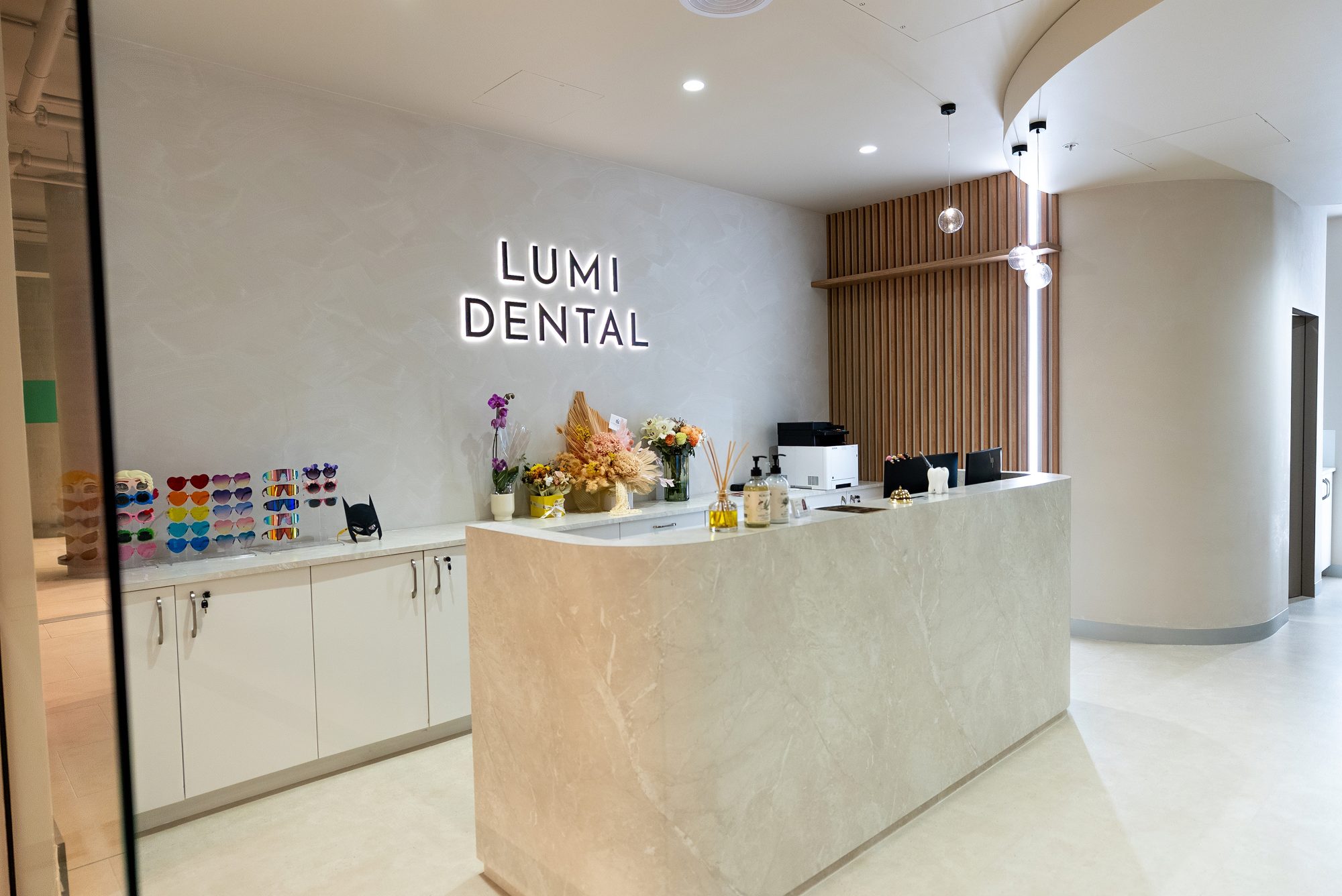
At Lumi Dental in Melrose Park, whitening for someone with diabetes begins with a dentist's examination: medical history and medicines are recorded, gum pockets and root surfaces are checked, and X-rays are taken where decay is suspected. The hygiene team of oral health therapists provides the scale and clean or gum therapy that comes first, and whitening maintenance afterwards. The 3D intraoral scan is used to make custom trays that seal well at the gum line. The whitening options are named Home, Refresh and Radiance, and the teeth whitening page explains how a consult works. Any question about your diabetes medicines is referred back to your GP or diabetes team; the dentist does not change them.
Questions patients ask
Can you whiten your teeth if you have diabetes?
Usually yes, after an examination. The ADA notes that with good blood glucose management the risk of gum disease is the same as for anyone else, and healthy gums are the main requirement. Inflamed gums, dry mouth or exposed roots are treated or allowed for first.
Does teeth whitening affect blood sugar levels?
No. The gel acts on enamel and is not absorbed as a medicine, so it does not move glucose readings or interact with insulin or tablets. The only indirect effect is on meal timing, so sessions are planned around your normal eating pattern.
Why do my gums sting more from whitening gel if I have diabetes?
Because inflamed gums react more to peroxide, and healing is slower in diabetes, so a small burn lingers. Treating the gums first and using a well-sealed tray with less gel usually fixes it. Our guide to gum irritation after whitening covers what to do if it happens.
Should I have my gums treated before whitening?
Yes, if there is any bleeding, swelling or recession. A scale and clean removes the plaque that keeps gums inflamed, and the gums then settle before trays are made. Our article on whitening before or after a scale and clean explains the timing.
Will whitening work if my gums have receded?
The enamel will lighten; the exposed root will not, and it feels the gel more. The dentist maps the exposed areas and keeps gel off them. Our guide to whitening with receding gums explains what to expect.
Diabetes and whitening questions? Complimentary cosmetic consult in Melrose Park
If diabetes has made you unsure about whitening, the team at Lumi Dental in Melrose Park can examine the gums and root surfaces and plan a gentler course around your diabetes care. Book a complimentary cosmetic consult or read about teeth whitening at Lumi Dental. Patients visit from Ryde, Parramatta, Ermington, Rydalmere and nearby suburbs.
Sources
- Australian Dental Association (teeth.org.au): Diabetes
- Diabetes Australia: Dental health
- Diabetes Australia: Diabetes in Australia
- healthdirect: Teeth whitening
About the author

Dr James Tran is a general dentist at Lumi Dental in Melrose Park. He holds a BDent from the University of Sydney and a Graduate Diploma in Oral Implants, and is a Member of the International Congress of Oral Implantologists (MICOI).
This article is general information only and is not a substitute for an examination and individual advice from a registered dental practitioner. Suitability for any treatment varies from person to person.








