
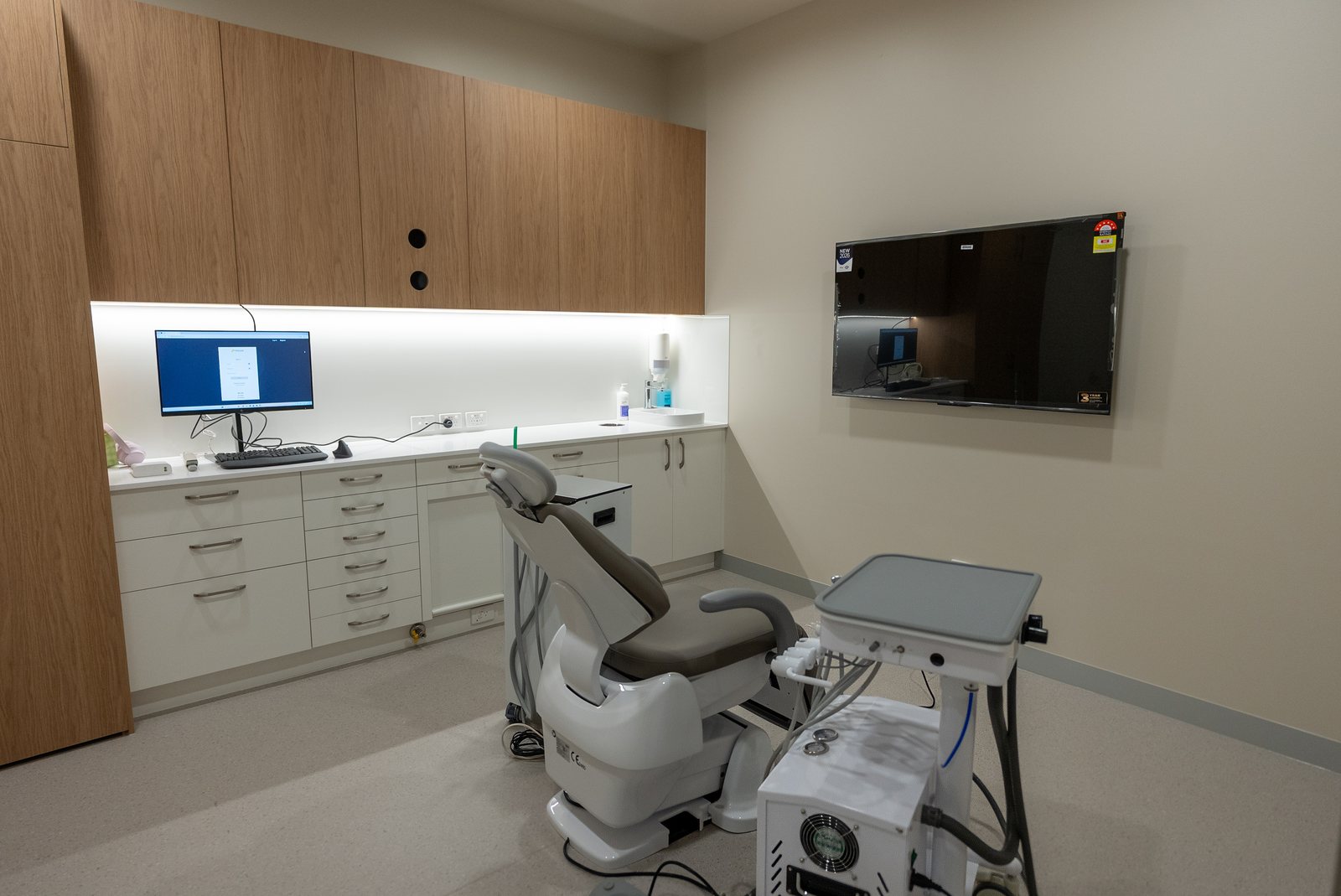

Rosacea is not a reason to avoid teeth whitening, but it does change how the visit is planned: avoid setting off a flush, keep peroxide gel off reactive skin, and tell the dentist which antibiotics you take or have taken. DermNet, the dermatology reference written by New Zealand dermatologists, estimates that rosacea affects around 5% of adults worldwide. Whitening gel works on the tooth surface and is not known to change rosacea itself.
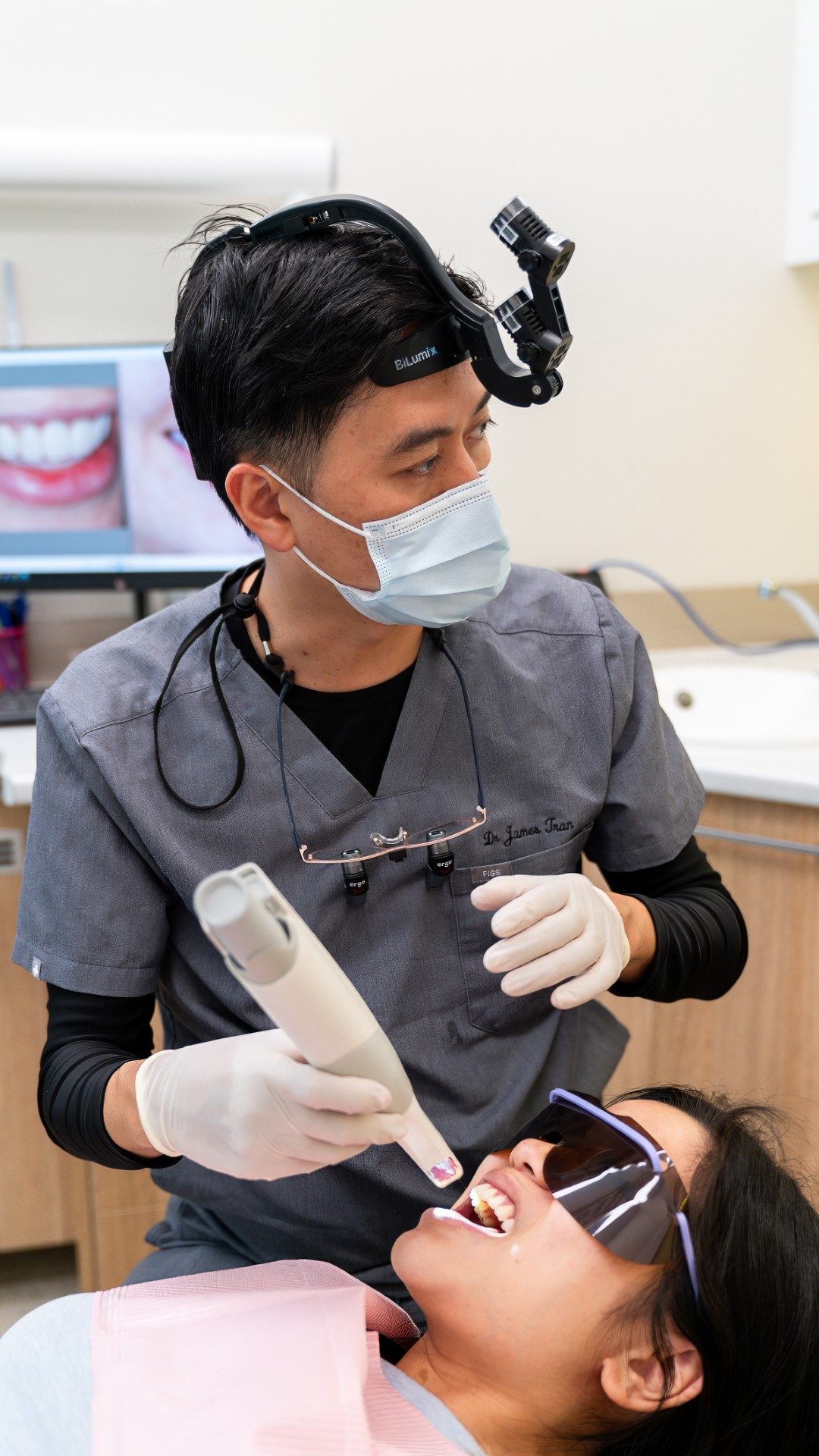
Written by Dr James Tran, BDent (University of Sydney), MICOI, GradDip (Oral Implants), general dentist at Lumi Dental in Melrose Park.
The short version
- A dental visit can stack several common triggers at once: a warm room, lying back under a bright light, and a few nerves. Small changes help.
- Peroxide gel stays on the teeth. Our guide to whitening with perioral dermatitis or eczema around the mouth covers barriers and toothpaste in detail.
- Tell the dentist about any oral antibiotic, past or present. Minocycline has been linked with grey or blue-grey staining of adult teeth; doxycycline mainly brings sun sensitivity.
- Grey staining from a medicine tends to respond slowly to whitening, and sometimes only partly.
- Your dermatologist or GP manages your rosacea medicines. Nothing is stopped or changed for the sake of whitening.
The single rule: plan around the flush, protect the skin, name your antibiotics
The condition itself is rarely the obstacle. What matters is keeping the visit from triggering a flare, keeping gel off skin that stings easily, and knowing whether a past medicine has changed the colour inside the teeth. In my experience, most people with rosacea have an ordinary whitening course once these three things are sorted.
| Situation | What may help before or during whitening |
|---|---|
| Flushing-prone skin | Book a cooler time of day, ask for the room to be kept cool, sit up between steps, bring cool water, and consider take-home trays instead of a long chair session |
| Papules or pustules around the mouth | Wait for the flare to settle, use a lip barrier, and keep trays trimmed short of the gums and lips |
| Ocular rosacea | Bring sunglasses or ask for tinted protective glasses, ask for the overhead light to be angled away, and see your GP first if an eye is red or painful |
| Taking doxycycline | Tell the dentist, keep up sun protection, and keep taking it exactly as prescribed |
| Past minocycline and greyer teeth | Have the stain assessed first and expect slow change; bonding or veneers may be discussed if whitening falls short |
| A prescribed cream near the lips | Keep using it as directed and ask the prescriber how to time it around whitening sessions |
What rosacea is, and why a dental visit can set it off
DermNet describes rosacea as a chronic inflammatory skin condition that mainly affects the central face and most often starts between the ages of 30 and 60. Features include flushing that comes and goes, persistent redness, small visible blood vessels, and inflamed bumps.
The NHS lists the common triggers as alcohol, spicy foods, hot drinks, sunlight, hot or cold temperatures, aerobic exercise and being stressed. DermNet adds that ultraviolet light is the most significant environmental trigger.
Now think about a typical dental appointment: a hot coffee on the way, a rush from the car park, then lying back under a bright light, perhaps feeling a little anxious. None of this is dangerous, but together it can leave your face burning for the afternoon.
Small changes on the day
- Choose an appointment at a cooler time of day and skip the hot drink beforehand.
- Tell the team you flush easily and ask for the room to be kept cool.
- Ask for short breaks sitting upright during longer sessions.
Keeping peroxide off reactive skin
The NHS notes that one of the first signs of rosacea is a burning or stinging feeling when using water or skincare products. Peroxide on the lips or nearby skin can sting and leave a pale, tender patch for a day or so.
Wait for any active bumps around the mouth to settle before starting. Use a thin layer of a plain, unscented lip balm before each session. Make sure trays are trimmed so they sit on the teeth and not the gums, and wipe away any gel that squeezes out straight away. Our guide on how much whitening gel to put in your trays shows how small the amount is.
Many people with rosacea use a prescribed cream or gel, such as azelaic acid, ivermectin or metronidazole, which DermNet lists among the treatments for inflamed bumps. Keep using them as directed. If you apply one close to the lips, ask your prescriber whether to put it on after a whitening session rather than just before, so it does not mix with gel at the edge of the tray. The dentist does not change these treatments.
Ocular rosacea and bright lights
Rosacea does not only affect the skin. DermNet states that eye features occur in over half of people with rosacea, and its page on ocular rosacea lists itching, burning, a gritty feeling, dry eye and sensitivity to light among the symptoms.
Bring your own sunglasses or ask for tinted protective glasses, and ask for the overhead light to be angled to keep the glare off your eyes. Some in-chair whitening systems also use a light; our article on whether LED light whitening works explains what it adds and whether a session needs one.
The NHS advises an urgent GP appointment if you have rosacea and a painful eye, blurred vision, light sensitivity, a red eye or a gritty feeling, because these can be signs of keratitis. Whitening waits until that has been checked.
Doxycycline, minocycline and your teeth
Oral antibiotics from the tetracycline family are often prescribed for rosacea, sometimes for months. Two come up most often, for different reasons.
Doxycycline: mainly a sun question
DermNet lists doxycycline among the oral treatments for rosacea and notes that it is a photosensitiser, which can cause unexpected sunburn, so skin should be protected from the sun while taking it. The sources I read do not link it with greying of adult teeth in the way they link minocycline. For whitening, that usually means going ahead once the mouth has been checked, with sun protection for the trip home.
Minocycline: a possible cause of grey teeth
DermNet notes that minocycline carries more risk of serious side effects than doxycycline and that prolonged use can cause blue pigmentation of the skin and nails. A review in the International Journal of Dermatology describes adult-onset tooth discolouration after long-term minocycline, typically a blue-grey to grey darkening of the crowns. It puts the figure for tetracycline and minocycline staining at around 3 to 6%, while noting that most of the evidence comes from individual case reports.
If you took minocycline for a long stretch and your teeth now look greyer, mention it. Our article on teeth staining from medication explains the difference between surface and built-in stain.
Why medicine-related grey whitens slowly
Colour that sits inside the tooth responds to peroxide more slowly than surface stain, and grey tends to shift less than yellow. Our guide to tetracycline and intrinsic tooth stains explains why courses are planned in months and when bonding or veneers are considered instead. Keep taking any antibiotic exactly as prescribed; the medicine is your doctor's decision.
Isotretinoin and dry lips
For severe or stubborn rosacea, a dermatologist may prescribe isotretinoin. DermNet lists dry lips and cheilitis, meaning sore, cracked or scaly lips, among its most common side effects, along with dry or irritable eyes. Peroxide on split lips stings.
DermNet's precautions during isotretinoin cover some skin and eye procedures, not whitening, so the timing is a question to put to your prescriber. Meanwhile, a plain lip balm used often keeps the lips more comfortable.
How we approach this at Lumi Dental
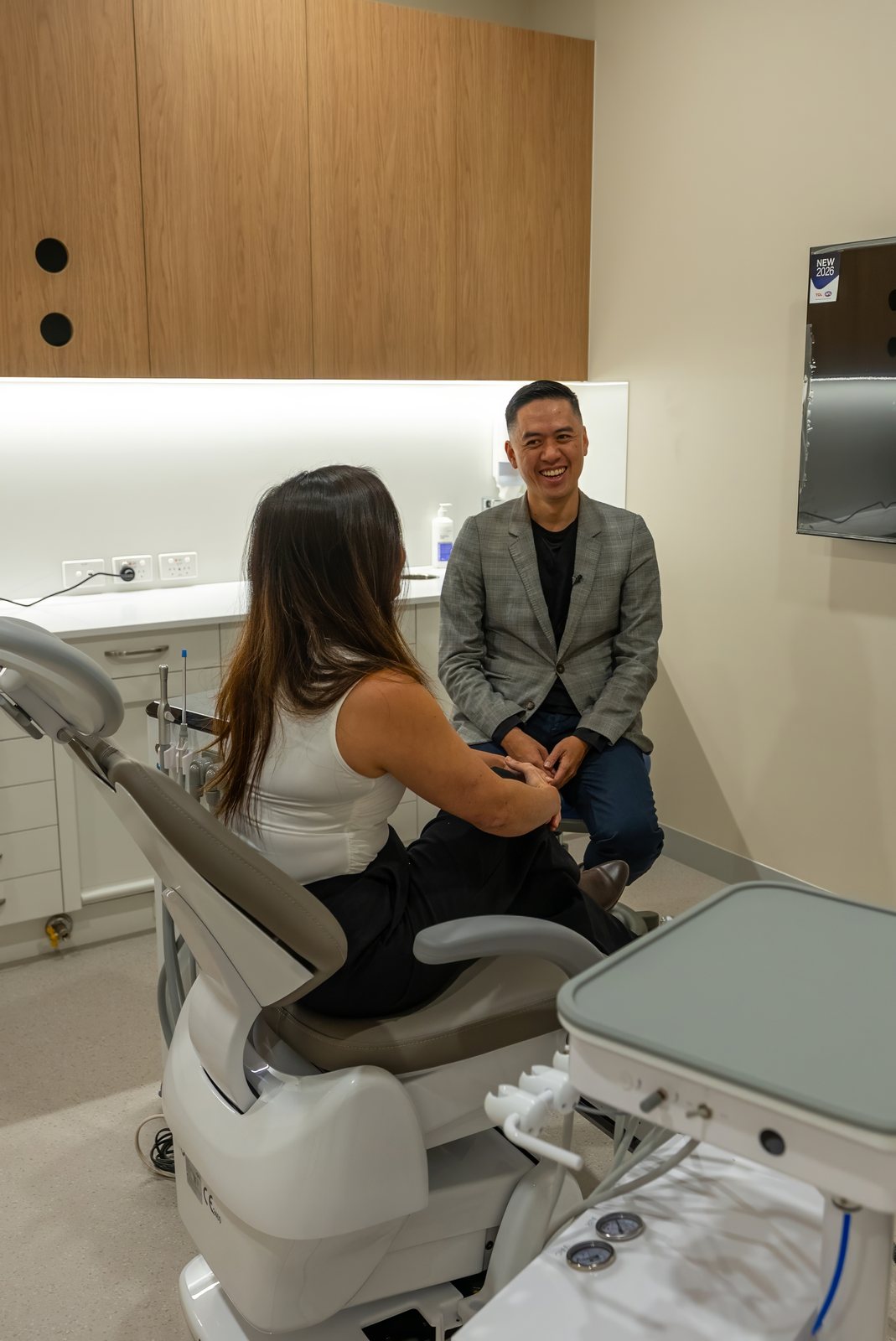
At Lumi Dental, whitening starts with an examination by a dentist, who checks the teeth for decay, worn areas and the type of any staining, and looks at the lips, gums and skin around the mouth. The dentist also asks about your medicines, including past antibiotics, and your usual triggers. Where gums are inflamed, an oral health therapist (OHT) usually cleans and settles them first. The whitening options are named Lumi Home, Lumi Refresh and Lumi Radiance, and the dentist will explain which may suit you, including whether trays or a chair session is kinder to skin that flushes. You can read more on the general dentistry page.
Questions patients ask
Can I whiten my teeth if I have rosacea?
Usually yes. Rosacea itself is not a reason to avoid whitening. The dentist checks the skin around your mouth, asks about medicines, and the visit is planned around your triggers.
Will teeth whitening make my rosacea flare?
There is no evidence that whitening gel affects rosacea itself. A warm room, a hot drink beforehand or a stressful visit can bring on a flush, and gel on the skin can sting, so both are avoided.
Can I whiten my teeth while taking doxycycline?
For most people, yes, once the mouth has been checked. Doxycycline makes skin more sensitive to the sun, so protect your face on the way home, and keep taking it as prescribed. Our article on medicines and teeth whitening lists what else to mention.
I took minocycline for years and my teeth look grey. Will whitening fix it?
It may help, but slowly and not always evenly. Long-term minocycline has been linked with grey staining of adult teeth, although it is uncommon. An examination shows whether the colour is inside the tooth and what is realistic.
Is in-chair or take-home whitening better with rosacea?
Either can work. Take-home trays avoid a long session under a light in a warm room, while an in-chair visit keeps all gel handling with the team. More detail is on our teeth whitening page.
Thinking about whitening? Complimentary cosmetic consult in Melrose Park
If you have rosacea and would like a brighter smile, the team at Lumi Dental can check your teeth and the skin around your mouth, talk through your medicines and triggers, and suggest a plan. Book a complimentary cosmetic consult at Melrose Central in Melrose Park, or read about teeth whitening options at Lumi Dental. Patients visit from Ryde, Parramatta, Ermington and Rydalmere, with on-site parking.
Sources
- DermNet: Rosacea
- NHS: Rosacea
- DermNet: Tetracyclines (doxycycline, minocycline)
- PubMed (International Journal of Dermatology): Tetracycline and other tetracycline-derivative staining of the teeth and oral cavity
About the author

Dr James Tran is a general dentist at Lumi Dental in Melrose Park. He holds a BDent from the University of Sydney and a Graduate Diploma in Oral Implants, and is a Member of the International Congress of Oral Implantologists (MICOI).
This article is general information only and is not a substitute for an examination and individual advice from a registered dental practitioner. Suitability for any treatment varies from person to person.







