

For three missing teeth in a row, two implants carrying a three-tooth implant bridge is usually the balance point when the neighbouring teeth are healthy and the bone is adequate; three single implants suit people with the space, bone and budget for them, and a partial denture is the sensible choice when surgery is not wanted. A conventional bridge on the neighbouring teeth is the fourth option. The numbers favour the fixed options: a meta-analysis of 63 studies reported five-year survival of around 96 percent for implant-supported single crowns and around 94.5 percent for implant-supported bridges. The decision comes down to where the gap is, how much bone is left, the state of the neighbouring teeth and how much surgery you want.
Written by Dr James Tran, BDent (University of Sydney), MICOI, GradDip (Oral Implants), general dentist at Lumi Dental in Melrose Park.
The short version
- Four options: a conventional bridge on the neighbouring teeth, an implant bridge on two implants, three single implants, or a removable partial denture.
- Two implants and a three-unit bridge leave the natural teeth alone and need fewer surgical sites; our guide to the implant-supported bridge explains the parts.
- Three single implants are the easiest to clean, but published guidance quotes at least 3 mm between implants and about 1.5 mm from a natural tooth, so they need room.
- A conventional bridge over three missing teeth is a long span that loads the anchor teeth; it suits gaps where those teeth are already heavily filled.
- A partial denture needs no surgery and costs least, but the bone under the gap keeps shrinking and the clasps may show.
- Upper back gaps often lack bone height near the sinus, so a sinus lift, shorter implants or a bridge that puts the implants where the bone is may be needed.
The four ways to fill a three-tooth gap
Conventional tooth-supported bridge
Healthdirect describes the usual bridge as crowns on the teeth each side of the gap, joined by false teeth, with the anchor teeth filed down to make room. For three missing teeth that is a five-unit span: the anchors carry the load of five teeth, and healthdirect notes that bridges most often fail through decay of those teeth or failure of the cement. If those teeth are already crowned or heavily filled, the preparation costs little; if they are untouched, cutting them down is a real loss.
Implant bridge on two implants
Teeth.org.au explains that several teeth can be replaced with a bridge where two or more implants are placed in the bone and joined by crowns side by side. For three teeth, an implant goes where the first and third tooth stood and the middle tooth is a pontic resting on the gum.
Three single implants
Each tooth gets its own implant and crown, floss passes between every tooth, and if one crown ever needs attention the others are unaffected. The trade-off is three surgical sites, the most bone and spacing, and the largest cost. Our article on how many dental implants you need covers the counting.
Removable partial denture
An acrylic or cobalt chromium plate carrying three teeth, held by clasps on the remaining teeth. Leeds Dental Institute patient information describes metal-based dentures as thinner and stronger than acrylic, notes that clasps may show when you smile, and advises removing the denture at night. No surgery and the lowest cost, but the bone under the gap keeps shrinking.
The single rule: healthy neighbours plus adequate bone points to two implants and a bridge
If the teeth either side of the gap are healthy and there is enough bone at both ends, start from two implants carrying a three-tooth bridge: it protects the natural teeth and needs two surgical sites rather than three. Move to three single implants when the gap is wide enough, the bone is good along its whole length, and easier cleaning is worth the extra surgery and cost to you. Move to a conventional bridge when the neighbours already need crowns. Move to a partial denture when surgery is not wanted, not advisable, or needs to wait. In my experience most three-tooth gaps at the back end up as two implants and a bridge, and most at the front come down to how much gum and bone has been lost.
| Option | Natural teeth involved | Surgery | Cleaning | Bone under the gap | Usual fit |
|---|---|---|---|---|---|
| Conventional bridge (five units) | Anchor teeth cut down | None | Superfloss under the span | Keeps shrinking | Anchors already crowned or heavily filled |
| Implant bridge (two implants) | None | Two implant sites | Superfloss under the middle tooth | Maintained at the implant sites | Healthy neighbours, adequate bone at each end |
| Three single implants | None | Three implant sites | Ordinary floss between every tooth | Maintained along the gap | Wide gap, good bone throughout, budget allows |
| Partial denture | Clasps rest on neighbouring teeth | None | Removed and brushed daily | Keeps shrinking | Surgery not wanted or not yet possible |
What decides it: bone, neighbours and spacing
How much bone is left
Bone shrinks after teeth are lost, and the longer the gap has been empty the less there tends to be. Teeth.org.au lists enough bone as one of the most important factors, assessed with X-rays that commonly include a 3D X-ray. In the upper back jaw the sinus sits above the roots, and people who lost those teeth years ago often lack the height for standard implants; a sinus lift, a graft or shorter implants are the usual answers, and our guide to bone grafts and sinus lifts goes through them.
The teeth either side
Untouched neighbours argue for implants. Neighbours with large fillings, root canal treatment or existing crowns tilt the decision towards a conventional bridge, because the crowns they need anyway can double as anchors. Neighbours with gum disease are poor anchors for anything, and gum therapy comes first.
Room for three implants
Published implant guidance quotes a minimum of about 1.5 mm between an implant and the adjacent tooth and at least 3 mm between two implants, because tighter spacing has been linked with loss of the bone crest between them. Three lower incisors rarely leave that room, one reason two implants and a bridge are chosen there even when the bone is adequate.
What the research reports about how long each option lasts
The meta-analysis mentioned earlier pooled 63 studies with at least five years of follow-up: around 96 percent survival for implant-supported single crowns, around 94.5 percent for implant-supported bridges and around 91 percent for bridges joining an implant to a natural tooth. The gap between single crowns and implant bridges is small, and both sit above the tooth-implant hybrid, which is why I do not join an implant to a natural tooth unless there is no alternative.
Survival is not the same as trouble-free. Teeth.org.au notes that implants cannot decay but can develop peri-implantitis, inflammation and bone loss around the implant, if plaque is left on them, and that cleaning differs between a single implant and an implant bridge. Our article on a dental bridge versus a partial denture compares the two non-implant options in more depth.
When a partial denture is the right call
Patients sometimes apologise for choosing a denture. There is no need. A well-made cobalt chromium partial can be comfortable and discreet, and keeps the remaining teeth from drifting while a bigger decision waits. It suits people who want to avoid surgery, have a medical reason to delay it, or are still deciding whether the rest of the arch has a future. If several other teeth are also failing, the question becomes the whole arch, and our guide to full-arch implants or keeping your remaining teeth is the better starting point. Leeds notes that an immediate denture fitted straight after extractions loosens as the bone heals and usually needs relining or remaking.
How we approach this at Lumi Dental
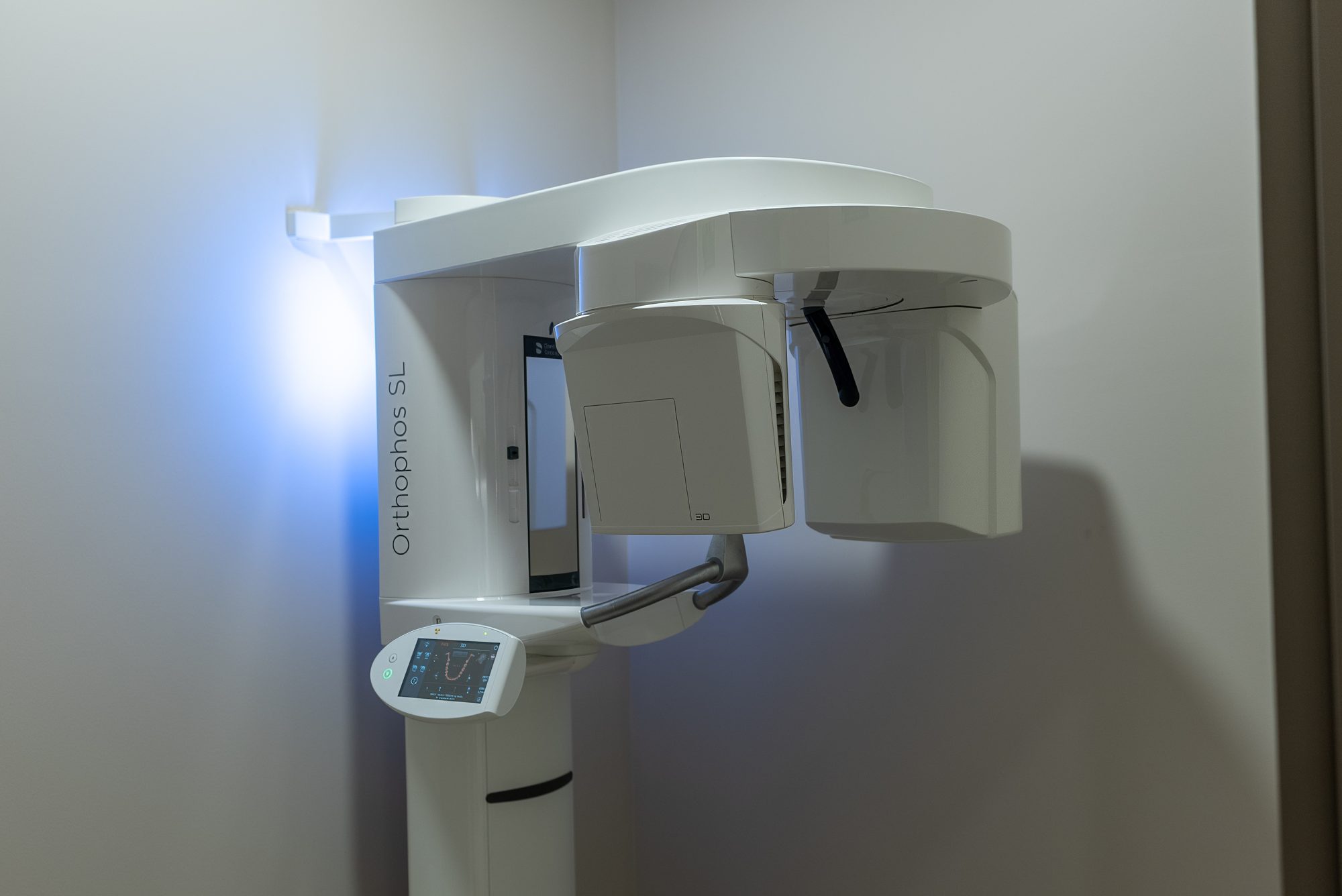
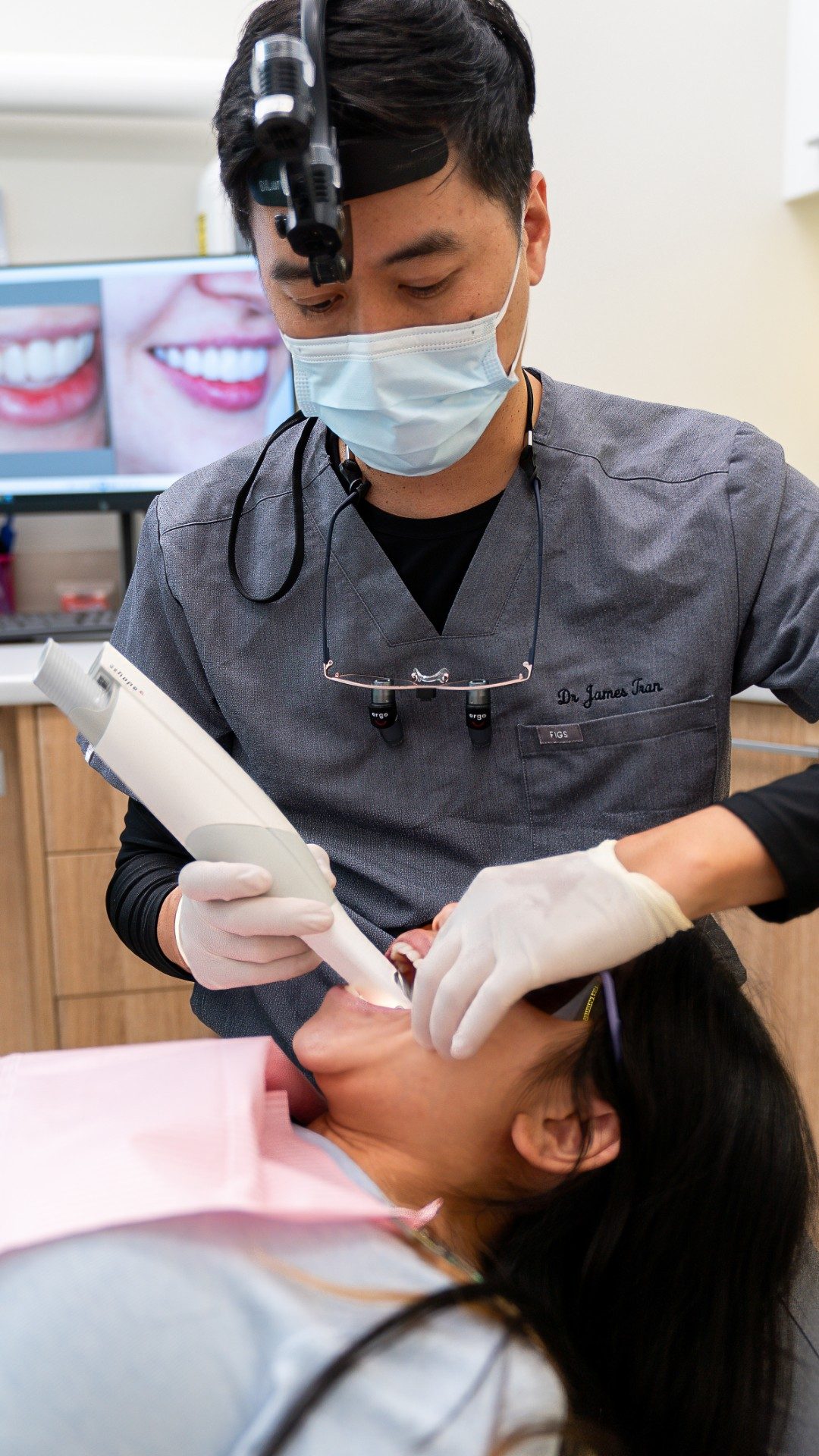
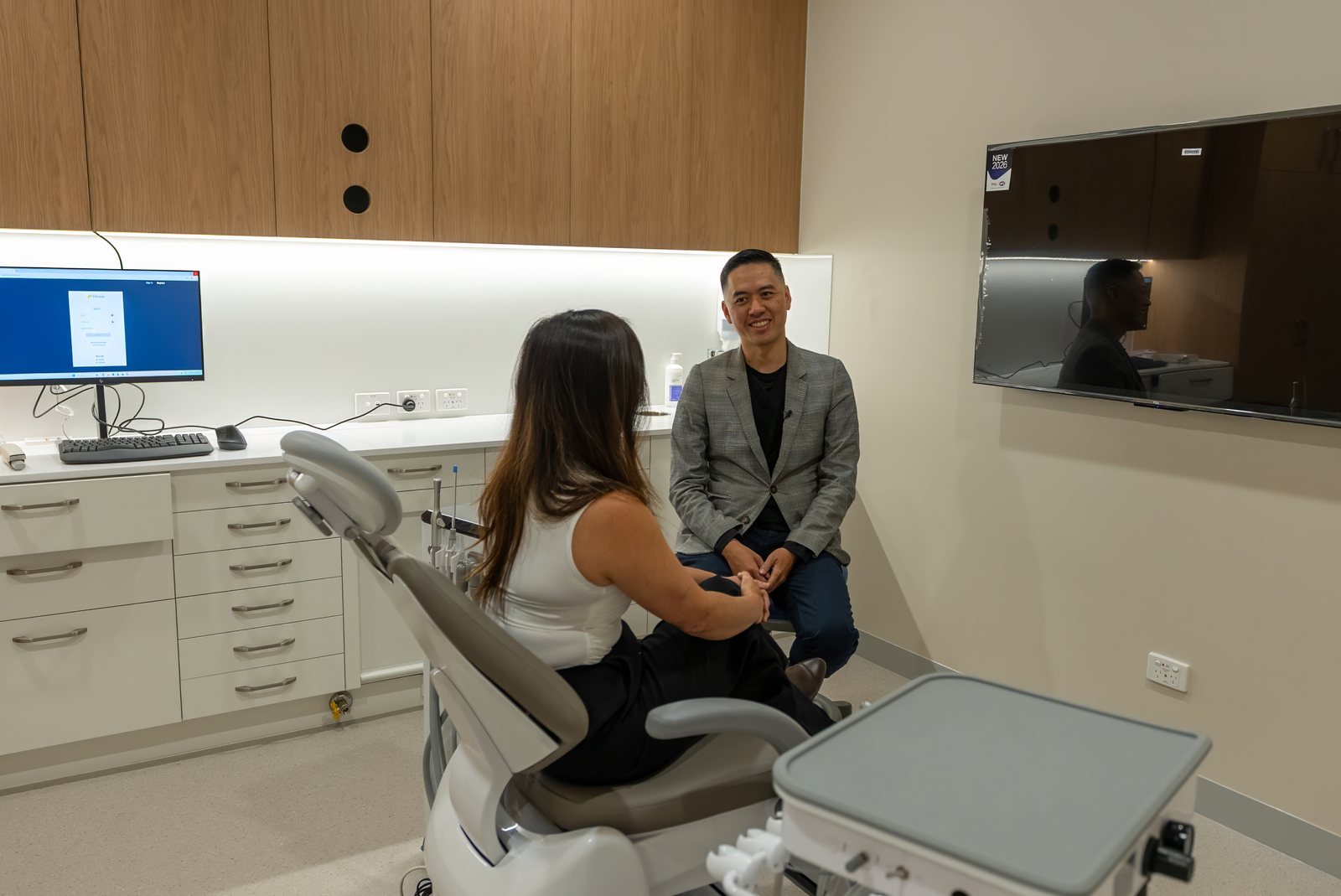
At Lumi Dental in Melrose Park a three-tooth gap starts with an examination of the neighbouring teeth and gums, a 3D X-ray (OPG and CBCT) taken in-house to measure bone along the whole gap, and a 3D intraoral scan so the bridge or crowns can be planned digitally; the equipment is described on our technology page. Single implants and implant bridges are placed at the practice with IV sedation available, and dentures and relines are made here too. Where a large graft or complex sinus procedure is needed, the team refers to a registered specialist and continues the restorative work afterwards. For patients with medical conditions that affect healing, the team at Lumi Dental writes to your GP or specialist before planning surgery.
Questions patients ask
Can you get one implant for three missing teeth?
Not usually. One implant carrying three teeth would be a cantilever on both sides, overloading the implant and the bone around it. Two implants with a three-unit bridge is the usual minimum.
How many implants do you need for three missing teeth?
Two or three. Two implants carrying a bridge is the most common plan when the bone at each end of the gap is adequate. Three single implants are chosen when the gap allows 3 mm between implants, the bone is good throughout and you prefer teeth that floss normally.
Is an implant bridge as strong as three separate implants?
For everyday chewing, yes. Pooled research reports five-year survival of around 94.5 percent for implant bridges against around 96 percent for single implant crowns. The practical differences are cleaning, easier with single implants, and cost and surgery, lower with a bridge.
Can a normal bridge replace three teeth in a row?
It can, as a five-unit span on crowned anchor teeth, and it is reasonable when those teeth already need crowns. On healthy, unfilled teeth I would rather not cut them down, and a long span at the back carries heavy loads, so implants are usually suggested first.
What is the cheapest way to replace three missing teeth?
A removable partial denture costs least upfront, then a conventional bridge, an implant bridge and three single implants. Prices vary with materials, grafting and provider, so a written quote after an examination is the only reliable figure; our dental implant cost guide explains what drives the number.
Three teeth missing in a row? Complimentary implant consult in Melrose Park
If you have three missing teeth in a row and want to know which option suits your mouth, the team at Lumi Dental in Melrose Park can take a 3D X-ray, examine the neighbouring teeth and set the options out side by side. Contact Lumi Dental to book a complimentary implant consult, or read more about dental implants at Lumi Dental. Patients visit from Ryde, Parramatta, Ermington, Rydalmere and nearby suburbs.
Sources
- healthdirect: Dental bridge
- Australian Dental Association (teeth.org.au): Dental implants
- Leeds Teaching Hospitals NHS Trust: Removable partial dentures
- PubMed Central: Meta-analysis of Failure and Survival Rate of Implant-supported Single Crowns, Fixed Partial Denture, and Implant Tooth-supported Prostheses
About the author

Dr James Tran is a general dentist at Lumi Dental in Melrose Park. He holds a BDent from the University of Sydney and a Graduate Diploma in Oral Implants, and is a Member of the International Congress of Oral Implantologists (MICOI).
This article is general information only and is not a substitute for an examination and individual advice from a registered dental practitioner. Suitability for any treatment varies from person to person.








