


Food tastes different with a new upper denture mainly because the acrylic plate covers the roof of the mouth and blunts the temperature and texture signals that make up much of what we call flavour, not because it covers many taste buds, which sit mostly on the tongue. A study of 170 upper denture wearers found taste recognition differed with the denture in and out, bitter most of all, while a smaller study that followed new wearers for a month found the change faded. For most people the muted feeling eases over a few weeks; where it does not, the fit, the gum under the plate, saliva, medicines and the denture design are the things to check.
Written by Dr James Tran, BDent (University of Sydney), MICOI, GradDip (Oral Implants), general dentist at Lumi Dental in Melrose Park.
The short version
- Taste buds are mostly on the tongue. The hard palate under a denture carries few, but it is rich in touch and temperature nerves, which the plate switches off.
- Much of flavour is smell released while chewing. Cautious chewing with a new denture releases less aroma, so food seems blander.
- Research has reported altered taste recognition with an upper denture in, bitter most of all; a small study found it settled within a month.
- Sore gums, a yeast infection under the plate, adhesive residue, dry mouth and some medicines can all add a bad or metallic taste on top.
- If the denture is new, give it a few weeks and follow our guide to eating with new dentures. If taste stays flat once the fit has settled, a thinner plate, a palateless design or implants can free the palate.
Where taste actually happens
Taste buds sit in the papillae on the top and sides of the tongue, with further groups on the soft palate, pharynx, larynx and epiglottis. The hard palate, the bony roof of the mouth that a full upper denture covers, has few. What it has instead is a dense supply of nerves that read pressure, texture and temperature.
Flavour is built from more than taste. A physiology reference calls it a multisensory experience built from smell and texture as well as taste, and notes that most taste complaints turn out to be smell problems. Much of that smell reaches the nose from the back of the mouth while you chew. Cover the palate with a plate and you lose the hot and cold of the food, the feel of crisp against soft, and the tongue-to-palate contact that drives aroma up and back. The taste buds still work; the supporting cast is muffled.
What the research on dentures and taste shows
The largest study I can point to tested 170 upper denture wearers aged 45 to 83 with taste strips, once with the denture in and once with it out. Perception differed significantly, and bitter was the taste patients struggled with most, followed by salty, sweet and sour. A Dutch review concluded that changes in temperature and texture perception from covering the hard palate are the principal factors, with smell, age and saliva composition contributing.
Two experimental studies add detail. Volunteers wearing a test palatal plate became worse at telling apart food thickness and roughness. In another, a small opening at the front of an experimental palate improved perception of a fibre hidden in food but cut retention by about a third at the centre of the plate.
The reassuring counterweight is a study of 30 patients tested before their first full upper denture, three days after fitting and a month later. Flavour recognition slowed a little in the first days and recovered by a month, and none of the changes reached statistical significance. So the plate does change how food is perceived, the effect is modest, and most brains adjust within weeks.

Four other reasons food tastes odd with a new denture
Denture stomatitis
Redness of the gum under the plate, usually with a Candida yeast biofilm on the denture, is reported in between 20% and 67% of denture wearers depending on the population studied. It can be silent or produce a burning or salty sensation that colours everything you eat. Overnight wear, dry mouth, poor denture hygiene, an older or ill-fitting denture, a sugary diet and smoking all raise the risk. Our denture stomatitis guide covers treatment.
Adhesive and cleaner residue
Fixative left on the plate and cleaning solution not rinsed off both have their own taste, and a thick layer of adhesive pads the palate further. A well-fitting new denture should need little or none.
Dry mouth
Saliva dissolves food so taste molecules can reach the buds, and long-standing dryness is itself a cause of taste dysfunction. A dry mouth also makes the plate rub.
Medicines
Metronidazole, some blood pressure tablets and antifungals are among the medicines known to distort taste or leave a metallic note. If the change arrived with a new prescription, our guide to a metallic taste in the mouth is the better starting point.
How long adjustment takes, and what helps in the meantime
Patients I see usually describe the first week as the strangest, with the plate feeling enormous and food tasting of plastic. By three to four weeks most have stopped noticing it at meals, which matches the month-long study above. In the meantime, let hot food cool a little, because the plate hides heat until it reaches the throat; chew on both sides to keep the denture stable and release more aroma; favour foods with strong smell and clear texture; take the denture out at night and brush the palate; and sip water with meals. A denture that still rocks or needs adhesive after a month needs adjusting rather than tolerating.
The single rule: if the denture is under three months old, fix the fit before changing the design
A new denture that tastes of nothing may simply be new. Adjust sore spots, treat any stomatitis, deal with dry mouth and give the brain its few weeks. If the plate still deadens food once all of that is done, or if you have worn a full upper for years and never got used to it, the conversation moves to design.
Design options that free the palate
Every option below trades palate coverage against retention: a conventional upper denture holds on by suction across the whole palate, so the less it covers, the more it needs something else to grip. In my experience the patients who gain most from a palateless or fixed design are those already struggling with gagging, speech or taste.
| Option | Palate coverage | Effect on taste and texture | How it stays in | Who it tends to suit |
|---|---|---|---|---|
| Full acrylic upper denture | Complete, several millimetres thick | Most muting of heat, cold and texture | Suction and ridge shape | Most first-time wearers; easiest to adjust |
| Cobalt chrome plate | Complete but thin | Metal conducts temperature better and feels less bulky | Suction, plus clasps if teeth remain | Partial denture wearers and those who gag on acrylic |
| Palateless (horseshoe) denture | Ridge only; centre of the palate open | Palate largely uncovered | Needs implants or firm teeth; little suction | Those who cannot tolerate a plate and have implants to hold it |
| Implant overdenture | Can be reduced to a horseshoe | Palate open; removable for cleaning | Clips onto implants, often four in the upper jaw | Long-term denture wearers wanting stability |
| Fixed full-arch bridge (All-on-X at Lumi Dental) | None | Closest to natural teeth for heat, cold and texture | Screwed to four or more implants | Those who want no denture at all |
A palateless denture is only as good as what holds it, which is why our guide to the palateless upper denture spends most of its time on implants. A fixed bridge removes the plate entirely; the Lumi Dental page on All-on-X full-arch implants explains the assessment. Neither is a quick fix for a denture that is simply new.
How we approach this at Lumi Dental
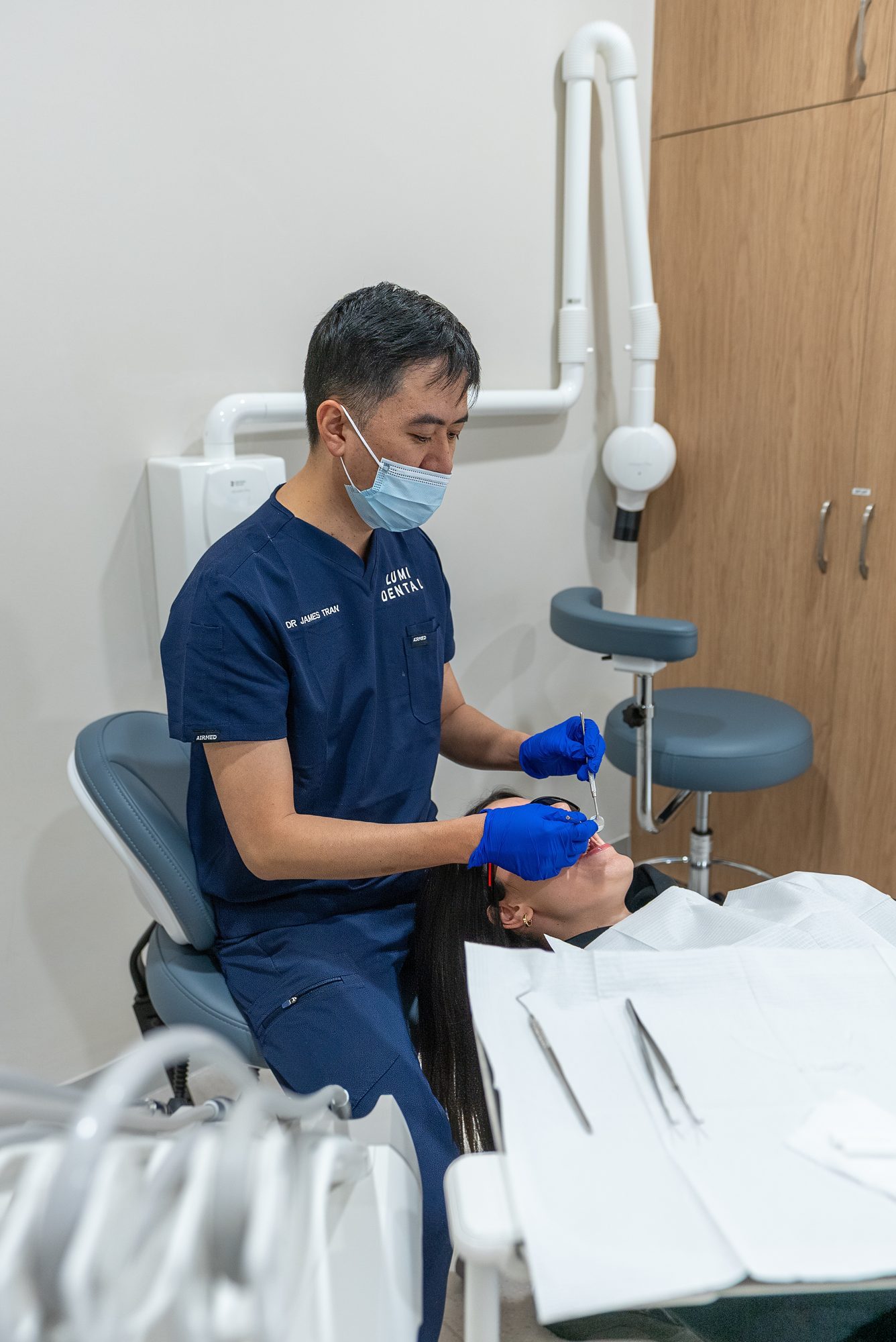
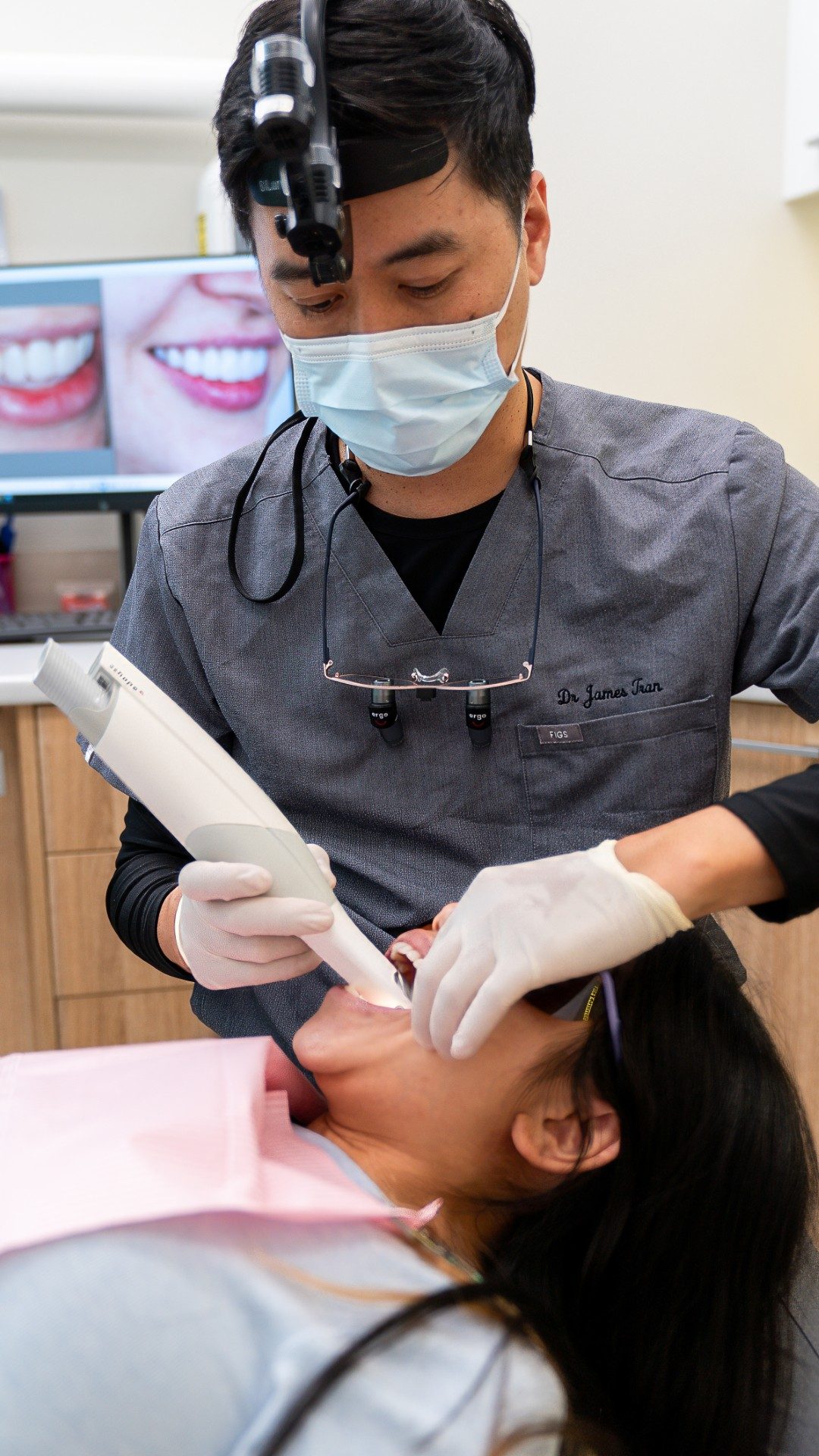
At Lumi Dental in Melrose Park a taste complaint with a denture starts with an examination by a dentist: the fit, the gum under the plate, saliva, the medicine list and the age of the denture. Dentures and relines are provided at the practice, and adjustments are part of the first weeks. Where a patient wants the palate freed, the team uses the in-house 3D intraoral scanner and 3D X-ray (CBCT) to see whether implants are an option, from a clip-in overdenture to a fixed full-arch bridge, and the oral health therapists help with denture hygiene and stomatitis care.
Questions patients ask
Why can't I taste my food with my dentures in?
Because the plate over the roof of your mouth blocks temperature and texture and changes how aroma moves while you chew, which the brain reads as lost flavour. Research has reported modest differences in taste recognition with an upper denture in, bitter most of all. Most people adjust within weeks.
Will my sense of taste come back after getting dentures?
Usually, yes. A study that followed new wearers found flavour recognition slowed in the first days and recovered by a month. If it has not improved by then, have the fit, the gums and your medicines checked.
Can an upper denture be made without a palate?
Yes, as a horseshoe or palateless design, but it loses the suction a full plate relies on, so it generally needs implants or firm teeth to hold it. Our article on implant-retained overdentures explains how the clips work.
Does a metal denture let you taste more?
A cobalt chrome plate is thinner and conducts heat and cold better than acrylic, so food feels more natural even though it still covers the palate. It muffles fewer signals rather than adding taste.
Do implant teeth let you taste food properly again?
A fixed full-arch bridge has no palate, so heat, cold and texture come through as with natural teeth. Our comparison of dentures and All-on-X weighs that against cost, surgery and maintenance.
Considering dental implants? Complimentary implant consult in Melrose Park
If an upper denture has left your meals tasting flat and the first months have not fixed it, the team at Lumi Dental in Melrose Park can check the fit, treat the gum under the plate and show you what a palate-free option would involve. Contact Lumi Dental to book a complimentary implant consult, or read about dental implants at the practice. Patients visit from Ryde, Parramatta, Ermington and Rydalmere, with on-site parking at Melrose Central.
Sources
- PubMed (Special Care in Dentistry): Relationship between taste perception and use of upper complete dentures
- NCBI Bookshelf (StatPearls): Physiology, Taste
- PMC: Evaluation of the effect of upper complete denture on gustatory and olfactory senses
- PMC: A systematic review of denture stomatitis, predisposing factors, clinical features, etiology and global Candida distribution
About the author

Dr James Tran is a general dentist at Lumi Dental in Melrose Park. He holds a BDent from the University of Sydney and a Graduate Diploma in Oral Implants, and is a Member of the International Congress of Oral Implantologists (MICOI).
This article is general information only and is not a substitute for an examination and individual advice from a registered dental practitioner. Suitability for any treatment varies from person to person.








