
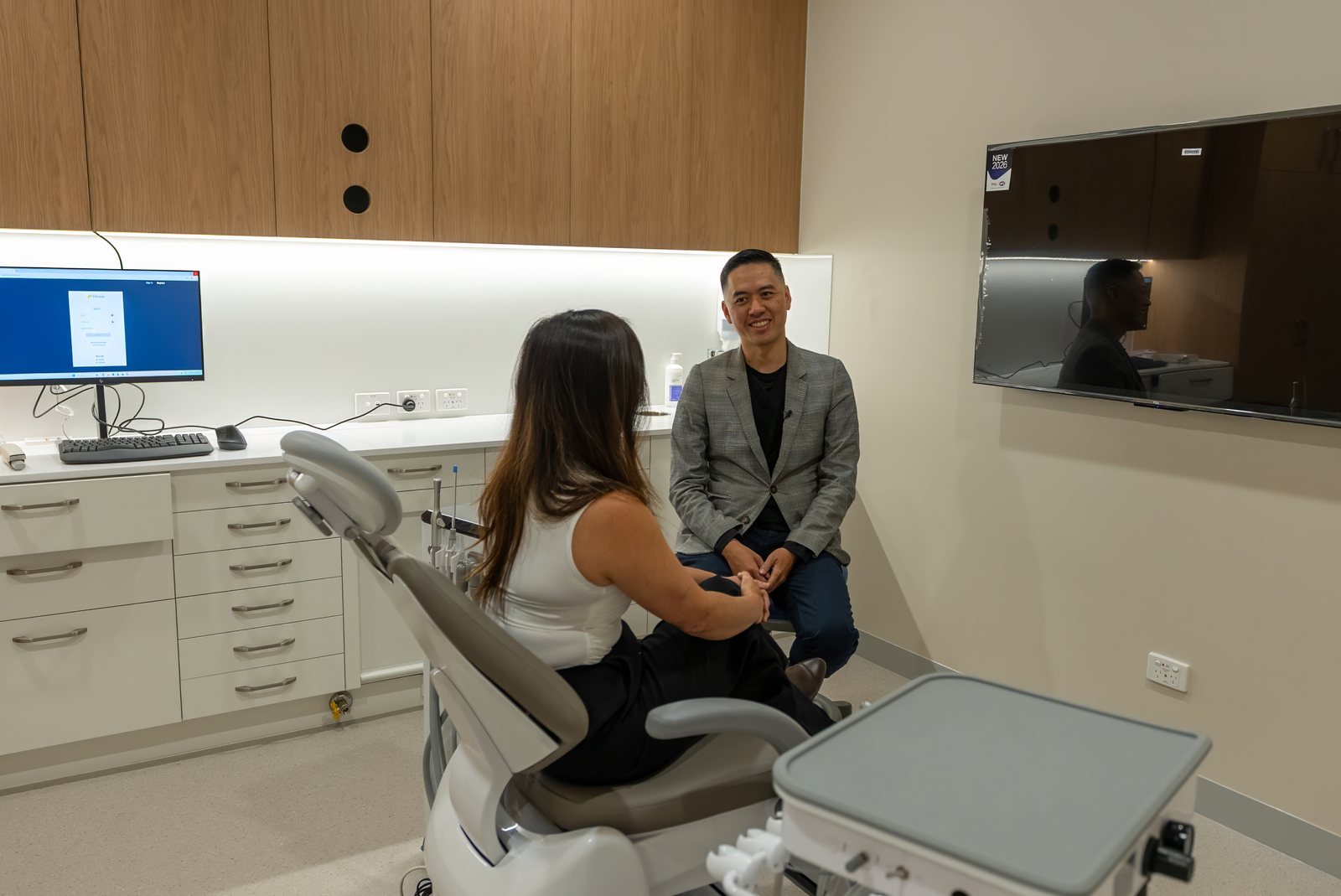

Dental implants with kidney disease are possible for many people, but the answer depends on how stable the kidneys are, if you are on dialysis, and how healthy the gums and jaw bone are; people on dialysis can still have implants, with the renal team involved from the first appointment. A clinical guideline published in the International Journal of Oral Science describes implants as the most reliable treatment for missing teeth, while noting that infection, bone changes, bleeding risk and altered drug clearance make implant treatment on dialysis more demanding. This guide explains what kidney disease changes in the mouth, how the decision is staged, and what the planning looks like.
Written by Dr James Tran, BDent (University of Sydney), MICOI, GradDip (Oral Implants), general dentist at Lumi Dental in Melrose Park.
The short version
- Stable chronic kidney disease with healthy gums is not an automatic no. Dialysis needs your nephrologist's sign-off and tighter planning.
- Kidney disease changes the jaw bone, clotting, infection risk and how medicines are cleared, and heparin is used during haemodialysis.
- Implant surgery is usually booked on a non-dialysis day, most often the day after a session, in the morning.
- Expect blood tests, a letter between the dentist and your renal team, and a 3D X-ray of the jaw before anyone talks about dates.
- Pain relief and antibiotics are chosen with the renal team: paracetamol is the usual first choice and anti-inflammatories are often avoided.
- For the wider picture, start with our guide to dental care on dialysis and with kidney disease.
The single rule: stable kidney disease is not an automatic no, dialysis needs the renal team's sign-off
If your kidney disease is well controlled, your gums are healthy and you are not on dialysis, an implant is planned much as it would be for anyone else. If you are on dialysis, the implant can still be considered, but only after your nephrologist has confirmed you are stable enough for surgery and the timing, medicines and bleeding plan have been agreed in writing. In my experience the patients who do well bring their renal team in early rather than mentioning dialysis at the surgical visit.
What kidney disease changes, and why it matters for an implant
Kidneys help regulate calcium, phosphate and vitamin D, they clear most medicines, and when they fail, waste builds up in the blood (uraemia) and affects platelets, immunity and the lining of the mouth. The guideline notes that some studies have found around 90 percent of people with renal disease have oral symptoms, and the Discovery Medicine scoping review lists uraemic stomatitis, dry mouth and candida as very frequent on dialysis and after transplant.
| What changes | Why it happens | What it means for implant planning |
|---|---|---|
| Jaw bone | Disturbed calcium, phosphate, vitamin D and parathyroid hormone balance: demineralised bone, thinner outer bone, slower healing | 3D X-ray to assess bone quality; longer healing time; vitamin D worth checking |
| Bleeding | Platelets work less well in uraemia; heparin is given during haemodialysis | Surgery on a non-dialysis day; clotting tests; stitches and local measures |
| Infection | Lowered immunity; many people also have diabetes | Gum disease treated first; antibiotic cover commonly advised; antiseptic rinses |
| Medicines | Kidneys clear many drugs more slowly, so they accumulate | Doses and intervals set with the renal team; some antibiotics avoided; paracetamol preferred |
| Dry mouth and mouth lining | Altered saliva, uraemic stomatitis and candida are common | Higher decay and gum risk around implants; dry-mouth care in maintenance |
| Blood pressure | High blood pressure is both a cause and a complication of kidney disease | Monitored during surgery; adrenaline in the anaesthetic kept low; cuff never on a fistula arm |
Three situations: early kidney disease, dialysis, and after a transplant
Well-controlled kidney disease, not on dialysis
The implant questions are mostly the ones that go with the cause: how well diabetes is controlled, which blood pressure tablets are taken, and whether a blood thinner is on the list. The dentist writes to your GP or nephrologist, asks for recent blood results, and treats any gum disease before planning.
On haemodialysis or peritoneal dialysis
This is where planning tightens. The guideline recommends consulting the nephrologist early and running a full set of blood tests before surgery, with a referral back if results are out of range. Heparin used during haemodialysis wears off within hours, so the accepted practice is to operate on the day after a session, when circulating toxins have been cleared and heparin has been metabolised. Our article on dental implants and blood thinners explains how a blood thinner is handled without the dentist changing any medicine.
After a kidney transplant
A transplanted kidney often restores much of the filtering, but anti-rejection medicines lower immunity and some, including ciclosporin, can enlarge the gums. The Saudi Dental Journal review cautions that azole antifungals are avoided in transplant patients because they raise ciclosporin and tacrolimus levels. Implant surgery is generally deferred until the transplant is stable. Our guide for organ transplant recipients covers the broader dental picture.
The planning checklist before anyone talks about dates
- A letter to your nephrologist or GP. It sets out the proposed surgery in plain terms and asks for the stage of kidney disease, current treatment, the best timing and any concerns. Nothing is booked until the reply is on file.
- Blood tests. The guideline lists electrolytes, urea, creatinine, a full blood count, and clotting including bleeding time. Bleeding times above 10 to 15 minutes are associated with a high risk of haemorrhage, so abnormal results go back to the renal team first.
- A complete medicines list. Blood pressure tablets, phosphate binders, blood thinners, diabetes medicines, steroids and immunosuppressants all change the plan.
- Your dialysis timetable. It fixes which days are available for surgery and the review visit.
- Gum assessment and gum therapy first. Periodontitis and poor oral hygiene are main risk factors for peri-implantitis, the infection that can loosen an implant, so the guideline places dialysis patients with implants in a regular maintenance program.
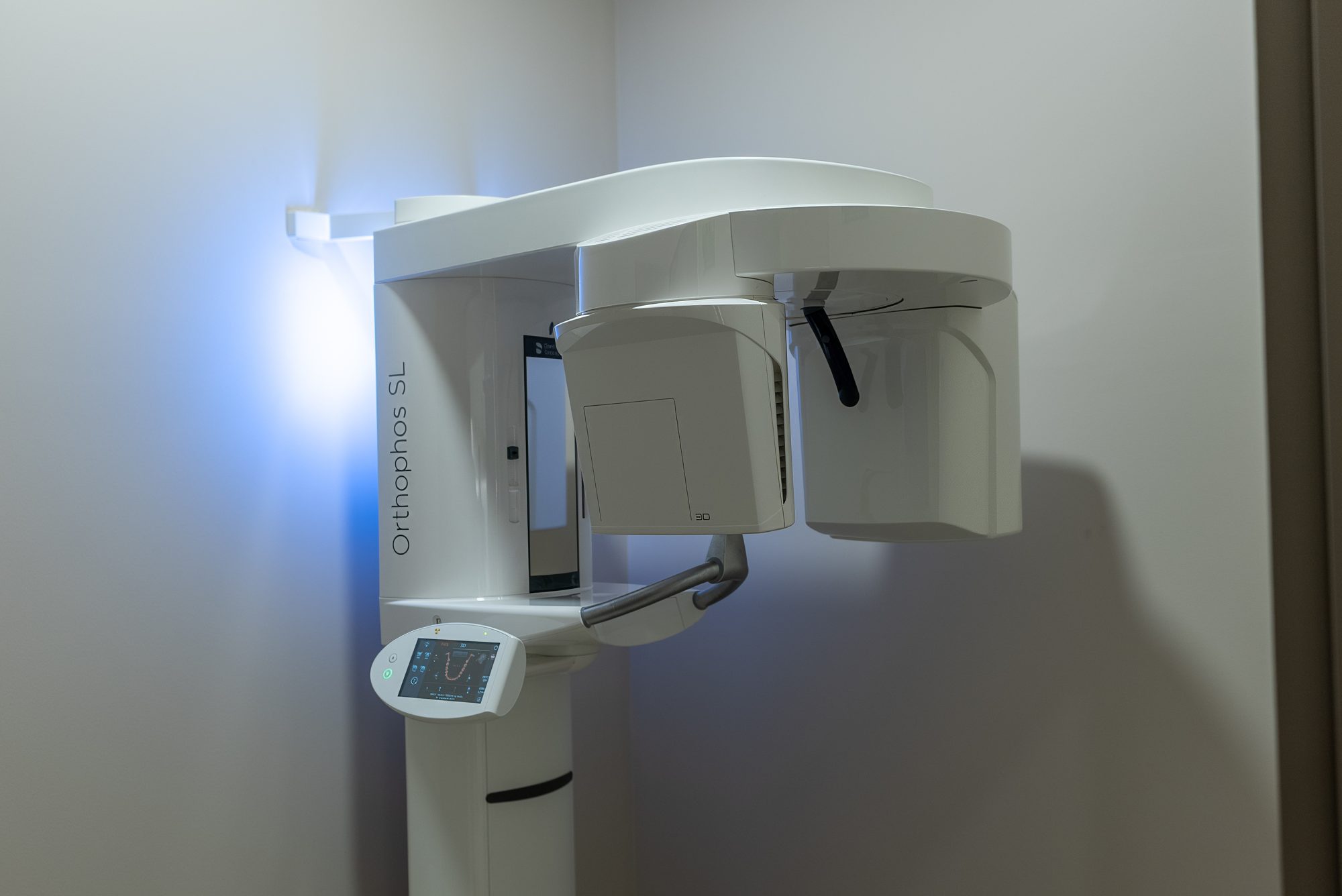
- A 3D X-ray (CBCT). Bone quality, outer bone thickness and any cystic areas show up before a drill does; the technology page describes the in-house 3D X-ray and scanner.
- The simplest surgery that will work. The guideline favours minimally invasive, template-guided placement to reduce bleeding and infection.
On the day, and the first week
Appointments are booked in the morning, and on the day after dialysis where that applies. Blood pressure is monitored, with the cuff kept off any arm that carries a fistula or shunt. The local anaesthetic needs thought too: lidocaine and mepivacaine are considered safe in renal failure, but the adrenaline in the cartridge is kept low because it can raise blood pressure. A chlorhexidine rinse before surgery is standard, and any agreed antibiotic cover is taken about an hour beforehand.
For the first 24 hours afterwards: no smoking, no vigorous rinsing, no strenuous activity, and soft food. Chlorhexidine twice daily continues for at least a week. Paracetamol is the most frequently recommended pain reliever on dialysis, at the interval your prescriber sets; aspirin is avoided because it affects platelets, and healthdirect advises asking your doctor before any anti-inflammatory medicine. The implant is usually left to integrate for longer before a tooth is attached. I usually explain that the slower timetable is deliberate, not a sign that something is wrong.
When an implant is not the right answer
Sometimes the renal team advises against elective surgery, the bone is too compromised, the gums are not stable, or the medicine list makes the risk too high for now. None of that means living with a gap. A bridge replaces a tooth without surgery, and a well-made denture can be adjusted as the mouth changes. Our comparison of implants, bridges and dentures sets out how each wears, cleans and ages.
How we approach this at Lumi Dental
At Lumi Dental in Melrose Park, an implant consultation for someone with kidney disease starts with a dentist's examination, and a 3D X-ray and intraoral scan taken in house. For medically complex cases the team at Lumi Dental writes to your nephrologist or GP before planning surgery. Gum health is assessed first, and the hygiene team of oral health therapists provides gum therapy and ongoing maintenance. Lumi Dental does not provide general anaesthetic itself and refers where it is needed, though IV sedation is available at the practice. Read more about dental implants at Lumi Dental.
Questions patients ask
Can you get dental implants if you are on dialysis?
Often yes, with conditions. The guideline treats implants on haemodialysis as more challenging rather than off limits, provided the nephrologist is consulted early, blood tests are in range, surgery is timed for a non-dialysis day and infection and bleeding are planned for.
Do dental implants fail more often in people with kidney disease?
The research base is small, so no reliable failure rate can be quoted. Demineralised bone, slower healing, gum disease and lowered immunity each raise the risk of complications. Our article on who is and is not suited to implants covers the general risk factors.
Which day should dental surgery be done if I have dialysis?
Usually the day after a haemodialysis session, in the morning. Heparin has largely worn off by then and waste products have been cleared. Where dialysis runs three times a week, the guideline notes the second day after a session can also work.
What painkillers can I take after implant surgery with kidney disease?
Paracetamol is the usual first choice, at the interval your prescriber sets. Aspirin and anti-inflammatories such as ibuprofen are generally avoided because they affect platelets and can stress the kidneys; any exception is your nephrologist's call. Our implant recovery timeline describes normal healing.
Can I have an implant after a kidney transplant?
Generally yes, once the transplant is stable and the transplant team agrees. Immunosuppressant medicines raise infection risk and interact with some antifungals and antibiotics, so prescriptions are checked with the medical team.
Kidney disease and thinking about implants? Complimentary implant consult in Melrose Park
If you have kidney disease or are on dialysis, the team at Lumi Dental in Melrose Park can examine the mouth, take the 3D X-ray and liaise with your renal team. Contact Lumi Dental to book a complimentary implant consult, or read about dental implants at the practice. Patients visit from Ryde, Parramatta, Ermington, Rydalmere and nearby suburbs.
Sources
- PMC (International Journal of Oral Science): Dental implant treatment for renal failure patients on dialysis, a clinical guideline
- PubMed (Discovery Medicine): Oral surgery and dental implants in patients with chronic kidney disease, scoping review for oral health status
- healthdirect: Kidney failure, symptoms, causes and treatment
- PMC (Saudi Dental Journal): Dental management of patients with renal diseases or undergoing renal transplant
About the author

Dr James Tran is a general dentist at Lumi Dental in Melrose Park. He holds a BDent from the University of Sydney and a Graduate Diploma in Oral Implants, and is a Member of the International Congress of Oral Implantologists (MICOI).
This article is general information only and is not a substitute for an examination and individual advice from a registered dental practitioner. Suitability for any treatment varies from person to person.








