

Once a dental implant has healed, the final crown is usually made over two short appointments: a records visit, where a scan captures the implant position, the gum shape and your bite, and a fitting visit, where the crown is tried in, checked, tightened and sealed. Hospital patient leaflets describe implants being left to bond with the bone for around 2 to 6 months before they are used. This guide walks through getting your final dental implant crown, what each step is for, what you may feel, and what the first weeks are usually like.
Written by Dr James Tran, BDent (University of Sydney), MICOI, GradDip (Oral Implants), general dentist at Lumi Dental in Melrose Park.
The short version
- The crown is made to fit the gum shape and bite that healing has produced, so records are taken only once the implant is stable and the gum has settled.
- At the records visit, the healing cap comes off for a few minutes, a small scan body is attached, and a 3D scan and shade photos are taken.
- At the fitting, the dentist checks contacts, bite and fit before the screw is tightened to the value the implant manufacturer sets.
- On a screw-retained crown, the access hole is sealed with a soft layer and a tooth-coloured filling. Our article on screw-retained versus cement-retained implant crowns explains the two designs.
- Gum pressure and a tight feeling between the teeth are common for a few days.
- Call if the crown feels loose, or if pain or swelling builds.
Where the final crown fits in implant treatment
Cambridge University Hospitals describes implant treatment in two phases. In the surgical phase the implant heals in the bone, which usually takes three to six months and can take longer after bone grafting. The restorative phase follows, and that is when the tooth itself is made.
The Leeds Dental Institute leaflet adds that a temporary crown is sometimes made first to help shape the gum. When the gum is stable, a further impression is taken and the final crown is made, which may take several visits a few weeks apart.
If your implant was buried under the gum, our guide to second-stage surgery and healing abutments covers the step that uncovers it. Timing varies from person to person, so treat any time frame here as general information.
The single rule: the crown follows the gum and the bite
If your implant has healed, the crown is made to fit what healing has produced, not the other way round. So the dentist checks stability on an X-ray and the gum shape first, then takes a scan with a scan body in place, then matches the shade. At the fitting, contacts, bite and fit are checked before the screw is tightened and the hole is sealed.
In my experience, patients find the visits easier once they know this order, because each check has a clear reason.
The records appointment
Checking the implant first
The visit usually starts with a look at the gum and a small X-ray of the implant. If the gum is red or bleeding, it is often better to settle it first, because records taken over swollen gum may not reflect its later shape.
The scan body and the 3D scan
The healing cap is unscrewed for a few minutes. Because the gum has healed snugly around it, you may feel a brief pinch, and a spot of bleeding is common. A scan body, a small post that screws into the implant, gives the scanner a precise reference for the position and angle of the implant.
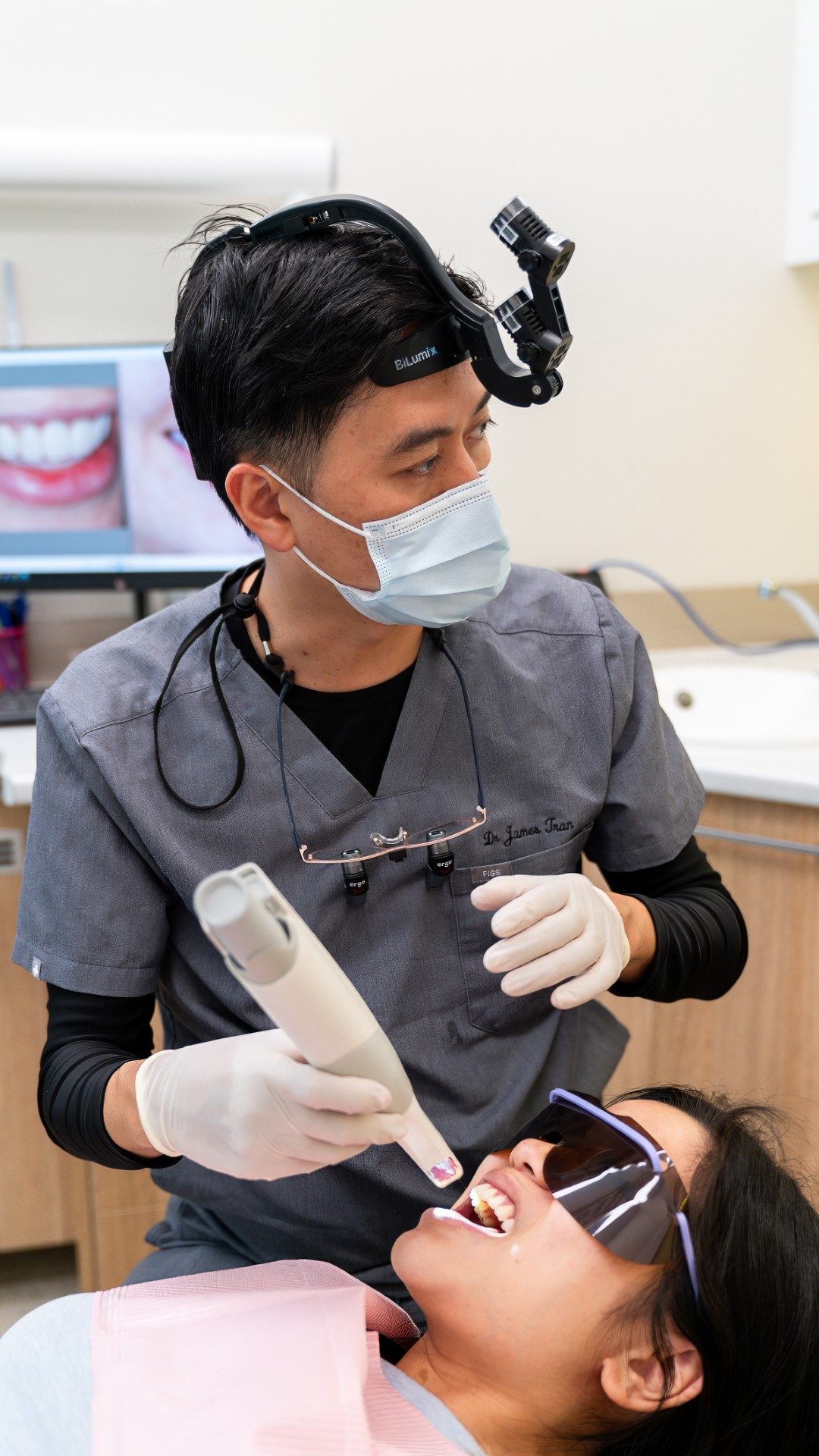
The dentist then scans the area, the opposing teeth and your bite. Some situations still suit an impression tray, and our article on digital scans versus dental impressions compares the two. The healing cap then goes back on.
Shade and photographs
Shade is recorded with a shade guide and clinical photographs, so the laboratory can see colour and translucency. Our article on matching an implant crown to your natural teeth explains why front teeth may need extra photos.
While the laboratory makes the crown
The laboratory uses the scan to design the abutment and crown. As general information, this commonly takes a few weeks, though it varies with the laboratory, the material and the case. Keep brushing gently around the healing cap, and call if it feels loose, because the gum can start to close over an implant if a cap is left out.
The fitting appointment, step by step
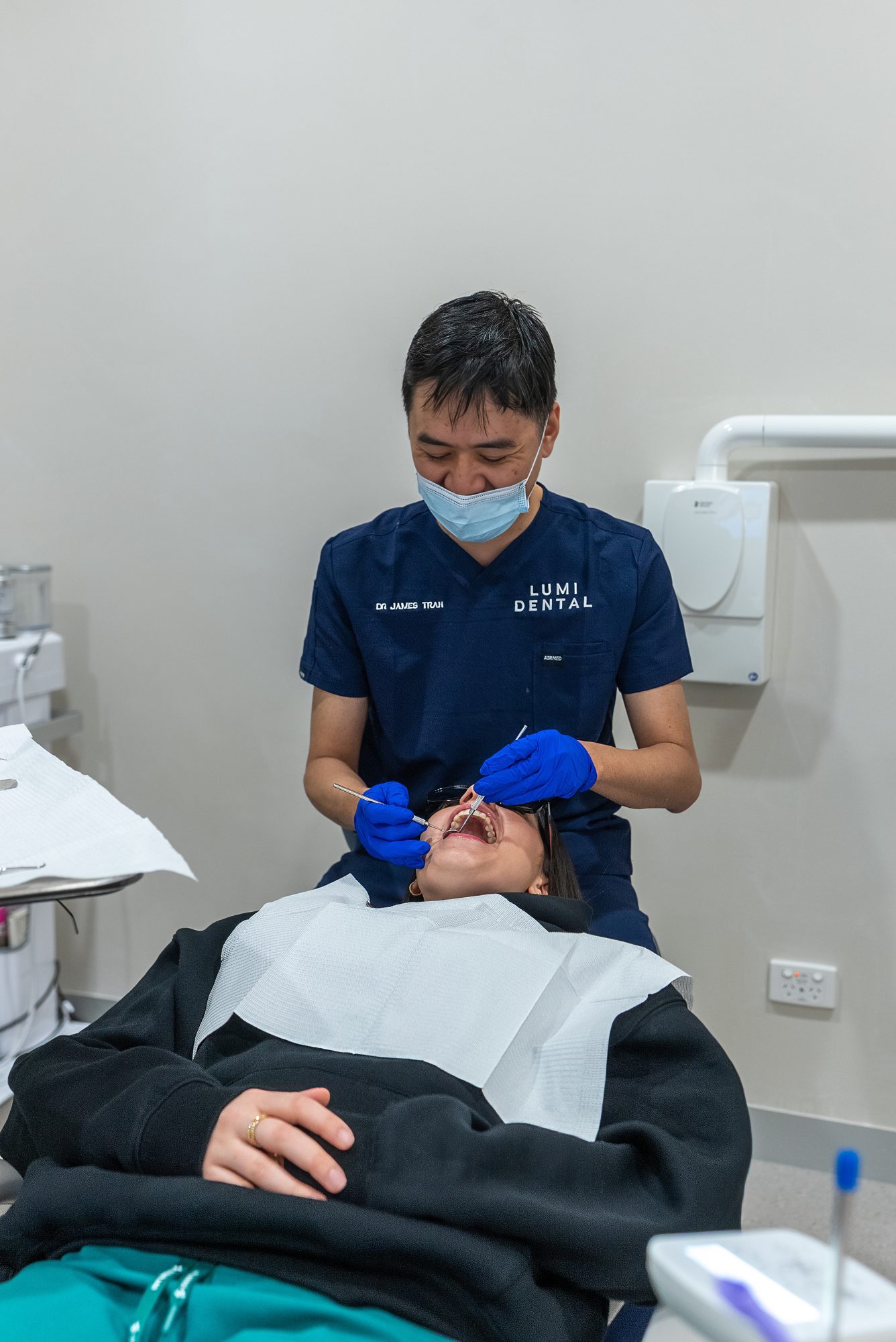
The healing cap comes off for the last time and the crown is tried in.
Contacts and bite
Floss is passed between the crown and each neighbouring tooth. It should snap through with gentle resistance. If it shreds, the contact is too tight; if it drops through freely, food may trap there later.
You then bite on thin marking paper. An implant has no cushioning ligament around it the way a natural tooth does, so dentists often set an implant crown to touch a little lighter than its neighbours. Our article on an implant crown that feels high explains why.
Seating, tightening and sealing
Many dentists take a small X-ray to confirm the crown is sitting fully down on the implant, because a small gap cannot always be seen or felt.
The screw is then tightened with a torque driver to a value the implant manufacturer specifies. A laboratory study of implant screws notes that screw loosening is the most frequently reported mechanical problem with implant restorations, and that the most common way to seal the hole is a layer of PTFE tape over the screw head, followed by tooth-coloured composite. The tape keeps the screw reachable if it ever needs checking.
If your crown is cemented
Some crowns are cemented onto the abutment, often because of the implant angle. The concern is excess cement left under the gum. In an endoscopic study of 46 patients with gum or bone inflammation around cemented implant crowns, cement residue was found under the gum in 80.4% of patients. This is why dentists take care to remove excess cement, and why some prefer a screw-retained design where the angle allows.
| Appointment step | What it is for | What you may feel |
|---|---|---|
| X-ray check | Confirms the implant is stable and the bone looks healthy | Only the sensor held in place |
| Healing cap removed | Gives access to the implant | A brief pinch, sometimes a spot of bleeding |
| Scan body and scan | Records the implant position, gum shape and bite | Light pressure and the scanner moving over the teeth |
| Shade match | Records colour and translucency for the laboratory | Nothing beyond holding still for photos |
| Try-in | Checks fit, shape, contacts and bite | Gum pressure and a tight feeling between the teeth |
| Torque and seal | Secures the crown and protects the screw | A firm turning pressure, then a short filling step |
| Review | Checks the gum, the bite and your cleaning | Usually nothing |
The first weeks with your new crown
Gum pressure usually eases over a few days, and the tight feeling against the neighbouring teeth often fades in a similar time. Most people can chew normally, though I usually suggest easing into very hard foods over the first few days.
If the crown still hits first after a few days, book a quick bite check rather than waiting. If food keeps catching beside it, our article on food stuck around an implant crown explains the usual causes.
Brush along the gumline and clean between the teeth with floss, an interdental brush or a floss threader. Our guide to cleaning dental implants at home goes through technique. Cambridge University Hospitals advises reviews with a dentist or hygienist every three to six months over the long term.
When to call the practice
Call if the crown feels loose, rocks or clicks, if pain builds rather than settles, if the gum swells or bleeds easily, or if the filling over the screw hole comes out. A loose crown is often a loose screw rather than a problem with the implant itself, and our article on a loose implant crown explains what to do in the meantime.
How we approach this at Lumi Dental
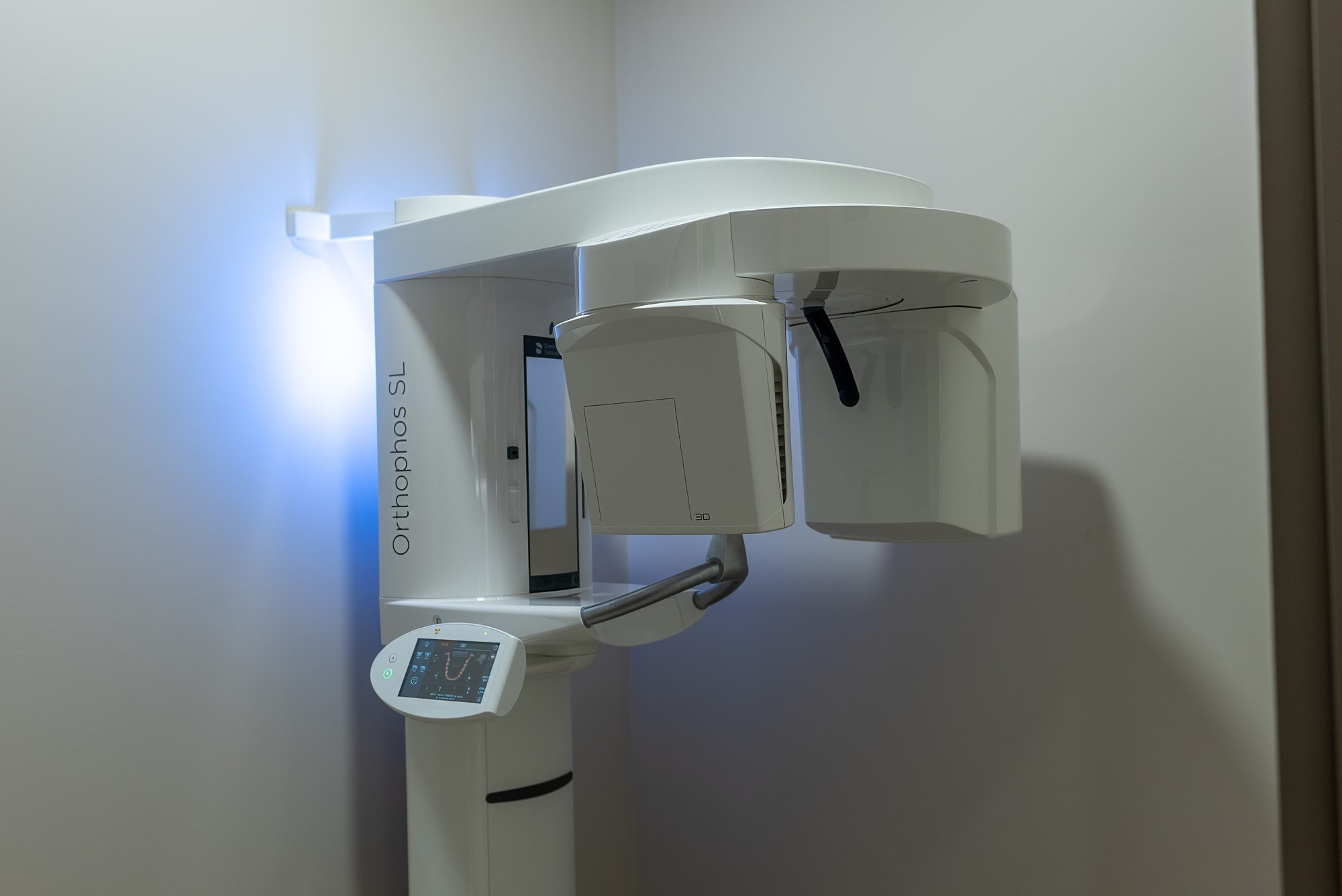
At Lumi Dental, implant crowns are planned with in-house 3D X-ray, 3D intraoral scanning and clinical photography, which you can read about on our technology page. The dentist examines the implant and gum before records are taken, talks through crown material options such as zirconia or porcelain fused to metal, and explains whether a screw-retained or cemented design suits the implant angle.
How a crown looks depends partly on the gum and bone around it, so the team discusses what is realistic beforehand. The oral health therapists then help with cleaning and maintenance.
Questions patients ask
How long after an implant do you get the crown?
It varies. Hospital leaflets describe around 2 to 6 months of healing before the implant is used, then a few weeks for the crown. Grafting can add time.
Does getting an implant crown fitted hurt?
Most people describe pressure rather than pain, and a needle is usually not needed. The gum can feel tender as the crown seats, and local anaesthetic can be used if you prefer.
Why does my implant crown have a filling on top?
On a screw-retained crown, the filling covers the hole the screw is tightened through. It keeps the screw reachable if it ever needs checking, and our article on screw-retained and cemented crowns explains the trade-offs.
Is it normal for a new implant crown to feel tight?
Yes, a tight feeling between the teeth and some gum pressure are common for a few days. If floss still will not pass after about a week, book a check.
When can I eat normally on my implant crown?
Usually soon after the fitting, unless the dentist advises otherwise. Ease into very hard foods over the first few days, and have a bite that still feels high checked.
Considering an implant? Complimentary implant consult in Melrose Park
If you are planning an implant, a complimentary implant consult is a chance to talk through each stage, including the crown. Contact Lumi Dental to book, or read more about dental implants in Melrose Park. Patients visit from Ryde, Parramatta, Ermington and Rydalmere, with on-site parking at Melrose Central.
Sources
- Cambridge University Hospitals: Dental implants in restorative dentistry
- Leeds Teaching Hospitals (Leeds Dental Institute): Dental Implants, information for patients
- Journal of Periodontology (Montevecchi and colleagues): Excess cement and peri-implant disease, a cross-sectional clinical endoscopic study (PMC)
- Materials: Effect of access channel sealing and superstructure material on abutment to implant screw stability after cyclic loading (PMC)
About the author

Dr James Tran is a general dentist at Lumi Dental in Melrose Park. He holds a BDent from the University of Sydney and a Graduate Diploma in Oral Implants, and is a Member of the International Congress of Oral Implantologists (MICOI).
This article is general information only and is not a substitute for an examination and individual advice from a registered dental practitioner. Suitability for any treatment varies from person to person.







