
A full-arch implant bridge is planned differently for each jaw: the upper jaw usually has softer bone and the sinuses to work around, the lower jaw has denser bone and a nerve to avoid, and the two bridges do different jobs for the face, speech and chewing. Patients weighing up upper vs lower full arch implants often ask which is harder, and each is hard in its own way. Research reviews have reported that implants in the lower jaw survive at slightly higher rates than in the upper jaw, especially towards the back, with bone quality considered the main reason.
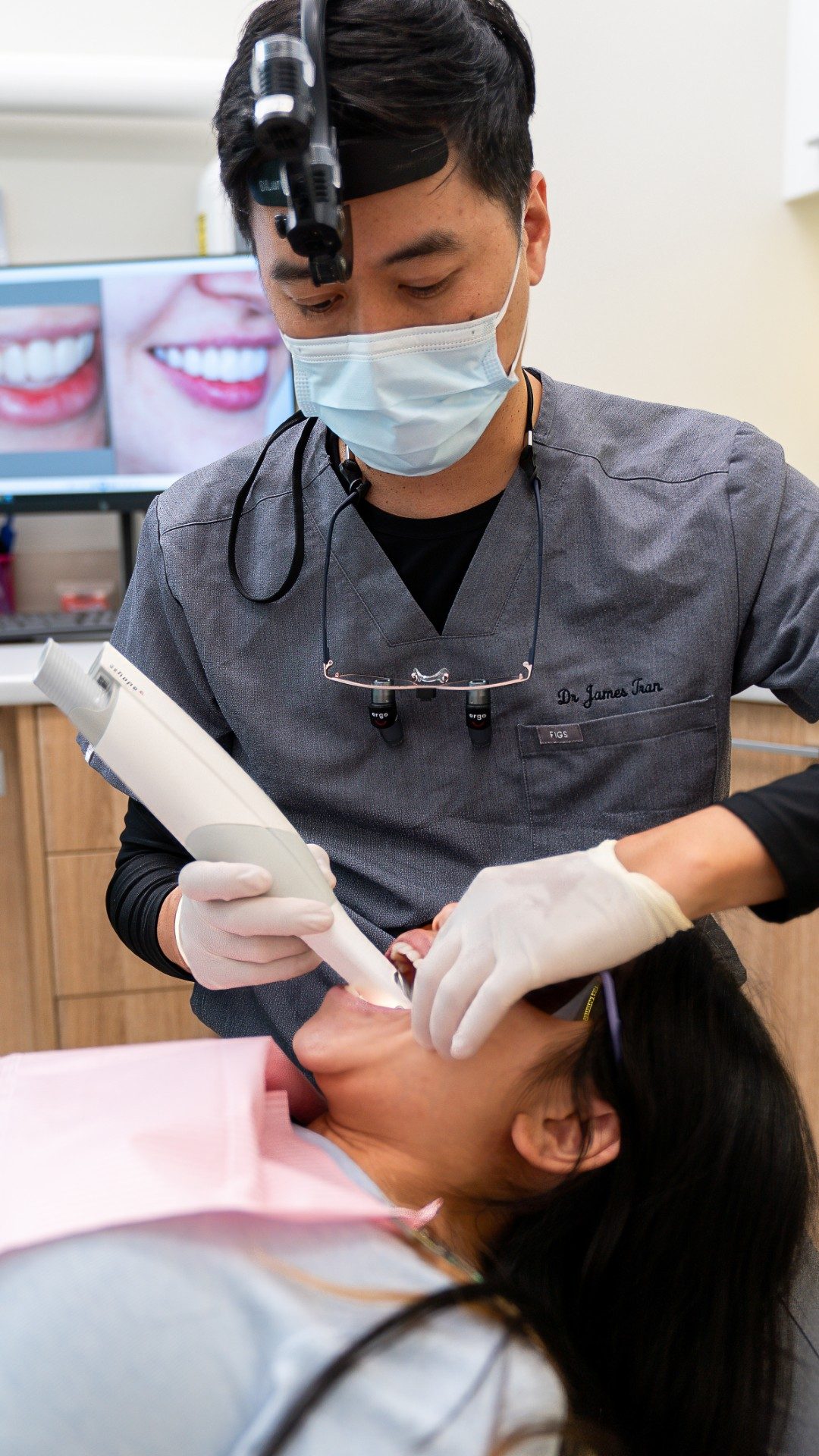
Written by Dr James Tran, BDent (University of Sydney), MICOI, GradDip (Oral Implants), general dentist at Lumi Dental in Melrose Park.
The short version
- Upper jaw bone is usually softer, so upper arches often need more implants, longer implants or angled placement to reach the same initial stability.
- The limits are anatomical: sinuses and nasal floor above, the inferior alveolar nerve and its mental branch below.
- An upper bridge carries more of the facial appearance and affects speech more, because it sits near the lip and palate.
- A lower bridge takes the brunt of chewing on a jaw that flexes slightly, so framework and material matter.
- Cleaning, healing and the opposing teeth also differ, and a 3D X-ray and digital scan turn these generalisations into a plan for your jaw. If you are still deciding between removable and fixed, start with our comparison of dentures and All-on-X full-arch implants.
Bone: why the upper jaw is usually the softer one
Dentists grade jaw bone using the Lekholm and Zarb system, from type 1, mostly dense cortical bone, to type 4, a thin shell over soft, spongy bone. The upper jaw tends to sit at the softer end, often type 3 or 4, especially at the back. The lower jaw, particularly at the front, is usually type 1 or 2.
Density matters because an implant has to be tight in the bone on the day it is placed. Research has reported a strong correlation between local bone density and the stability readings taken at surgery, and that this primary stability is an important predictor of whether the implant integrates. One older analysis quoted in the literature reported failure rates many times higher in the softest bone type, though implant designs have changed since.
Immediate loading, where a provisional bridge is fitted within a day or so of surgery, depends on every implant reaching a stability threshold. In my experience the lower jaw reaches it more predictably; in the upper jaw we sometimes plan a longer wait or add an implant.
Anatomy: sinuses above, nerves below
Above the back upper teeth are the maxillary sinuses, and above the front teeth is the floor of the nose. Both set a ceiling on implant length. When bone height is short the options are to graft and lift the sinus floor, use shorter implants, tilt implants forward into denser bone near the front, or in very thin upper jaws anchor into the cheekbone. Our guide to bone grafts and sinus lifts explains grafting, and zygomatic implants covers the cheekbone option.
In the lower jaw the limit is the inferior alveolar nerve, which runs through the body of the jaw and exits near the premolars as the mental nerve. It supplies feeling to the lower lip and chin, so implants are kept a safe distance above it. Healthdirect lists nerve damage and sinus problems among the possible complications of implant surgery, one for each jaw.
How many implants, and why the upper arch often gets more
Angled implants make full-arch bridges possible without grafting in many jaws. The All-on-4 treatment concept, trademarked by Nobel Biocare, uses two straight front implants and two tilted back implants so that four can support a full bridge while avoiding the sinus or the nerve. Lumi Dental's full-arch service is All-on-X, which uses the same principle but lets the number follow the bone rather than a brand name. Four is common in a dense lower jaw. In the upper jaw we more often plan five or six, because softer bone benefits from spreading the load and losing one implant from four leaves little margin. Our article on how many implants you need covers the trade-offs.
Chewing forces, flexing and bridge design
The lower jaw is a single bone moved by some of the strongest muscles in the body, and it flexes slightly when the mouth opens wide. A rigid bridge has to tolerate that, so lower bridges are usually built on a titanium framework or milled from zirconia. The upper jaw does not flex, but it meets the same chewing forces on softer bone, which forgives overload less. The material question is covered in our comparison of zirconia and acrylic full-arch bridges.
Face, lips and speech
An upper bridge carries most of the visible smile. It sets how much tooth shows, how the upper lip is supported, and whether the join between bridge and gum hides behind the lip. Where the upper jaw has shrunk a lot, the bridge may need a small flange of pink material to support the lip, which we check with a prototype first.
Speech differs too. A full upper denture covers the palate, which thickens speech for many people. An implant bridge leaves the palate free, but the space behind the front teeth can let air escape and cause a lisp until the shape is refined. A lower bridge rarely affects speech beyond the first few days.
Upper and lower arch at a glance
| Factor | Upper arch | Lower arch |
|---|---|---|
| Typical bone quality | Softer, often type 3 to 4, especially at the back | Denser, often type 1 to 2, especially at the front |
| Anatomical limit | Maxillary sinuses and nasal floor | Inferior alveolar nerve and mental nerve |
| Usual implant count | Often five or six; four with tilting or zygomatic anchorage | Often four, sometimes five |
| Immediate loading | Less predictable; a delayed bridge is sometimes planned | More predictable; same-day provisional bridge is common |
| Aesthetics | Carries the smile line and upper lip support | Less visible; supports lower lip and chin |
| Speech | Palate-free, but air escape can cause a temporary lisp | Rarely affected |
Plan the arch you have, not the arch in the brochure
If there is one rule, it is this. The plan should follow a 3D X-ray that shows bone height and density, the sinus floor and the nerve canal, and a digital scan that lets the bridge be designed before anything is placed. Some upper jaws turn out dense enough for four implants; some lower jaws need more. The number is an output of the planning, not an input.
Cleaning, healing and doing one arch only
Cleaning
Both bridges need daily cleaning underneath. Healthdirect's advice for implants, to clean around them with floss, interdental brushes or a water flosser, applies doubly to a full arch. The upper bridge is harder to see, so it is often cleaned by feel with a water flosser. The lower bridge collects calculus faster on the tongue side, so the hygiene team spends more time there at reviews.
Healing and recovery
Healthdirect notes that bone takes roughly three months to grow around an implant, and Guy's and St Thomas' NHS Foundation Trust describes implant treatment as taking six to twelve months from assessment to final restoration. In my experience lower jaw surgery brings more swelling in the first week, while an upper jaw sinus lift adds its own precautions.
When only one arch is done
Many patients restore one arch and keep natural teeth or a denture on the other. A fixed bridge opposing a loose lower denture shows up the denture's weaknesses, and a hard zirconia bridge opposing worn natural teeth can wear them further, so the opposing arch is part of the plan even when it is not being treated.
How we approach this at Lumi Dental
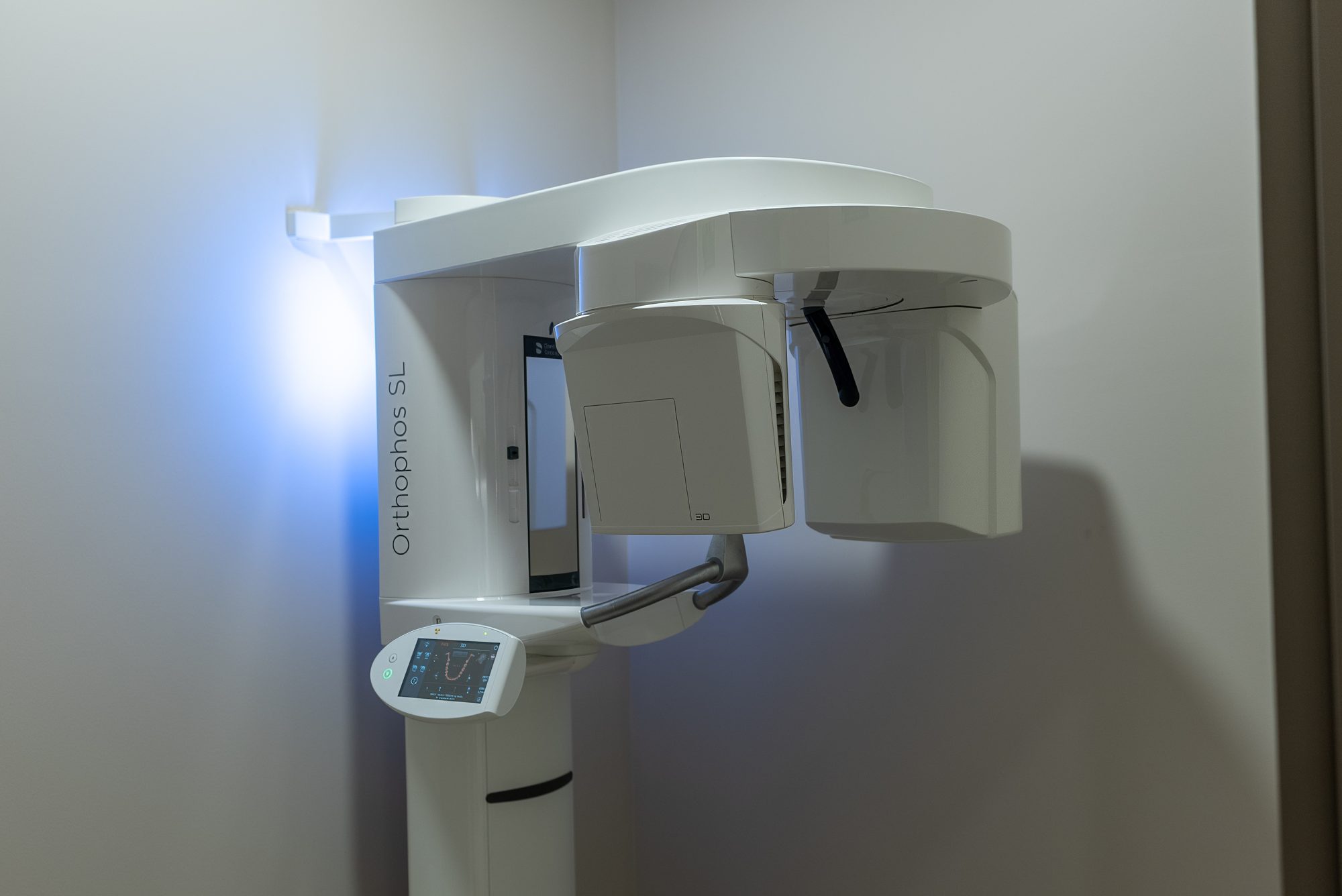
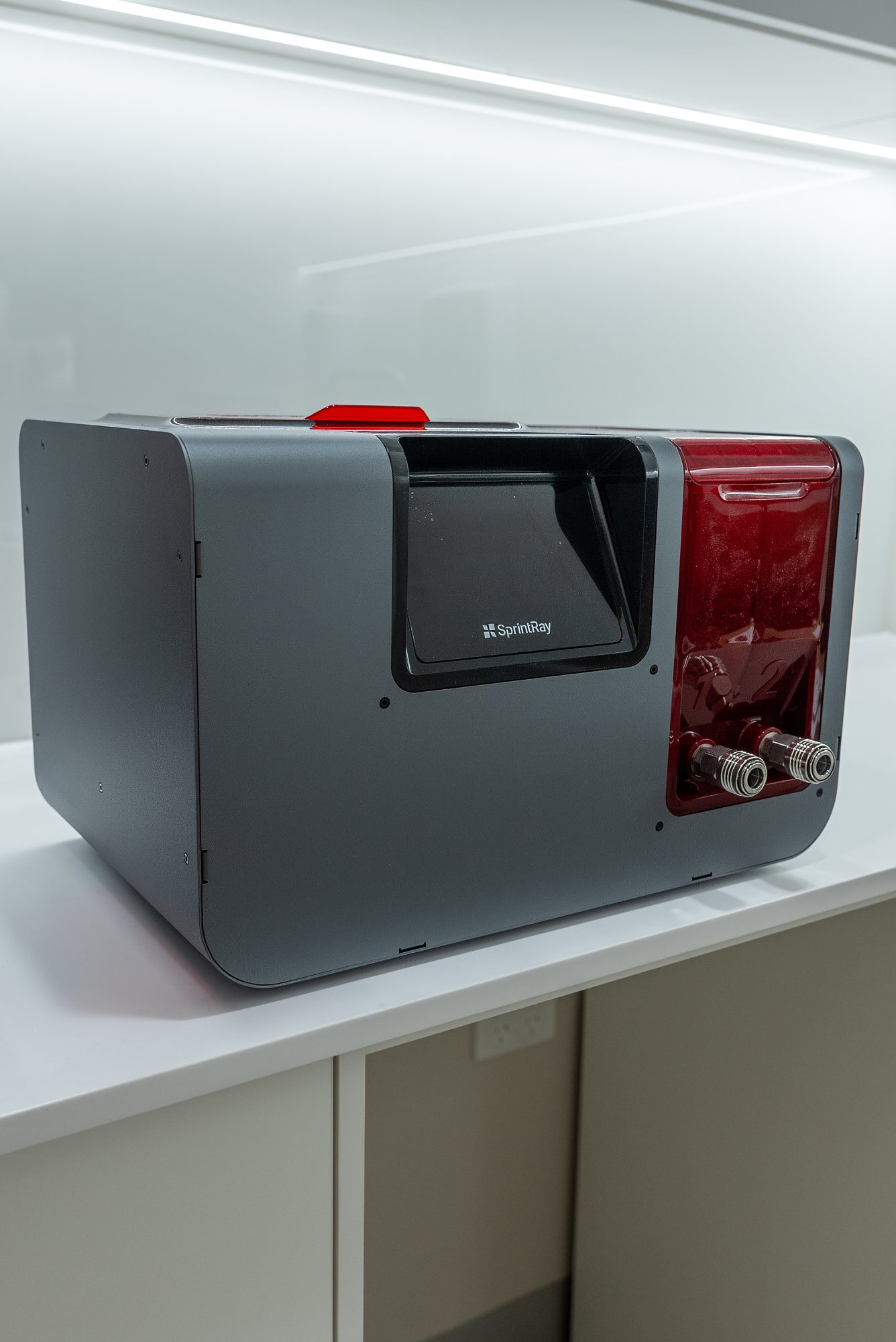
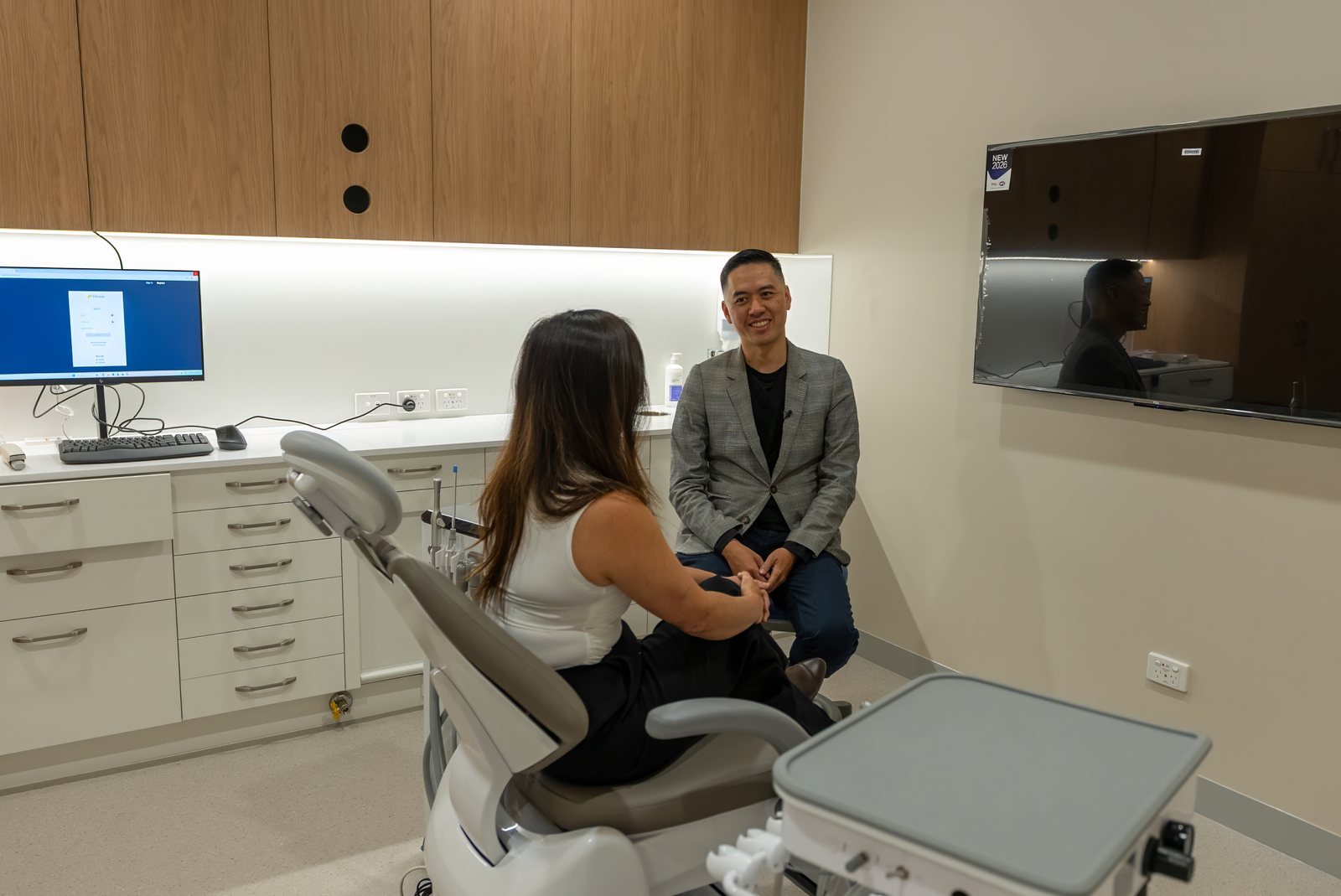
The team at Lumi Dental plans All-on-X full-arch implants from an in-house 3D X-ray and intraoral scan, so implant number, length and angle are decided from your bone rather than a template. Surgical guides and prototype bridges are 3D printed on site, and the prototype is checked with you for lip support, speech and bite before the final bridge is made. IV sedation is available; Lumi Dental does not provide general anaesthetic itself and refers where it is needed. Cases needing zygomatic implants or complex grafting are referred to registered specialists.
Questions patients ask
Are upper or lower full-arch implants harder?
Each is harder in a different way. The upper jaw is harder surgically because the bone is softer and the sinuses limit implant length, and harder prosthetically because the bridge carries the smile and affects speech. The lower jaw has denser bone but a nerve to avoid.
Why does the upper jaw usually need more implants?
Softer bone gives each implant less grip, so spreading the load across five or six leaves a margin if one fails to integrate. Some upper jaws are dense enough for four, which is why the number should follow the 3D X-ray.
Can I have the top done first and the bottom later?
Yes, and many patients do. The opposing arch still needs thought, because a fixed bridge changes how the other jaw's teeth or denture wear, so the plan should cover both arches even if only one is treated now.
Will an upper implant bridge cover my palate?
No. A fixed upper bridge leaves the palate free, which is one of the main reasons patients move from a conventional denture. Some notice a temporary lisp while the shape settles.
Is numbness after lower jaw implants normal?
Some temporary numbness of the lip or chin can occur after lower jaw surgery because the mental nerve is close by, and it usually settles. Lasting numbness is uncommon when implants are planned on a 3D X-ray with a safe margin. See our post on numbness after implant surgery.
Book a complimentary full-arch implant consult at Lumi Dental
If you are comparing options for an upper or lower arch, the team at Lumi Dental in Melrose Park can take a 3D X-ray and give you a written plan and quote after the examination. Book a complimentary full-arch consult, read about All-on-X at Lumi Dental, or start with dental implants in Melrose Park. Patients visit from Ryde, Parramatta, Ermington, Rydalmere and nearby suburbs.
Sources
- healthdirect: Dental implant
- Guy's and St Thomas' NHS Foundation Trust: Dental implants
- NCBI PMC: Influence of bone density on implant stability parameters and implant success
- NCBI PMC: New classification for bone type at dental implant sites
About the author
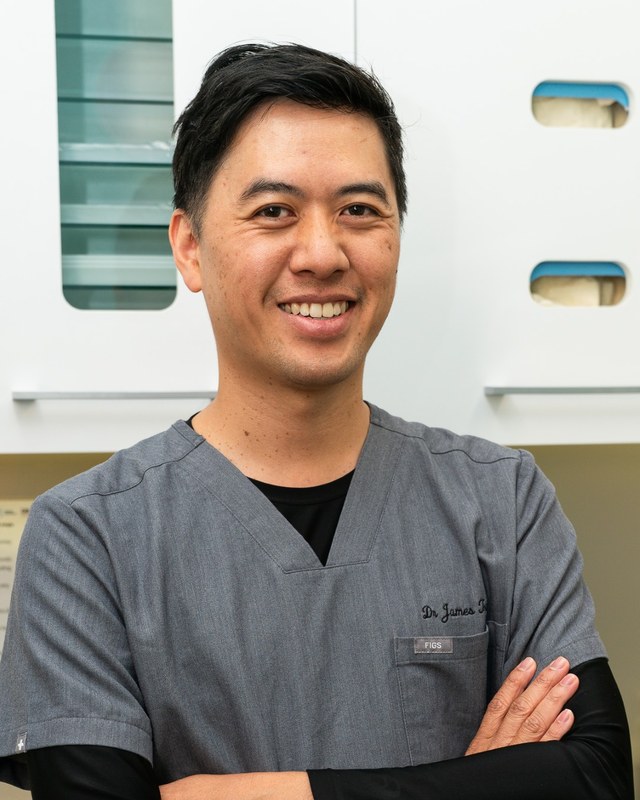
Dr James Tran is a general dentist at Lumi Dental in Melrose Park. He holds a BDent from the University of Sydney and a Graduate Diploma in Oral Implants, and is a Member of the International Congress of Oral Implantologists (MICOI).
This article is general information only and is not a substitute for an examination and individual advice from a registered dental practitioner. Suitability for any treatment varies from person to person.