

Using a wheelchair or living with limited mobility does not, on its own, rule out dental implants: what usually shapes how treatment goes is the number and length of visits, the transfers each one needs, and an implant design that you or your carer can clean every day. The Australian Institute of Health and Welfare estimates that around 1 in 5 people in Australia have disability, about 5.5 million people. A study of 465 implants in people with disabilities at a university oral care centre reported a 10-year implant survival of about 98%. This guide covers dental implants for wheelchair users and people with limited mobility, from planning the visits to cleaning at home.
Written by Dr James Tran, BDent (University of Sydney), MICOI, GradDip (Oral Implants), general dentist at Lumi Dental in Melrose Park.
The short version
- Limited mobility is rarely the deciding factor; bone, gum health, general health and cleaning usually matter more.
- Ask how many appointments each option needs and how long each one runs, before you choose an option.
- Consultations, reviews and some scans may be possible in your own wheelchair.
- Bring your transfer method, pressure care routine and, if you have a spinal cord injury at T6 or above, your autonomic dysreflexia plan.
- Choose teeth that you or your carer can clean every day with the hand function you have on a bad day, not a good one.
- Our guide to wheelchair-accessible dental care covers booking questions, transfers and staying in your own chair for routine visits.
What the research reports about implants and disability
The study by Kim and colleagues in the Journal of Oral Rehabilitation followed 137 patients with physical, cognitive or multiple disabilities at a university oral care centre. The 10-year cumulative implant survival was 98.3% overall and 98.1% in the group with physical impairment. The most common later problems were mechanical, chiefly crowns coming loose.
The authors linked these results to careful surgical planning, simplified prosthetic design and maintenance that included carers. It is a single-centre, retrospective study, so it shows what is possible rather than what to expect for any one person.
The single rule: plan the visits as carefully as the implants
If you use a wheelchair or move with difficulty, plan the number and length of appointments with the same care as the implant itself. In my experience, what makes treatment hard is less often the mouth than the cost of each visit: a transfer, a carer's time and a long trip.
Before choosing an option, ask three things:
- How many visits does each option need, and how long is each one?
- Which steps can happen in my own wheelchair?
- Can I, or my carer, clean this design every day? If the answer is uncertain, a simpler design may be the better choice.
Counting the visits, stage by stage
Treat the stages below as a guide to what to ask, not a fixed schedule. A single implant often involves several visits over a few months while the bone heals. Full-arch treatment has its own sequence, which our article on full-arch implant appointments and timelines sets out.
| Stage | What to ask or plan |
|---|---|
| Consultation | Whether it can happen in your own chair; bring your medicines list, transfer method and any medical plans |
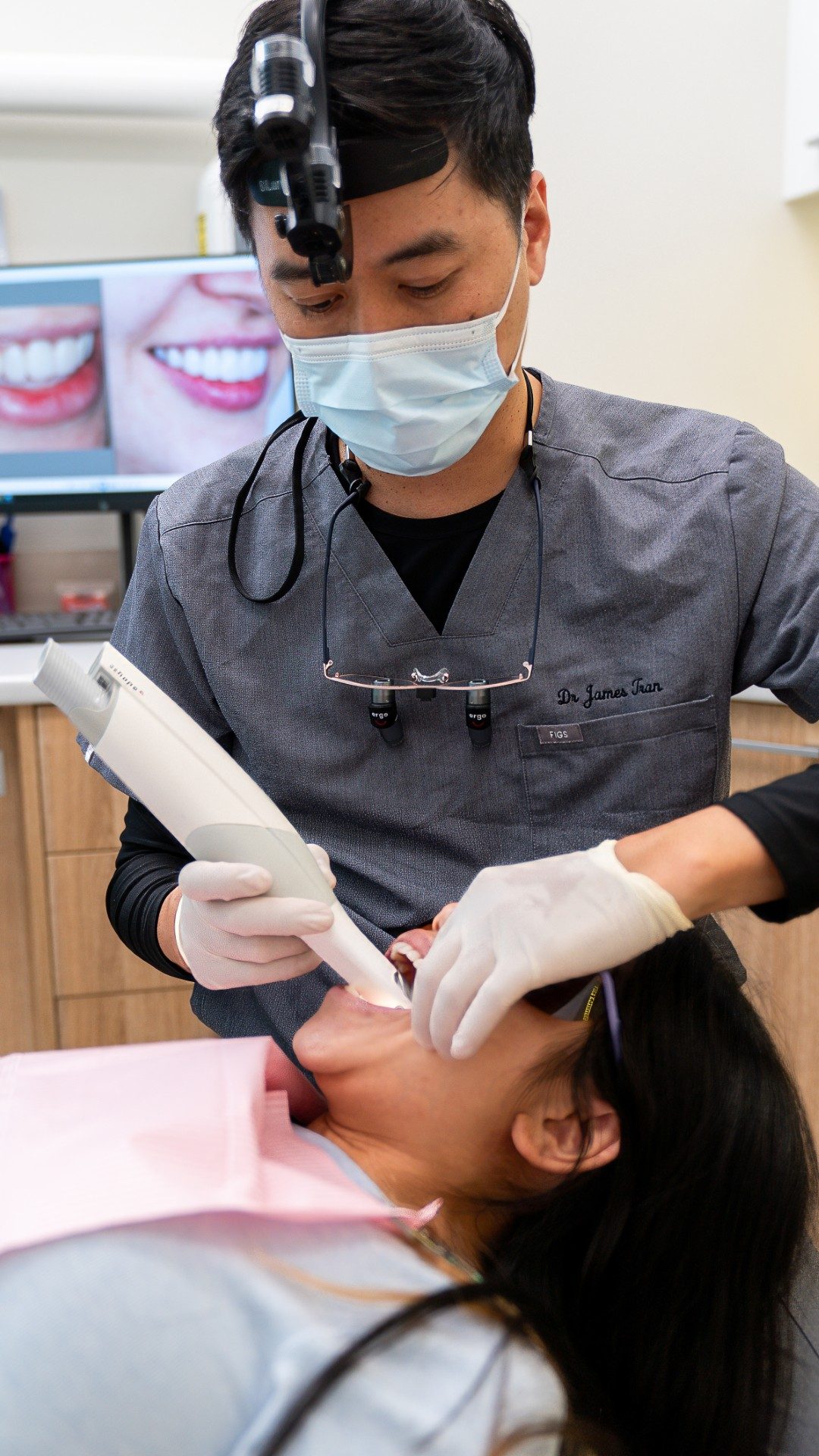
| 3D X-ray and scans | Whether the X-ray can be taken with you seated in your wheelchair, and how long the intraoral scan takes |
| Surgery day | Appointment length, planned breaks to reposition, transfer method, pressure care, sedation and who comes with you |
| First week | Who helps with soft food, cleaning and medicines; how to reach the team if swelling or pain worsens |
| Final teeth | How many fitting visits are needed, and a cleaning check with you or your carer before you leave |
| Maintenance | Review intervals, whether visits can be grouped, and a written home routine your carer can follow |
Transfers, positioning and pressure care on surgery day
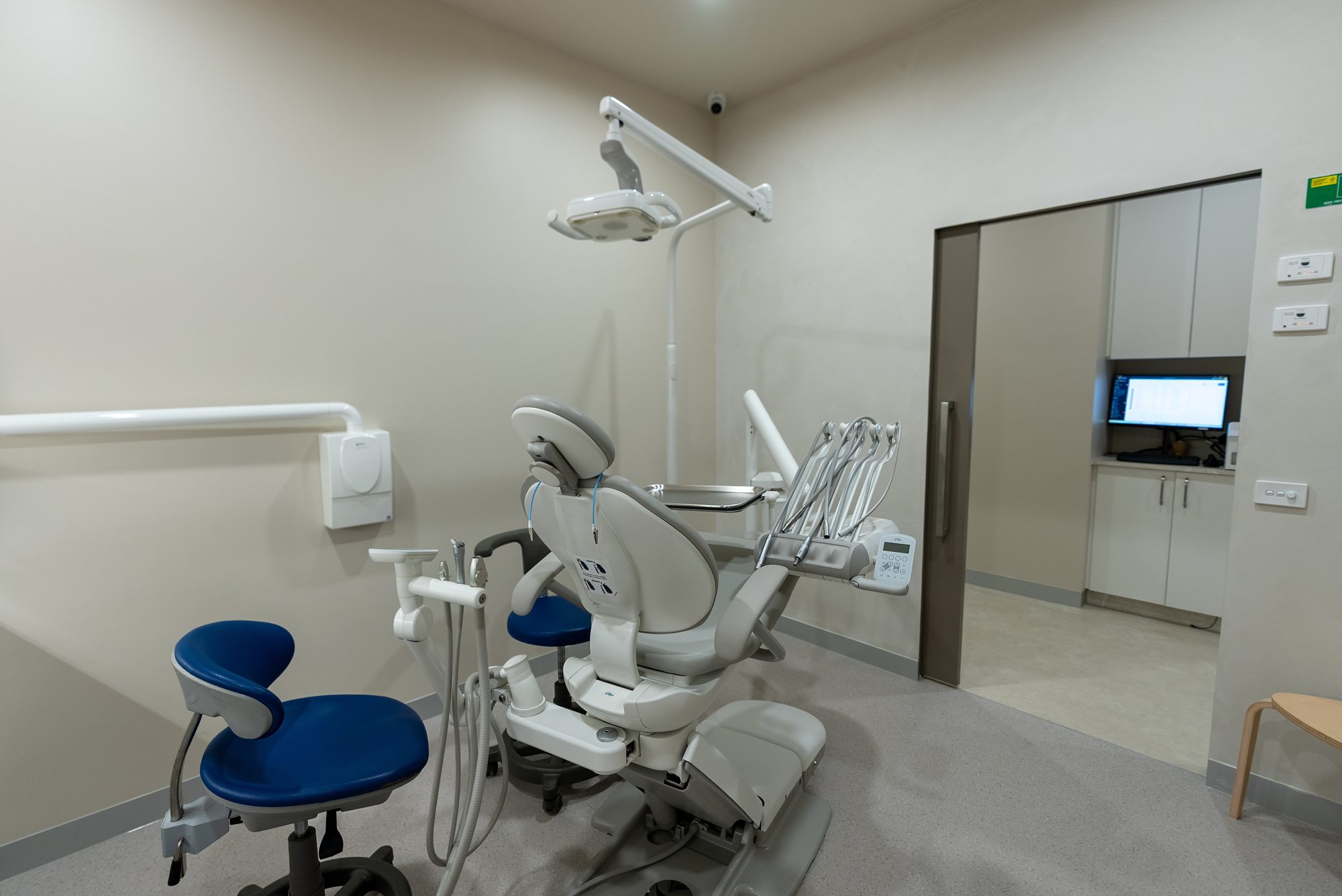
Implant surgery usually needs a dental chair. The transfer method should be the one you already use and trust. Our article on dental implants with multiple sclerosis covers positioning, spasticity and fatigue in the chair in more detail.
Pressure care during a longer appointment
A guide for clinicians from the NSW Agency for Clinical Innovation notes that people with a spinal cord injury have reduced or no sensation below the level of injury, which raises the risk of pressure injury. It encourages relieving pressure for 2 to 3 minutes at least every 45 minutes, ideally every 20 minutes, and lists tight clothing, thick seams and poorly maintained equipment among things that can harm the skin.
For a long surgery, agree planned breaks to reposition, wear loose clothing, and ask whether your own pressure cushion can be used. Your occupational therapist can advise what suits you.
Autonomic dysreflexia
Spinal Cord Injuries Australia describes autonomic dysreflexia as a potentially life-threatening rise in blood pressure that usually occurs with an injury at or above the sixth thoracic level (T6). Listed signs include a pounding headache, a flushed face and sweating above the level of injury. Its prevention list includes not letting the bladder become too full, controlling pain, bowel care and good skin care, and the NSW guide adds that pressure injuries and skin irritation can set it off.
If this applies to you, bring your autonomic dysreflexia plan, tell the team at booking and again on the day, and plan bladder management around the appointment length. Treatment can stop at the first sign.
Sedation, medicines and your medical team
IV sedation is considered only after a medical review, because breathing, blood pressure and some neurological conditions can change the plan. Our guide to IV sedation for implant surgery explains the day. Lumi Dental does not provide general anaesthetic itself and refers where it is needed, though IV sedation is available at the practice.
Medicines that affect bone or bleeding, such as some osteoporosis treatments or blood thinners, are a matter for your GP or specialist, and the dental team never changes them. For medically complex plans, the team at Lumi Dental writes to your GP or specialist before planning surgery.
Recovery at home
The first few nights are often easier with your head raised, and our article on sleeping after implant surgery covers positions and pillows.
Cold packs on the cheek are often suggested for swelling. The NSW guide advises people with a spinal cord injury to avoid heat and ice packs, because reduced feeling hides early warning signs of skin damage, so check with your spinal team or GP before using one. Stock soft food beforehand, and make sure whoever helps at home knows the instructions.
Cleaning implants with limited hand function
Plaque left around an implant can lead to gum and bone inflammation, so daily cleaning matters as much as the surgery. Options that often help include:
- an electric toothbrush, with a wider or built-up handle if grip is weak
- interdental brushes on a longer handle, sized by the dental team
- a water flosser, which some people find easier than floss around implant teeth
- a carer routine for at least one thorough clean a day, shown in the chair
Our guides to brushing and flossing with one hand and cleaning dental implants at home go through technique.
Overdenture or fixed bridge
An overdenture clips onto implants and comes out for cleaning, which can suit a carer but needs some hand strength to remove. A fixed bridge stays in, so there is nothing to take out, but cleaning underneath it takes more skill. I usually suggest trying the cleaning tools for each option before deciding. Our article on implant-retained overdentures compares them.
Getting to and from appointments
Transport for NSW runs the Taxi Transport Subsidy Scheme for NSW residents with a severe, permanent disability that prevents them using public transport. It covers half of a taxi fare up to a set limit per trip, including travel in wheelchair-accessible taxis, which can be booked in Sydney through Wheelchair Book & Ride. If sedation is used, you will need someone to take you home.
How we approach this at Lumi Dental
At Lumi Dental, a dentist examines your mouth and plans implant treatment using a 3D X-ray and intraoral scan taken in house, and sets out how many visits each option involves. Please call ahead to confirm access and transfer needs. On-site parking is available at Melrose Central.
Where your health is complex, the team writes to your GP or specialist before planning surgery, and IV sedation is offered only after medical review. Specialist cases are referred to registered specialists. The oral health therapists look after maintenance and can show your carer a home routine. Read more about dental implants at Lumi Dental.
Questions patients ask
Can you get dental implants if you use a wheelchair?
Often, yes. Using a wheelchair does not by itself rule out implants; bone, gum health, general health and a manageable cleaning plan usually decide suitability.
Do I have to transfer out of my wheelchair for implant surgery?
Usually, because surgery needs a dental chair. Consultations, reviews and some scans may be possible in your own chair, so ask about each step.
How many appointments do dental implants take?
It varies. A single implant often needs several visits over a few months, and full-arch treatment more. Ask for the number and length of visits for each option.
Can I have sedation for implant surgery if I have a spinal cord injury?
Sometimes, after a medical review that may involve your GP or spinal team. Our guide to IV sedation for implants explains what is involved.
Can my carer clean my implants?
Yes, and it often helps. Ask the team to show your carer the routine in the chair, and our article on cleaning implants at home covers the tools.
Considering an implant? Complimentary implant consult in Melrose Park
If you use a wheelchair or have limited mobility and are thinking about implants, a complimentary implant consult is a chance to map out the visits, transfers and cleaning before you commit. Contact Lumi Dental to book and to confirm access and transfer needs, or read more about dental implants in Melrose Park. Patients visit from Ryde, Parramatta, Ermington and Rydalmere, with on-site parking at Melrose Central.
Sources
- Australian Institute of Health and Welfare: People with disability in Australia, how many people have disability?
- Journal of Oral Rehabilitation (Kim and colleagues): Long-Term Survival Rates of Dental Implants in Patients With Disabilities (PubMed)
- Spinal Cord Injuries Australia: Autonomic Dysreflexia in Spinal Cord Injury
- NSW Agency for Clinical Innovation: Prevention and management of skin and pressure injuries in spinal cord injury patients
About the author

Dr James Tran is a general dentist at Lumi Dental in Melrose Park. He holds a BDent from the University of Sydney and a Graduate Diploma in Oral Implants, and is a Member of the International Congress of Oral Implantologists (MICOI).
This article is general information only and is not a substitute for an examination and individual advice from a registered dental practitioner. Suitability for any treatment varies from person to person.







